


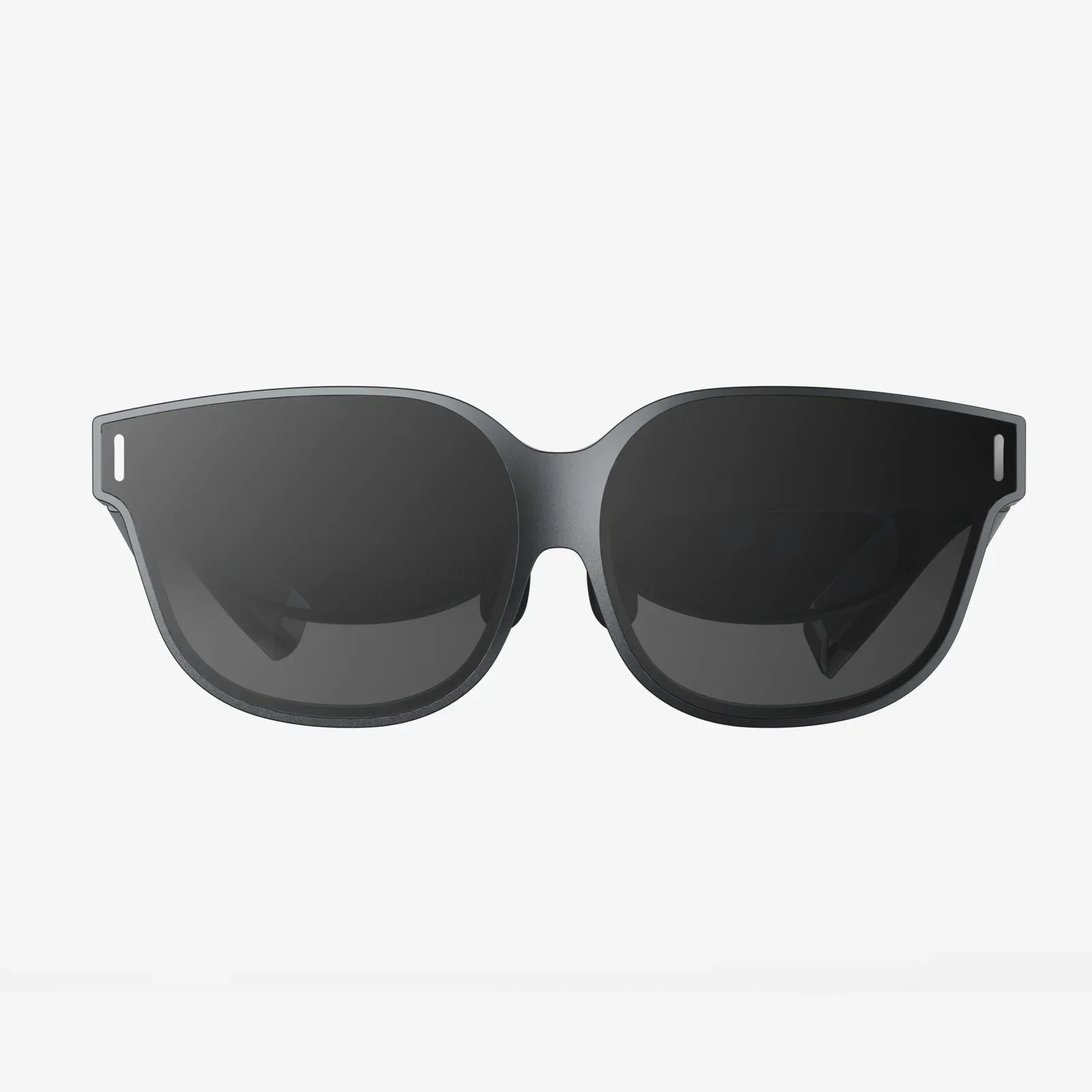
Imagine walking through a city, donning a sleek pair of glasses, and seeing the world transformed. Historical figures reenact events on the very street corners they occurred, navigation arrows are painted directly onto the pavement, and a virtual art gallery is permanently installed on the side of a building, its exhibits changing daily. This isn't a scene from a distant sci-fi future; it's the imminent reality being built today, and its foundational technology is something both incredibly complex and elegantly simple: AR Spatial Anchors. This invisible digital framework is the unsung hero poised to unlock the true, pervasive potential of augmented reality, moving it from novel app to indispensable platform.
The Fundamental Problem of Where: Beyond GPS
For decades, humanity's primary tool for answering the question "Where?" has been the Global Positioning System (GPS) and its counterparts. While revolutionary for macro-scale navigation, GPS fails spectacularly at the micro-scale. It can guide you to a building but cannot tell you which specific machine on a factory floor needs maintenance. It has an accuracy of several meters, which is useless for placing a virtual character precisely on a physical chair or aligning a digital instruction manual with a real-world engine. This imprecision is the first wall that AR hit. Early AR was a solitary, transient experience—a filter on your phone screen that didn't understand the world around it. The digital content floated unmoored, unable to persist or be shared. AR Spatial Anchors are the technological breakthrough that solved this.
What Exactly Is a Spatial Anchor?
At its core, an AR Spatial Anchor is a precise point in space that a device can recognize and track over time. It's not a physical marker like a QR code, though it can use them. Instead, it's a sophisticated digital bookmark. Here's how it works:
- Scanning and Mapping: An AR-enabled device (like a smartphone or headset) uses its cameras, sensors, and onboard processing to scan its surroundings. It doesn't just take a picture; it builds a rich, feature-based 3D map of the environment, identifying unique patterns, edges, and textures—a "point cloud" that defines the space. This process is often called "spatial mapping."
- Anchor Creation: The user or application defines a specific point in this mapped space to be the anchor. The system doesn't just store GPS coordinates. It saves a complex digital signature based on the visual features surrounding that point. This signature is what makes it unique.
- Relocalization: This is the magic. When a device returns to that area, it rescans the environment. Its software compares the new scan against the stored digital signature of the anchor. By finding a match between the current view and the stored data, the device can precisely calculate its own position and orientation relative to that anchor point. It literally recognizes the place.
- Content Pinning: Virtual content—a 3D model, a video, a text note—is then bound to this anchor. Because the device knows exactly where the anchor is in the real world, it can render the content in a stable, fixed position, regardless of how the user moves.
This process creates persistence. The anchor, and thus the content attached to it, exists in that specific location until it is deliberately moved or deleted. This is the leap from "viewing" AR to "populating" the world with AR.
The Technical Symphony Behind the Magic
Creating and resolving spatial anchors is a computationally intensive task that relies on a symphony of advanced technologies working in concert.
- Computer Vision: This is the star of the show. Algorithms perform feature detection to identify distinct visual patterns in the environment. Techniques like Simultaneous Localization and Mapping (SLAM) allow the device to both map an unknown environment and track its own location within that map in real-time.
- Sensor Fusion: Cameras alone are not enough. Data from inertial measurement units (IMUs)—gyroscopes, accelerometers, and magnetometers—is fused with the visual data. This provides crucial information about the device's movement and orientation, making the tracking smoother and more robust, especially during quick motions or in low-light conditions where the camera might struggle.
- Cloud Computing: While basic anchoring can be done on-device, the true power is unlocked by the cloud. Cloud-based spatial anchor services allow anchors to be stored, shared, and resolved across multiple devices. When you create an anchor, its unique spatial data can be uploaded to the cloud. When another user enters the space, their device downloads this data and uses it to find the anchor, enabling a shared AR experience. This also allows for persistence across sessions and different device types.
- Machine Learning: ML models are increasingly used to improve the recognition and stability of anchors. They can help the system understand the semantics of a scene (e.g., identifying a wall, a floor, a table) which allows for more intelligent placement of content and better handling of "scene changes" like moved furniture or different lighting.
Transforming Industries: The Practical Power of Persistence
The applications for this technology stretch far beyond gaming and entertainment. It is poised to become a critical tool in enterprise and industry.
Design, Construction, and Architecture
Architects and engineers can leave virtual notes and markers directly on a construction site. A foreman can see the planned plumbing lines inside a concrete floor before it's poured. Teams can visualize a full-scale building model on the empty plot of land where it will be built, walking through its halls before a single brick is laid. Spatial anchors ensure that these models are fixed in the correct location, allowing for accurate alignment and measurement against the physical world.
Manufacturing and Complex Assembly
On a factory floor, a spatial anchor can be placed on a specific machine. A technician wearing AR glasses can then approach it and see a persistent digital work order, historical performance data, or step-by-step holographic repair instructions overlaid directly on the components they need to touch. This eliminates paper manuals, reduces errors, and drastically speeds up training and complex procedures.
Retail and Interior Design
Imagine placing a virtual sofa in your living room to see if it fits and matches your decor. With spatial anchors, that sofa would stay exactly where you left it. You could leave the room, come back hours later, and it would still be there. Furniture retailers could create showrooms where customers can use their phones to see how entire product lines would look in their own homes, with the experience anchored and persistent.
Navigation and Public Spaces
Indoor navigation has long been a challenge. Spatial anchors can power hyper-accurate wayfinding inside airports, museums, and shopping malls. Arrows can be drawn on the floor, guiding you to your gate. In a museum, an anchor placed next to an exhibit could trigger a persistent AR reconstruction of a historical event or show a 3D model of a fossil from all angles, available to every visitor who points their device at it.
Challenges and The Path to a Shared AR Cloud
Despite its promise, the widespread adoption of AR Spatial Anchors faces significant hurdles.
- Environmental Changes: The biggest challenge is a dynamic environment. If the unique visual features an anchor relies on change—if a poster is taken down, furniture is rearranged, or snow covers key textures—the device may fail to recognize the anchor. Developers are combatting this with more robust scanning that captures a wider area and uses semantic understanding to distinguish between permanent structures and movable objects.
- Scale and the AR Cloud: The ultimate vision is a universal, persistent "AR Cloud"—a digital twin of the entire world where data and experiences are anchored and accessible to everyone. This presents immense technical challenges in data storage, processing power, latency, and continuous updating. It also raises critical questions about privacy, data ownership, and governance. Who owns the digital space above your physical property?
- Standardization: For a truly seamless experience, different devices and platforms need to be able to recognize the same anchors. The industry is still young, and moving towards open standards for spatial data will be crucial for avoiding a fragmented AR world where experiences are locked to specific ecosystems.
- Privacy and Security: The process of continuously scanning and mapping our surroundings involves collecting vast amounts of visual data. Ensuring this data is anonymized, secure, and used ethically is paramount. Users must have control over who can place anchors in their private spaces and what data is collected about their environments.
The Future: A World Layer of Information
The development of AR Spatial Anchors is the critical first step in building what many technologists call the "Mirrorworld" or the "Metaverse's bridge to reality." It will evolve from placing simple objects to creating complex, interactive, and intelligent world-level content.
Future advancements will see anchors that are not just spatial but also contextual. An anchor will understand that it's on a restaurant menu, triggering not just a 3D model of a dish but also reviews and dietary information. It will know it's on an industrial valve, displaying real-time pressure and temperature data streamed from the IoT sensor inside it. They will become the fundamental indexing system for the physical world, a way to query a location and receive a layer of digital information specific to it.
This technology is quietly building the infrastructure for the next great computing platform. It’s the reason our digital world will no longer be confined to screens but will instead become a seamless extension of our physical reality, anchored, persistent, and shared. The places we know are about to become the platforms for experiences we have yet to imagine.
The world around you is not as empty as it seems. It is already being populated with invisible digital signposts, waiting for the right device to come along and reveal the rich layer of information, story, and utility they hold. The race to map our physical world into a digital one is on, and the winners will be those who master the art of tying it all together, one precise point at a time. The anchor has been dropped; the future is settling in.
Share:
Best Budget Smart Wearables: Maximizing Health and Connectivity Without the Premium Price Tag
Best Definition of Artificial Intelligence: A Deep Dive into the Core of Machine Minds