


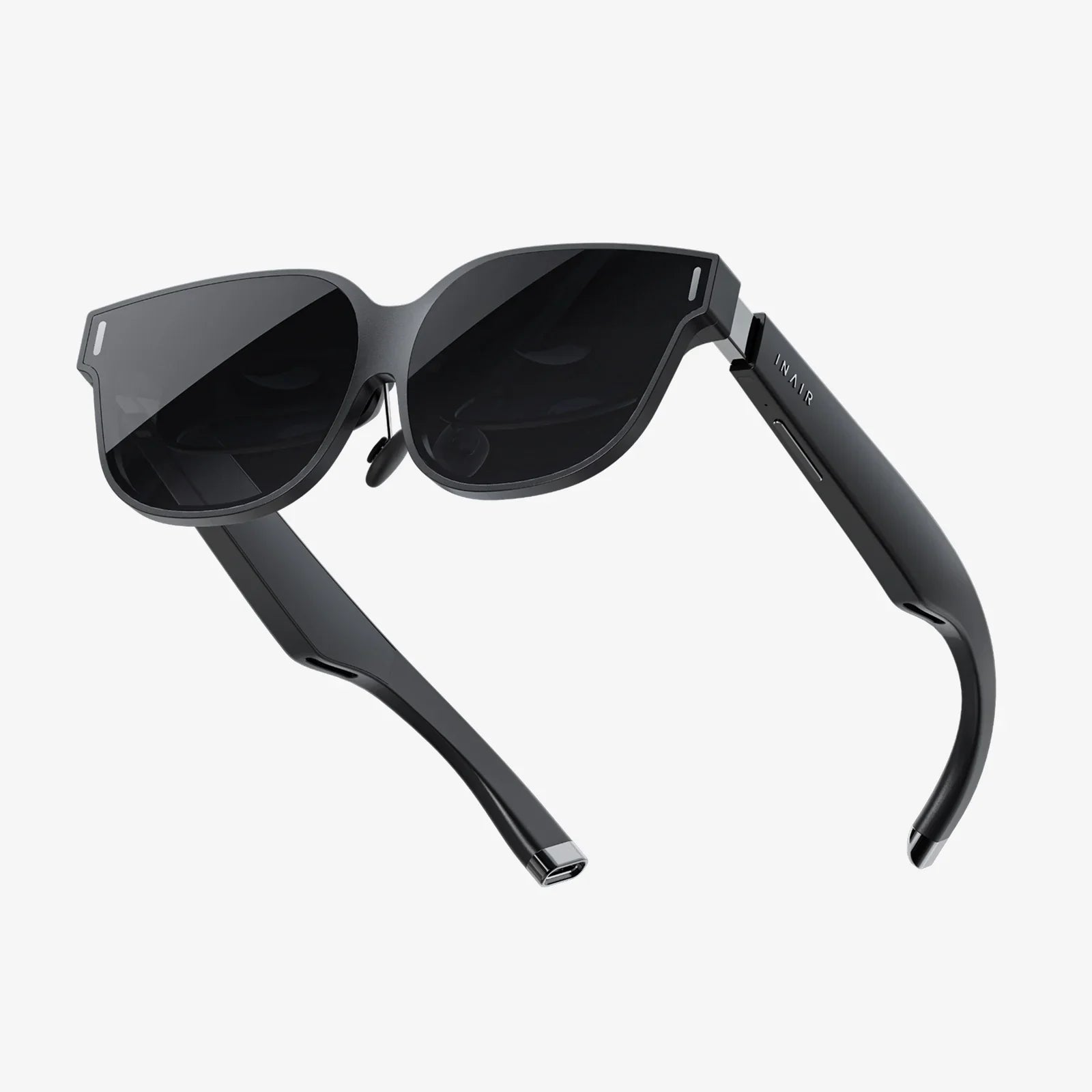
You’ve just strapped on a headset, ready to be transported to a digital world or to see your living room transform into a battlefield with dragons. The initial awe is palpable—until a sudden frame rate drop shatters the illusion, or a misaligned virtual object breaks your sense of presence. This jarring disconnect, the chasm between promised immersion and delivered experience, is what separates a captivating adventure from a forgotten gadget. The invisible force guarding against this disappointment, the rigorous discipline ensuring that the magic doesn’t just work but works flawlessly, is the intricate and demanding field of AR VR performance testing.
Why Performance is Paramount in Immersive Technologies
In traditional software or even video games, performance issues might mean a slow-loading webpage or a slightly choppy character animation. In the realms of Augmented Reality (AR) and Virtual Reality (VR), performance failures are not mere inconveniences; they are experience-breaking events that can have real-world consequences. The stakes are infinitely higher because these technologies directly hijack the user's primary sensory inputs: vision and hearing.
The human brain is exceptionally adept at detecting inconsistencies in the world around it. A lag between your head movement and the world's response, known as latency, is immediately perceived as unnatural and can quickly lead to a phenomenon known as simulator sickness—a type of motion sickness characterized by disorientation, eye strain, and nausea. This isn't just a minor bug; it's a barrier to adoption that can render an otherwise brilliant application unusable. Therefore, AR VR performance testing transcends traditional quality assurance. It is the foundational practice of validating not just functionality, but human perception, comfort, and safety.
The Unique and Daunting Challenges of AR/VR Testing
Performance testing for flat, 2D applications is a well-trodden path. For immersive technologies, the path is new, complex, and filled with unique obstacles. Testers must account for a multitude of variables that simply don't exist elsewhere.
The Tyranny of Latency and the 20ms Rule
The most infamous challenge is motion-to-photon latency—the time between a user moving their head and the display updating to reflect that movement. Research has shown that to maintain user comfort and the illusion of reality, this latency must be kept below 20 milliseconds. Achieving this is a monumental task that involves the entire pipeline: sensor polling, engine processing (physics, rendering logic), GPU rendering time, and the display's own refresh cycle. Testing must precisely measure each segment of this pipeline to identify bottlenecks.
Rendering Double the World
Unlike a monitor, VR requires two distinct, high-resolution images to be rendered—one for each eye. This effectively doubles the graphical workload. Furthermore, these renders must be performed with techniques like stereoscopic rendering and must account for complex lens distortion and chromatic aberration correction to ensure the image looks correct through the optics. AR faces similar challenges, but with the added complexity of blending rendered elements seamlessly with a live camera feed in real-time. Performance testing must validate that an application can maintain target frame rates (often 90Hz, 120Hz, or even higher) under this immense load.
The Unpredictable Real World (Especially for AR)
VR testing, while difficult, occurs in a controlled, digital environment. AR testing is chaos theory in practice. The application must perform flawlessly in a near-infinite number of real-world scenarios: different lighting conditions (bright sun, dim rooms, flickering fluorescent lights), various surface textures for plane detection, physical obstructions, and unpredictable user movement. Performance can vary wildly depending on whether it's tracking a high-contrast rug or a blank, white wall. This demands a testing strategy that includes a vast matrix of environmental conditions.
Thermal Throttling and Power Consumption
Immersive applications are computationally expensive, pushing processors and GPUs to their limits. This generates heat. On mobile and standalone devices, excessive heat triggers thermal throttling—a protective mechanism where the device deliberately reduces its performance to cool down. For a user, this means an application might run smoothly for ten minutes before gradually degrading into a stuttering mess as the device overheats. Performance testing must therefore include long-duration stress tests to monitor thermal performance and identify if and when throttling occurs, ensuring sustained playability.
The Core Metrics: What to Test in AR/VR Applications
A robust AR VR performance testing strategy moves beyond just "is it fast?" It involves a holistic suite of quantifiable metrics that together paint a complete picture of experience quality.
- Frame Rate (FPS) and Frame Time: The most fundamental metric. Consistency is key here. A steady 90 FPS is far superior to an average of 90 FPS that frequently dips to 70. Frame time, measured in milliseconds, is often a more precise metric, showing the time taken to render each individual frame. Spikes in frame time are the direct cause of perceived stutter.
- Latency: Breaking down latency into its components—tracking latency, rendering latency, and end-to-end latency—is crucial for pinpointing the source of delay.
- CPU/GPU Usage: Monitoring the utilization of the central and graphics processing units helps identify if the application is CPU-bound (bottlenecked by game logic, physics) or GPU-bound (bottlenecked by rendering complexity). This dictates the optimization strategy.
- Memory Usage: Both RAM and VRAM must be carefully monitored for leaks and excessive allocation, which can lead to crashes, especially during longer sessions or when switching between complex application states.
- Power and Thermal Performance: Measuring power draw in watts and tracking core temperature over time is essential for predicting and preventing thermal throttling on mobile platforms.
- Tracking Accuracy:
How precisely does the system track the user's head and controller movements? Drift or jitter in tracking can be just as disruptive as low frame rates. Testing involves measuring positional and rotational error against ground-truth data.
Methodologies and Tools of the Trade
Executing tests around these metrics requires a blend of automated processes, specialized tools, and good old-fashioned human evaluation.
Automated Testing and Profiling
Modern game engines provide powerful built-in profilers that allow developers to deep-dive into performance data, identifying expensive functions, draw calls, and asset loads. The key for testing is to automate these profiling sessions. This involves creating repeatable test cases—specific paths a user takes, specific actions they perform—and running them continuously while collecting profiler data. This allows teams to catch performance regressions early, immediately seeing if a new code change negatively impacted the frame time of a critical scene.
The Critical Role of Human Testers
While automation handles the numbers, the subjective human experience remains the ultimate judge. No automated tool can yet quantify the "feeling" of presence or the slight onset of eye fatigue. This is where dedicated QA testers, especially those with experience in VR, become invaluable. They perform structured user experience tests, providing feedback on comfort, intuitiveness, and any subtle perceptual issues that metrics might miss. A common practice is to use a combination of automated data and human-reported feedback to triangulate the root cause of a problem.
Advanced Capture and Analysis
Beyond software tools, some testing requires specialized hardware. High-speed cameras can be used to physically measure motion-to-photon latency by filming a controller's movement alongside the resulting movement on the display. Network testing tools are vital for cloud-based VR streaming, measuring bandwidth, jitter, and packet loss that can devastate the experience. For AR, test labs are set up with controlled lighting rigs and a variety of surface textures to systematically test tracking robustness.
Building a Future-Proof Testing Strategy
As the technology evolves, so must the approach to testing. A forward-looking strategy is integrated, continuous, and user-centric.
- Shift-Left Testing: Integrating performance testing early in the development lifecycle (shifting it "left" on the project timeline). Instead of being a final gate before release, performance becomes a daily consideration for every developer, with automated tests running on every build.
- Establishing Performance Baselines: Defining clear, quantitative targets for all key metrics (e.g., "This scene must run at 90 FPS on Target Device X, with a memory budget under 2GB"). These baselines become non-negotiable quality gates.
- Testing on the Target Spectrum: Testing must be performed across the entire spectrum of target hardware, from the highest-end dedicated VR computers to the mobile processors powering standalone and AR devices. An experience must be scalable.
- Preparing for New Paradigms: Emerging technologies like foveated rendering (which renders only the center of the user's gaze in high detail) and inside-out tracking introduce new performance characteristics and, consequently, new testing requirements. The strategy must be adaptable.
The Horizon: Evolving Challenges and the Future of Testing
The journey of AR VR performance testing is far from over. As we move towards more photorealistic graphics, wider field-of-view displays, and the holy grail of the metaverse—persistent, shared virtual spaces—the performance demands will escalate exponentially.
Testing will need to grapple with the immense network latency and synchronization challenges of thousands of users interacting in a single instance. Machine learning will play a dual role: both as a feature to test (e.g., ML-powered hand tracking) and as a tool for testing, with AI potentially being used to automatically identify visual glitches or predict user discomfort from performance data. The line between AR and VR will continue to blur with mixed reality (MR), demanding testing protocols that can validate seamless transitions between real and virtual content.
Ultimately, the goal remains constant: to erase the technical barriers between the user and the experience. It is a relentless pursuit of imperceptibility, where the technology itself fades into the background, leaving only the magic, the story, and the connection. This pursuit is what will transform immersive technology from a novel spectacle into an indispensable part of our lives, and performance testing is the rigorous, unsung discipline that will build the foundation for that future, one perfectly rendered frame at a time.
Imagine a world where digital creations are so flawlessly woven into your reality that you never once question their authenticity. That world isn't a distant dream; it's being built today in test labs and development studios, by teams obsessing over millisecond latencies and consistent frame times, ensuring that when you finally step into the metaverse, the only thing you'll be motion sick from is the excitement.
Share:
Design Projection AR: The Invisible Revolution Reshaping Our World
AI-Powered App Development Tools Comparison 2025: The Ultimate Guide for Developers