


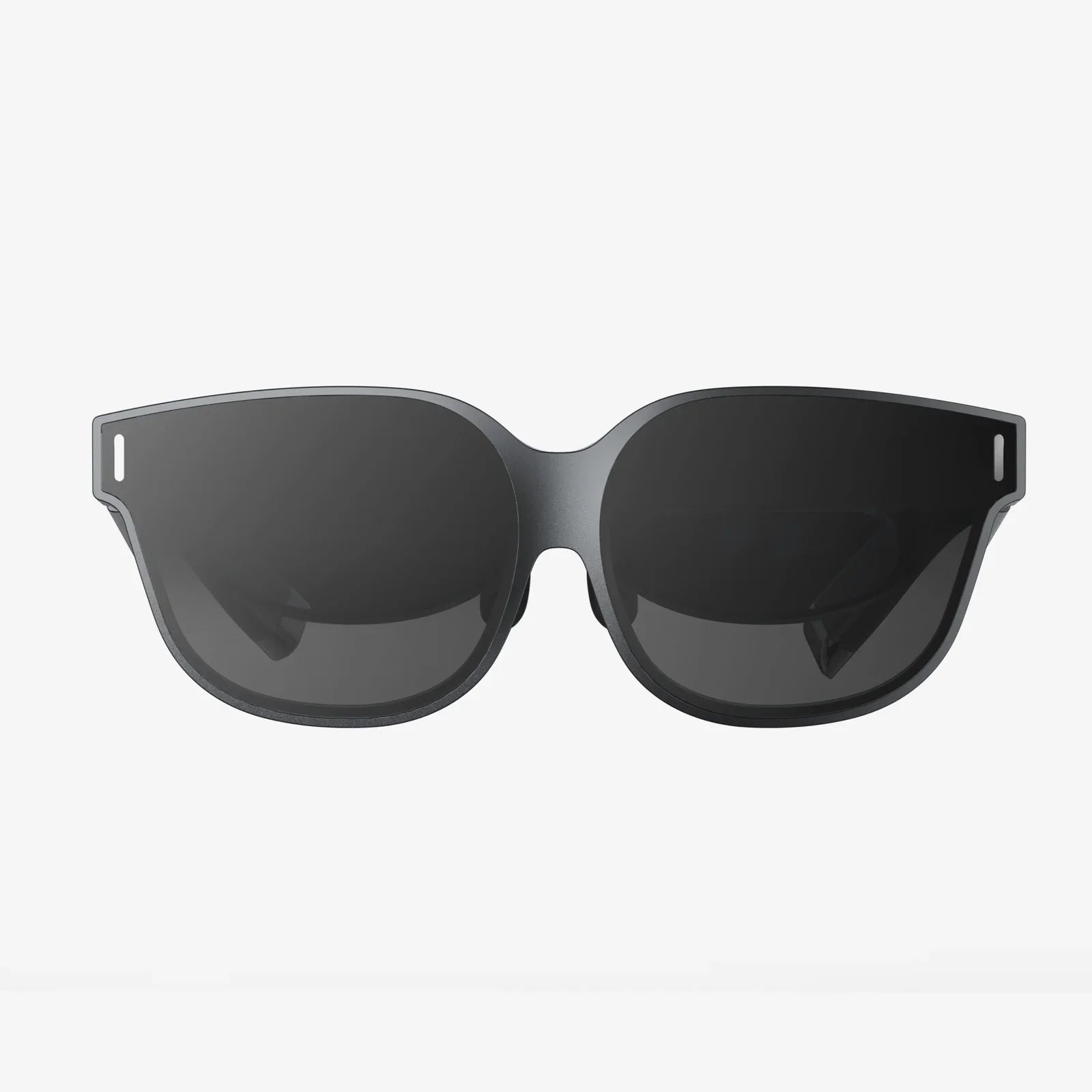
Imagine a world where digital information doesn't just live on a screen but is seamlessly woven into the fabric of your everyday life, where you can learn, work, and play in fully immersive environments limited only by imagination. This is the promise and the profound reality behind the terms Augmented Reality and Virtual Reality, a technological evolution that is far more than just a passing trend. To truly grasp the AR VR technology meaning is to understand a fundamental shift in how humans interact with data, with each other, and with the very concept of reality itself. It’s a journey from the flat, detached experience of a 2D display to a world where we are active participants inside the data itself.
Deconstructing the Acronyms: A Tale of Two Realities
While often mentioned together, AR and VR represent two distinct approaches to altering our perception. Their core difference lies in their relationship with the user's physical environment.
Virtual Reality (VR): The Total Escape
Virtual Reality technology meaning is centered on the concept of immersion and presence. VR aims to completely replace the user's real-world environment with a simulated, digital one. By wearing a head-mounted display that covers the entire field of vision and often incorporates headphones for spatial audio, the user is visually and audibly transported to a different place. This place can be a photorealistic recreation of a real location, a fantastical game world, a abstract data visualization space, or a virtual meeting room. The key is the sensation of "being there," a psychological state known as presence, which is achieved by tracking the user's head movements and updating the visual perspective in real-time to match. Advanced systems also track hand controllers or even full body movement, allowing users to interact with and manipulate the virtual world, further deepening the immersion. The ultimate goal of VR is to make the user forget the physical constraints of their room and accept the digital environment as their current reality.
Augmented Reality (AR): The Enhanced World
In contrast, the Augmented Reality technology meaning is about superimposition and contextual layering. Rather than replacing reality, AR enhances it by overlaying digital information—images, text, 3D models, animations—onto the user's view of the real world. This is most commonly experienced today through smartphone and tablet cameras, where apps can place virtual furniture in your living room or show animated characters dancing on your driveway. However, the most powerful expression of AR is through transparent glasses or lenses that allow you to see the real world naturally, with digital elements fixed within it. This technology understands the environment through cameras and sensors, allowing digital objects to interact with real-world surfaces—a virtual pet might hide under your real table, or navigation arrows can appear to be painted on the road ahead of you. The magic of AR is its ability to make the digital world contextually relevant to your immediate physical surroundings, turning the entire world into an interactive interface.
Mixed Reality (MR): The Blurred Line
As the technology evolves, the line between AR and VR has begun to blur, giving rise to the term Mixed Reality. MR sits on a spectrum between the purely real and the purely virtual. It describes environments where physical and digital objects not only co-exist but can interact with each other in real-time. Imagine an AR character that can convincingly jump onto your real couch, casting a digital shadow as it lands, or a virtual control panel that you can physically touch and manipulate. This requires advanced understanding of the geometry and lighting of the physical world, a step beyond simple overlay. While often used interchangeably with AR, true MR represents the next frontier where the boundaries between what is real and what is digital become almost indistinguishable.
The Technological Engine Room: How AR and VR Work
Creating these altered realities requires a sophisticated fusion of hardware and software, a symphony of components working in perfect harmony.
The Hardware of Illusion
The primary interface for both technologies is the headset, but their construction differs significantly. VR headsets are essentially high-resolution screens housed in a light-blocking enclosure, placed mere centimeters from the user's eyes. Lenses focus and reshape the image for each eye to create a stereoscopic 3D effect. Inside-out or outside-in tracking systems, using a combination of cameras, gyroscopes, accelerometers, and infrared LEDs, constantly monitor the position and orientation of the headset to update the view accordingly. This is critical to prevent latency, which can cause disorientation and motion sickness.
AR systems, particularly smart glasses, face a different challenge: they must be lightweight, socially acceptable, and allow the user to see the real world clearly. They often use waveguides or holographic optical elements to project a digital image onto transparent lenses, overlaying it onto the user's natural vision. They are packed with forward-facing cameras and depth sensors (like LiDAR) to continuously scan and map the environment, understanding surfaces, planes, and objects to anchor digital content securely in space.
The Software of Creation
On the software side, game engines have become the unexpected powerhouse behind VR and AR development. These powerful platforms provide the tools to create realistic 3D worlds, physics simulations, and complex interactions. They handle the heavy lifting of rendering two high-frame-rate perspectives simultaneously, a demanding task that requires significant graphical processing power. For AR, Simultaneous Localization and Mapping (SLAM) software is the unsung hero. SLAM algorithms process the data from the headset's sensors in real-time to simultaneously map the unknown environment (Mapping) and track the device's position within that map (Localization), all without any pre-existing data. This is what allows a digital dinosaur to stay pinned to your coffee table even as you walk around it.
Beyond Gaming: The Expansive Applications of AR and VR
While entertainment was the initial catalyst, the true AR VR technology meaning is revealed in their transformative potential across nearly every industry.
Revolutionizing Education and Training
VR creates unparalleled experiential learning. Medical students can perform virtual dissections and practice complex surgical procedures without risk. History students can walk through ancient Rome. Mechanics can train on the internal systems of a jet engine. This "learning by doing" in a safe, repeatable, and cost-effective environment dramatically improves knowledge retention and skill acquisition. AR, meanwhile, acts as a powerful performance support tool. A technician repairing a complex machine can see schematics and instructions overlaid directly on the equipment they are fixing, guiding them through each step.
Transforming Enterprise and Manufacturing
From design to maintenance, AR and VR are streamlining enterprise workflows. Designers and engineers use VR for virtual prototyping, allowing them to explore and interact with full-scale 3D models of cars or buildings long before physical prototypes are built, saving immense time and resources. On the factory floor, AR glasses can guide warehouse workers to items faster, show assembly line workers the correct installation sequence, and allow remote experts to see what a local technician sees and provide visual annotations directly into their field of view, effectively teleporting expertise anywhere in the world.
Redefining Healthcare and Therapy
The healthcare sector is embracing these technologies for both treatment and therapy. Surgeons use AR to visualize patient scan data, such as CT scans, superimposed onto the patient's body during operations, providing "x-ray vision" to improve accuracy. VR is proving highly effective in exposure therapy for treating phobias (like fear of heights or flying) and Post-Traumatic Stress Disorder (PTSD), allowing patients to confront and process triggers in a controlled, safe environment. It is also used for pain management, distracting burn victims during painful wound care procedures with immersive, calming experiences.
Enhancing Retail and Remote Collaboration
AR has become a powerful tool for commerce. The ability to "try before you buy" is now digital: shoppers can see how a sofa looks in their living room, how a pair of glasses fits their face, or how a new shade of paint appears on their walls. This reduces purchase uncertainty and returns. For collaboration, VR is creating the next best thing to being there. Teams distributed across the globe can meet in a virtual boardroom, interact with 3D models of their projects, and feel a sense of shared presence that video calls cannot replicate, fostering a new era of remote work.
The Road Ahead: Challenges and the Future of Spatial Computing
Despite rapid advancement, the journey towards perfect AR and VR is not without its hurdles. For VR, achieving true visual fidelity and solving the "vergence-accommodation conflict" (where your eyes focus on a screen fixed at one distance but must converge to perceive depth at another) remains a challenge to eliminate eye strain. For AR, creating stylish, all-day glasses with a wide field of view, all-day battery life, and powerful processing is the holy grail. Social acceptance and privacy concerns, particularly around always-on cameras and environmental scanning, are also significant societal questions that need to be addressed.
Yet, the trajectory is clear. The ultimate AR VR technology meaning points towards a future of ubiquitous spatial computing, where our digital lives are no longer confined to rectangles in our pockets or on our desks. Instead, information and experiences will be integrated into the world around us, accessible through a glance or a gesture. We are moving towards a world where the internet will not be something we look at, but something we live inside. This convergence of the physical and digital promises to augment human potential, break down geographical barriers, and unlock new forms of creativity and connection that we are only beginning to imagine.
The screen is dissolving. The boundaries are blurring. We stand at the precipice of a new layer of reality, one where the digital and physical coalesce into a seamless experience, forever changing how we perceive, interact with, and ultimately shape our world. This isn't just about new gadgets; it's about redefining the human experience itself, offering a glimpse into a future where our reality is only the starting point for infinite possibility.
Share:
Best Smartglasses 2024: The Ultimate Guide to the Future on Your Face
Smartglasses for Men: The Ultimate Fusion of Style, Technology, and Functionality