


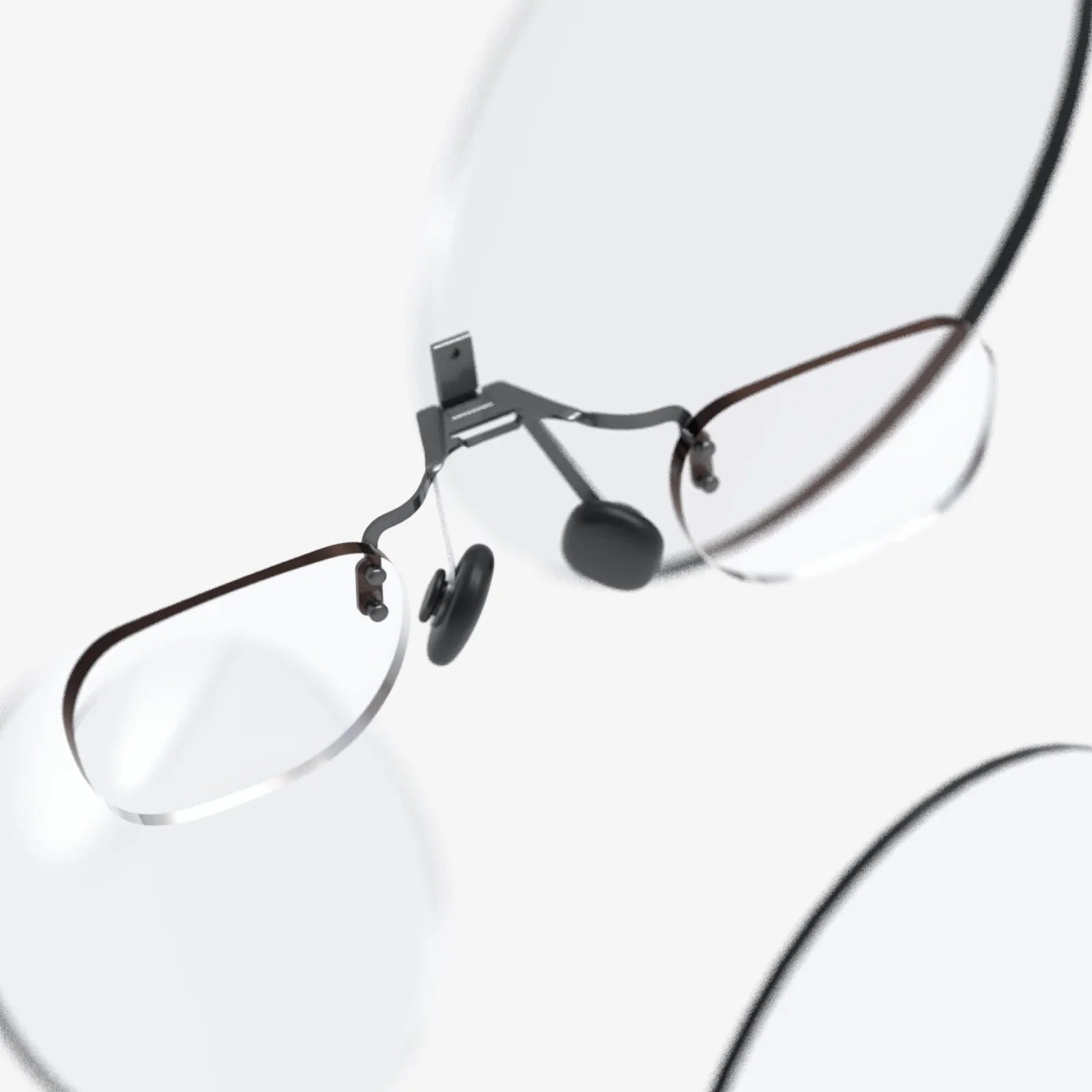
Imagine a world where a subtle blink, a whispered command, or a mere glance could bring the distant world into crystal-clear focus. The concept of smart zoom glasses—eyewear that grants its wearer superhuman visual acuity—feels ripped from the pages of a sci-fi novel or the latest superhero blockbuster. For decades, the idea has tantalized inventors and consumers alike, promising a seamless fusion of digital enhancement and human perception. But as you scroll through tech news and see headlines boasting such incredible devices, a pressing, pragmatic question emerges from the realm of fantasy: are smart zoom glasses real, or are they merely a futuristic pipedream cleverly marketed to the masses? The answer is far more complex and fascinating than a simple yes or no, weaving together cutting-edge optics, burgeoning artificial intelligence, and the relentless march of miniaturization. This isn't just about whether they exist; it's about understanding what "real" truly means in the rapidly evolving landscape of wearable technology.
Deconstructing the Dream: What Do We Mean by "Smart Zoom Glasses"?
Before we can assess their reality, we must first define what we're looking for. The term "smart zoom glasses" is not a single, monolithic product category but rather an umbrella concept that encompasses several interpretations of technology-augmented vision.
For many, the ideal is a pair of elegant, everyday spectacles that look no different from conventional designer frames. Within these seemingly normal lenses, a sophisticated system would allow the wearer to optically zoom in on anything in their field of view, perhaps by tapping a temple, using a voice command, or even through intuitive eye-tracking. This would be a true extension of human capability, offering, for example, a tourist the ability to read the intricate details on a distant cathedral's spire or a birdwatcher to identify a species perched far across a lake, all without carrying bulky equipment.
A second interpretation leans more heavily into the augmented reality (AR) domain. Here, the "zoom" function is not purely optical but digital. A camera captures the world, software processes the image, and a micro-display projects a magnified version onto the lenses or directly into the user's eye. This approach offers more flexibility—such as picture-in-picture zoom windows, on-screen annotations, or digital recording—but can introduce lag, reduce image quality, and feel less natural than true optical zoom.
The core technologies required to make either vision a reality are immense. They include advanced micro-optics and actuators for physical zoom mechanisms, powerful yet incredibly efficient processors, long-lasting miniature batteries, high-resolution micro-displays, and intuitive control systems. The challenge isn't just inventing these components but integrating them into a form factor that is socially acceptable, comfortable to wear for extended periods, and affordable.
The State of the Art: What Exists Today?
So, can you buy a pair of glasses that let you zoom in on the world like a telephoto lens? The landscape is a mix of impressive prototypes, niche commercial products, and ambitious concepts that have yet to materialize.
Several companies and research institutions have demonstrated functional prototypes. These devices often serve specific professional or assistive purposes rather than the consumer market. For instance, developers have created glasses that help individuals with low vision by magnifying text or faces in real-time. These are very much "real" in the sense that they exist and function, but they are specialized medical or assistive devices, often with a limited field of view and a noticeable form factor that wouldn't be mistaken for regular glasses.
In the realm of augmented reality, numerous tech giants and startups have released smart glasses. However, most current-generation AR glasses prioritize overlaying digital information (like maps, messages, or notifications) onto the real world. Their camera systems are typically used for contextual understanding and photography, not for real-time, high-quality optical zooming. The computational demand for stable, high-resolution digital zoom on a see-through display, with zero perceptible latency, remains a significant technical hurdle.
Furthermore, any device with a camera immediately bumps into the formidable wall of privacy and social acceptance. The idea of people wearing glasses that can secretly record or zoom in on others raises serious ethical and legal questions. This societal barrier is as crucial as any technical one in delaying the widespread adoption of such technology. Manufacturers must navigate these concerns with transparent design choices, like obvious recording lights and clear privacy policies, which can also impact the product's design and functionality.
The Optical Conundrum: The Biggest Hurdle to True Zoom
The most significant challenge in creating bona fide smart zoom glasses is physics itself. Traditional zoom mechanisms, like those in cameras, require a series of lenses that move relative to each other to change the focal length. This movement requires space and mechanical parts—two things that are diametrically opposed to the goal of creating a sleek, lightweight pair of glasses.
Engineers are exploring ingenious alternatives to overcome this. One promising field is liquid lens technology. Inspired by the human eye, these lenses use a tiny membrane filled with optical fluid. By applying an electrical current, the shape of the membrane can be altered, changing the lens's focal length almost instantly without any moving mechanical parts. This technology is revolutionary for miniaturization but is still maturing in terms of achieving the zoom range, clarity, and durability needed for consumer products.
Another approach is computational optics and multi-aperture systems. This involves using an array of tiny, fixed-focus cameras, each capturing the scene from a slightly different perspective. Sophisticated algorithms then combine these inputs to synthesize a zoomed-in image with enhanced detail. This is a form of digital zoom, but one that is far more advanced than simply cropping an image, potentially offering a software-based workaround to the physics of moving lenses. However, this method is computationally intensive and can struggle with dynamic, real-time processing without draining a small battery rapidly.
Beyond Zoom: The Integrated Ecosystem of Smart Vision
Focusing solely on the zoom function misses the broader point of what makes glasses "smart." The ultimate goal is not just magnification but contextual visual enhancement. The real magic happens when zoom capabilities are integrated with other sensors and artificial intelligence.
- Object Recognition and Translation: Imagine looking at a menu in a foreign language. Instead of just zooming in, the glasses could translate the text in real-time, overlaying the English translation directly onto your view of the menu.
- Augmented Information: A engineer looking at a complex machine could have specific parts highlighted and annotated with their names and functions. A student in a museum could zoom in on an artifact and see a video recreation of its use appear next to it.
- Accessibility Features: As mentioned, this is where some of the most impactful work is being done. Real-time captioning for the hearing impaired, scene description for the visually impaired, and enhanced contrast and edge detection are all within reach.
In this context, zoom becomes one feature in a suite of tools powered by the device's cameras and AI. This integrated approach is more likely to be the path forward than a single-function zoom device, as it provides a compelling and multifaceted reason for consumers to adopt the technology.
The Verdict: A Reality in Progress
So, are smart zoom glasses real? The most accurate answer is that they are in a state of becoming real.
Fully realized, consumer-ready, stylish smart glasses with seamless, powerful optical zoom that you can buy off the shelf at a local store do not exist today. The technology is not yet mature enough to be miniaturized into that ideal form factor at a reasonable cost.
However, the foundational technologies are very real and advancing at a breakneck pace. Functional prototypes exist. Niche products for specific professional and medical applications are available. The core components—liquid lenses, advanced AI processors, micro-displays—are all being actively developed and improved by researchers and corporations worldwide.
The journey from prototype to product is a marathon, not a sprint. It requires overcoming not only immense engineering challenges but also societal concerns about privacy and establishing a clear, valuable use-case for the average person. The first truly successful smart zoom glasses might not look like what we initially imagined; they may prioritize digital augmentation over pure optical zoom, or they may find their initial foothold in enterprise and specialized fields before trickling down to consumers.
The dream of effortless, enhanced vision is no longer pure fiction. It is a tangible goal on the horizon, being built piece by piece in labs and workshops around the globe. The question has shifted from "Is it possible?" to "When will it be seamless?" We are witnessing the awkward, fascinating adolescence of a technology that promises to fundamentally change how we see and interact with our world. The future is looking closer than ever, and soon, we might all have the power to see it in perfect detail with just a blink or a word.
You've now peered through the lens of current technology and seen the blurred line between science fiction and emerging reality. The race to perfect smart zoom glasses is more than a technical challenge; it's a reimagining of human potential, offering a glimpse into a future where our own eyes are just the beginning. While the perfect product may not be in your local store this year, the rapid pace of innovation suggests that the wait won't be long. The next time you squint at a distant sign or wish you could see a stage more clearly, remember that the solution is already taking shape, getting sharper and closer with every passing day. The era of augmented sight is dawning, and it promises to change everything we look at.
Share:
AR Glasses Green Text: The Digital Ghost in Our Machine and the Future of Reality
Portable Computer Screen: The Ultimate Guide to Expanding Your Workspace Anywhere