


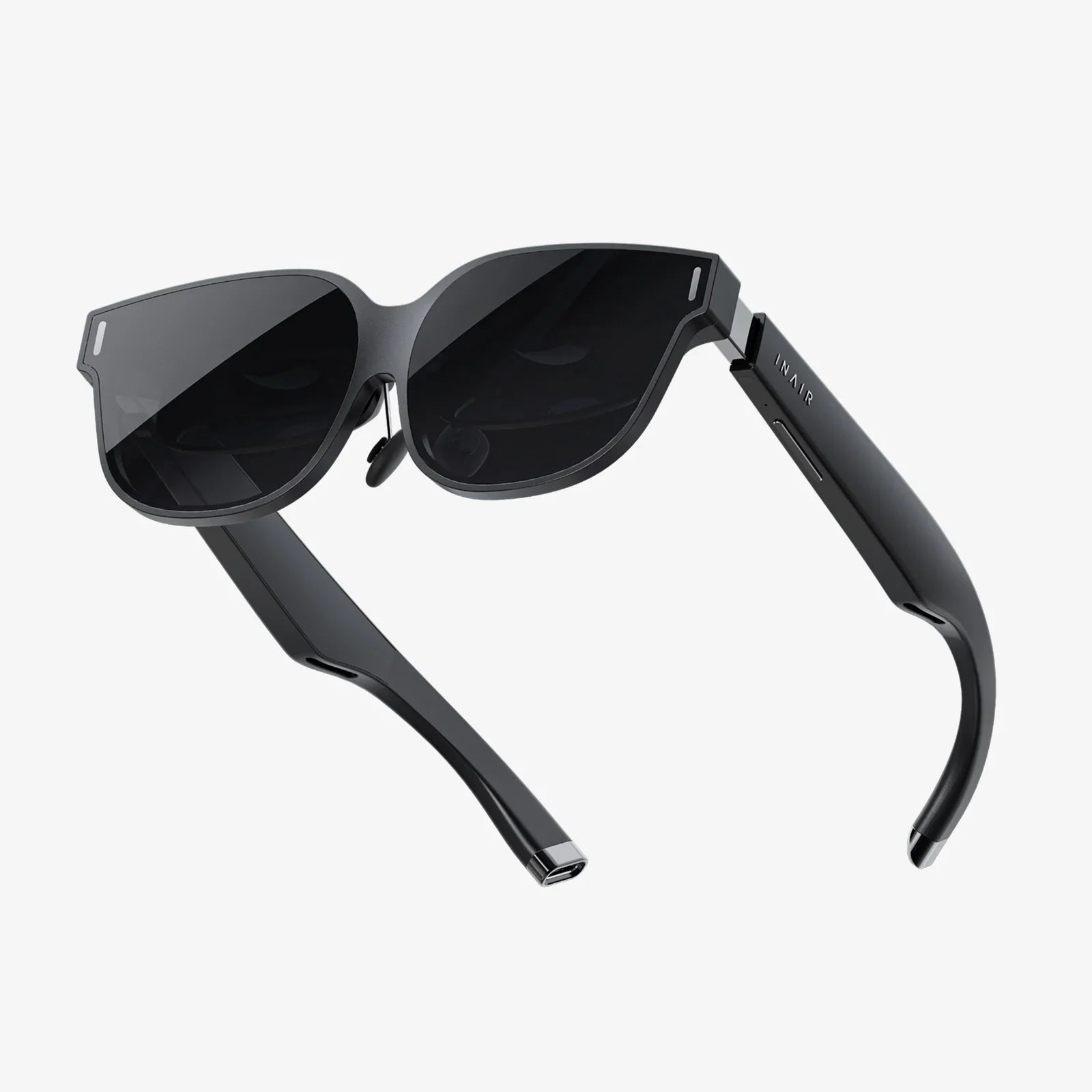
Imagine a world where digital information doesn’t live on a screen in your hand but is woven seamlessly into the fabric of your physical reality. Where instructions for repairing a complex engine appear superimposed on the machinery itself, where historical figures narrate their stories as you stand on the very ground they walked, and where a distant colleague can appear as a lifelike hologram in your living room to collaborate on a project. This is not a distant science fiction fantasy; it is the imminent future being built today at the powerful intersection of two transformative technologies: Augmented Reality and 5G. Together, they are forming a symbiotic partnership, each amplifying the other's potential to fundamentally reshape how we work, learn, connect, and perceive the world around us.
The Foundation: Understanding the Pillars
Before delving into their powerful synergy, it's crucial to understand these technologies individually, not as isolated gadgets but as foundational platforms for innovation.
Augmented Reality: More Than Just Filters
Augmented Reality (AR) is a technology that superimposes computer-generated perceptual information—be it visual, auditory, haptic, or somatosensory—onto the user’s view of the real world. Unlike Virtual Reality (VR), which creates a completely immersive digital environment, AR enhances the real world by adding a digital layer to it. The goal is to create a system where the digital and physical coexist and interact in real-time.
The applications of AR extend far beyond popular social media filters. In its most advanced form, it requires a complex stack of technologies:
- Advanced Sensors and Cameras: To scan and understand the environment, including depth, planes, and objects.
- Simultaneous Localization and Mapping (SLAM): The core algorithm that allows a device to understand its position in space while simultaneously mapping the environment around it.
- Powerful On-Device Processing: To handle the immense computational load of rendering high-fidelity 3D graphics and tracking the user's movements with precision.
- Precise Anchoring: To ensure digital objects remain locked in place in the real world, even as the user moves.
For years, AR has been constrained by the limitations of mobile processors, battery life, and thermal management, often resulting in clunky, low-fidelity experiences that failed to deliver on the promise of true immersion.
5G: The Nervous System of a New Reality
Fifth-generation wireless technology (5G) is often mistakenly simplified as merely "faster 4G." While increased speed is a key feature, the true revolution of 5G lies in three fundamental pillars that make it a perfect enabler for advanced technologies like AR:
- Enhanced Mobile Broadband (eMBB): This is the high-speed component, offering multi-gigabit per second peak data rates. This allows for the rapid downloading and streaming of massive, complex AR content and models.
- Ultra-Reliable Low Latency Communications (URLLC): Perhaps the most critical pillar for AR, URLLC drastically reduces latency—the delay between sending and receiving data—to mere milliseconds (1ms or less). This is essential for maintaining the illusion that digital objects are truly part of the real world. Any noticeable lag between a user's movement and the AR object's response breaks immersion and can cause user discomfort.
- Massive Machine-Type Communications (mMTC): This enables the connection of a vast number of Internet of Things (IoT) devices per square kilometer, creating a dense network of data points that can inform and enrich AR experiences with real-world data.
Together, these capabilities transform 5G from a simple data pipe into a high-performance, responsive, and ubiquitous nervous system capable of connecting distributed computing resources with end-user devices seamlessly.
The Symbiosis: Why 5G and AR Are Meant for Each Other
The relationship between AR and 5G is not merely complementary; it is symbiotic. 5G solves the most critical challenges that have held back high-fidelity, untethered AR, while AR provides a compelling, data-intensive use case that justifies the massive investment in 5G infrastructure.
Offloading the Computational Burden
The most immediate benefit 5G offers AR is through Mobile Edge Computing (MEC). High-end AR requires immense processing power for rendering photorealistic 3D graphics and running complex SLAM algorithms. Doing this entirely on a lightweight headset or smartphone quickly leads to overheating, short battery life, and a heavy, uncomfortable form factor.
5G’s high bandwidth and low latency enable a paradigm shift: cloud-rendered AR. With this model, the heavy computation is offloaded to powerful servers located at the edge of the 5G network, physically close to the user. The user's device acts primarily as a window, streaming the rendered AR environment back with imperceptible delay. This allows for sleek, lightweight AR glasses to deliver experiences that were previously only possible on high-end gaming PCs, all powered by the cloud.
Enabling Persistent and Shared Experiences
For AR to become a persistent layer on our world, digital content must be anchored to specific locations and persist over time, accessible to multiple users simultaneously. This requires a constant, reliable connection to a cloud-based "AR cloud" or digital twin of the world.
5G’s mMTC and URLLC capabilities make this possible. Imagine a world where an artist creates a digital sculpture in a public park. With 5G, the precise GPS and spatial data of that sculpture can be stored in the cloud. When another user arrives at that same spot hours later, their device, connected via 5G, instantly accesses that data and renders the sculpture exactly in place, allowing for a shared, persistent experience that exists beyond a single device or session. This creates a foundation for a new kind of shared reality and collaborative workspace.
Real-Time Data Integration for Contextual Awareness
The most powerful AR experiences will be those that are dynamic and context-aware, integrating real-time data into the overlay. This could include live transit data superimposed on a street view, the vital signs of a patient appearing above their hospital bed for a doctor making rounds, or the real-time performance metrics of a wind turbine for a field engineer.
5G’s ability to connect a massive number of IoT sensors and stream their data with low latency is the key to enabling this. The AR device becomes a visual browser for the vast, invisible world of data flowing around us, made accessible and understandable through intuitive visualizations placed directly in our field of view.
Transforming Industries: The Practical Revolution
The combination of AR and 5G is poised to revolutionize nearly every sector, moving beyond novelty to deliver tangible value, efficiency, and safety.
Revolutionizing Manufacturing and Field Services
In industrial settings, AR guided by 5G is a game-changer. A technician tasked with repairing a complex piece of equipment can wear AR glasses that overlay step-by-step digital instructions directly onto the machinery, highlight specific components with arrows, and display schematics. With 5G, a remote expert can see exactly what the technician sees through a live video feed and annotate the technician's real-world view in real-time, guiding them through the repair as if they were standing side-by-side. This reduces errors, cuts down on travel costs for specialists, and drastically shortens resolution times.
Redefining Healthcare and Telemedicine
The medical field stands to benefit enormously. Surgeons could use AR overlays during procedures to view critical patient data, such as MRI scans or heart rate, without looking away from the operating field. Medical students could learn anatomy by exploring detailed, interactive 3D holograms of the human body. Most profoundly, 5G-enabled AR can make telemedicine truly immersive. A doctor could conduct a remote examination, with patient vitals and notes displayed in their AR view, fostering a more personal and effective connection than a simple video call allows.
Creating Immersive Retail and Live Events
Retail is being transformed as customers can use their smartphones or future glasses to visualize how furniture would look in their home at true scale or "try on" clothes and accessories digitally. 5G ensures these high-resolution models load instantly and look realistic. At live events like concerts or sports games, AR can overlay statistics, player information, and even offer unique camera angles or replay holograms, all streamed seamlessly to thousands of devices simultaneously without network congestion.
Building the Cities and Workplaces of Tomorrow
Urban planners and architects can walk through a city and see proposed new buildings rendered at full scale in their actual location, assessing impact before a single brick is laid. In the workplace, the concept of the "virtual office" will evolve. Instead of a grid of faces on a screen, colleagues from around the world could join a meeting as photorealistic avatars or holograms, interacting with shared 3D models of products or data visualizations, making remote collaboration feel as natural as being in the same room.
Navigating the Road Ahead: Challenges and Considerations
Despite the immense potential, the path to a ubiquitous AR/5G future is not without its obstacles. Widespread deployment of the necessary 5G infrastructure, particularly the dense network of small cells required for URLLC, is a massive and ongoing undertaking. The development of compelling, lightweight, and affordable AR wearables that consumers and enterprises will adopt en masse is still in its relative infancy.
Furthermore, this new layer of reality raises critical questions about data privacy, security, and digital ethics. The constant streaming of video from a user's environment to the cloud necessitates robust security protocols to prevent unauthorized access. There is also the risk of visual pollution, spam, and even malicious attacks in the form of unwanted or dangerous AR content. Establishing norms, regulations, and a permissions-based framework for this new digital layer will be as important as developing the technology itself.
The journey towards a seamlessly augmented world is a marathon, not a sprint. It requires continued innovation in chip design, display technology, battery efficiency, and network architecture. Yet, the trajectory is clear. With each passing day, the underlying technologies grow more powerful, the networks more pervasive, and the developers more adept at crafting experiences that feel less like technology and more like magic. We are standing at the precipice of a fundamental shift in human-computer interaction, one that will blur the line between the digital and the physical until it disappears altogether. The devices on our faces and the networks that connect them are not just tools for consumption; they are the lenses through which we will build, learn, and connect in the next chapter of our digital evolution.
Share:
Glasses for Gaming: The Ultimate Guide to Enhancing Your Visual Performance
AR and VR Testing: The Ultimate Guide to Building Immersive Realities That Work