


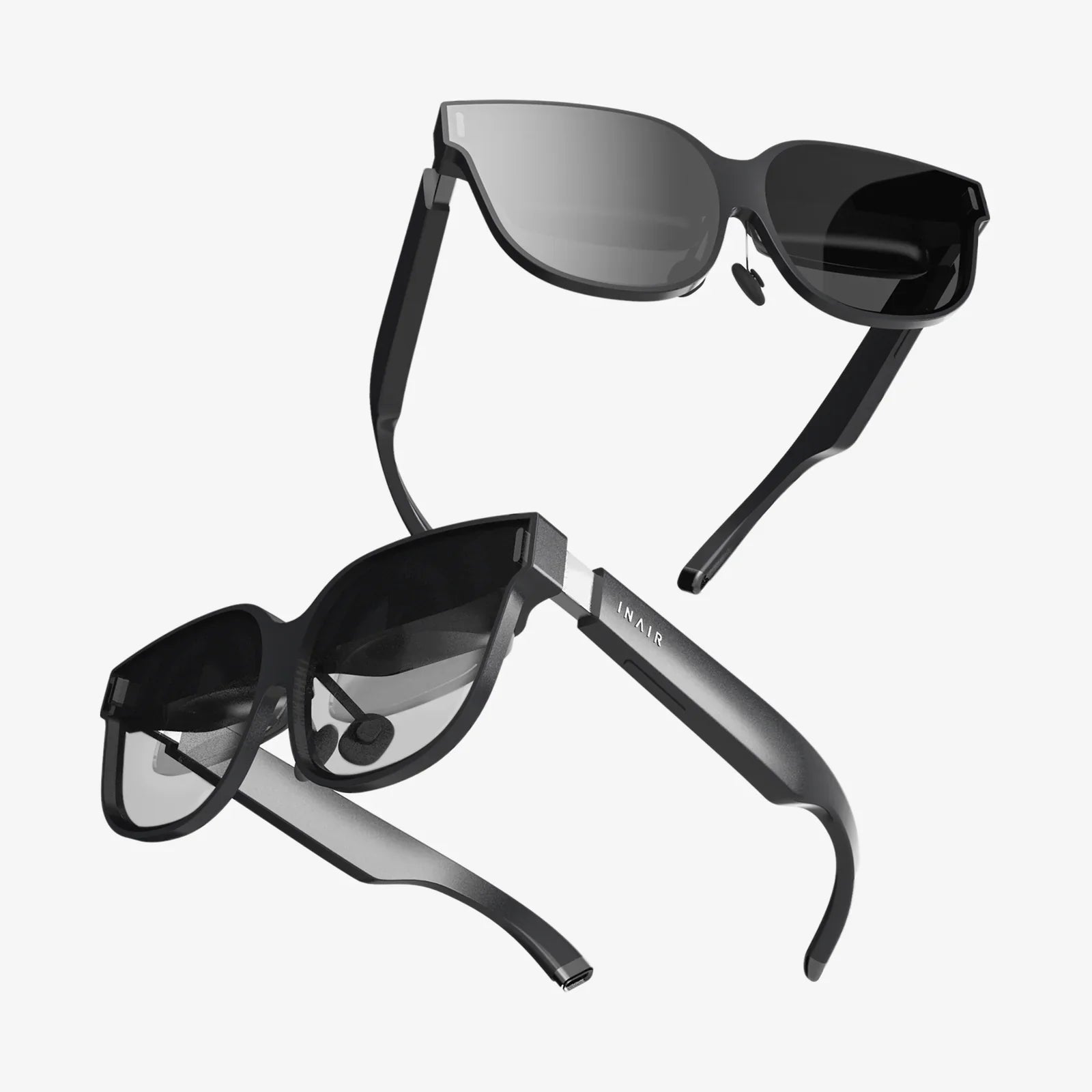
Imagine a world where the digital and the physical are no longer separate realms but a single, intertwined existence; where you can learn complex surgery by practicing on a holographic heart, or explore the ancient ruins of Rome from your living room. This is not a distant science fiction fantasy—it is the emerging reality being built today through the rapid evolution of Augmented Reality (AR) and Virtual Reality (VR). These two technologies, often mentioned in the same breath, are the twin engines powering the next great leap in human-computer interaction, promising to fundamentally alter how we work, play, connect, and perceive the world around us.
Demystifying the Digital Duo: Core Concepts Defined
While frequently grouped together, AR and VR offer distinctly different experiences. Understanding this distinction is the first step toward appreciating their potential.
Virtual Reality (VR) is the technology of complete immersion. It operates on a simple yet powerful premise: to transport the user to a completely computer-generated environment, effectively replacing their real-world surroundings. By wearing a head-mounted display that covers the entire field of vision and often incorporating motion-tracking sensors and handheld controllers, the user is visually and audibly isolated from the physical world. The goal of VR is to create a convincing sense of presence—the undeniable feeling of "being there," whether "there" is the surface of Mars, the cockpit of a fighter jet, or a meticulously crafted fantasy landscape. It is an exercise in world-building, constructing a digital reality for the user to inhabit and interact with.
Augmented Reality (AR), in contrast, does not seek to replace the real world but to augment it. It overlays digital information—images, text, data, 3D models—onto the user's view of their physical environment. This is typically achieved through cameras on smartphones, tablets, or transparent lenses in smart glasses, which scan the surroundings and anchor digital content to specific points in real space. Unlike VR's closed ecosystem, AR thrives on context. It uses the real world as a canvas, enhancing it with a layer of interactive, computer-generated perceptual information. The magic of AR lies in its ability to make the invisible visible, providing real-time data and digital objects that coexist with reality.
The Technological Engine Room: How They Work
The creation of these immersive experiences relies on a sophisticated fusion of hardware and software.
The VR Stack
A robust VR system is built on several key components. The Head-Mounted Display (HMD) is the centerpiece, featuring high-resolution screens for each eye to create a stereoscopic 3D effect. These are paired with precise tracking systems, which use a combination of internal sensors (like gyroscopes and accelerometers) and external cameras or lasers to monitor the position and orientation of the user's head and controllers in real-time. This tracking is crucial; any lag or inaccuracy can break immersion and cause discomfort. Audio is another critical element, often employing spatial or 3D audio technology to make sounds appear to originate from specific points in the virtual environment, further deepening the sense of presence. Finally, powerful computing hardware, either from a connected personal computer or a standalone device, renders the complex, high-fidelity graphics required to make the virtual world believable.
The AR Architecture
AR technology presents a different set of challenges, primarily centered on perception and integration. The core of any AR system is its ability to understand the environment. This is achieved through a process called simultaneous localization and mapping (SLAM). SLAM algorithms use data from cameras and other sensors like LiDAR to scan a room, identify features, and create a 3D map of the space in real-time. This map allows the system to precisely place and anchor digital objects so they appear stable and interact correctly with physical surfaces. Depth sensing is used to understand the distance to objects, enabling digital content to appear behind or in front of real-world obstacles. The processing can happen on a mobile device or, increasingly, on sleek wearable glasses, which project images directly onto the lenses for a hands-free experience.
A Tale of Two Realities: Key Differences and Overlap
The table below summarizes the fundamental distinctions between these two transformative technologies.
| Feature | Virtual Reality (VR) | Augmented Reality (AR) |
|---|---|---|
| Environment | Fully virtual, computer-generated | Real-world with digital overlays |
| Immersion Level | Full immersion, blocks out physical world | Partial immersion, enhances physical world |
| User Awareness | Isolated from real surroundings | Remains aware of and present in real surroundings |
| Primary Hardware | Head-mounted display (opaque), controllers | Smartphones, tablets, smart glasses (transparent) |
| Core Interaction | Navigation and manipulation within a virtual space | Interaction with digital content contextual to real-world objects |
It is also important to acknowledge the spectrum that exists between them. Technologies like Mixed Reality (MR) blend the real and virtual worlds to produce new environments and visualizations where physical and digital objects co-exist and interact in real-time. A user in an MR experience could see a virtual robot hide behind their real sofa, demonstrating an advanced level of environmental understanding that sits between pure AR and pure VR.
Transforming Industries: Practical Applications Today
The value of AR and VR is not theoretical; it is already delivering tangible benefits across a wide range of sectors.
Revolutionizing Healthcare and Medicine
In medicine, these technologies are saving lives and improving outcomes. Surgeons use AR to project critical information, such as CT scans or 3D models of a patient's anatomy, directly onto their field of view during procedures, effectively giving them X-ray vision. This allows for incredible precision and minimizes invasiveness. VR is a powerful tool for medical training, enabling students to perform virtual dissections and practice complex operations without risk. Furthermore, VR has proven highly effective in therapy, treating conditions like post-traumatic stress disorder (PTSD) through controlled exposure therapy, and managing severe pain by distracting patients with immersive experiences.
Reimagining Education and Training
AR and VR are turning abstract concepts into tangible experiences. Instead of reading about ancient Egypt, students can take a guided VR tour of the pyramids. Mechanics-in-training can use AR glasses to see step-by-step repair instructions overlaid on the actual engine they are working on. This "learn by doing" approach in a risk-free environment accelerates comprehension and skill acquisition. Corporations are adopting VR for soft skills training, placing employees in realistic simulations of difficult conversations or high-pressure scenarios to practice their responses.
Redefining Retail and E-Commerce
The retail sector is being transformed by the ability to "try before you buy" in a digital space. AR apps allow customers to see how a new sofa would look in their living room, how a pair of glasses fits their face, or what a new shade of paint would do for their walls. This reduces purchase uncertainty and minimizes returns. VR can create virtual showrooms, where customers from anywhere in the world can explore a car's interior or walk through a property listing as if they were physically there, breaking down geographical barriers to commerce.
Elevating Entertainment and Gaming
While gaming was the initial driver for consumer VR, creating deeply immersive worlds that players can step inside, the applications extend far beyond. VR concerts allow fans to enjoy front-row experiences from their homes. AR games turn city parks into digital playgrounds, encouraging physical activity and social interaction. Filmmakers are experimenting with immersive storytelling, placing the viewer inside the narrative rather than having them observe it from a distance.
Empowering Enterprise and Design
In architecture, engineering, and construction, professionals use VR to walk clients through unbuilt designs, identifying potential issues before ground is ever broken. AR is used on construction sites to visualize plumbing and electrical systems behind walls. Car designers can collaborate on full-scale 3D models of new vehicles in a virtual space, making changes in real-time and saving millions on physical prototypes.
Navigating the Challenges: The Road Ahead
Despite the immense promise, the path forward for AR and VR is not without significant hurdles that must be addressed for widespread adoption.
Technical Limitations: For VR, achieving perfect visual fidelity and eliminating the motion sickness sometimes induced by latency remains a goal. The hardware, while improving, can still be bulky and cumbersome. For AR, the holy grail is developing smart glasses that are socially acceptable, lightweight, have all-day battery life, and offer a wide field of view—a formidable technical challenge. For both, generating photorealistic graphics in real-time requires immense computing power.
Social and Ethical Considerations: As these technologies become more pervasive, they raise profound questions. How do we prevent the creation of "realities" that are used for misinformation or malicious manipulation? What are the privacy implications of AR devices that constantly scan and record our surroundings? Prolonged use of immersive technology could potentially impact social skills and our connection to the physical world. Establishing ethical guidelines and digital etiquette will be crucial.
Health and Safety: Beyond simulator sickness, there are concerns about the long-term effects of wearing headsets on eyesight and brain development, particularly in children. Furthermore, being immersed in a virtual world creates obvious physical safety risks in the user's immediate environment, necessitating robust safety systems and clear play areas.
Content and Accessibility: The ecosystem is still maturing. The "killer app" that drives mass adoption for AR glasses has yet to emerge. Creating high-quality, immersive content is expensive and complex, potentially limiting the diversity of experiences available. Finally, the cost of high-end equipment remains a barrier to entry for many consumers and businesses.
The Future is a Blend: The Convergence of AR and VR
The most exciting future does not lie in AR and VR as separate, competing paths, but in their inevitable convergence. We are moving towards a spectrum of experiences where the lines are blurred. Future headsets will likely be capable of switching seamlessly between a fully virtual experience and an augmented one, depending on the user's needs—a concept often referred to as XR (Extended Reality). The underlying technologies, particularly environmental understanding and spatial computing, are the same for both. This fusion will give rise to a persistent digital layer over our world, a kind of pervasive computing interface that we can summon and interact with naturally.
This future could see the internet evolve from something we look at on a screen to something we experience in the space around us. Information will be contextual and ambient. Collaboration will happen across continents as if colleagues were standing in the same room, manipulating 3D models together. Our digital and physical lives will become so intertwined that the distinction may eventually become meaningless.
The door is now open to a new dimension of human experience, limited only by our imagination and our willingness to shape these powerful tools responsibly. The next decade will not be about choosing between our reality and a digital one, but about weaving them together into a richer, more informed, and more astonishing human experience.
Share:
How Is Augmented Reality Made: The Complete Guide to AR Creation
AR VR Headset Market Size 2025: A Deep Dive into the Future of Immersive Technology