


Imagine holding your phone over a newspaper and watching the front-page image spring to life, a victim of a distant conflict recounting their story directly to you, their holographic form trembling with emotion. This is no longer the stuff of science fiction; it is the rapidly evolving present of augmented reality news articles, a technological leap that is fundamentally altering the nexus between information, experience, and understanding. The static, two-dimensional world of traditional journalism is being overlaid with a dynamic, interactive digital layer, promising to deepen empathy, clarify complexity, and redefine engagement in an era of information overload.
The Genesis of a New Media Language: From Text to Experience
The journey of news consumption has been a linear progression towards greater immersion. It began with the printed word, evolved to include still photography, leaped forward with broadcast radio and television, and was democratized by the digital internet. Each step offered a new dimension of understanding. Augmented reality represents the next, and perhaps most profound, evolutionary step: the fusion of the physical and digital worlds to create a new medium of storytelling.
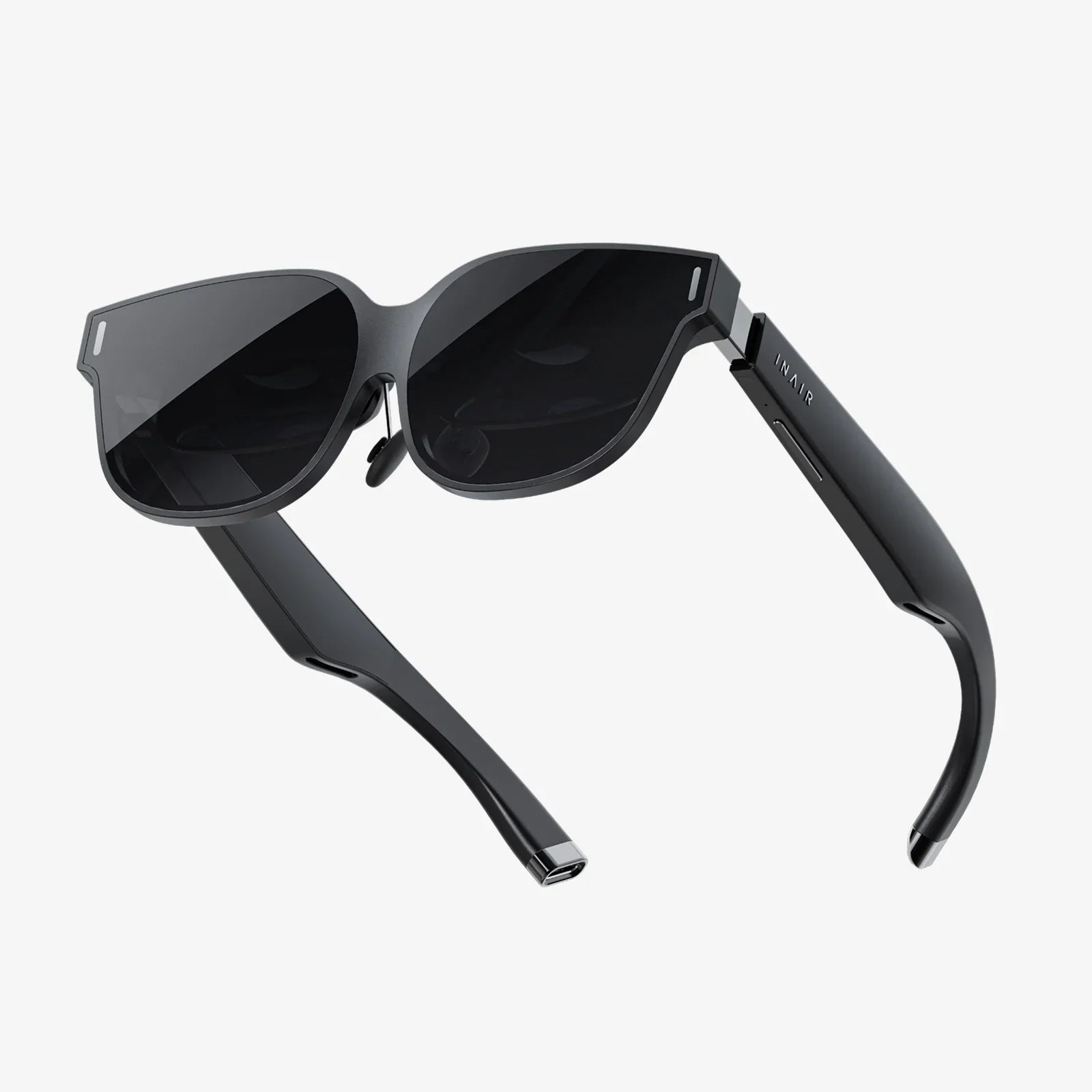
Unlike Virtual Reality (VR), which seeks to replace the user's environment with a simulated one, Augmented Reality (AR) enhances the real world by superimposing computer-generated perceptual information onto it. This key distinction makes AR uniquely suited for journalism. Instead of transporting a reader away from their context, it brings the story into their context. The news is no longer confined to a screen; it inhabits your living room, your kitchen table, the park bench where you sit. This technology leverages the familiar—a smartphone, a tablet, or increasingly, sleek AR glasses—to deliver the extraordinary.
The earliest forays into AR news were simple overlays: point your device at a specific image in a print magazine, and a related video would play. Today, the applications have grown exponentially more sophisticated. Major global news organizations now maintain dedicated AR news teams, creating standalone experiences that require no print trigger, just a curiosity and a download. This shift marks the move from a novelty to a new, serious pillar of journalistic practice.
Beyond the Page: Key Applications Reshaping News Narratives
The power of augmented reality news articles lies in their versatility. They are not a one-trick medium but a multifaceted toolset for journalists to convey stories that were previously difficult, if not impossible, to tell with full impact.
Visualizing Complex Data and Scale
How tall was the ancient pyramid? How does the scale of a new skyscraper compare to the Empire State Building? How fast is glacial ice really melting? Text descriptions and even standard infographics can struggle to convey true scale and quantitative change. AR solves this elegantly. Users can project a meticulously rendered 3D model of a melting glacier onto their desk, watching its volume shrink over decades in a matter of seconds. They can stand a virtual replica of a Mars rover next to their car, understanding its size and mechanics intimately. This transforms abstract data into tangible, visceral understanding, making complex scientific and architectural stories accessible and memorable.
Reconstructing Events and Places
History and current events are often about places—places that have been destroyed, altered, or are simply inaccessible. AR news articles can rebuild them. Imagine pointing your device at the empty space where a historic building once stood and seeing its façade perfectly restored through your screen. War correspondents can use AR to superimpose pre-conflict imagery of a vibrant city street over the rubble-strewn reality of today, creating a powerful, heartbreaking juxtaposition that speaks louder than any written account. This application provides profound context, allowing audiences to viscerally comprehend loss, change, and the passage of time.
Enhancing Empathy and Human Connection
Perhaps the most powerful application of AR in journalism is its ability to foster empathy. Feature stories about individuals can be elevated through volumetric video, a technology that captures people in 3D. Instead of watching a displaced family on a flat screen, an AR experience can project them into your space, life-sized. You can walk around a holographic mother as she describes fleeing her home, making eye contact, and sensing her presence. This breaks down the psychological barrier between "subject" and "viewer," creating a powerful, emotional connection that compels understanding and compassion in a way traditional media cannot.
Interactive Explanatory Journalism
How does a jet engine work? What is the mechanism behind a new medical procedure? Explanatory journalism finds a perfect partner in AR. Users can deploy a complex machine as a digital model and interact with it—spinning it around, tapping on parts to see cross-sections, and watching animated sequences that demonstrate functionality. This active learning process, where the user controls the exploration, leads to a much deeper and more durable comprehension of intricate topics.
The Inherent Challenges: Navigating the AR Newsroom
For all its promise, the integration of augmented reality into mainstream news is not without significant hurdles. These challenges span the technical, ethical, and practical realms.
The Production Conundrum: Cost and Expertise
Creating high-quality, journalistically sound AR experiences is currently resource-intensive. It requires a new skill set: 3D modelers, animators, Unity or Unreal Engine developers, and UX designers specialized in spatial computing. This represents a substantial investment for news organizations already operating on thin margins. The result is that complex AR projects are often reserved for major, feature-length stories, limiting their use for daily breaking news. The technology is rapidly becoming more accessible, but the expertise gap remains a barrier to ubiquitous adoption.
Accessibility and the Digital Divide
AR experiences typically require a relatively modern smartphone and a fast internet connection to download often large asset files. This immediately creates a barrier for audiences with older devices, limited data plans, or poor connectivity. If AR journalism becomes a significant source of deeper context and understanding, there is a risk of creating a two-tiered information society: those who can afford to experience the full, immersive story, and those who are left with the basic text version. News organizations must be vigilant to ensure their AR offerings are a complement to, not a replacement for, accessible reporting for all.
Ethical Pitfalls: Sensationalism and Trauma
The immersive power of AR is a double-edged sword. While it can build empathy, it can also veer into sensationalism or unintentionally re-traumatize audiences. Projecting a hyper-realistic recreation of a violent crime scene or a natural disaster into someone's personal space could be deeply disturbing. Journalistic ethics around graphic content, which are well-established for photography and video, must be renegotiated for immersive, spatial media. The line between powerful storytelling and gratuitous intrusion is thin and must be tread carefully, with clear guidelines and user warnings.
The Verification Question
Journalism's core tenet is truth. In a digital medium where anything can be modeled and animated, how does a user know what is a factual reconstruction based on evidence and what is artistic license or even malicious deception? Establishing provenance and trust in AR assets is a new frontier for newsrooms. Techniques like citing sources for 3D models, using photogrammetry from verified footage, and being transparent about what is known and what is inferred will be crucial to maintaining credibility in this new format.
The Future Lens: Where AR News is Headed Next
The current state of AR news, primarily experienced through handheld devices, is merely a stepping stone. The future points towards more seamless and integrated experiences.
The eventual widespread adoption of AR glasses will be the true catalyst for change. News will become ambient and contextual. Walking down a street, your glasses could highlight buildings that were recently in the news, overlaying headlines about a local election or a community event. Looking at a product on a store shelf might trigger a consumer watchdog report on its manufacturing practices. The news will find you, relevant to your location and your gaze, breaking free from the app-and-click model entirely.
Furthermore, the integration of Artificial Intelligence will enable personalized and real-time AR news feeds. AI could generate simplified 3D explanations of breaking news events on the fly, making them available minutes after a story breaks. It could also tailor the complexity of an explanation to the user's pre-existing knowledge level, creating a truly personalized learning journey for every story.
We are also moving towards more collaborative news experiences. Shared AR spaces could allow families scattered across the globe to experience and discuss a news event together, interacting with the same virtual models in their respective living rooms as if they were in the same place. This could transform news from a solitary consumption activity into a shared social experience, fostering discussion and collective understanding.
A New Reality for Truth
Augmented reality news articles represent more than a technological gimmick; they are a fundamental reimagining of journalism's mission. In a world drowning in misinformation and superficial headlines, AR offers a path back to depth, context, and genuine understanding. It empowers audiences to not just read about the world, but to see it, scale it, and in a profound sense, experience it for themselves. It challenges journalists to become not just writers and reporters, but architects of experience and guides to a new layer of reality. The potential to inform, educate, and connect is limitless. The next big story might not just be on your front page—it might be standing right in front of you.
Share:
Best Uses of Augmented Reality: Transforming Industries and Redefining Human Experience
AR VR News Today: Spatial Computing Redefines Our Digital and Physical Worlds