


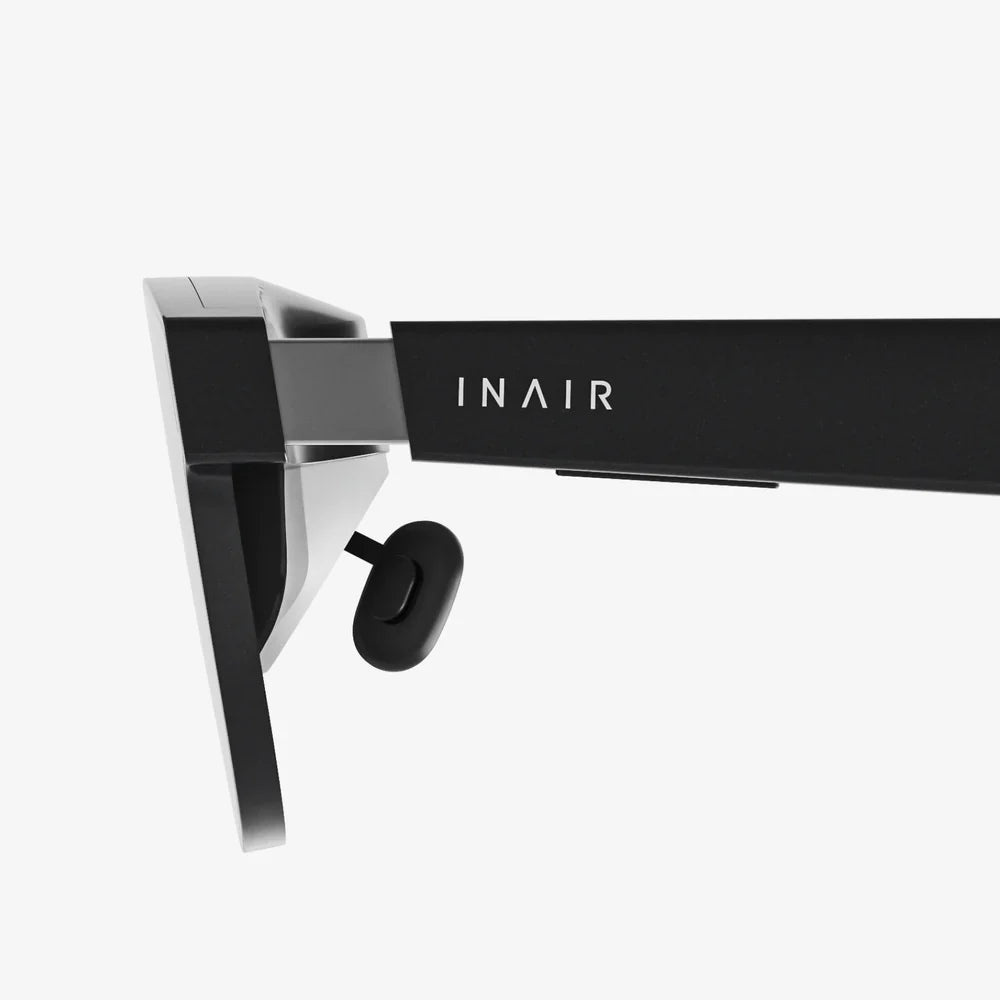
Imagine a world where digital information seamlessly overlays your physical reality, where complex instructions are visualized in mid-air, and where customers can try before they buy from the comfort of their own homes. This is no longer the stuff of science fiction; it's the tangible present, and it's being built by the visionary architects of the digital age: the augmented reality development company. Partnering with the right team isn't just about coding an app; it's about unlocking a new dimension of customer engagement, operational efficiency, and competitive advantage that will define the next decade of business.
The Core Services of a Specialized AR Partner
An experienced augmented reality development company offers a comprehensive suite of services designed to take a concept from a nascent idea to a fully functional, market-ready immersive experience. These services are the building blocks of any successful AR initiative.
Custom AR Application Development
This is the cornerstone service. It involves the end-to-end creation of bespoke applications for various platforms, primarily mobile devices like smartphones and tablets, but also extending to specialized AR glasses and headsets. This process encompasses everything from user experience (UX) and user interface (UI) design, which is crucial for intuitive interaction with digital layers, to complex backend integration and robust programming. The development can be for marker-based AR (triggered by specific images or objects), markerless AR (using GPS, accelerometers, and compass data for location-based experiences), or the more advanced projection-based and superimposition-based AR.
Strategic Consulting and Ideation
Before a single line of code is written, a top-tier AR firm acts as a strategic consultant. Many businesses recognize the potential of AR but are unsure how to apply it effectively to their specific industry challenges. A dedicated team will work closely with stakeholders to brainstorm, prototype, and validate concepts, ensuring that the proposed AR solution has a clear return on investment (ROI) and aligns perfectly with business objectives. This phase is about answering the "why" before the "how."
3D Modeling and Asset Creation
The digital world is built on assets. Augmented reality experiences are heavily reliant on high-quality, optimized 3D models, animations, and visual effects. An in-house team of 3D artists and modelers is essential for creating photorealistic or stylized assets that are both visually stunning and performance-efficient, ensuring they render smoothly on consumer-grade devices without causing lag or draining battery life excessively.
Enterprise AR Solutions
Beyond consumer-facing apps, there is a massive opportunity in the enterprise sector. Specialized development companies create solutions for remote expert assistance (where a specialist can guide a field technician through complex repairs via AR annotations), sophisticated training simulations for dangerous or expensive equipment, and complex data visualization for architects and engineers, allowing them to see building systems overlaid onto physical structures.
Maintenance, Support, and Evolution
The launch of an AR application is just the beginning. A reputable company provides ongoing maintenance, updates for new operating system versions, cloud service management, and analytics to track user engagement and performance. They become a long-term partner in evolving the experience based on real-world data and user feedback.
The Tangible Business Benefits of Investing in AR
Moving beyond the "wow" factor, the decision to work with an augmented reality development company must be justified by concrete business outcomes. The benefits are profound and span across multiple departments.
Revolutionizing Customer Engagement and Sales
AR provides an unprecedented level of interactivity. In retail, it allows customers to visualize furniture in their space, try on watches or makeup virtually, or see how a new car's features work. This immersive interaction significantly reduces purchase hesitation, decreases return rates, and creates memorable brand experiences that foster loyalty and drive sales conversions.
Supercharging Training and Education
Traditional training methods can be expensive, risky, and inefficient. AR creates safe, repeatable, and scalable training environments. Medical students can practice procedures on virtual patients, factory workers can learn to operate machinery with digital instructions overlaid on the actual equipment, and logistics personnel can be trained on warehouse layouts and picking processes without disrupting live operations. This leads to faster onboarding, improved knowledge retention, and a significant reduction in training costs.
Driving Operational Efficiency and Productivity
On factory floors, in warehouses, and at remote job sites, AR is a powerful tool for enhancing productivity. Technicians equipped with AR glasses can have schematics, instruction manuals, and live data feeds hands-free in their field of view. This eliminates constant trips to a computer or paper manual, reduces errors, and speeds up complex assembly, maintenance, and inspection tasks. The result is less downtime, higher quality output, and optimized workflows.
Creating Powerful Marketing and Advertising Campaigns
AR campaigns are inherently shareable and novel, generating organic buzz and virality. By creating interactive print ads, immersive billboards, or engaging in-store experiences, brands can cut through the noise of traditional advertising. An AR experience allows a consumer to not just see an ad, but to interact with the product, creating a deeper emotional connection and a far more impactful brand impression than a static image or video could ever achieve.
Navigating the AR Development Lifecycle
Understanding the process an augmented reality development company follows demystifies the journey and sets clear expectations for collaboration. It is a structured yet iterative process.
Phase 1: Discovery and Strategy
This initial phase is dedicated to deep diving into the business problem. Through workshops and meetings, the development team seeks to understand the target audience, the core objectives, and the technical constraints. The output is typically a detailed project roadmap, feature list, and a high-level strategy document that serves as the project's north star.
Phase 2: UX/UI and Prototyping
Designing for AR is uniquely challenging. It's not about a flat screen but about a user's interaction with the physical world. UX designers map out user flows for spatial interactions, while UI designers create the visual language of the digital overlays. Crucially, simple prototypes are built early to test core functionality and user comprehension, validating ideas before major development resources are committed.
Phase 3: Development and Integration
This is the core execution phase. Developers build the application using chosen game engines and AR software development kits. Simultaneously, 3D artists are creating and optimizing assets. This phase also involves integrating with existing enterprise systems like Customer Relationship Management (CRM), Product Lifecycle Management (PLM), or Enterprise Resource Planning (ERP) software, and setting up any necessary cloud infrastructure for data storage and processing.
Phase 4: Rigorous Testing and Quality Assurance (QA)
AR apps must be tested across a myriad of real-world conditions and on a wide array of devices. QA testers check for environmental tracking stability, asset rendering quality, user interaction logic, performance under different lighting conditions, and overall application stability. This phase is critical to ensuring a smooth and frustration-free user experience upon launch.
Phase 5: Deployment and Launch
The application is published to the appropriate app stores (e.g., Apple App Store, Google Play Store) or distributed through enterprise channels. The development company manages the submission process, ensuring it meets all platform-specific guidelines and requirements.
Phase 6: Ongoing Optimization and Support
Post-launch, the work continues. The team monitors performance, fixes any unforeseen bugs, and gathers user analytics. This data informs future iterations and updates, adding new features and refining the experience to ensure it continues to deliver value and remain relevant.
Selecting the Right Augmented Reality Development Partner
With the market growing, choosing the right company is the most critical decision. Here are the key criteria to evaluate.
Proven Expertise and a Robust Portfolio
Look beyond marketing claims. Examine their portfolio in detail. Do they have experience in your industry? Have they built applications with similar complexity? Ask for case studies that demonstrate measurable results, not just cool demos. A strong portfolio shows a history of solving real problems.
Technical Proficiency and Tool Mastery
The AR landscape is built on specific technologies. Ensure the team has deep expertise in the primary game engines that power most high-end AR experiences. They should also be proficient with AR platforms and their associated software development kits. This technical foundation is non-negotiable for building a stable, high-performance application.
A User-Centric Design Philosophy
The best technology is useless if it's confusing. The partner must have a strong, dedicated design team that understands the principles of spatial computing and human-computer interaction. They should be able to articulate their design process and show how they prioritize user intuition and comfort.
Clear Communication and Transparent Processes
Development is a collaborative effort. You need a partner that communicates clearly, provides regular updates, and is transparent about challenges and progress. Assess their project management methodology to ensure it aligns with your company's workflow and offers the visibility you need.
Cultural Fit and Strategic Alignment
This is a partnership. You will be working closely with this team for months. It's essential that there is a good cultural fit, shared enthusiasm for the project, and a sense that they are a true extension of your team, invested in your success as much as their own.
The future is not something we enter; it's something we build. And right now, the most compelling blueprints for that future are being drafted on the servers and workstations of dedicated augmented reality development companies. This isn't a fleeting trend but a fundamental shift in how we compute, communicate, and connect with the world around us. The businesses that will lead tomorrow are those that make the strategic decision today to embrace this immersive revolution, finding a partner who can translate their vision into an experience that blurs the line between imagination and reality. Your customers, your employees, and your bottom line are waiting on the other side of that decision.
Share:
What Is Smart Sun Glass - The Ultimate Guide to High-Tech Eyewear
Interactive Augmented Reality Experience: Bridging the Digital and Physical Worlds