


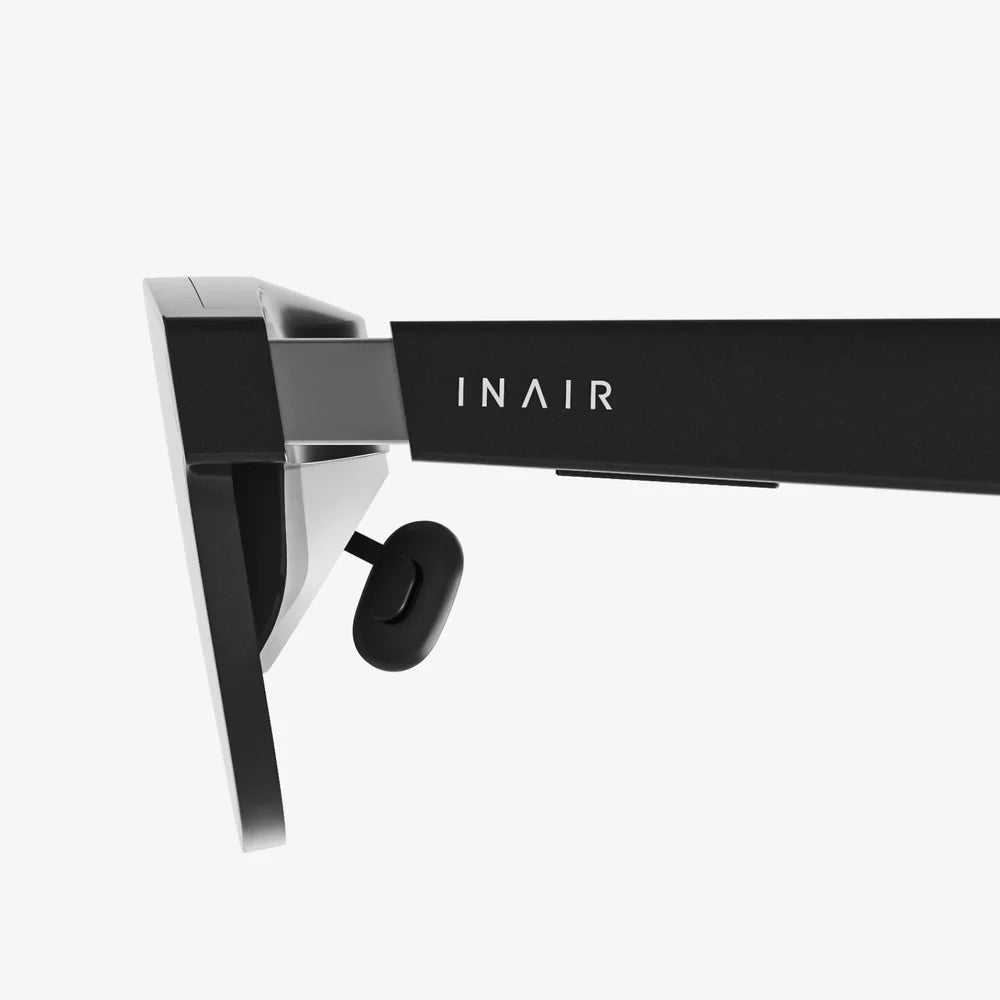
Imagine a world where information doesn’t live on a screen in your hand, but is painted onto the world itself. Where directions appear as a glowing path on the sidewalk, the history of a building unfolds before your eyes as you walk past, and a colleague from another continent stands in your living room, pointing to a holographic model only the two of you can see. This is the promise of augmented reality eyepieces, a technology not of distant science fiction, but of an imminent future that is already beginning to take shape. We stand on the precipice of a fundamental shift in human-computer interaction, one that will dissolve the barrier between the digital and the physical, and it will all happen through a pair of unassuming lenses.
From Concept to Reality: The Long Road to Viable AR
The dream of augmenting our vision is not new. The conceptual foundations were laid in the 1960s with the first head-mounted displays, clunky and primitive systems that were the domain of government and military research. For decades, the technology remained trapped in labs, held back by the immense technical challenges of creating a device that was powerful enough to be useful, yet small and comfortable enough to be worn on the face. The core hurdles were, and to some extent still are, the holy trinity of wearable tech: processing power, battery life, and display technology.
Early attempts were often bulky, tethered to a powerful computer, and offered a limited field of view that felt more like peering through a tiny window into a digital world rather than having that world integrated with our own. The turning point came with the miniaturization revolution driven by smartphones. Components like microprocessors, motion sensors, high-resolution micro-displays, and cameras became exponentially smaller, more powerful, and more energy-efficient. This allowed engineers to finally begin packaging the necessary technology into a form factor approaching that of conventional eyeglasses. The journey from room-sized systems to pocket-sized smartphones was the necessary precursor to the final leap to face-worn eyepieces.
Deconstructing the Magic: The Core Technologies Inside
To understand the potential of AR eyepieces, one must first understand the sophisticated technology packed into their frames. This is a symphony of hardware and software working in perfect harmony.
The Display and Waveguides
At the heart of the experience is the optical system—how digital images are projected into the user’s eye. Unlike virtual reality, which blocks out the world, AR must seamlessly blend light from the real environment with generated light from a projector. The most advanced method for this uses waveguide technology. Imagine a clear, flat piece of glass or plastic embedded within the lens. A micro-projector, often using lasers or LEDs, shoots images into the edge of this waveguide. Through a complex process of reflection and diffraction within the material, this light is "piped" through the lens and then directed precisely into the pupil of the eye. The result is a bright, sharp image that appears to be floating in space several feet away, all while allowing the user to see the real world clearly through the transparent lens.
Spatial Mapping and Understanding
For digital content to interact convincingly with the physical world, the device must understand that world in real-time. This is achieved through a suite of sensors typically including:
- Cameras: Used for computer vision, tracking surfaces, and object recognition.
- Depth Sensors: Often LiDAR or time-of-flight sensors, which fire out invisible dots of light to measure the precise distance to every surface in the environment, creating a detailed 3D map.
- Inertial Measurement Units (IMUs): Accelerometers and gyroscopes that track the precise movement and orientation of the user’s head.
This sensor fusion creates a live digital twin of the user’s surroundings. The device knows where the walls, floor, tables, and chairs are. This allows a virtual character to convincingly walk behind a real sofa, or for a digital weather widget to stay pinned to your wall as you move around the room.
Processing and Connectivity
Interpreting all this sensor data and rendering complex graphics requires serious computing power. Some early systems offload this processing to a companion device, like a smartphone or a small wearable computer. However, the industry’s ultimate goal is standalone functionality, with a systems-on-a-chip (SoC) designed specifically for the intense demands of AR. These processors handle simultaneous localization and mapping (SLAM), AI-driven object recognition, and graphics rendering, all while sipping power to preserve battery life. Constant, high-bandwidth connectivity, via Wi-Fi and eventually 5G/6G, is also crucial for accessing cloud-based data and processing, enabling shared experiences across distances.
Beyond Novelty: The Transformative Applications
The true power of AR eyepieces lies not in the technology itself, but in the profound ways it will change entire industries and facets of daily life.
Revolutionizing the Workspace
The professional world will be one of the earliest and most dramatically impacted domains. Imagine a field technician repairing a complex piece of machinery. Instead of fumbling with a physical manual or a tablet, their eyepieces overlay animated, step-by-step instructions directly onto the equipment, highlighting exactly which bolt to turn and with what tool. A surgeon could have a patient’s vital statistics and 3D scans visible during an operation, without ever looking away from the operating field. Architects and engineers could walk through full-scale, holographic models of their designs, making changes in real-time with a gesture. Remote collaboration will be transformed, as teams can interact with the same 3D models and data visualizations as if they were in the same physical room, regardless of their actual locations.
Redefining Education and Training
Learning will become immersive, interactive, and profoundly more effective. A medical student could practice procedures on a hyper-realistic holographic patient. A history class could don their eyepieces and witness a reenactment of ancient Rome unfolding around them in the schoolyard. Mechanics-in-training could see the inner workings of an engine superimposed over the physical block, watching the flow of fluids and the movement of pistons. This learning-by-doing in a simulated, yet realistic, environment accelerates comprehension and retention in a way textbooks never could.
The New Social and Entertainment Layer
Social interaction will acquire a new digital layer. Friends meeting for coffee could share and view photos and videos that appear to float above the table, visible only to their group. Navigating a new city will become intuitive, with directional arrows and points of interest layered onto streets. At a concert, you might see spectacular holographic effects complementing the live performance. Gaming will explode out of the TV and into our homes and parks, turning our entire environment into a playground for digital characters and adventures.
The Invisible Barrier: Challenges on the Path to Adoption
Despite the exciting potential, the path to ubiquitous AR eyepieces is fraught with significant challenges that must be overcome.
The Social Hurdle: The "Glasshole" Problem
Early wearable cameras created a massive social stigma, making others feel uncomfortable and recorded without consent. AR eyepieces, with their always-on cameras and sensors, face an even greater social acceptance challenge. They risk making the wearer seem disconnected, distracted, or even creepy. Solving this requires not just sleek, fashionable design that looks like ordinary glasses, but also clear social cues and technological solutions—like a prominent "recording" light—that communicate to others when the device is active and what it is doing. Building trust is paramount.
The Privacy Paradox
This is perhaps the most significant hurdle. A device that maps your home, records your daily interactions, and sees everything you see is a privacy advocate’s nightmare. The amount of personal and environmental data these devices will collect is staggering. Who owns this data? How is it stored and used? Could it be used for hyper-targeted advertising or, more nefariously, surveillance? Robust, transparent, and user-centric data policies must be developed and enforced. Features like on-device processing (where data never leaves the glasses) and easy physical lens covers for cameras will be essential for earning public trust.
The Quest for the Perfect Form Factor
While progress has been rapid, the ideal AR eyepiece—one that is as light, comfortable, and visually indistinguishable from regular glasses, with all-day battery life—remains a future goal. Current prototypes often have trade-offs in field of view, brightness, or battery size. Achieving this ultimate form factor will require continued breakthroughs in materials science, battery technology, and optical engineering.
A Glimpse into the Next Decade: The Always-On Future
Looking ahead, the evolution of AR eyepieces points toward a future where they become as ubiquitous and essential as smartphones are today. We are moving toward a contextually aware, always-available digital layer that enhances our perception and cognition. They will evolve from being a device we "use" to a permanent fixture we "wear," seamlessly providing information exactly when and where we need it. The line between accessing the internet and simply perceiving the world will blur until it disappears entirely. This will require advancements in AI to become a true contextual partner, anticipating our needs without being asked. The development of a robust spatial web—an internet of places and things, not just pages—will provide the content and framework for this new reality. The eventual convergence with other technologies, like brain-computer interfaces, could lead to a future where we can control and query this digital layer with a mere thought.
The age of staring down at a handheld rectangle is drawing to a close. Augmented reality eyepieces represent the next great paradigm in computing, one that promises to weave the digital tapestry of information, communication, and entertainment directly into the fabric of our physical reality. The challenges are real and substantial, but the potential to enhance human capability, connection, and understanding is too profound to ignore. The world is about to get a major upgrade, and it will all happen right before our eyes.
Share:
Web Based Augmented Reality: The Future of Accessible Digital Interaction
Augmented Reality Market Price: A Deep Dive into Cost Drivers and Future Trends