


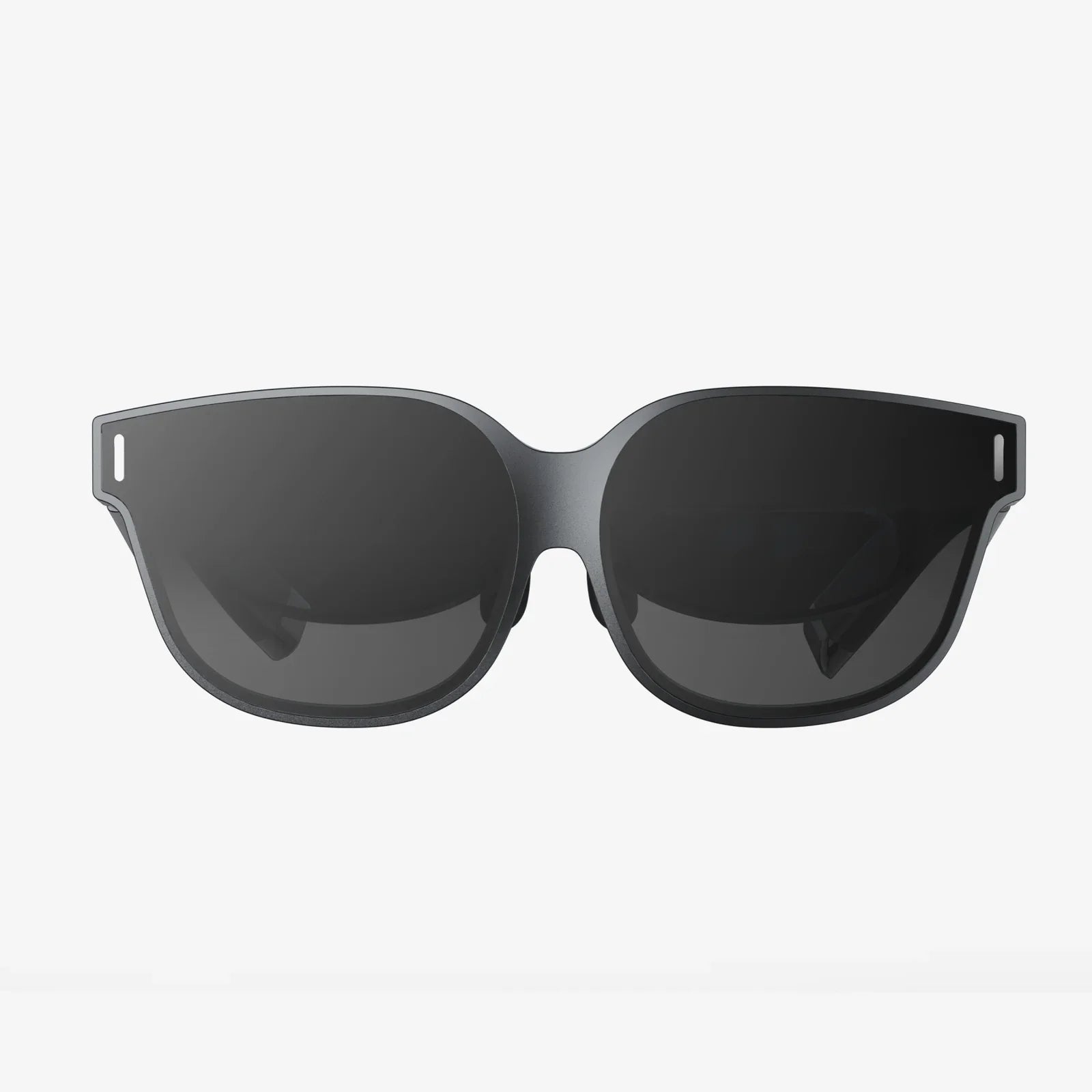
- by wangfred
Augmented Reality Glasses Consumer Revolution: A New Reality Dawns
- by wangfred
Imagine a world where the line between the digital and the physical isn't just blurred—it's elegantly erased. Where information doesn't live on a screen in your hand but is painted onto the very fabric of your reality, accessible with a glance and interactable with a gesture. This is the promise held in the frames of augmented reality glasses, a technology once confined to science fiction and industrial applications that is now steadily marching toward the consumer's face. We are standing on the precipice of a revolution, not in how we compute, but in how we perceive. The journey of the augmented reality glasses consumer is just beginning, and it is a path that will redefine human experience itself.
The concept of augmenting our reality is not new. For decades, research labs and military projects have explored the potential of overlaying data onto a user's field of view. However, these early systems were monumental in size, prohibitively expensive, and offered rudimentary functionality. They were tools for specialists, not accessories for the masses. The turning point came with the miniaturization of core technologies. The development of micro-displays, incredibly small but bright projectors, advanced inertial measurement units (IMUs), and spatial sensors allowed engineers to pack supercomputing power into a form factor that vaguely resembled traditional eyewear.
This technological convergence was the key that unlocked the door to consumer markets. Early consumer attempts were often clumsy, suffering from limited field of view, short battery life, and social awkwardness. But they proved a vital concept: there was a public appetite for this new medium. Each successive generation has brought significant refinements. Processing moved to companion devices and then onto the glasses themselves, untethering the user. Waveguide optics replaced bulky prisms, creating sleeker designs. Cameras and LiDAR scanners were integrated, enabling the device to understand and map the environment in real-time, a critical step for placing digital objects convincingly in physical space.
For any technology to achieve mass adoption, it must solve real problems or provide unique value. For the augmented reality glasses consumer, this value manifests in several transformative use cases that extend far beyond flashy filters and games.
The most immediate application is the liberation of information from the smartphone screen. Instead of looking down at a map, directions can be superimposed onto the street in front of you, with floating arrows guiding your path. Imagine looking at a complex piece of machinery and seeing animated repair instructions overlaid on the specific components. Or visiting a foreign city and having historical facts and translations appear next to the monuments and menus you look at. This ambient, context-aware information layer turns the entire world into an interactive interface.
Augmented reality glasses have the potential to revolutionize communication. Video calls could evolve into shared spatial experiences where a remote participant appears as a photorealistic hologram in your living room, able to gesture and interact with your environment. This isn't just about seeing a face on a screen; it's about feeling a presence. For families separated by distance or for global work teams, this creates a sense of shared space and co-presence that is impossible to achieve with current technology.
The entertainment industry is poised for a paradigm shift. Gaming will move beyond the television and into the home, with characters and gameplay elements occupying your physical space. But the potential extends beyond games. Imagine watching a historical drama and having the battle you're viewing unfold on your own coffee table, or learning about astronomy by having a scale model of the solar system orbit around you in your garden. AR glasses become a portal to experiences that are both personally immersive and socially shareable.
For the modern professional, AR glasses promise a multi-monitor workstation that is available anywhere. Instead of being chained to a desk, a developer could code while looking at virtual screens floating in their backyard. A designer could sculpt 3D models with their hands, manipulating virtual clay. A chef could see a recipe without touching a tablet with flour-covered hands. This always-available, hands-free digital layer removes friction from countless tasks, creating a seamless flow between intention and action.
Despite the exciting potential, significant challenges remain before AR glasses become as commonplace as smartphones. The augmented reality glasses consumer of tomorrow will only emerge if the industry successfully tackles these critical issues today.
Ultimately, technology worn on the face is as much a fashion statement as it is a gadget. Early devices have struggled with a "cyborg" aesthetic—too bulky, too obvious, too strange. For true mass adoption, AR glasses must become something people want to wear. This means achieving a design that is indistinguishable from high-end fashion eyewear: lightweight, comfortable, and available in a variety of styles to suit personal taste. Social acceptance is the other side of this coin. The act of wearing cameras on your face and interacting with an invisible interface in public raises questions of etiquette and normalcy. This cultural shift will take time.
Powering high-resolution displays, multiple cameras, spatial audio, and powerful processors is an immense drain on batteries. Consumers will not accept a device that needs recharging every two hours. Innovations in battery technology, from solid-state batteries to more efficient processing architectures and low-power modes, are essential to enable all-day use.
A device is nothing without its software. The smartphone succeeded because of the app store model, which empowered millions of developers to create useful and engaging applications. AR glasses need a similar ecosystem. Developers must be given powerful and intuitive tools to create spatial experiences that feel native to the medium, not just ported from 2D screens. Furthermore, these experiences need to work across different hardware platforms to avoid fragmentation, a challenge the industry has yet to solve.
This is perhaps the most significant hurdle. Glasses with always-on cameras and microphones represent a profound privacy concern. The potential for unauthorized recording, facial recognition, and constant environmental data collection is a legitimate societal fear. Manufacturers must adopt a "privacy-by-design" approach. This includes clear physical indicators when recording, robust user controls over data, transparent data policies, and on-device processing for sensitive information whenever possible. Building trust is not optional; it is a prerequisite for survival.
The widespread adoption of augmented reality glasses will ripple through society, creating new opportunities and challenges that we are only beginning to comprehend.
We may see the emergence of a new digital divide—not just between those who have access to the technology and those who don't, but between those who can navigate and thrive in an augmented world and those who cannot. The very nature of advertising and commerce will change, with virtual billboards and products placed in your personal space, raising urgent questions about consent and the commercialization of our perception.
On a deeper level, our relationship with reality itself may evolve. If everyone can customize their visual and auditory experience of the world, will we share a common reality? Could this lead to greater empathy, as we literally see the world through another's eyes, or to further isolation in personalized filter bubbles? The ethical framework for this technology needs to be built collaboratively by technologists, philosophers, and policymakers.
The path forward is not merely one of better processors and thinner waveguides. It is a human-centered journey. The true success of the augmented reality glasses consumer market will be measured not by units sold, but by how well the technology enhances our lives without diminishing our humanity, strengthens our connections without eroding our privacy, and enriches our reality without replacing it. The glasses are not the destination; they are the lens through which we will build our next chapter.
The world is about to put on a new pair of glasses, and nothing will look the same again. The potential to enhance every facet of our daily lives—from the way we learn and work to how we connect and play—is not a distant dream but an imminent reality. The next great platform for human creativity and connection is being built right before our eyes, even if we can't quite see it yet. The question is no longer if these devices will become commonplace, but how quickly we will adapt to and shape the incredible augmented world they will unlock.