


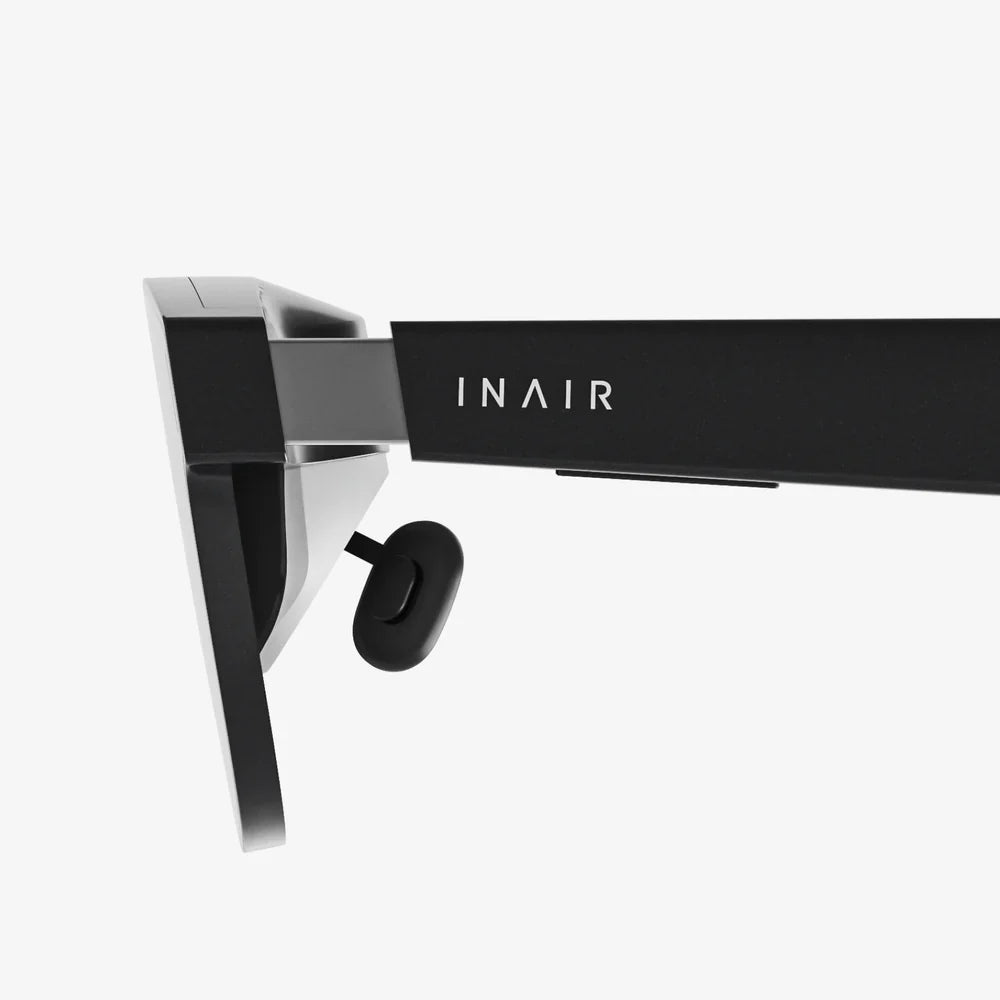
Imagine a world where digital information doesn't just live on a screen in your hand or on your desk, but is seamlessly woven into the very fabric of your physical reality. Directions float on the pavement ahead of you, a recipe hovers next to the ingredients you're preparing, and a colleague's 3D model is projected onto your workshop table for collaborative review. This is the promise of augmented reality (AR) glasses, a technology poised to revolutionize how we work, learn, play, and connect. The journey from science fiction to store shelves is well underway, and a fascinating array of augmented reality glasses examples are already demonstrating a future bursting with potential.
Beyond the Hype: Defining the Modern AR Glasses Experience
Before diving into specific examples, it's crucial to understand what separates today's advanced AR glasses from earlier prototypes or simple smart glasses. True AR glasses are characterized by several key capabilities:
- See-Through Display: The ability to view the real world through transparent lenses while digital content is superimposed onto it.
- Spatial Awareness: Sensors like cameras, depth sensors, and IMUs that map the physical environment, allowing digital objects to interact with and persist in real space.
- User Interaction: Methods for the wearer to control the experience, such as touchpads, voice commands, hand tracking, or gesture control.
- Standalone or Tethered Operation: Some devices are fully self-contained computers, while others leverage the processing power of a connected smartphone or computer.
The Vanguard of Industry: Enterprise and Professional AR Glasses Examples
The most significant and mature adoption of AR glasses has occurred in enterprise and industrial settings. Here, the technology solves immediate, high-value problems, leading to a rapid return on investment. The examples in this category prioritize functionality, durability, and powerful features over sleek consumer aesthetics.
Remote Assistance and Expert Guidance
One of the most powerful use cases is remote expert guidance. Imagine a field technician facing a complex repair on a piece of machinery they've never encountered. By wearing AR glasses, they can stream their first-person view to a senior engineer located thousands of miles away. The expert can then annotate the technician's real-world view with digital arrows, circles, and text instructions, literally guiding their hands. This application drastically reduces travel costs, minimizes equipment downtime, and empowers less experienced workers to perform complex tasks accurately.
Complex Assembly and Digital Work Instructions
In manufacturing and logistics, AR glasses are transforming assembly lines and warehouses. Instead of constantly referring to paper manuals or a stationary monitor, workers see the next steps, torque specifications, and part numbers visually overlaid directly on the product they are building or the shelf they are picking from. This hands-free access to information reduces errors, improves efficiency, and significantly shortens training times for new employees. Complex wiring harness assembly, for instance, becomes intuitive as the glasses show exactly where each wire should be routed and connected.
Design and Prototyping
Architects, engineers, and designers are using AR glasses to visualize and interact with 3D models at full scale. Instead of looking at a building's blueprint on a screen, they can walk through a life-sized holographic model of the structure before a single brick is laid, identifying potential design clashes and experiencing the space. This allows for rapid iteration and stakeholder buy-in much earlier in the design process, saving considerable time and resources.
Stepping Into the Everyday: Consumer-Focused AR Glasses Examples
While the consumer market is still evolving, several compelling examples of AR glasses are targeting early adopters and specific enthusiast niches. These devices often prioritize style, comfort, and social acceptability alongside their technical features.
The Information Companion
A primary vision for consumer AR glasses is that of a subtle, always-available information companion. Imagine walking through a foreign city and seeing contextual translations of street signs and menus appear in your periphery. Or attending a conference where the name and affiliation of each person you meet gently materializes next to them. Glasses designed for this purpose are typically lighter, with a smaller field of view focused on delivering notifications, basic directions, and bite-sized information without completely overwhelming the user's vision.
Immersive Entertainment and Gaming
Gaming is a massive driver for consumer AR. The concept involves turning your living room into a digital playground, where game characters and objects interact with your physical furniture. While full immersion is still on the horizon, current examples offer novel experiences like playing a virtual board game on your actual coffee table or watching a movie on a giant virtual screen that only you can see. The social potential is immense, allowing friends in different locations to share a common augmented space.
Fitness and Navigation
For athletes and fitness enthusiasts, AR glasses can project performance metrics like heart rate, pace, and route maps directly into their line of sight, eliminating the need to look down at a watch or phone. For navigation, turn-by-turn directions can be projected onto the road itself, making it safer for cyclists or pedestrians to navigate unfamiliar areas without distraction.
Specialized Tools: Niche AR Glasses Examples
Beyond broad enterprise and consumer categories, specialized AR glasses are being developed for highly specific professions and applications.
Healthcare and Surgery
In the medical field, AR glasses are being piloted for incredible use cases. Surgeons can wear them to see critical patient vitals, ultrasound data, or 3D anatomical models overlaid directly on the patient during a procedure, allowing them to "see inside" the body without looking away from the operating table. This can enhance precision and improve surgical outcomes.
Military and Defense
The military has long been a pioneer in head-mounted displays. Modern AR glasses for soldiers provide a tactical advantage by displaying real-time battlefield data, enemy positions, navigation cues, and target information on their visors, creating a vastly superior situational awareness tool known as the "digitized battlefield."
Education and Training
In educational settings, AR glasses can bring abstract concepts to life. Medical students can practice procedures on holographic patients, history students can witness historical events unfold around them, and mechanics can learn to disassemble an engine with interactive, step-by-step holographic guides. This experiential learning leads to dramatically improved retention and understanding.
The Technology Behind the Magic: How AR Glasses Create the Illusion
The wonder of AR glasses is made possible by a sophisticated blend of hardware and software. Key technological components include:
- Waveguide Displays: The most common method for projecting light into the eye while allowing the real world to be seen. Thin, transparent glass or plastic plates use diffraction optics to bend light from a micro-display on the temple into the user's eye.
- Birdbath Optics: Another optical design that uses a combiner and a beamsplitter to fold the image from a micro-display into the user's eye. Often allows for a brighter image and wider field of view but can result in bulkier designs.
- SLAM (Simultaneous Localization and Mapping): This is the core software algorithm that allows the glasses to understand their position in the world. By analyzing camera feed data, SLAM constructs a 3D map of the environment in real-time and tracks the glasses' movement within it, enabling digital objects to stay locked in place.
- Gesture and Hand Tracking: Cameras pointed at the user's hands enable intuitive control. Users can pinch, select, drag, and resize digital elements with natural hand movements, creating a direct and magical interface.
Navigating the Obstacles: Challenges on the Road to Mass Adoption
Despite the exciting progress, significant hurdles remain before AR glasses become as common as smartphones.
- Form Factor and Social Acceptance: Many high-powered AR glasses are still too bulky, heavy, and aesthetically conspicuous for all-day wear. The goal is to achieve a form factor indistinguishable from regular eyeglasses, which requires major advancements in miniaturization of batteries and components.
- Battery Life: Processing complex AR environments and powering bright displays is incredibly energy-intensive. Current devices often struggle to last a full workday without a recharge, limiting their utility.
- Field of View (FoV): The window through which you see the digital world is often narrow compared to human vision. Expanding the FoV without making the device enormous or prohibitively expensive is a major optical challenge.
- Cost: Advanced AR glasses remain a significant investment, primarily affordable for businesses rather than individual consumers. Driving down costs through economies of scale and technological innovation is essential.
- Compelling Content and Ecosystem: A hardware platform is nothing without software. Developing a robust ecosystem of apps and experiences that provide undeniable daily value is critical for consumer adoption.
The Invisible Revolution: What the Future Holds
The trajectory of AR glasses points toward a future where they become an invisible, indispensable part of our lives. We are moving toward devices that are lighter, more powerful, and socially acceptable. The eventual convergence of AR with AI will be transformative, creating a contextually intelligent assistant that understands what you're looking at, what you're trying to do, and what information you need, presenting it effortlessly before you even have to ask. The boundary between the digital and physical worlds will continue to blur, not to replace reality, but to enhance it, making us more capable, connected, and informed.
The examples we see today are merely the first few brushstrokes on a vast canvas. From guiding a surgeon's hands to helping a student understand the cosmos, from revolutionizing factory floors to redefining how we play games in our living rooms, augmented reality glasses are not just a new gadget; they are a foundational shift in human-computer interaction. The real-world applications are already proving their worth, and as the technology matures, the line between the possible and the impossible will continue to fade, revealing a future where our reality is limited only by our imagination.
Share:
Next Generation VR Headset: The Unseen Revolution Reshaping Reality
How to Know What VR Headset I Have: The Ultimate Identification Guide