


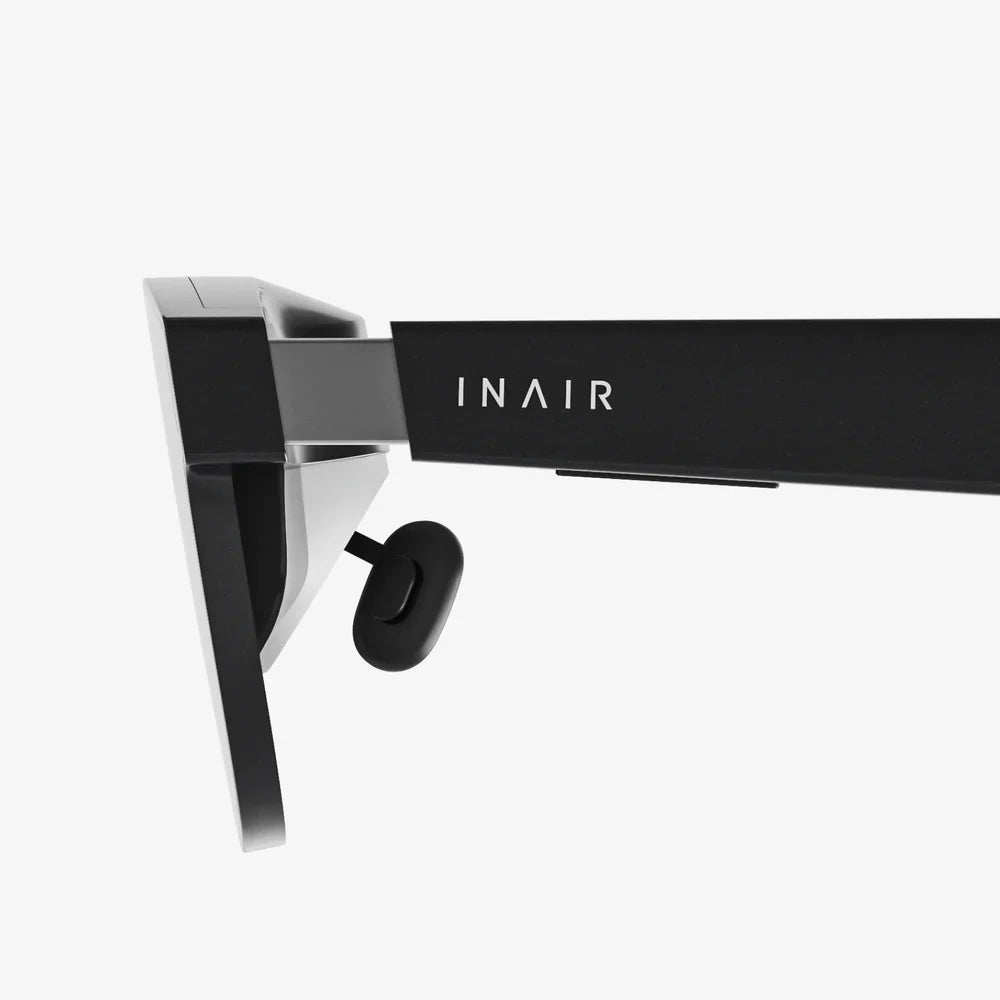
Imagine a world where digital information seamlessly overlays your physical reality, where instructions float above a complex machine you're repairing, historical figures narrate their stories as you walk through a city, and distant colleagues appear as lifelike holograms in your living room. This is the breathtaking promise of augmented reality glasses, a technology poised to fundamentally reshape how we work, play, and connect. The potential is so vast it feels like science fiction, but the path from prototype to普及 is fraught with monumental challenges. The journey to perfect, ubiquitous AR is not just a race of innovation; it's a minefield of complex issues that, if ignored, could derail the entire revolution before it even begins.
The Tyranny of Hardware: A Clash of Form and Function
The most immediate and obvious set of augmented reality glasses issues revolves around the physical hardware itself. Creating a device that is both powerful enough to deliver a compelling experience and comfortable enough to wear for extended periods is an engineering nightmare. The core components—waveguides for projecting images, micro-displays, spatial sensors, cameras, and processors—all demand space and generate heat. This creates an inherent conflict between the desired form factor, which is to look like a pair of ordinary eyeglasses, and the functional requirements of the technology.
Current generations of devices often suffer from being too bulky, too heavy, or too unbalanced, leading to user fatigue. Furthermore, the field of view (FOV) in many devices is often compared to looking through a postage stamp or a small window into the digital world. This limited FOV severely breaks immersion and limits the practical utility of the glasses. Achieving a wide, high-resolution, and bright field of view without making the device enormous and prohibitively expensive remains one of the single greatest technical hurdles. The dream is a lightweight, stylish, and unobtrusive pair of glasses, but the reality, for now, is often a compromise that leans heavily towards function, alienating the average consumer.
The Power Paradox: Demanding Workloads and Dismal Battery Life
Closely tied to the hardware challenge is the monumental issue of power consumption. Augmented reality is an incredibly computationally intensive process. The glasses must continuously map the environment in real-time, understand surfaces and depth, track the user's precise head and eye movements, render high-fidelity 3D graphics that are locked in place in the real world, and process data from a constant stream of sensor input. This requires immense processing power, which in turn devours battery life.
Many standalone AR glasses currently on the market offer only two to three hours of active use, a figure that plummets when running more demanding applications. This creates a massive usability gap. For a device meant to be worn throughout the day, constantly needing to be tethered to a bulky external battery pack or requiring frequent recharging is a non-starter for mass adoption. Breakthroughs in battery technology, ultra-low-power processors, and more efficient display systems are not just desirable; they are absolute prerequisites for making AR glasses a viable all-day productivity and lifestyle tool. The industry is caught in a power paradox: the features that make AR magical are the same ones that make it unsustainable.
The Social Stigma: Navigating the Uncharted Waters of Cyborg Etiquette
Beyond the silicon and solder, a more subtle yet equally powerful barrier exists: social acceptance. The concept of wearing a computer on your face that can record video, take pictures, and display information invisible to others is fraught with social complications. Early adopters of obvious wearable tech, like the first-generation smart glasses, were often labeled "glassholes," a term highlighting the social unease and perceived arrogance associated with the technology.
This social stigma presents a critical adoption hurdle. Will it be considered rude to wear AR glasses during a conversation? How will people know if they are being recorded? The presence of a camera, even if it's not actively recording, creates a chilling effect, potentially stifling genuine interaction and breeding paranoia. This is not a problem that can be solved with a faster processor; it requires the development of new social norms, clear visual indicators of recording status that are universally recognized, and perhaps most importantly, a design that is so elegant and normalized that it ceases to be a point of contention. Until wearing AR glasses feels as natural and socially unremarkable as wearing a wristwatch, their use in public will be limited and potentially contentious.
The Privacy Abyss: A Panopticon on Your Face
If social stigma is a concern, the privacy implications of augmented reality glasses are a full-blown crisis waiting to happen. These devices are, by their very nature, the most pervasive data collection tools ever conceived for consumer use. They combine always-on cameras, microphones, location tracking, and eye-tracking, constantly scanning and interpreting the user's environment. The potential for abuse is staggering.
Consider the data harvested: a continuous video and audio feed of everything and everyone around the user, detailed biometric data from eye movements, and a precise log of physical behaviors and interactions. Who owns this data? How is it stored, processed, and used? The risks range from sophisticated targeted advertising based on what you look at in a store to corporate surveillance of employees, and even government mass surveillance. The very feature that makes AR powerful—its ability to see what you see—also makes it the ultimate spy tool. Without robust, transparent, and legally enforceable privacy frameworks developed in tandem with the technology, augmented reality risks creating a dystopian panopticon where every moment of public life is subject to capture and analysis by unknown entities.
The Digital Divide 2.0: Accessibility and Economic Exclusion
The transformative potential of AR glasses is often touted in fields like remote assistance, education, and navigation. However, this promise hinges on universal accessibility. The high cost of developing and producing this complex technology means the first iterations will carry a premium price tag, potentially putting them out of reach for the average consumer, schools, and small businesses. This threatens to create a new, more profound digital divide.
This wouldn't just be a divide in access to information, but a divide in perception itself. A privileged class would literally see the world with an enriched layer of data and assistance, while others would be left with an un-augmented reality. In the workplace, this could lead to a two-tier system where employees with AR tools are vastly more efficient and informed than those without, exacerbating economic inequality. For the technology to be a true force for good, it must be developed with affordability and accessibility as core tenets, not as afterthoughts. The revolution must be for everyone, or it risks being for no one in a truly meaningful sense.
Health and Safety: The Unanswered Questions of Long-Term Use
The health implications of staring into bright displays mounted just centimeters from the user's eyes for hours on end are not yet fully understood. Prolonged use could lead to digital eye strain, headaches, and other visual discomforts. Furthermore, the phenomenon of vergence-accommodation conflict (VAC) is a significant problem in current AR and VR systems. Our eyes naturally converge (cross) and accommodate (focus) in tandem when looking at objects at different distances. AR glasses that project images at a fixed focal depth force a disconnect between these two processes, which can cause visual fatigue, discomfort, and even nausea in some users.
Beyond the eyes, there are concerns about the psychological effects. Will constant digital stimulation lead to increased anxiety and a decreased ability to focus on the physical present? Could it exacerbate attention disorders? There are also tangible physical safety risks. A user immersed in a complex AR overlay could easily trip over a real-world obstacle, walk into traffic, or otherwise fail to notice critical hazards in their environment. Mitigating these risks requires not only technological solutions like adaptive focal planes and better pass-through video but also extensive long-term health studies and the development of clear safety protocols for use.
The Software Conundrum: Building a Universe from Scratch
Finally, even if all the hardware and social issues were solved tomorrow, the augmented reality glasses ecosystem would still face a monumental software challenge. For AR glasses to be useful, they need a rich, diverse, and intuitive library of applications. Developers are currently tasked with inventing entirely new interaction paradigms. How do users interact with a floating, invisible menu? What are the standard gestures for selecting, moving, or dismissing a hologram? How does text input work without a physical or virtual keyboard?
Creating a cohesive and user-friendly operating system for spatial computing is a task of immense complexity. It requires building a stable and powerful platform that can understand the world in real-time and allow digital content to interact with it convincingly. Furthermore, the industry risks fragmentation with competing standards and closed ecosystems, which could stifle innovation and confuse consumers. The killer app for AR glasses—the equivalent of the spreadsheet for the PC or the web browser for the internet—has yet to be discovered. Until developers can easily create compelling and indispensable experiences, AR glasses will remain a solution in search of a problem for most people.
The vision of digital layers enhancing our reality is not a question of if, but when. Yet, the journey to that future is paved with more than just technical hurdles; it's an obstacle course of human factors, ethical dilemmas, and societal questions that demand thoughtful and inclusive answers. Solving the augmented reality glasses issues of today isn't merely about building a better gadget—it's about proactively shaping a technology that amplifies our humanity, protects our privacy, and benefits all of society, rather than fracturing it. The success of AR won't be measured in megapixels or battery hours, but in its seamless, secure, and equitable integration into the fabric of our daily lives. The real innovation required isn't just inside the glasses; it's inside us, in our ability to wield this powerful tool with wisdom and foresight.
Share:
Why Virtual Meetings Are Redefining the Modern Workplace and Beyond
Best Headsets for Virtual Meetings: The Ultimate Guide to Professional Audio