


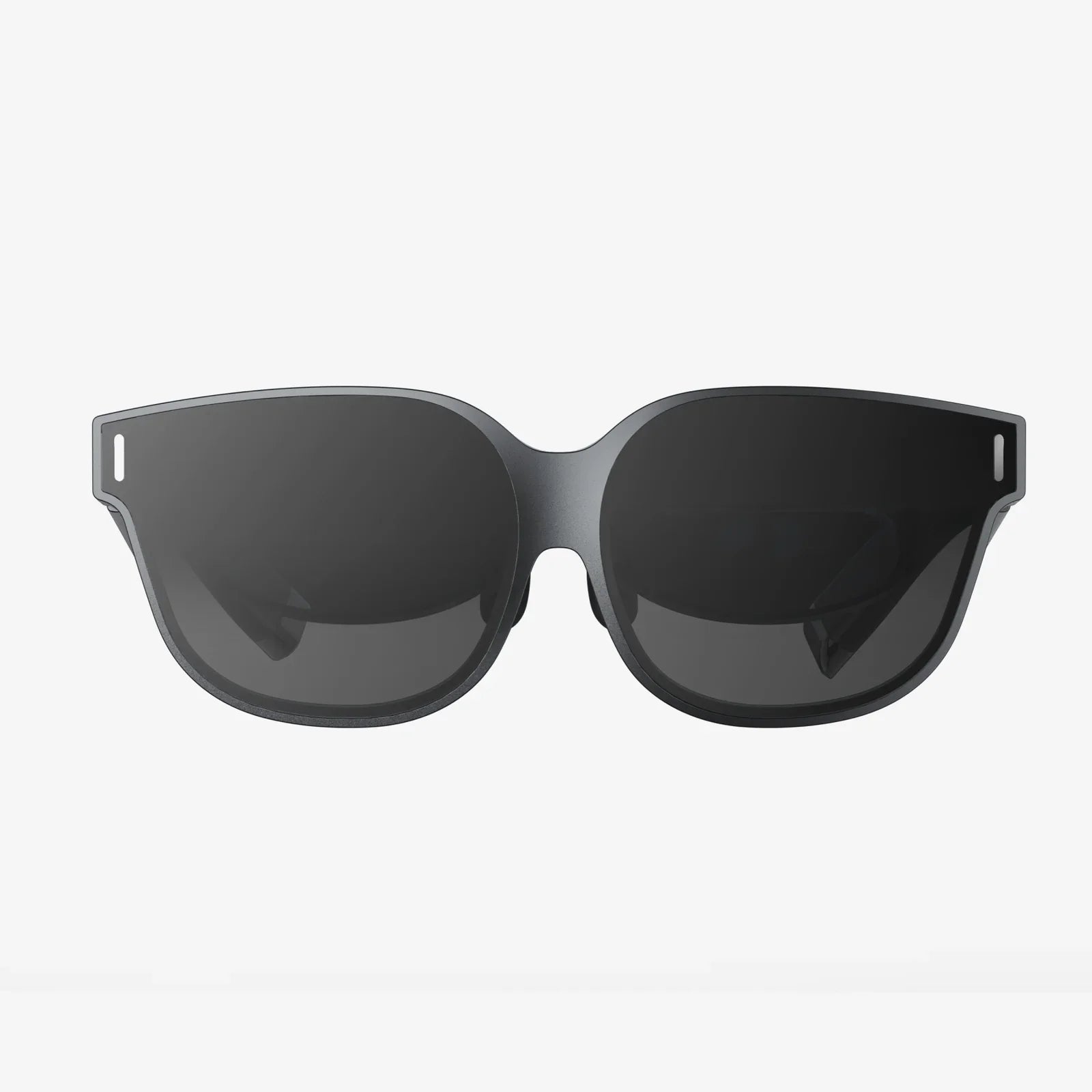
Imagine driving down a winding coastal highway, the setting sun casting long shadows, but your speed, navigation, and even incoming call alerts aren't hidden on a distracting screen in your dashboard. Instead, they float seamlessly on the road ahead, perfectly integrated with the real world, guiding your turn, warning you of a hidden hazard around the bend, and leaving your focus entirely on the joy of the drive. This is no longer a scene from science fiction; it is the imminent reality promised by the latest wave of Augmented Reality Head-Up Display (AR HUD) news, a technological revolution that is turning the humble windshield into the most dynamic and intuitive interface we have ever known.
Beyond Basic Projections: The Core Technology Unleashed
The traditional Head-Up Display, a technology borrowed from fighter jets, was a simple marvel. It projected basic data like speed and RPM onto a small combiner glass, allowing pilots—and later, drivers—to keep their "heads up" and eyes on the critical task ahead. The news today, however, is not about these monochrome, fixed-depth projections. The breakthrough lies in the "Augmented Reality" prefix. Modern AR HUDs are a symphony of advanced hardware and sophisticated software, creating a cohesive and context-aware experience.
At their heart, these systems rely on several key technological pillars. High-brightness micro-displays, often using DLP or LCoS technology, generate the imagery. Complex free-form mirrors and waveguides then fold the optical path and project this imagery across a vast section of the windshield. The true magic, however, happens in the software. A network of sensors—including high-resolution cameras, LiDAR, radar, and precise GPS—continuously scans the vehicle's environment. This real-time data is processed by powerful computing units that understand the car's position, speed, and the exact spatial relationship to other objects on the road.
The result is a display that doesn't just sit on the windshield; it becomes part of the world. Instead of a floating arrow telling you to "turn left in 500m," an AR HUD can project a glowing path on the road itself, directly highlighting the correct lane and the exact turn point. It can identify a pedestrian stepping out from between parked cars and draw a bright, urgent框 around them directly in your line of sight, a warning far more instinctive than a beep or a flashing light on the dashboard.
Driving the Future: Automotive Applications Redefine Safety and Navigation
The most immediate and impactful wave of AR HUD news originates from the automotive sector. Here, the technology is poised to fundamentally alter the driving experience, with safety as its primary mandate. The human brain processes visual information in the context of our environment far more quickly than it can translate abstract symbols on a screen. AR HUDs leverage this biological fact.
- Context-Aware Navigation: Gone are the days of glancing down to interpret a complex multi-lane interchange on a map. AR navigation paints virtual guide lines and lane markers directly onto the road, ensuring you are in the correct lane well before your exit. It can highlight your destination building with a marker as you approach, eliminating last-minute confusion.
- Advanced Driver Assistance Systems (ADAS) Integration: AR is the perfect interface for ADAS features. Forward-collision warnings can manifest as a pulsating red highlight on the rear of the car you're following too closely. Blind-spot monitoring can project a subtle warning in the periphery of your vision if a vehicle is detected, mimicking the natural way we check our mirrors.
- Intelligent Hazard Alerting: By fusing sensor data, the system can identify and highlight potential hazards long before the human eye can, such as a cyclist about to cross your path at an intersection or a suddenly braking vehicle several cars ahead, projected directly onto its location.
Beyond safety, the convenience factor is enormous. Imagine your next turn direction appearing as a floating banner attached to the road itself, or your current speed and speed limit information seamlessly integrated into your field of view without a single glance away from the traffic light that just turned green.
Beyond the Dashboard: Enterprise and Industrial Innovations
While consumer cars grab headlines, some of the most transformative AR HUD news is emerging from enterprise and industrial applications. Here, the technology is not about convenience; it's about efficiency, accuracy, and safety in high-stakes environments.
In logistics and warehousing, technicians wearing AR smart glasses equipped with micro-HUDs can have picking instructions, inventory data, and schematic diagrams overlaid directly onto their view of a shelf or a product. This "hands-free, eyes-free" information access drastically reduces errors and training time. A maintenance engineer working on a complex piece of machinery can see torque specifications, a digital twin of the internal components, and a step-by-step guide projected onto the equipment itself, streamlining repairs and reducing downtime.
The military and aerospace sectors, the original pioneers of HUD technology, are now advancing into full AR. Pilots can see targeting data, enemy and friendly unit positions, and terrain warnings integrated with their real-world view through the cockpit canopy. For ground troops, tactical information like waypoints, enemy locations (gathered from drones or other assets), and mission objectives can be displayed on helmet-mounted displays, creating unparalleled situational awareness on the battlefield.
Challenges on the Road to Ubiquity: The Hurdles for AR HUDs
Despite the exciting news, the path to making AR HUDs a standard feature is not without significant obstacles. The technology faces a triad of core challenges: cost, packaging, and user experience.
The complex optical systems and powerful processing required are currently expensive, limiting their inclusion to premium and luxury vehicles. Furthermore, the optical unit itself is not small; it requires a significant amount of space within the dashboard, often conflicting with other essential components. Automotive designers are engaged in a constant battle to shrink these systems without compromising on performance or field of view.
Perhaps the most nuanced challenge is the user experience. A poorly calibrated or overly cluttered AR display can be more distracting and dangerous than no display at all. Industry leaders are investing heavily in human-machine interface (HMI) research to determine the optimal amount of information, the correct placement, and the most intuitive visual language for these projections. The goal is informational harmony, not digital clutter. Striking this balance is critical for widespread adoption and trust.
What's Next? The Cutting Edge of AR HUD Development
The pace of innovation ensures that the AR HUD news cycle is constant. Research and development are pushing the boundaries of what's possible. The next generation of displays is moving towards even larger fields of view, some aiming to cover the entire windshield, effectively turning it into a mixed-reality canvas. This enables even more immersive applications, like highlighting the perfect racing line on a track day or transforming a long highway drive with virtual elements that make the journey more engaging.
Integration with other transformative technologies is also a key trend. The fusion of AR HUDs with vehicle-to-everything (V2X) communication will allow cars to receive and display information about traffic conditions, accidents, and road hazards from the infrastructure and other vehicles miles ahead. Furthermore, as autonomous driving technology matures, the role of the AR HUD will shift from an assistive tool for the driver to a communicative interface for the passenger, explaining the vehicle's decisions and highlighting what its sensors are detecting to build trust and provide entertainment.
The ultimate goal for many in the industry is the development of holographic optical elements and laser-based scanning systems that could eventually eliminate the need for a bulky projector unit entirely, potentially integrating the display technology directly into the glass laminate of the windshield itself. This would solve the packaging issue and open the door to truly ubiquitous adoption.
The stream of augmented reality head-up display news is more than just a chronicle of a new automotive feature; it is a front-row seat to a fundamental shift in human-computer interaction. We are moving away from isolated screens that demand our attention and toward a future where digital information is woven into the very fabric of our perception, enhancing our abilities, keeping us safer, and deepening our understanding of the world around us. The view through the windshield will never be the same again, and the road ahead has never looked more exciting or more intelligent.
Share:
Augmented Glasses Online: The Future of Vision is Here and It's Wearable
Forces Propelling AR Augmented Reality Into the Mainstream and Beyond