


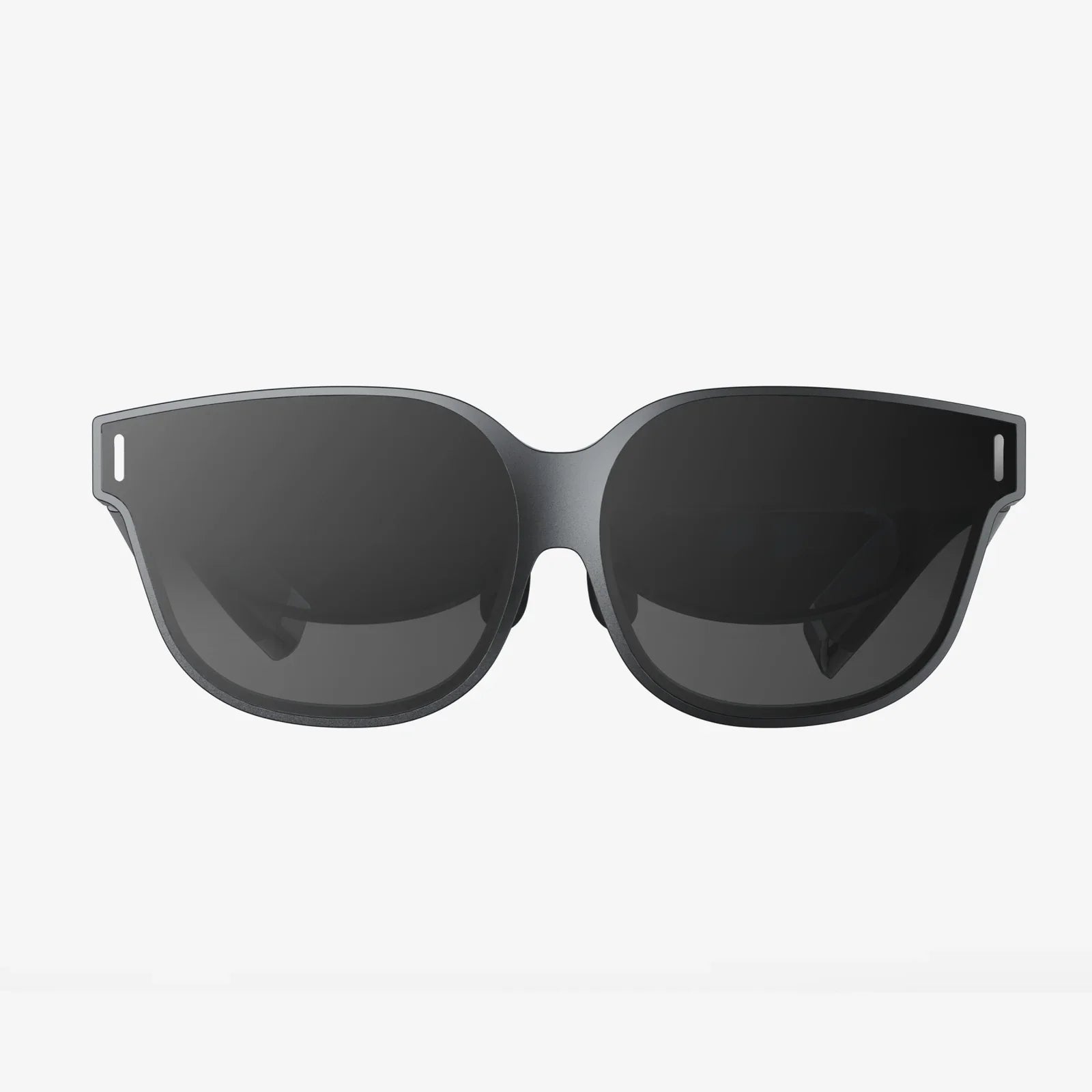
Imagine a factory floor where complex assembly instructions are projected directly onto the components in front of a worker, where a maintenance technician can see the inner workings of a malfunctioning machine simply by looking at it, and where a designer in one country can collaborate in real-time with an assembler on another continent, both viewing the same holographic prototype. This is not a scene from a science fiction film; it is the present and rapidly evolving future of manufacturing, powered by the transformative technology of augmented reality (AR). For an industry perpetually driven by the pursuit of efficiency, precision, and safety, AR is emerging as the most powerful tool to bridge the digital and physical divides, creating a seamless, intelligent, and profoundly connected operational ecosystem.
The Architectural Shift: From Paper to Pixels to Holograms
The journey of manufacturing information has been a long one. For decades, the factory floor relied on massive binders filled with paper schematics, printed work instructions, and static blueprints. The digital revolution brought these documents onto computer screens and tablets, a significant step forward in organization and accessibility. However, this still required workers to constantly shift their focus from the physical task at hand to a separate 2D screen, a process that is inherently inefficient and prone to error. Context switching breaks concentration and increases the cognitive load on the operator.
Augmented reality shatters this paradigm. Instead of pulling information out of context onto a separate device, AR superimposes digital information directly into the user's field of view and onto the physical world. Through devices like smart glasses, helmets, or even tablets and smartphones, workers see graphical overlays, text, animations, and 3D models aligned with the machinery, components, or spaces they are interacting with. This creates a direct and intuitive link between data and reality, transforming how tasks are performed, understood, and optimized. It is the culmination of the digital thread, making the wealth of data from Product Lifecycle Management (PLM), Enterprise Resource Planning (ERP), and Internet of Things (IoT) systems instantly actionable on the front lines of production.
Transforming Core Manufacturing Operations
The applications of AR are vast and touch nearly every facet of the manufacturing value chain. Its impact is most profoundly felt in several key areas.
Assembly, Production, and Pick-by-Vision
Complex assembly processes, often involving thousands of parts and hundreds of steps, are a prime candidate for AR optimization. Instead of consulting a manual or screen, workers wearing AR glasses can see digital work instructions superimposed onto the product they are building. A series of arrows can point to exact attachment points, animations can demonstrate the correct installation procedure for a specific part, and checkmarks can confirm completed steps, drastically reducing errors and rework. This is particularly valuable for high-mix, low-volume production and for training new employees, who can achieve proficiency much faster.
In warehouse and logistics, "Pick-by-Vision" systems are revolutionizing order fulfillment. AR glasses guide warehouse operators along the most efficient picking route, visually highlighting the exact shelf and bin location of the required item and displaying the quantity to be picked. This eliminates guesswork, reduces walking time, and slashes picking errors to near zero, all while allowing workers to keep their hands free and focus on their environment.
Maintenance, Repair, and Overhaul (MRO)
Downtime is the enemy of manufacturing. AR empowers maintenance technicians to become exponentially more effective. When a machine fails, a technician can use AR to view its internal schematics overlaid onto the physical equipment, literally seeing "through" the machine to identify problem components. They can access the machine's real-time IoT sensor data, view historical maintenance records, and even initiate remote expert assistance. Using AR, an off-site senior engineer can see exactly what the on-site technician sees and can annotate the technician's live view with arrows, circles, and notes to guide them through a complex repair procedure. This not only resolves issues faster but also democratizes expertise, allowing junior staff to perform repairs that would have previously required a specialist's physical presence.
Design, Prototyping, and Quality Assurance
In the design phase, AR allows engineers to project and interact with full-scale 3D holographic models of new products long before physical prototypes are built. They can walk around the design, assess ergonomics, and identify potential assembly or interference issues in a real-world context, enabling rapid iteration and validation. This accelerates time-to-market and improves design for manufacturability.
Quality control and inspection processes are also enhanced. AR systems can overlay the digital twin—the perfect virtual model—of a product onto the physically assembled unit. Any deviations, such as a misaligned part or an incorrect component, become immediately visible as a mismatch between the physical and digital objects. This provides a powerful and objective tool for ensuring the highest quality standards are met consistently.
Training and Onboarding
AR creates immersive, interactive, and safe training environments. New employees can learn complex procedures by following AR instructions without the risk of damaging expensive equipment or causing production delays. They can practice on virtual models, gaining muscle memory and confidence before working on live production lines. This hands-on, guided learning approach significantly reduces training time and cost while improving knowledge retention and skill acquisition compared to traditional classroom or video-based training.
The Tangible Benefits: Measuring the Impact on the Bottom Line
The adoption of AR is not merely a technological upgrade; it delivers concrete, measurable returns on investment that justify its implementation.
- Unprecedented Gains in Productivity: Studies and real-world implementations consistently show productivity increases of 20% to 35% in complex assembly tasks. By eliminating context switching and providing intuitive guidance, workers complete tasks significantly faster and with greater consistency.
- Radical Reduction in Errors: Error rates can plummet by over 90% in guided assembly and picking processes. By making the correct action visually obvious, AR virtually eliminates opportunities for human mistake, leading to higher quality products and less waste.
- Drastic Downtime Reduction: In maintenance, AR can cut problem-resolution times by half or more. Faster diagnostics and repairs, empowered by remote expertise, mean production lines are back online faster, saving enormous costs associated with unplanned downtime.
- Enhanced Workforce Safety: AR can improve safety by providing visual warnings for hazardous areas, displaying lockout-tagout procedures directly on equipment, and guiding workers through safe operating protocols. Hands-free operation also keeps workers more aware of their surroundings.
- Knowledge Capture and Democratization: AR acts as a vessel for institutional knowledge. The expertise of a retiring veteran worker can be captured in an AR-guided procedure, preserving it for future generations of employees and leveling the skills playing field across the entire organization.
Navigating the Road to Implementation: Challenges and Considerations
Despite its immense potential, integrating AR into manufacturing is not without its challenges. A successful implementation requires careful strategic planning.
Technological Hurdles: Hardware remains a key consideration. Devices must be robust enough for industrial environments, with long battery life, comfortable form factors for all-day wear, and sufficient processing power. Tracking and registration—the ability of the AR system to accurately align digital content with the physical world—must be flawless to be trusted by workers. Connectivity is also crucial, as many AR solutions rely on strong Wi-Fi or 5G networks to access cloud-based data and processing.
Content Creation: The digital content that powers AR experiences—the 3D models, animations, and step-by-step instructions—must be created and managed. This requires new software skills and processes, often integrated with existing CAD and PLM systems to ensure the information is always accurate and up-to-date.
Cultural and Human Factors: Perhaps the most significant hurdle is human adoption. Workers may be skeptical of new technology or fear it is meant to replace them or monitor their performance. Change management is critical. Leadership must clearly communicate that AR is a tool to augment and empower the workforce, not replace it. Training and involving employees in the development and testing of AR applications can foster buy-in and ensure the solutions are practical and user-friendly.
The Future is Overlaid: What Lies Ahead
The evolution of AR in manufacturing is accelerating. We are moving towards a future of "spatial computing," where the digital and physical are inextricably linked. Advancements in AI will make AR systems predictive and prescriptive, not just instructive. Imagine an AR system that can not only guide an assembly but also predict a potential future failure point based on real-time sensor data and historical analytics, prompting pre-emptive maintenance. The integration with digital twin technology will become more profound, allowing for real-time synchronization and simulation between the physical asset and its virtual counterpart. As the hardware becomes lighter, more powerful, and eventually indistinguishable from standard safety equipment, adoption will become ubiquitous.
The factory of the future is not a fully lights-out, fully automated facility devoid of people. It is a collaborative environment where humans and machines work in harmony, each doing what they do best. Augmented reality is the interface that makes this collaboration possible, enhancing human intelligence with digital precision. It empowers the worker, optimizes the process, and elevates the entire manufacturing enterprise to new levels of agility, quality, and innovation. The transformation has already begun, and those who embrace this augmented vision will undoubtedly lead the next industrial revolution.
Share:
Adoption of Virtual and Augmented Reality: Reshaping Industries and Redefining Human Experience
Are Virtual Reality Goggles Safe? An In-Depth Look at the Risks and Rewards