


Imagine a world where the digital and the physical are no longer separate realms, but a single, seamless tapestry of experience. Where information doesn’t live on a screen in your hand, but is woven into the very fabric of your environment, accessible with a glance and a command. This is no longer the stuff of science fiction; it is the imminent future being built today at the powerful intersection of augmented reality, smart glasses, and AI. This technological trinity is poised to become the most transformative computing platform since the smartphone, moving us from a world of looking at technology to looking through it.
The Confluence of Vision: Where AR, Hardware, and Intelligence Meet
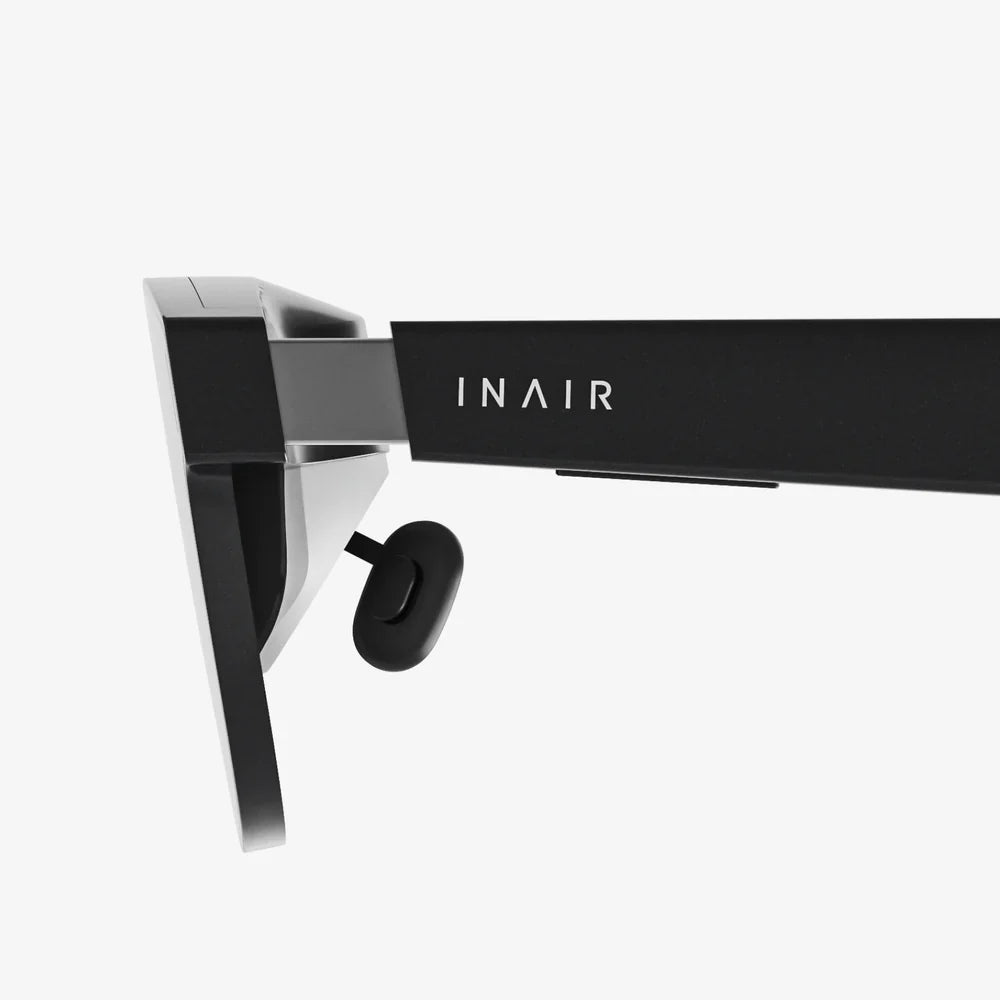
To understand the revolution, we must first deconstruct its core components. Augmented reality is the technology that superimposes computer-generated perceptual information—images, text, 3D models—onto our view of the real world. Unlike Virtual Reality (VR), which creates a fully immersive digital environment, AR enhances reality rather than replacing it. The vehicle for delivering this enhanced experience is the smart glasses—a wearable, heads-up display that projects digital content directly into the user’s field of vision. Early iterations were often clunky, obtrusive, and limited in functionality. Today, they are evolving into sleek, socially acceptable form factors that prioritize comfort and all-day usability.
However, hardware and display technology alone are not enough. The true magic, the element that transforms these glasses from a simple display into a contextual and intelligent partner, is Artificial Intelligence. AI acts as the brain of the operation. It is the engine that understands the world the user sees, processes natural language commands, anticipates needs, and serves up the right information at the precisely right moment. Without a powerful, on-device AI processing data in real-time, smart glasses would be little more than a cumbersome heads-up monitor.
The synergy is profound: the glasses provide the eyes (sensors and cameras) and the lens (display), while the AI provides the brain (processing and context). This creates a continuous, bidirectional loop of perception and assistance. The glasses see the world, the AI interprets it, and the glasses then augment the user’s perception based on that interpretation.
Beyond the Hype: The Core Technologies Powering the Vision
The seamless experience promised by AR smart glasses is underpinned by a suite of advanced technologies working in concert.
Computer Vision and Spatial Mapping
At the heart of any AR system is its ability to understand the geometry and content of the physical space. Using cameras and sensors, the glasses perform simultaneous localization and mapping (SLAM), creating a real-time 3D map of the environment. AI-driven computer vision algorithms then identify objects, surfaces, people, and even text within this map. This allows digital objects to be placed on a physical table, occluded correctly by real-world obstacles, and remain persistently anchored in space.
On-Device AI and Neural Processing Units (NPUs)
For AR to feel instant and magical, processing cannot be delayed by a round trip to a distant cloud server. Latency is the enemy of immersion. This is why next-generation smart glasses incorporate powerful NPUs designed specifically for running machine learning models directly on the device. This enables real-time object recognition, gesture tracking, and voice assistant responsiveness while also preserving user privacy by keeping sensitive visual and auditory data local.
Advanced Display and Photonics
Projecting bright, high-resolution graphics onto a transparent lens that sits mere centimeters from the eye is a monumental engineering challenge. Technologies like waveguides, micro-LEDs, and holographic optics are evolving to solve this. These systems pipe light into the eye, painting digital images that appear to exist in the world at various focal depths, reducing eye strain and creating a more believable blend of digital and physical.
Natural User Interfaces (NUIs)
The goal is to move beyond the touchscreen. AI enables a suite of intuitive interaction models:
- Voice Control: A powerful, context-aware AI assistant allows users to ask questions and issue commands hands-free.
- Gesture Recognition: Subtle finger pinches or hand waves can serve as clicks, swipes, and selections.
- Gaze Tracking: Simply looking at an object or UI element can select it, enabling a new level of effortless control.
Transforming Industries: The Professional Paradigm Shift
While consumer applications often capture the imagination, the most immediate and impactful adoption of AR smart glasses with AI is occurring within the enterprise and industrial sectors. Here, the technology is solving real-world problems with a clear return on investment.
Manufacturing and Field Service
A technician repairing a complex machine can have schematic diagrams, torque specifications, and animated instructions overlaid directly onto the equipment they are working on. An AI assistant can highlight the specific part that needs replacement and warn if a step is performed out of order. This reduces errors, slashes training time, and empowers less experienced workers to perform complex tasks with expert guidance.
Healthcare and Medicine
Surgeons can visualize critical patient data—such as heart rate or blood pressure—without looking away from the operating field. During procedures, AI can overlay pre-operative scans (like MRI or CT) onto the patient’s anatomy, providing an “X-ray vision" effect to guide incisions. Medical students can learn anatomy through interactive 3D models, and nurses can use AR to locate veins more easily for injections.
Logistics and Warehousing
Warehouse pickers equipped with smart glasses are guided by AI along the most efficient route to retrieve items. Digital arrows appear on the floor, and the exact shelf and bin are highlighted visually. The system can verify the picked item using computer vision, drastically reducing picking errors and improving fulfillment speed. This represents a monumental leap from handheld scanners and paper lists.
Design and Architecture
Architects and interior designers can walk through a physical space and overlay their digital blueprints and 3D models at full scale. They can visualize how a new piece of furniture would look in a room, change materials and colors in real-time, and identify potential design clashes with the existing environment before construction ever begins. This merges the design phase with the physical review phase.
The Social and Ethical Lens: Navigating a New Reality
As this technology permeates our daily lives, it brings a host of profound social and ethical questions that we must grapple with as a society.
The Privacy Paradox
Smart glasses with always-on cameras and microphones represent a significant step-change in surveillance capability. The potential for unauthorized recording in both public and private spaces is a major concern. Robust privacy frameworks are essential. This includes clear physical indicators when recording is active, strict data anonymization policies, and on-device processing that ensures personal data never leaves the glasses without explicit user consent. The ethical development of AI that can see and hear everything the user does cannot be an afterthought.
The Digital Divide and Accessibility
Will this technology become a great equalizer or a source of further inequality? On one hand, it has incredible potential for accessibility, providing real-time captioning for the hearing impaired, navigation for the visually impaired, and translation for non-native speakers. On the other hand, the high cost of early adoption could create a new digital divide between those who can afford this layer of intelligence and those who cannot, potentially exacerbating socioeconomic disparities.
Reality Ownership and Digital Pollution
If everyone can augment the world with their own digital content, who controls the shared visual space? Will our cities become cluttered with virtual advertisements and digital graffiti? The concept of “reality ownership” will become critical. We may need digital zoning laws and agreed-upon standards to prevent visual spam and ensure that our shared physical world is not corrupted by a chaotic, overlapping digital one.
The Future Vision: Where Do We Go From Here?
The current state of AR smart glasses is merely the prelude. The trajectory points toward a future where this technology becomes as ubiquitous and indispensable as the smartphone is today.
We are moving toward glasses that are indistinguishable from regular eyewear in terms of weight, style, and battery life. The displays will become full-color, high-resolution, and capable of rendering digital objects that are photorealistic and indistinguishable from physical ones. AI will evolve from a reactive assistant to a proactive partner, anticipating our needs based on context, gaze, and subtle cues we may not even be aware of.
The ultimate destination is the concept of the “Metaverse” or “Spatial Web”—a persistent, shared layer of information and experience draped over the physical world. In this future, your glasses will be your constant gateway to a universe of contextually relevant data, social connection, and immersive entertainment, all while allowing you to remain present and engaged in the real world around you.
The path to this future is not without its challenges. It will require breakthroughs in battery technology, display photonics, and AI efficiency. It will demand a thoughtful and inclusive conversation about ethics, privacy, and the kind of digitally-augmented world we collectively want to build. But the direction is set. The fusion of augmented reality, smart glasses, and artificial intelligence is quietly assembling the framework for the next great chapter of human-computer interaction, promising to unlock a new dimension of human potential and redefine our very perception of reality itself.
We stand on the brink of a world where the line between helper and human begins to blur, where your environment doesn't just respond to your commands but understands your intent. The next time you put on a pair of glasses, they might just show you a world transformed, not by changing what's there, but by revealing everything that's possible.
Share:
AR Says Headset Next Year With Revolutionary Features Will Change Everything
VR Headset Good For Eyes: The Surprising Visual Benefits of Immersive Technology