


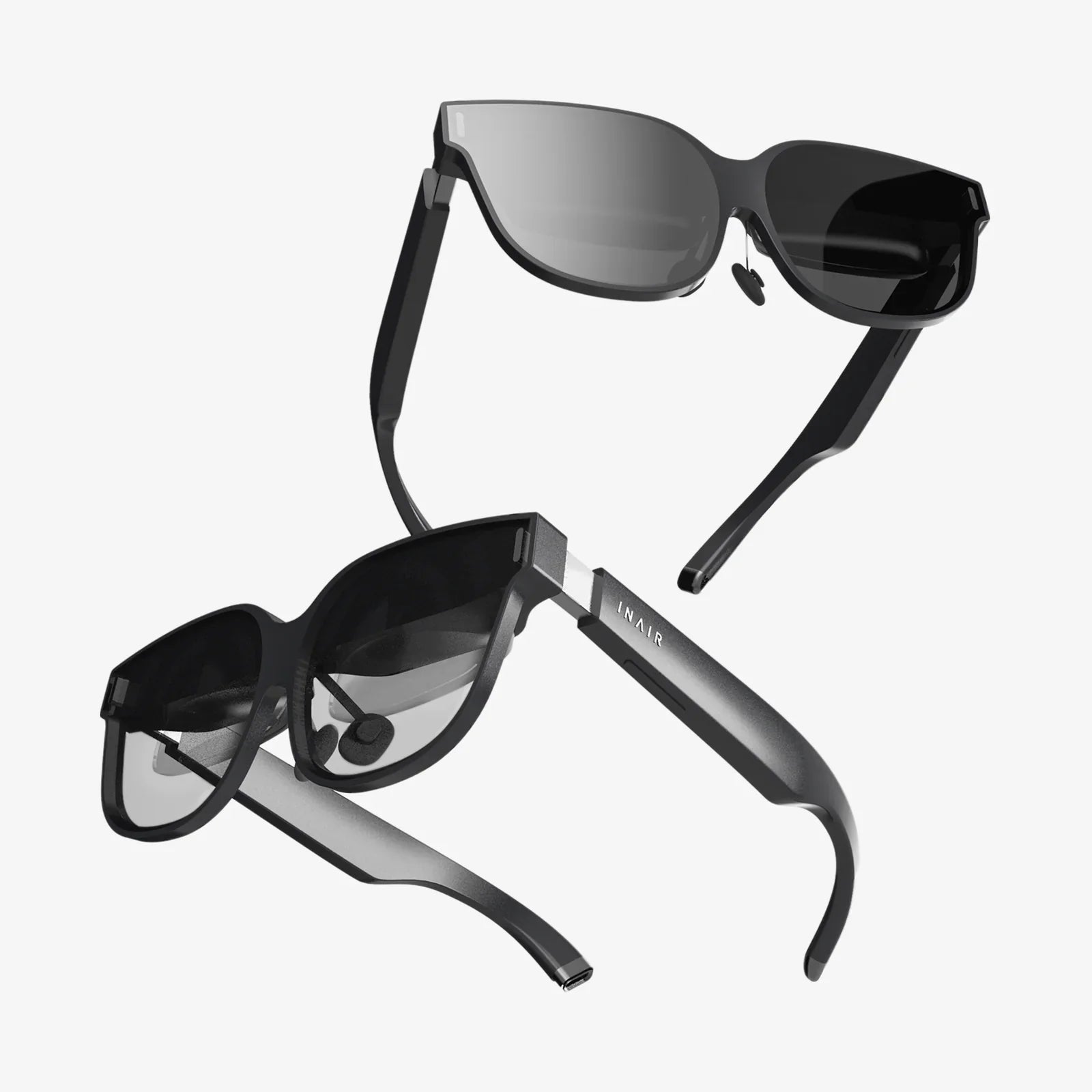
Imagine a world where the line between what's real and what's digital isn't just blurred—it's intelligently and contextually intertwined, enhancing everything from how you fix your car to how you experience ancient history. This isn't a distant sci-fi fantasy; it's the burgeoning present, powered by two powerful but often confused technological paradigms. The journey to understand this future begins with a critical comparison: the dynamic interplay between Augmented Reality and its lesser-known but equally significant counterpart, Augmented Virtuality.
Defining the Reality-Virtuality Continuum
To truly grasp the difference between Augmented Reality (AR) and Augmented Virtuality (AV), we must first step back and view them not as isolated technologies, but as points on a broader spectrum. This spectrum is formally known as the Reality-Virtuality (RV) Continuum, a concept pioneered by Paul Milgram and Fumio Kishino in 1994. This continuum represents a seamless progression from a completely real environment to a completely virtual one.
On the far left of this spectrum lies the Real Environment: the unmediated, physical world we perceive with our senses. On the far right lies the Virtual Environment, a fully digital, computer-generated world often experienced through a headset, completely disconnected from the physical surroundings. The magic, and the confusion, happens in the vast middle ground, which is collectively referred to as Mixed Reality (MR).
It is within this Mixed Reality space that both Augmented Reality and Augmented Virtuality reside, each occupying a distinct territory. Their primary differentiating factor is the base environment and the primary focus of the user's experience.
What is Augmented Reality (AR)?
Augmented Reality is the more widely recognized of the two concepts. In AR, the user's base environment is the real world. The digital elements are superimposed onto or composited with the user's view of their physical surroundings. The primary goal is to enhance the real world by adding a layer of digital information.
Core Characteristics of AR:
- Real-World Anchor: The experience is grounded in and triggered by the real environment. It requires a real-world context to function.
- Digital Overlay: Computer-generated information (images, text, 3D models, animations) is overlaid onto the real-world view.
- Real-Time Interaction: The digital content can often interact in real-time with the real-world environment, responding to changes and user input.
- Device Agnostic: It can be experienced through a variety of devices, from smartphones and tablets to specialized smart glasses and heads-up displays.
How AR Works: The Technical Magic
The process of creating a convincing AR experience involves a sophisticated dance of hardware and software. It typically begins with computer vision. The device's camera captures the real-world scene. Advanced algorithms then analyze this video feed to understand the environment. This involves:
- Object Recognition: Identifying specific objects, images (markers), or surfaces.
- Simultaneous Localization and Mapping (SLAM): This is the crucial technology that allows a device to simultaneously map an unknown environment and track its own location within that space. SLAM creates a spatial understanding, allowing digital objects to be placed and remain persistent in the real world.
- Rendering: Once the environment is understood, the software renders the appropriate digital assets and seamlessly composites them into the user's view in real-time, aligning them correctly with the physical world.
What is Augmented Virtuality (AV)?
Augmented Virtuality is often considered the mirror image of AR. If AR brings the digital into the real, AV brings the real into the digital. In an AV experience, the base environment is a virtual world. Elements from the real world are captured and integrated into this primarily virtual space.
Core Characteristics of AV:
- Virtual-World Anchor: The experience is grounded in a computer-generated, immersive environment.
- Real-World Injection: Real-world objects, people, or data streams are imported into the virtual space. This is often achieved through live video feeds, 3D scans, or sensor data.
- Immersion is Key: The goal is often to create a more believable, responsive, or contextually relevant virtual world by incorporating real elements, thereby enhancing the virtual experience.
- High-Fidelity Hardware: AV experiences almost universally require powerful, immersive headsets to create the convincing virtual environment that serves as the canvas.
How AV Works: Blending the Real into the Virtual
The technical pipeline for AV is different from AR. It starts with the creation of a high-fidelity virtual environment. The integration of real-world elements is then achieved through:
- Video Pass-Through: Many modern VR headsets feature cameras. In an AV application, these cameras can capture the real world and display it inside the headset, but this video feed is then used as a texture or element within the larger virtual world, not as the primary view.
- 3D Reconstruction: Depth sensors and cameras can be used to scan a real object or person, creating a detailed 3D model that is then imported into the virtual environment in real-time.
- Data Streaming: Real-world data from the internet (e.g., live sports scores, weather data, stock tickers) or from IoT sensors can be visualized within the virtual world as interactive holograms or dashboards.
The Crucial Distinction: A Matter of Primacy
The simplest way to distinguish between the two is to ask one question: "What is the primary reality the user is interacting with?"
- In Augmented Reality, you are in your room, and a digital dinosaur is walking through it. The room is real; the dinosaur is the augmentation.
- In Augmented Virtuality, you are on a virtual Mars, and a live video feed of your real-world desk is displayed on a virtual monitor. Mars is virtual; the video feed of your desk is the augmentation.
This distinction of primacy—real-world-first versus virtual-world-first—is the fundamental dividing line between AR and AV.
Applications and Use Cases: Transforming Industries
Both technologies are proving to be revolutionary across numerous sectors, though their applications often differ due to their inherent strengths.
Augmented Reality in Action
- Retail & E-Commerce: Visualizing furniture in your home before purchase, trying on clothes or makeup virtually.
- Industrial Maintenance & Repair: Providing technicians with interactive, hands-free instructions overlaid on complex machinery, highlighting parts and steps.
- Healthcare: Assisting surgeons with visualizing anatomy during procedures, overlaying vein maps onto a patient's skin, or aiding in medical training.
- Navigation: Projecting turn-by-turn directions onto the real-world view of a car's windshield or a user's smartphone camera.
- Education: Bringing textbooks to life with 3D models of historical artifacts or interactive diagrams of the human body.
Augmented Virtuality in Action
- Remote Collaboration & Telepresence: In a virtual meeting room, participants appear as avatars, but a live 3D scan of a physical product is brought into the VR space for everyone to inspect and manipulate together.
- Advanced Simulation & Training: Flight simulators for pilots that incorporate real-time weather data and live air traffic into the virtual training environment. First responders training in a virtual disaster scenario that includes live video feeds from real drones.
- Data Visualization: A scientist standing inside a massive, immersive 3D model of a protein structure, with live data from lab instruments streaming in and affecting the model in real-time.
- Broadcast & Entertainment: Watching a live sports game in VR, but having real-world stats and player information displayed on virtual screens around the stadium, and even seeing a live video feed of your friends watching alongside you in their virtual avatars.
Challenges and Considerations
Despite their promise, both AR and AV face significant hurdles on the path to mass adoption.
Technical Hurdles: Both require immense processing power, low-latency tracking, and high-resolution displays. For AR, achieving perfect occlusion—where digital objects convincingly hide behind real ones—remains a challenge. For AV, creating photorealistic virtual environments and seamlessly integrating real-world elements without breaking immersion is difficult.
User Experience (UX) & Design: Designing intuitive interfaces for spatial computing is a new frontier. How do users interact with digital objects in physical space? How do we avoid information overload and ensure virtual augmentations are helpful, not distracting?
Social & Ethical Concerns: The proliferation of AR raises questions about digital litter—who controls what is virtually placed in public spaces? Both technologies involve the collection of vast amounts of visual and spatial data, posing serious privacy and security risks. Furthermore, the potential for deeper escapism and the psychological effects of blending realities are areas that require careful study.
The Future is a Blended Spectrum
The most exciting development is the erosion of the hard line between AR and AV. The evolution of hardware, particularly towards advanced passthrough AR/VR headsets, is making the distinction more of a technicality than a practical user experience. These devices can operate across the entire spectrum. They can shut out the world for a fully virtual experience, or use their high-resolution cameras to show you a enhanced version of your surroundings with digital overlays, effectively functioning as AR glasses. They can also easily create AV experiences by placing real-world video feeds into virtual settings.
The future of mixed reality is not about choosing between Augmented Reality and Augmented Virtuality. It is about fluidly moving along the continuum, using the right blend of real and virtual for the task at hand. The technology will become context-aware, understanding your environment and your intent to provide the most natural and powerful augmentation, whether that means bringing a digital tool into your workshop or bringing a real colleague into your virtual design studio.
The next time you see a digital filter on your phone or hear about a virtual meeting, look closer. You're witnessing the early, fragmented stages of a fundamental shift in human-computer interaction. This isn't just about cooler games or novel filters; it's about building a new layer of intelligence and experience onto the very fabric of our reality, redefining how we work, learn, connect, and perceive everything around us. The race to own this blended spectrum is already underway, and its winners will shape the next chapter of our digital lives.
Share:
When Did Augmented Reality Become Popular? The Surprising Timeline of a Digital Revolution
AI Glasses News 2025: The Dawn of Mainstream Augmented Reality