


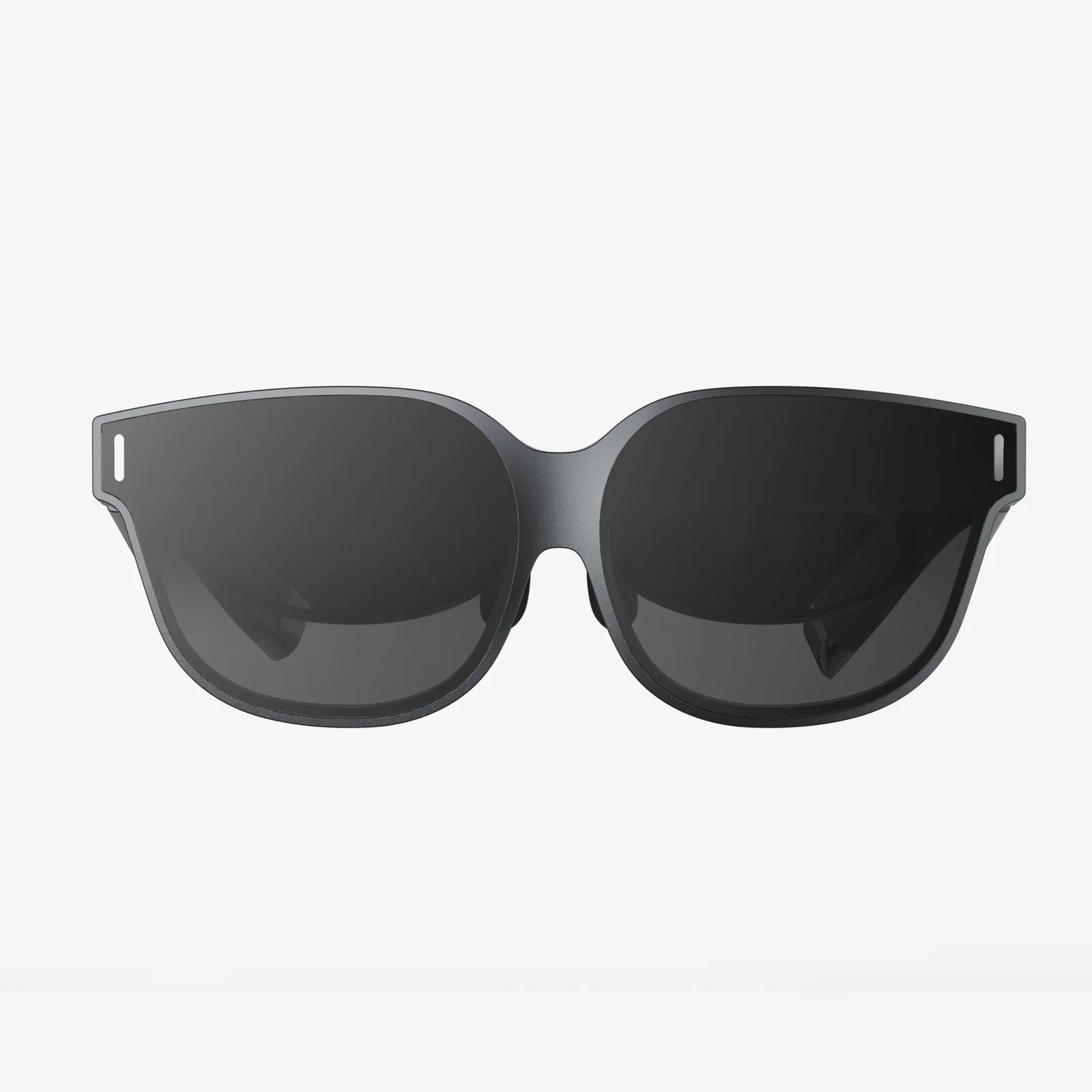
Imagine a world where your memories aren't confined to a flat, rectangular print or a digital screen, but can be re-experienced as holographic scenes layered onto your living room. Envision pointing your device at a historic ruin and watching it rebuild itself before your eyes, or capturing not just the light that bounced off a moment, but the moment itself, complete with data, emotion, and context. This is the frontier where two powerful mediums—one centuries-old and revered, the other nascent and transformative—are colliding: the timeless art of photography and the immersive potential of augmented reality. This isn't just a battle of technologies; it's a fundamental shift in the relationship between human experience, memory, and reality itself.
The Philosophical Divide: Capturing vs. Enhancing Reality
At its core, the difference between photography and augmented reality (AR) is a philosophical one, rooted in their primary objective. Photography, since its inception, has been an art of selection and subtraction. A photographer frames a scene, choosing what to include and, just as importantly, what to exclude. They wait for the perfect light, the decisive moment, to capture a sliver of reality and preserve it. The resulting image is a frozen testament to what was, a two-dimensional representation of a three-dimensional truth. Its power lies in its authenticity, its claim to document a moment that genuinely occurred.
Augmented reality, by contrast, is an art of addition and integration. It does not seek to freeze a moment but to augment the present one. Its goal is to overlay digital information—images, data, sounds, 3D models—onto our perception of the real world. Where photography subtracts context to focus on a subject, AR adds context to enrich it. A photograph of a cathedral is a record; an AR view of that same cathedral might show its architectural blueprints, narrate its history, or visually reconstruct its damaged portions. The philosophical question then becomes: is an experience more "real" or "valuable" when it is purely documentary, or when it is contextually enriched?
The Tools of the Trade: Lenses vs. Layers
The technological gulf between these two mediums is vast, yet they are increasingly sharing the same hardware. Traditional photography relies on a physical apparatus: lenses to focus light, a shutter to control its duration, and a sensor or film to record it. The skill involves mastering exposure, composition, and optics to produce a compelling image from the physical world.
AR, however, is a symphony of software and sensors. It uses complex algorithms for:
- Simultaneous Localization and Mapping (SLAM): To understand and map the physical environment in real-time.
- Object Recognition: To identify surfaces, objects, and points of interest to anchor digital content.
- Rendering Engines: To generate photorealistic or stylized digital assets that blend seamlessly with the real-world view.
While a photographer's primary tool is their creative eye, an AR creator's toolset involves 3D modeling, spatial audio design, and interactive programming. The output is no longer a static file (a JPEG or PNG) but an experience, often requiring a device like a smartphone, tablet, or AR glasses to be activated and viewed.
The Battle for Authenticity and "Truth"
Photography has long held a tenuous claim to "truth." While we acknowledge that a photo can be staged or manipulated, there remains a cultural bedrock belief that "the camera doesn't lie." This belief赋予s photojournalism and documentary photography their immense power. A photograph can serve as evidence, as a historical record, and as an unflinching witness to events.
AR inherently challenges this notion. It is, by its very definition, a medium that alters our perception of reality. This raises profound questions about authenticity. If two people look at the same street through different AR filters—one showing historical facts, another showing fictional characters—whose experience is more "true"? The potential for misinformation, manipulative advertising, and historical revisionism is significant. Photography can be doctored; AR can create an entirely alternative reality that is experienced as real, blurring the lines between fact and fiction in a far more immersive and persuasive way.
Convergence: When Photography and AR Collide and Merge
To frame this as a simple versus scenario is to miss the most exciting development: their convergence. The future likely lies not in one replacing the other, but in a symbiotic fusion.
We are already seeing this happen. Modern smartphones use computational photography, which is a form of augmentation—merging multiple exposures, enhancing details, and applying AI-driven scene recognition to improve a photo. This is AR's logic applied to the photographic process.
Looking forward, the next step is volumetric capture. Instead of taking a 2D photo, specialized camera arrays can capture a person or object in full 3D. This "volumetric photograph" can then be placed into any AR environment. This means you could capture a hologram-like recording of a child blowing out birthday candles and later project that memory onto your table, allowing you to walk around it and relive the moment from every angle. Here, photography's mission of preservation is achieved through AR's capability for immersion.
Furthermore, AR can breathe new life into archival photographs. Imagine pointing your device at an old, static photo in a museum and watching the scene within it animate, hearing the sounds of the era, and reading about the people depicted. The photograph becomes a portal, not an endpoint.
The Human Experience: Memory, Storytelling, and Connection
Ultimately, both mediums serve a deeper human need: to make sense of our world, tell our stories, and connect with others. Photography excels at creating poignant, shareable, and aesthetic artifacts of our lives. An album of photos is a curated narrative of our past.
AR has the potential to create more visceral, interactive, and personalized narratives. It can transform education, allowing students to dissect a virtual frog on their desk or walk through ancient Rome. It can revolutionize navigation, painting directions onto the street itself. It can enable new forms of art, where sculptures exist only in specific locations for those with the right viewer.
However, this power comes with a risk of sensory overload and a further retreat into personalized digital bubbles. The serene, contemplative nature of a beautiful photograph offers a respite that a constantly augmenting world may lack.
The Ethical Horizon: Privacy and Permanence in an Augmented World
The rise of AR forces us to confront new ethical dilemmas that photography only hinted at. If everyone is wearing AR glasses that can recognize faces and overlay information, the concept of privacy is radically altered. Will we be able to walk down the street anonymously? Will our homes be covered in digital graffiti only visible to certain people? The right to be forgotten becomes exponentially more complex in a world where every physical space can be tagged with persistent digital data.
Furthermore, photography creates a permanent record. An AR experience is often ephemeral, existing only for the user in that specific time and place. This raises questions about the preservation of culture and history. How do we archive an AR art installation? How do future generations understand our era if our primary records are interactive experiences that require obsolete hardware to view?
Photography freezes a moment in time; AR exists only in the present moment. This fundamental difference in temporality will shape how we use these tools to document our existence.
The choice between augmented reality and photography is not a binary one. It is a spectrum of visual expression, from the pure documentation of light to the rich layering of information onto our lived experience. Photography will endure for its elegance, its emotional resonance, and its powerful simplicity. It is the language of our past. Augmented reality, meanwhile, is rapidly becoming the canvas for our future—a tool not just for seeing the world, but for building upon it, for learning from it, and for connecting with it in ways we are only beginning to imagine. The most captivating future is one where we don't have to choose a side, but can wield both the photographer's discerning eye and the AR creator's limitless imagination to document, enhance, and ultimately, better understand the beautiful complexity of the world around us.
Share:
VR AR XR Updates: The Blurring Line Between Our World and the Digital
AR VR Questions: The Complete Guide to Understanding Immersive Technology