


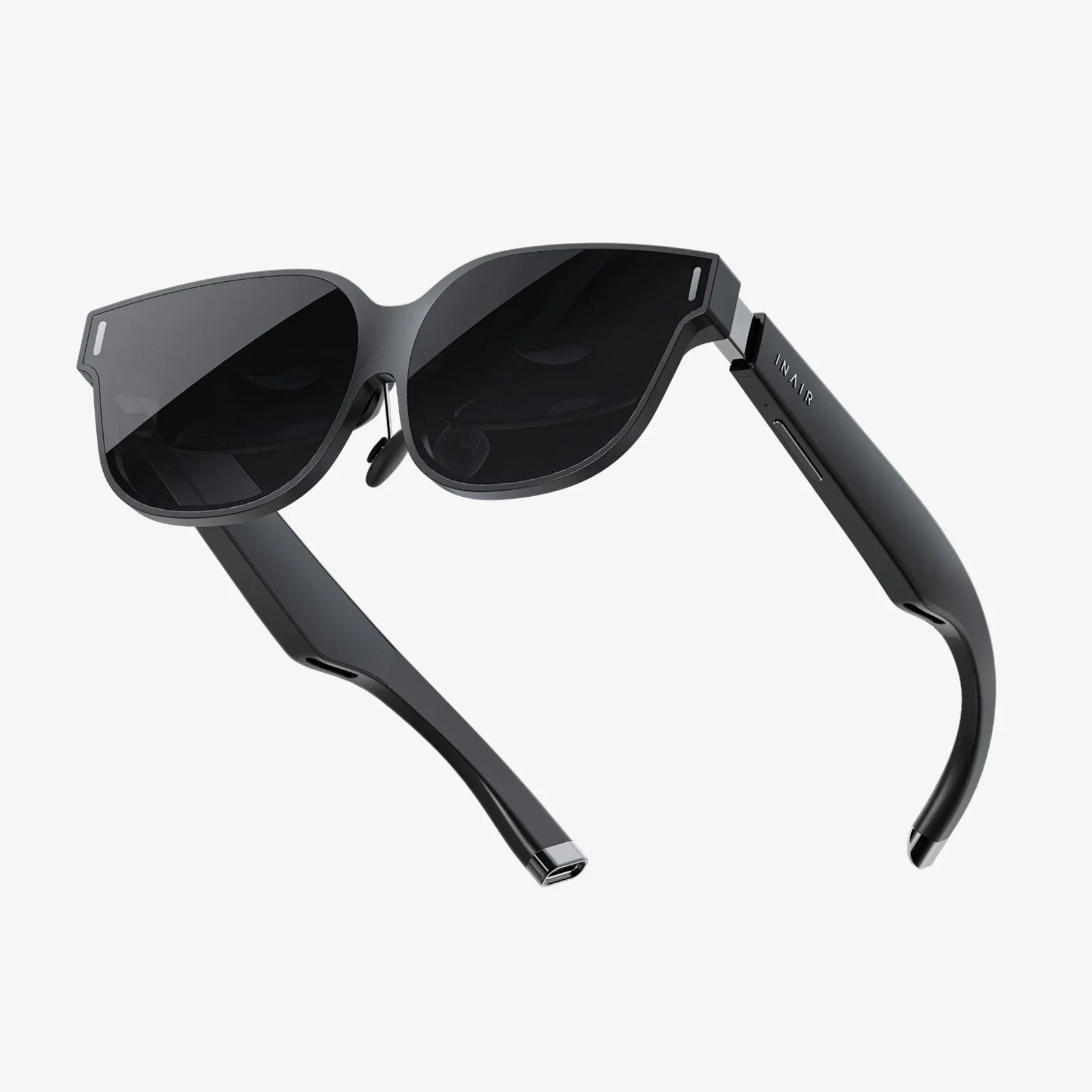
Most people still think of augmented reality as a novelty, but the real benefits of AR glasses are quietly reshaping how we work, learn, and live. Imagine walking into a new workplace and instantly seeing step-by-step guidance floating in your field of view, or studying a complex topic while 3D visualizations appear right on your desk. AR glasses are moving these scenarios from science fiction to everyday reality, and understanding their advantages now can give you a serious edge in the years ahead.
As AR glasses become lighter, smarter, and more connected, their impact is spreading across industries: from factories and hospitals to classrooms and living rooms. They are not just another screen; they are a new interface for the world around you. Below, you will find a detailed look at how this technology enhances productivity, safety, learning, collaboration, and even personal well-being, and why that matters for your future.
Understanding the Core Benefits of AR Glasses
To appreciate the full benefits of AR glasses, it helps to understand what makes them different from phones, tablets, or traditional headsets. Augmented reality glasses overlay digital information onto your real environment, aligning graphics, text, and 3D objects with what you see in the physical world. This hands-free, context-aware experience unlocks advantages that flat screens simply cannot match.
Some foundational benefits include:
- Hands-free access to information: Data, instructions, and communication tools appear in your view without needing to hold a device.
- Contextual awareness: AR content can be anchored to objects, locations, or tasks, making information more relevant and timely.
- Spatial understanding: 3D overlays help you visualize complex structures, processes, or layouts directly in the environment.
- Continuous connectivity: Real-time updates, remote assistance, and live data streams stay available while you move and work.
These capabilities are the foundation for the more specific advantages explored in the following sections.
Benefits of AR Glasses for Productivity and Efficiency
One of the most powerful benefits of AR glasses is their ability to boost productivity and efficiency across many types of work. Instead of switching between tools, screens, and documents, workers can keep their hands on the task while information appears exactly when and where it is needed.
Reducing Task-Switching and Distractions
Traditional workflows often force constant context switching: looking down at a manual, checking a phone, walking to a computer, or asking a coworker for help. AR glasses reduce these interruptions by keeping instructions, checklists, and visual cues in the user’s field of view.
- Faster task completion: Workers avoid time lost to searching for information or tools.
- Fewer mistakes: Clear, step-by-step overlays reduce the risk of skipping steps or misreading instructions.
- Better focus: Context-aware prompts mean fewer irrelevant notifications and less cognitive overload.
Streamlining Complex Workflows
In fields such as manufacturing, logistics, maintenance, and field service, tasks often involve many steps and specialized knowledge. AR glasses can guide users through these workflows with visual markers, arrows, and animations.
- Assembly guidance: AR overlays can highlight the exact parts to use, the orientation for installation, and torque specifications, all in real time.
- Maintenance procedures: Technicians can see exploded 3D views of equipment, with color-coded parts and interactive labels.
- Logistics and picking: Warehouse workers can follow visual paths to the right shelf, with highlighted bins and real-time inventory data.
These improvements translate into measurable gains in throughput, accuracy, and consistency, especially for teams managing complex or high-volume operations.
Benefits of AR Glasses for Training and Skill Development
Training is another area where the benefits of AR glasses are particularly dramatic. Instead of reading manuals or watching 2D videos, learners can practice tasks in a realistic environment enhanced with interactive guidance.
Accelerated Learning Through Immersive Instruction
AR glasses enable learners to see instructions directly overlaid on real equipment, tools, or environments. This makes abstract concepts concrete and supports learning by doing, which is often more effective than passive study.
- Step-by-step overlays: New employees can follow visual instructions projected onto the actual machines they are learning to use.
- Interactive prompts: AR systems can respond to learner actions, providing hints or corrections when a mistake is detected.
- Progress tracking: Training modules can automatically record completion of steps, time taken, and error rates.
This approach shortens the time it takes to reach proficiency, reduces the need for constant supervision, and helps standardize training across locations.
Safe Practice for High-Risk Tasks
Some skills are difficult or dangerous to practice in real life, especially at the early stages of learning. AR glasses make it possible to simulate these tasks in a controlled, low-risk environment while still using real-world surroundings.
- Hazard awareness: AR can highlight danger zones, moving equipment, or high-voltage areas, reinforcing safety protocols.
- Simulated scenarios: Trainees can rehearse emergency procedures with virtual overlays that mimic real incidents.
- Error tolerance: Mistakes in an AR training scenario do not have real-world consequences, but still provide valuable feedback.
By combining realism with safety, AR glasses make it easier to build confidence and competence before learners face high-stakes situations.
Benefits of AR Glasses in Healthcare
Healthcare is already experiencing some of the most transformative benefits of AR glasses. Clinicians, support staff, and patients all stand to gain from better visualization, guidance, and communication.
Enhanced Visualization for Procedures
In surgical and interventional settings, AR glasses can display critical information directly in the clinician’s field of view, reducing the need to look away from the patient.
- Anatomical overlays: Preoperative imaging can be aligned with the patient’s body, helping clinicians plan incisions or navigate complex anatomy.
- Real-time vitals: Heart rate, oxygen saturation, blood pressure, and other metrics can appear as unobtrusive overlays.
- Instrument guidance: Visual cues can assist in positioning instruments or implants with greater precision.
This improved situational awareness supports higher accuracy and may help reduce complications and procedure times.
Support for Remote Collaboration and Telemedicine
Another key benefit of AR glasses in healthcare is the ability to connect frontline clinicians with remote specialists. Instead of describing a situation over the phone, a clinician can share a live, first-person view.
- Remote expert guidance: Specialists can annotate the clinician’s view, draw attention to specific areas, or provide step-by-step instructions.
- On-the-spot training: Less experienced staff can receive real-time coaching while treating patients.
- Rural and emergency support: Facilities with limited resources can access expertise that would otherwise require transfers or delays.
These capabilities can expand access to high-quality care, especially in underserved regions, and help healthcare teams respond more effectively in critical situations.
Benefits of AR Glasses in Manufacturing and Industrial Settings
Industrial environments are ideal for AR adoption because they involve complex machinery, strict processes, and a constant need for safety and efficiency. AR glasses offer several concrete benefits in these contexts.
Improved Quality Control and Error Reduction
Quality control tasks often demand close inspection, careful measurement, and rigorous documentation. AR glasses can support these activities by overlaying standards and reference models directly onto products.
- Visual inspection aids: AR overlays can highlight areas that require inspection, compare real items to ideal models, and flag deviations.
- Measurement guidance: Virtual rulers, bounds, and tolerance indicators help ensure components meet specifications.
- Automated documentation: Photos, annotations, and inspection results can be captured hands-free and stored in digital records.
By reducing reliance on memory and manual paperwork, AR glasses help maintain consistent quality while reducing rework and waste.
Safer Operations and Risk Mitigation
Industrial sites often contain hazards such as heavy machinery, high temperatures, or hazardous materials. One of the practical benefits of AR glasses is the ability to keep workers informed about these risks in real time.
- Dynamic hazard alerts: AR can display warnings when workers enter restricted zones or approach active equipment.
- Procedural safeguards: Safety checklists and lockout-tagout procedures can appear at the point of use, reducing skipped steps.
- Emergency guidance: In an incident, AR can show evacuation routes, safety equipment locations, and status updates.
These features support a stronger safety culture by making risk information visible and actionable at the exact moment it matters.
Benefits of AR Glasses for Remote Work and Collaboration
Remote work has become a standard part of modern life, and AR glasses offer new ways to bridge the gap between distributed teams. Instead of relying solely on flat video calls, teams can share a sense of presence and context.
Shared AR Spaces for Collaboration
One major benefit of AR glasses is the ability to create shared virtual workspaces anchored in the real world. Team members can see the same 3D models, diagrams, or notes, even if they are in different locations.
- Co-design and review: Engineers, designers, and clients can walk around a virtual model, point out issues, and propose changes in real time.
- Interactive whiteboarding: Notes and sketches can appear as persistent overlays in a physical space, accessible to participants wearing AR glasses.
- Context-rich meetings: Instead of a grid of faces, participants can see content anchored to their environment, which can improve engagement and understanding.
This type of collaboration can shorten decision cycles, reduce misunderstandings, and make remote work feel more like being in the same room.
Remote Assistance for On-Site Tasks
Beyond meetings, AR glasses shine in scenarios where one person is on-site and another is providing remote support. The on-site worker shares a live view, while the remote expert overlays annotations and guidance.
- Field service support: Technicians can receive help with unfamiliar equipment without waiting for a specialist to travel.
- Construction and inspection: Supervisors can review progress, point out corrections, and verify work remotely.
- IT and infrastructure maintenance: Non-experts can be guided through simple fixes, reducing downtime and service calls.
This approach saves time and travel costs, while also expanding the reach of experienced experts across more sites and teams.
Benefits of AR Glasses in Retail and Customer Experience
Retailers and customer-facing businesses are exploring the benefits of AR glasses to create more engaging, personalized experiences. This applies to both customers and staff.
Enhanced Shopping Experiences
AR glasses can transform how customers discover, evaluate, and interact with products in stores or showrooms.
- Product information overlays: Customers can view specifications, reviews, and compatibility details simply by looking at an item.
- Virtual try-ons and previews: AR can simulate how furniture fits in a space, how decor looks on a wall, or how certain items might coordinate.
- Guided navigation: Visual cues can direct customers to items on their shopping list or highlight special offers as they walk.
These features can make shopping more efficient and enjoyable, while helping customers make more informed decisions.
Empowering Retail Staff
Retail employees also benefit from AR glasses, which can provide real-time access to inventory, pricing, and product knowledge.
- Instant product lookups: Staff can check stock levels, sizes, and alternatives without leaving the customer.
- Onboarding support: New employees can follow AR-guided tasks for stocking, merchandising, and checkout procedures.
- Store operations: Visual instructions can streamline tasks like shelf audits, price changes, and planogram compliance.
By reducing friction in both customer and staff experiences, AR glasses help retail environments become more responsive and efficient.
Benefits of AR Glasses for Education and Lifelong Learning
Education at every level can tap into the benefits of AR glasses to make learning more interactive, visual, and personalized. This applies to schools, universities, professional training, and self-directed learning.
Bringing Abstract Concepts to Life
Many subjects are easier to understand when learners can see and manipulate 3D representations rather than just reading about them. AR glasses make this possible in ordinary classrooms or study spaces.
- STEM visualizations: Students can explore molecules, physics simulations, or planetary systems as interactive 3D objects.
- Historical reconstructions: Historical events, architecture, and artifacts can be overlaid on real locations or classroom environments.
- Language and geography: AR can label objects in different languages, show cultural contexts, or overlay maps onto real-world spaces.
These experiences help learners connect theory with tangible representations, improving comprehension and retention.
Personalized and Adaptive Learning
AR glasses can also support more personalized learning paths by adapting content to each learner’s pace and performance.
- Real-time feedback: AR can provide hints, corrections, and encouragement as learners complete exercises.
- Adaptive difficulty: Tasks can become more or less challenging based on how quickly learners master previous steps.
- Progress visualization: Learners can see their progress, achievements, and areas for improvement in an engaging visual format.
This adaptive approach supports a wide range of learning styles and can help keep students motivated over longer periods.
Benefits of AR Glasses for Accessibility and Inclusion
One of the most meaningful benefits of AR glasses is their potential to make the world more accessible and inclusive. By augmenting perception and communication, AR can help remove barriers for people with different abilities.
Assistance for Visual and Hearing Impairments
AR glasses can provide alternative channels for information that might otherwise be difficult to access.
- Real-time captions: Spoken language can be converted into text and displayed in the wearer’s view, supporting people with hearing impairments.
- Visual enhancement: Contrast adjustments, edge detection, and magnification features can assist individuals with low vision.
- Object and sign recognition: AR can label objects, read signs aloud, or provide navigation cues in unfamiliar environments.
These tools help users interact more independently with their surroundings and participate more fully in conversations and activities.
Support for Cognitive and Learning Differences
AR glasses can also support individuals with cognitive, attention, or learning differences by providing structured cues and simplified interfaces.
- Task breakdown: Complex tasks can be broken into small, visual steps that appear one at a time.
- Reminder prompts: AR can provide gentle reminders for schedules, medications, or important actions.
- Environment simplification: Visual clutter can be reduced by highlighting relevant objects or instructions.
These features can increase independence and confidence in daily activities, education, and work.
Benefits of AR Glasses for Everyday Life and Personal Use
Beyond professional environments, the benefits of AR glasses extend into everyday routines, hobbies, and personal growth. As devices become more comfortable and affordable, more people will experience these advantages directly.
Navigation and Wayfinding
AR glasses can provide intuitive, glanceable navigation that feels more natural than constantly checking a phone.
- Turn-by-turn overlays: Arrows and markers appear on the road or sidewalk, reducing confusion at intersections.
- Point-of-interest highlights: Restaurants, transit stops, and landmarks can be highlighted as you move through a city.
- Indoor navigation: Large venues like airports, malls, or campuses can be easier to navigate with AR guidance.
These capabilities are particularly helpful in unfamiliar places or complex buildings.
Fitness, Wellness, and Hobbies
AR glasses can enhance personal activities by providing real-time feedback and immersive experiences.
- Workout guidance: Form cues, pacing, and performance metrics can appear during exercise without looking at a watch or phone.
- Outdoor activities: Hikers, cyclists, and runners can see routes, elevation, and safety alerts in their view.
- Creative pursuits: Artists, makers, and hobbyists can overlay sketches, measurements, or design elements on their workspaces.
These enhancements make everyday activities more engaging and can support healthier, more active lifestyles.
Addressing Challenges While Maximizing the Benefits of AR Glasses
To fully realize the benefits of AR glasses, it is important to acknowledge and address their challenges. These include comfort, privacy, social acceptance, and responsible use.
Comfort and Usability
For AR glasses to be worn for long periods, they must be comfortable, lightweight, and easy to use.
- Ergonomic design: Weight distribution, adjustable fits, and prescription compatibility are key factors.
- Intuitive interfaces: Voice commands, gesture controls, and simple menus reduce friction.
- Battery and performance: Devices must balance power and functionality without frequent interruptions.
As hardware and software improve, these barriers are gradually decreasing, making AR glasses more practical for daily use.
Privacy, Security, and Social Norms
Because AR glasses often include cameras and sensors, they raise important questions about privacy and social comfort.
- Clear indicators: Visible signals when recording or streaming can help others understand what the device is doing.
- Data protections: Strong security, transparent policies, and user control over data are essential.
- Respectful use: Social norms will evolve around where and how AR glasses are considered appropriate.
Responsible design and thoughtful usage are crucial to maintaining trust and ensuring that the benefits of AR glasses are widely accepted.
Why the Benefits of AR Glasses Matter for Your Future
The benefits of AR glasses are not limited to a niche group of tech enthusiasts. They are reshaping how people learn new skills, perform complex work, collaborate across distances, and navigate everyday life. Whether you are a professional seeking a competitive edge, an educator looking to engage learners, a business leader aiming to improve operations, or simply someone curious about the next wave of technology, AR glasses are worth your attention.
As the technology matures, the line between digital and physical experiences will continue to blur. Those who understand and embrace the benefits of AR glasses early will be better prepared to adapt, innovate, and thrive in this new environment. Exploring how AR could enhance your work, studies, or daily routines today may open opportunities that will be standard expectations tomorrow, and that makes now the ideal time to start paying attention.
Share:
Designing UI For AR Glasses That People Actually Want To Use
Is AR Glasses Good For Gaming? A Deep Dive Into The Future Of Play