


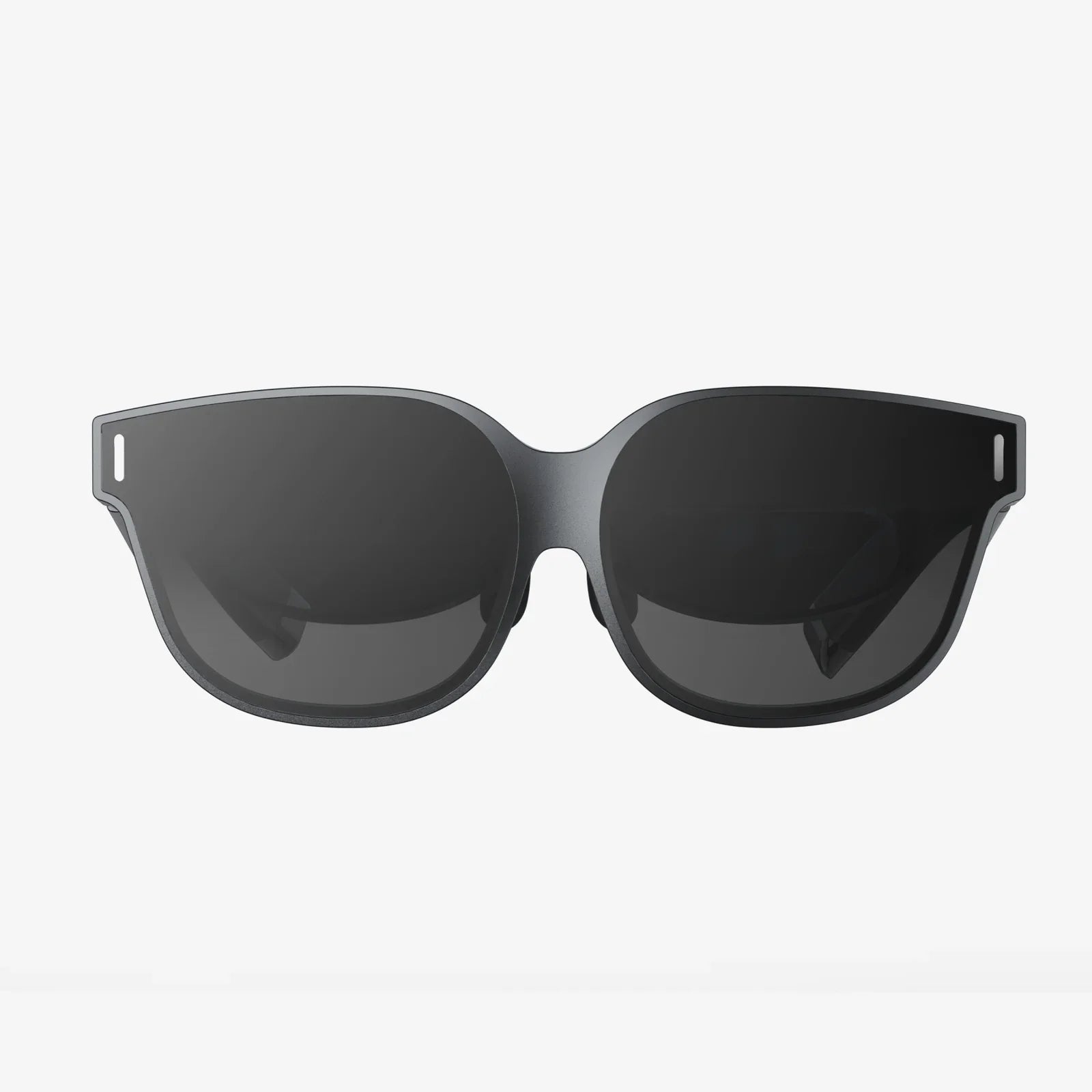
Imagine a world where digital information doesn’t live on a screen in your hand but is seamlessly woven into the fabric of your reality. A world where instructions float over a complex engine you’re repairing, historical figures narrate their stories as you walk through ancient ruins, and a virtual colleague sits on your couch for a brainstorming session. This is no longer the stuff of science fiction; it’s the promise of 2025’s best AR devices, and the future is putting on its headset.
The State of Augmented Reality in 2025
By 2025, Augmented Reality has decisively shifted from a niche novelty to a mainstream technological paradigm. The convergence of immense computational power, breakthroughs in display technology, and the maturation of spatial computing platforms has created a fertile ground for devices that are not only powerful but also practical and, crucially, desirable. The market is no longer defined by a single archetype; instead, it has blossomed into a diverse ecosystem catering to every need, from professional enterprise applications to all-day consumer wearables. The defining quest of this era is no longer just about achieving technical feasibility, but about perfecting the human experience—comfort, usability, and genuinely magical interactions.
Key Technological Breakthroughs Defining This Generation
The devices leading the pack in 2025 are built upon a foundation of several critical advancements that have solved long-standing challenges.
Photonic Crystal Waveguide Displays
This mouthful of a term is the reason why modern AR glasses can be so slim. Unlike older bulkier waveguide technologies, photonic crystal systems allow for incredibly efficient light projection with exceptional clarity and a massive field of view (often exceeding 100 degrees), finally delivering on the promise of immersive, cinema-sized virtual screens without the tunnel vision of earlier models.
Low-Latency, On-Device AI Co-Processors
True contextual awareness requires instant understanding. Dedicated neural processing units (NPUs) within these devices now handle complex computer vision tasks—object recognition, spatial mapping, gesture tracking—in real-time, without needing a constant cloud connection. This means interactions are instantaneous, private, and incredibly responsive, from translating a menu the moment you look at it to identifying a plant species during a hike.
Advanced Sensor Fusion Arrays
A combination of high-resolution RGB cameras, LiDAR scanners, depth sensors, and inertial measurement units (IMUs) work in concert to create a hyper-accurate, real-time 3D model of the user’s environment. This precise understanding of the physical world is what allows digital objects to convincingly occlude behind real-world furniture and interact with surfaces as if they were truly there.
All-Day Battery and Distributed Computing
The burden of processing has been intelligently distributed. While the glasses themselves house the essential sensors and displays, a companion device—often a sleek pocketable compute unit or a powerfully connected smartphone—handles the heaviest computations. This architecture allows the eyewear to be light and comfortable enough for all-day wear, with battery life measured not in hours, but in a full waking day.
Defining Features of Top-Tier AR Devices in 2025
When evaluating the best AR devices of 2025, experts and consumers alike look for a combination of these essential features.
Visual Fidelity and Immersion
This is paramount. The best devices offer high-resolution displays with exceptional brightness (over 3,000 nits) to remain clear in direct sunlight, rich color gamut, and minimal screen-door effect. A wide field of view is no longer a luxury but a standard expectation for a truly immersive experience.
Ergonomics and Form Factor
The goal is forgettability. The leading devices weigh less than 100 grams and are balanced for comfort, avoiding the painful nose-bridge pressure of yesteryear. They come in a variety of styles, some even resembling fashionable eyewear, making them socially acceptable to wear in any setting.
Spatial Audio and Immersive Sound
Audio is half the experience. Bone conduction technology and miniature directional speakers provide rich, spatial audio that seems to come from the environment itself without isolating the user from ambient sounds, which is critical for both safety and situational awareness.
Intuitive Interaction Modalities
The best devices offer a suite of interaction methods. This includes precise hand-tracking that allows you to pinch, grab, and manipulate digital objects, voice commands powered by advanced natural language processing, and subtle, wearable controllers for precision tasks like 3D design. The interface feels like a natural extension of the user’s intent.
Robust Developer Ecosystem and Platform
A device is only as good as its software. The top platforms are supported by mature SDKs and creator tools, enabling a vast and diverse library of applications, from productivity suites and games to specialized industrial tools, ensuring the hardware remains useful and evolving.
Leading Categories and Their Champions
The AR landscape in 2025 is not a monolith. It's best understood by categorizing devices based on their primary use case and design philosophy.
The All-Day Companion Glasses
These are the devices designed for seamless integration into daily life. They are lightweight, stylish, and prioritize features like notifications, navigation, call handling, and contextual information overlay. Their battery life is stellar, and they often feature prescription lens compatibility. They are the spiritual successor to the smartphone, offering glanceable, hands-free access to digital information.
The High-Fidelity Immersive Headset
This category is for professionals and enthusiasts who demand the absolute best in visual performance. They feature the widest field of view, the highest resolution displays, and are often tethered to a powerful computer for rendering complex 3D models, architectural visualizations, or detailed medical imagery. They are the tool of choice for designers, engineers, and surgeons.
The Enterprise and Industrial Workhorse
Built for durability, safety, and specific task-oriented applications. These devices are often part of a integrated system, featuring ruggedized designs, thermal cameras, augmented manuals, and remote expert guidance software. They are transforming fields like manufacturing, field service, and logistics by putting crucial information directly in a worker’s line of sight.
Transformative Applications Across Industries
The power of these devices is realized through software, and the applications in 2025 are staggering.
Revolutionizing Remote Collaboration
Teams can share a virtual space overlaid onto their physical environment. Engineers can annotate a machine in real-time for a colleague on another continent, architects can walk clients through a full-scale holographic model of a building, and medical students can observe a surgery from the surgeon’s point of view.
Redefining Retail and Try-Before-You-Buy
Shoppers can see how a new sofa fits in their living room, how a pair of glasses looks on their face, or even how a new car’s dashboard would feel—all from their home. This has dramatically reduced return rates and increased consumer confidence.
Supercharging Education and Training
From interactive historical lessons that bring timelines to life to complex mechanical training where instructions are overlaid directly on equipment, AR creates immersive, hands-on learning experiences that dramatically improve retention and understanding.
Navigating the Considerations: Privacy, Health, and Social Etiquette
With great power comes great responsibility. The always-on, sensor-rich nature of AR devices raises important questions. The best platforms in 2025 have addressed these head-on with hardware features like physical camera shutters, clear recording indicator lights, and robust privacy controls that give users complete ownership over their data. Furthermore, extensive research has gone into mitigating eye strain and ensuring user comfort during prolonged use, making them safer than staring at a traditional screen for hours. Social acceptance is growing as the technology becomes more commonplace and discreet.
The Road Ahead: What Lies Beyond 2025?
The trajectory points towards even greater integration. We are moving towards contact-lens based AR and eventually neural interfaces, but for the foreseeable future, wearable eyewear is the vessel. The focus will be on enhancing resolution to retinal levels, improving battery technology for true week-long endurance, and developing AI that can anticipate user needs before they even voice them. The line between the digital and the physical will continue to blur, becoming indistinguishable.
The best AR devices of 2025 are more than just gadgets; they are portals to a layered world of infinite information and possibility. They represent the culmination of decades of research, finally delivering a experience that feels less like using a computer and more like enhancing your own perception. The revolution isn’t coming; it’s already here, waiting for you to look up and see it.
Share:
Wearable Internet of Things: The Invisible Revolution Reshaping Our Daily Lives
Glasses You Can Watch Movies On: The Ultimate Guide to Personal Cinematic Freedom