


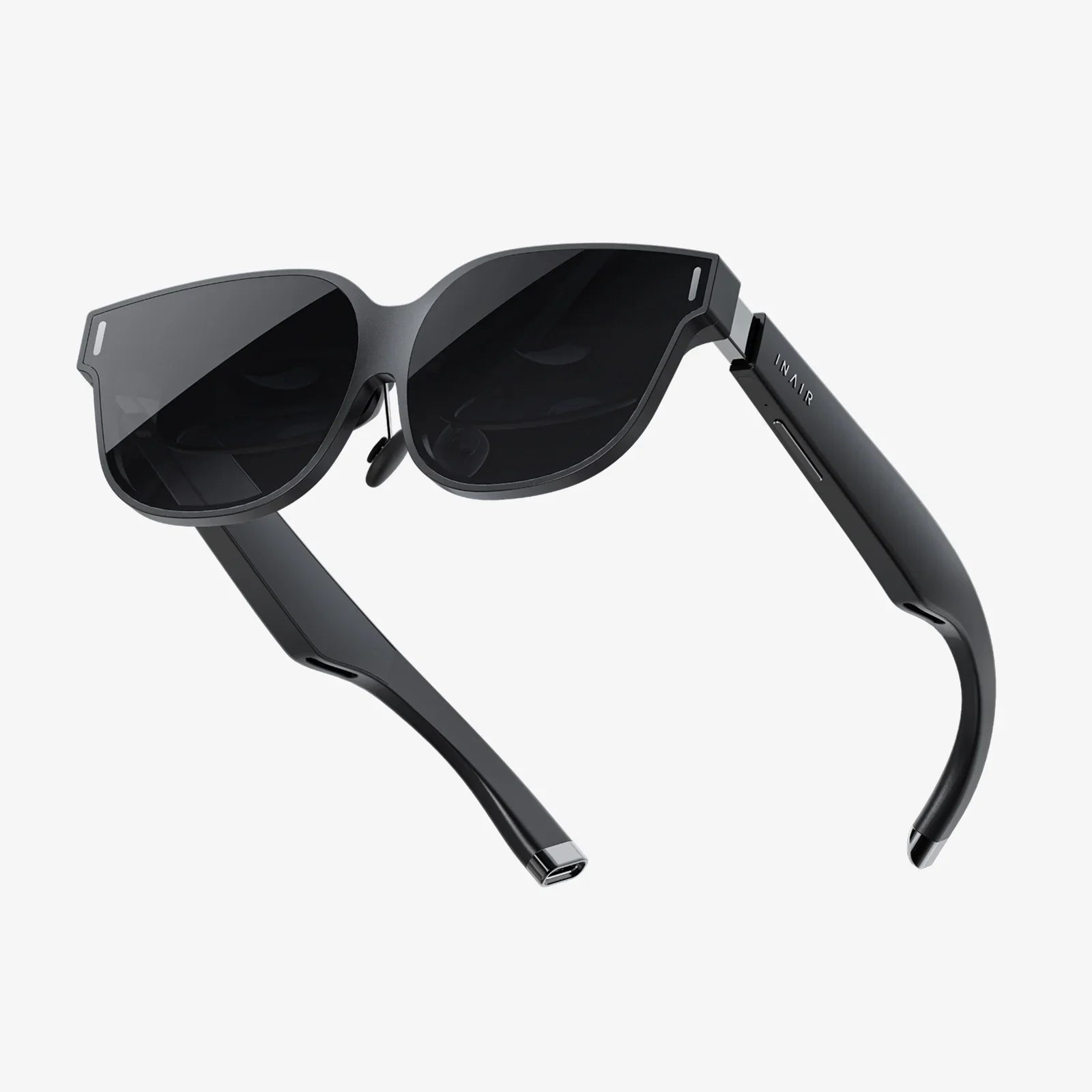
Imagine a world where digital information doesn't live on a screen in your hand but is seamlessly woven into the fabric of your reality, enhancing everything you see, do, and experience. This is the promise of Augmented Reality (AR), a technological revolution that is no longer a distant sci-fi fantasy but an emerging present. The quest for the best AR devices is about finding the perfect portal to this new layer of existence, a gateway that feels less like a piece of technology and more like a natural extension of your own perception. The future is not just coming; it's about to overlay your world.
Beyond the Hype: Defining True Augmented Reality
Before diving into the devices themselves, it's crucial to understand what separates true AR from other immersive technologies. Often confused with Virtual Reality (VR), AR has a fundamentally different goal. Where VR seeks to replace your reality with a completely digital one, AR aims to augment and enrich your existing environment.
The best AR devices achieve this through a combination of sophisticated hardware and intelligent software. They must understand the physical world in real-time, a process that involves:
- Advanced Spatial Mapping: Using sensors like LiDAR, depth cameras, and SLAM (Simultaneous Localization and Mapping) technology, the device scans and creates a 3D digital map of your surroundings. It understands the dimensions of your room, the location of your furniture, and the shape of the objects within it.
- Precise Pose Tracking: The device constantly tracks its own position and orientation in space relative to the mapped environment. This ensures that digital objects don't float aimlessly but remain locked in place, whether on your wall or on your coffee table.
- Seamless Visual Integration: This is the magic. Through high-resolution, transparent displays, digital content is projected into your field of view. The best devices manage this with correct lighting, shadows, and occlusion (where a real-world object can pass in front of a digital one, blocking it from view), creating a convincing illusion that the digital is physically present.
The Anatomy of an Elite AR Experience
What separates a good AR device from a truly great one? It's a delicate balance of several critical factors, each pushing the boundaries of current technology.
The Visual Gateway: Displays and Optics
The display is the soul of the AR device. The goal is a bright, high-resolution, and expansive digital canvas that feels native to your natural vision. Key challenges include field of view (FOV)—how much of your vision can be filled with digital content—and managing the vergence-accommodation conflict, where your eyes struggle to focus on digital objects at different depths. The best devices employ cutting-edge solutions like waveguide optics, micro-LED displays, and holographic techniques to create a comfortable, immersive, and visually stunning overlay.
The Brain and the Brawn: Processing Power
Processing the real world is computationally intensive. These devices are not just rendering complex 3D graphics; they are doing so while simultaneously processing multiple high-fidelity camera feeds, understanding spatial geometry, and running AI algorithms. This requires immense processing power, often delivered through a combination of onboard chipsets—specialized for computer vision and AI tasks—and sometimes supplemented by offloading processing to a connected companion device or powerful cloud computing infrastructure.
Bridging the Digital and Physical: Sensors
A device is only as aware as its sensors. A top-tier AR headset is a sensor powerhouse, typically featuring:
- High-resolution RGB cameras for pass-through video or environment recording.
- Depth sensors (e.g., LiDAR, time-of-flight cameras) for precise 3D mapping.
- Inertial Measurement Units (IMUs) for accurate head and motion tracking.
- Eye-tracking cameras for intuitive interaction and foveated rendering (dynamically rendering the area you're directly looking at in high detail to save processing power).
- Hand-tracking cameras to use your natural gestures as an input method.
The Interface of Tomorrow: Interaction Modalities
How do you interact with a world that doesn't physically exist? The best AR devices offer a suite of intuitive options. Voice commands allow for hands-free control. Hand and gesture tracking lets you reach out and manipulate digital objects as if they were real. Sophisticated controllers can offer haptic feedback for a more tactile experience. The most advanced systems blend these methods contextually, allowing you to pinch to select, voice to command, and gesture to throw away, creating a fluid and natural user interface.
The Form Factor Dilemma: Style vs. Substance
Perhaps the greatest challenge is design. There is a constant tension between capability and wearability. A device packed with premium sensors and a powerful compute unit can become heavy and cumbersome. The ultimate goal is a pair of glasses that are socially acceptable, comfortable for all-day wear, and yet powerful enough to deliver a transformative experience. Current leaders in the space are exploring different points on this spectrum, from sleek, lightweight glasses focused on specific information display to more robust headsets designed for immersive, high-fidelity experiences in controlled environments.
A World Remade: The Transformative Applications
The value of AR isn't in the technology itself, but in what it enables. The best AR devices are unlocking new possibilities across every industry.
Revolutionizing the Professional Landscape
For enterprise and industry, AR is already delivering a staggering return on investment. Technicians and engineers can see interactive repair manuals overlaid directly on the complex machinery they are fixing, with remote experts able to see their view and annotate the real world to guide them. Architects and interior designers can walk clients through full-scale, photorealistic 3D models of unbuilt structures. Surgeons can visualize patient scans, like MRI data, projected directly onto the patient's body during procedures, enhancing precision and safety.
Redefining Social Connection and Entertainment
AR promises to dissolve the barriers of physical distance. Instead of flat video calls, imagine sharing a virtual space with holographic representations of loved ones, feeling as if you are sitting together on the same couch. Gaming will leap out of the TV and into your living room, transforming your home into a dungeon to explore or your tabletop into a strategic battlefield. Live sports events could be enhanced with real-time stats floating above the players, and concerts could feature breathtaking digital effects happening right in your own space.
Enhancing Daily Life and Personal Productivity
On a personal level, AR acts as a contextual superpower. Navigation arrows can be painted onto the street in front of you, guiding you to your destination without ever looking down at a phone. Smart home controls can appear as interactive panels on your walls. You could receive subtle, glanceable notifications that don't pull you out of the moment. Learning a new skill, like cooking or playing an instrument, could be guided by step-by-step instructions integrated directly into your workspace.
Navigating the Current Ecosystem
The AR landscape is diverse, catering to different needs and levels of immersion. Understanding these categories is key to identifying the best device for a given purpose.
Standalone Headsets: These are all-in-one systems, representing the pinnacle of immersive AR. They contain their own compute pack, battery, and advanced sensor arrays. They are designed for deep, interactive experiences where high fidelity and robust tracking are paramount, often targeting professional and developer use cases.
Glasses-form Tethered Devices: These sleek glasses prioritize wearability and style. They often lack the full sensor suite of a headset and instead leverage the processing power of a connected smartphone or a small dedicated compute puck that fits in a pocket. This category is focused on delivering information, notifications, and simpler AR experiences for all-day use.
Smartphone-Dependent AR: While not a dedicated device, this is where most people have experienced AR. Using a phone's camera and screen, it offers a glimpse into the technology through filters and simple games. It serves as an accessible entry point but is limited by its form factor—you must hold up your phone, breaking immersion.
Gazing into the Crystal Ball: The Future of AR
The devices available today are merely the first steps on a long journey. The trajectory points toward even more incredible advancements. We are moving toward neural interfaces that could allow us to control AR environments with our thoughts. 5G and edge computing will enable incredibly complex and photorealistic AR experiences to be streamed instantly to lightweight glasses. Eventually, the technology will converge toward a single, universal device: a pair of normal-looking glasses that can toggle between full immersion and subtle augmentation, becoming an indispensable part of our lives, much like the smartphone is today.
The journey to find the best AR device is a journey into the next era of human-computer interaction. It’s a search for a lens that doesn’t just help you see the world more clearly, but helps you see a better, more informed, and more magical version of it. The devices are the keys, and they are finally here, waiting to unlock a new dimension of reality right before your eyes.
Share:
Quality VR Headset - The Ultimate Guide to High-Fidelity Immersion
Best Virtual Goggles: Your Ultimate Portal to Immersive Digital Realities