


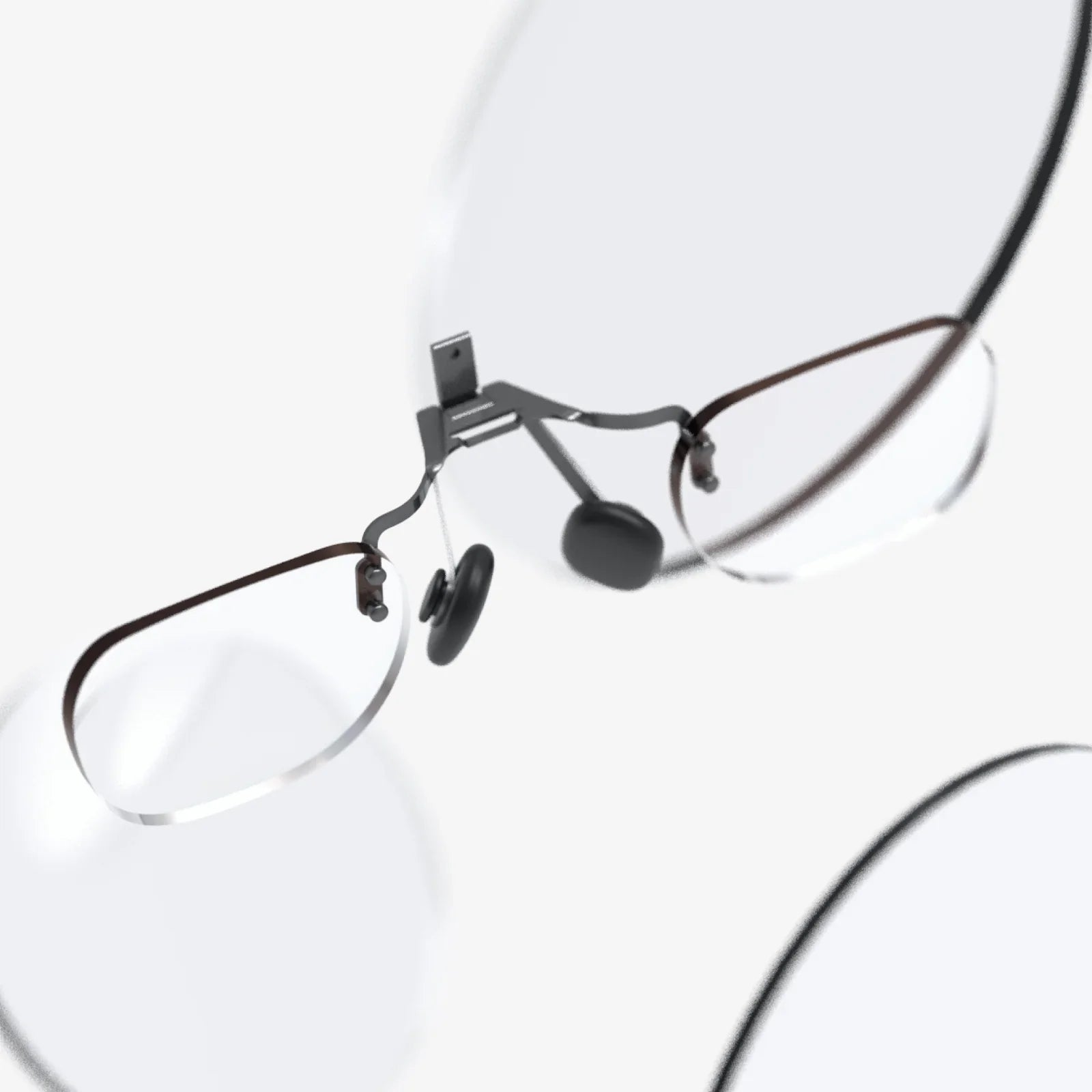
Imagine a world where information floats effortlessly before your eyes, where your favorite playlist is the soundtrack to your life without ever plugging in a single wire, and where the digital and physical realms merge into a seamless, interactive experience. This isn't a distant sci-fi fantasy; it's the reality being built today, one frame at a time, by the best smart eyewear. The race to place a powerful computer on your face is heating up, promising to revolutionize how we work, play, and connect. But with so many options emerging, how do you navigate this exciting new landscape to find the perfect pair that doesn't just add tech to your life, but truly enhances it? This ultimate guide cuts through the hype to explore the capabilities, categories, and crucial considerations that define the pinnacle of smart eyewear.
Beyond Novelty: The Core Technologies Powering Smart Vision
At its heart, smart eyewear is a marvel of miniaturization, packing an astonishing array of technologies into a form factor designed to be worn all day. Understanding these core components is key to appreciating what makes the best models stand out.
Advanced Optical Systems: This is where the magic of visual augmentation happens. Waveguides, tiny, transparent pieces of glass or plastic etched with microscopic patterns, are the industry standard for projecting images directly into the user's field of view. The best systems offer a wide field of view (FOV) for an immersive experience, high brightness to remain visible in various lighting conditions, and exceptional clarity to prevent eye strain. Some systems use MicroLED displays for their incredible brightness and efficiency, while others employ Liquid Crystal on Silicon (LCoS) or OLEDoS (OLED on Silicon) for rich colors and deep blacks.
Audio Innovation: For eyewear focused on audio, the challenge is creating rich, immersive sound without traditional speakers. The best audio glasses use bone conduction or, more commonly, open-ear audio systems. These employ tiny transducers that sit just off the ear, directing sound waves into the ear canal. The finest implementations create a surprising amount of bass and clear treble while minimizing sound leakage, allowing you to enjoy music and take calls without isolating you from your environment—a critical feature for safety and awareness.
Sensor Fusion: True intelligence requires situational awareness. High-end smart glasses are equipped with a suite of sensors that typically include:
- **Inertial Measurement Units (IMUs):** Accelerometers and gyroscopes that track head movement and orientation.
- **Cameras:** High-resolution cameras for capturing photos and video, but more importantly, for computer vision tasks. Depth-sensing cameras (like time-of-flight sensors) map the environment in 3D.
- **Microphone Arrays:** Multiple microphones work together for beamforming, which isolates the user's voice from background noise for crystal-clear call quality and accurate voice assistant interaction.
- **Ambient Light Sensors:** To automatically adjust display brightness.
Processing Power and Connectivity: All this data needs to be processed in real-time. While some glasses rely on a connected smartphone for heavy computation, the most advanced models feature a dedicated multi-core processor and a Neural Processing Unit (NPU) onboard. This allows for on-device AI for tasks like real-time translation and object recognition without latency or a data connection. Connectivity is handled through Bluetooth for audio and phone pairing, and Wi-Fi for more data-intensive tasks and updates.
A Spectrum of Smarts: Categories of Smart Eyewear
Not all smart glasses are created equal. The market has organically segmented into distinct categories, each catering to different needs and use cases. The "best" pair entirely depends on which category aligns with your lifestyle.
1. The Audio-First Performers: This is currently the most mature and accessible category. These glasses prioritize high-quality, open-ear audio and hands-free calling above all else. They look almost indistinguishable from premium traditional eyewear, housing discreet speakers and microphones in the temples. Their smart features are often limited to music, calls, and voice assistant access. They are perfect for someone who wants to upgrade their daily headphones to a more situational-aware, all-day wearable that doubles as a stylish accessory.
2. The Augmented Reality (AR) Pioneers: This category represents the futuristic ideal of smart eyewear. These devices feature transparent displays that overlay digital information—text, graphics, 3D models—onto the real world. Use cases are expansive: following GPS directions that are painted onto the street, viewing a recipe that hovers next to your mixing bowl, or having a life-sized telepresence avatar of a colleague appear in your living room. The best AR glasses offer a compelling "see-through" experience with minimal obstruction and intuitive control schemes, often via touchpad, voice, or gesture recognition.
3. The Fitness and Outdoor Specialists: Designed for action, these glasses often feature more ruggedized designs and are focused on providing data to athletes in real-time. Imagine seeing your heart rate, pace, and navigation cues without ever looking down at your wrist. They typically boast longer battery life, enhanced anti-fogging capabilities, and polarized lenses for outdoor use. They integrate deeply with popular fitness platforms to provide a heads-up display for your workout.
4. The Productivity Powerhouses: Aimed squarely at professionals, these glasses are designed to create a portable, private workspace. They may use micro-displays that project a large, virtual screen in front of the user, effectively allowing them to work from anywhere with the equivalent of a multi-monitor setup. They are invaluable for digital nomads, developers, and anyone who needs a massive screen that fits in their pocket. Privacy is a key feature, as the display is only visible to the wearer.
Design and Comfort: The All-Day-Wear Challenge
The most powerful smart glasses are useless if they are uncomfortable, heavy, or look bizarre. The best designs have made significant strides in overcoming the "cyborg" aesthetic.
Form Factor and Weight Distribution: Engineering a comfortable pair of smart glasses is a complex balancing act. The electronics, batteries, and speakers add weight, which must be distributed evenly to avoid pressure on the nose or ears. The best models use lightweight yet durable materials like titanium, flexible nylon, and advanced composites. They often feature adjustable nose pads and spring hinges to ensure a secure and custom fit for a wide range of face shapes.
Aesthetics and Personalization: Style is subjective, but the leading products understand that they are, first and foremost, eyewear. They offer a variety of frame shapes (aviator, rectangular, round) to suit different tastes and often partner with established optical brands to provide prescription lens compatibility. Interchangeable lenses—both clear and tinted for sun—are a hallmark of a thoughtful design, allowing one pair of tech to adapt to indoor and outdoor environments seamlessly.
Battery Life and Management: Battery technology remains a key constraint. Audio-focused glasses can often last a full day or more on a single charge, while power-hungry AR glasses may only manage a few hours of active use. The best systems are transparent about battery expectations and offer clever solutions, such as a compact charging case that provides multiple additional charges, or a "low-power mode" that extends usage for essential tasks. The speed and convenience of charging (e.g., USB-C) are also critical factors.
The Intelligent Experience: Software, Apps, and Ecosystem
The hardware is only half the story. The soul of smart eyewear is its software. A robust and intuitive operating system is what transforms a curious gadget into an indispensable tool.
Voice Assistant Integration: The primary interface for many smart glasses is voice. seamless, always-listening (with user permission) access to a major voice assistant is non-negotiable. It should understand commands in noisy environments, execute tasks reliably, and feel like a natural conversation rather than a clunky command-line input.
App Ecosystems and Developer Support: A healthy app store is a sign of a thriving platform. The best smart glasses attract developers who create innovative applications that unlock new use cases. From navigation and translation apps to immersive games and specialized professional tools, the software library defines the long-term value of the device. Open SDKs (Software Development Kits) encourage this innovation and are a marker of a company committed to its platform.
Seamless Multi-Device Integration: Your smart glasses shouldn't be an island. They need to work flawlessly within your existing tech ecosystem. This means effortless pairing with your smartphone (both iOS and Android), laptop, and tablet. Features like automatic switching between devices, sharing clipboard contents, and receiving unified notifications are what create a cohesive and productive experience.
Privacy, Security, and the Social Contract
Wearing a camera on your face inherently raises valid concerns about privacy and security. The best manufacturers address these concerns head-on with both technology and transparency.
Transparent User Controls: It must be immediately obvious to others when the camera is active. The leading devices use a physical hardware indicator—a bright LED light that cannot be disabled—that illuminates whenever the camera is in use. This allows the wearer to record consciously and gives people in the vicinity a clear signal.
Data Ethics and On-Device Processing: Privacy-conscious companies process as much data as possible directly on the device itself. For instance, a translation feature might process the audio on the glasses' own chip rather than streaming it to the cloud, ensuring a private conversation remains private. Clear, easy-to-understand privacy policies that explain what data is collected and how it is used are essential for building trust.
Social Acceptance: Beyond legality, there is a social dimension. The best designs are subtle and avoid making others feel uncomfortable. The industry is steadily moving towards devices that look normal, which helps them blend into everyday life and become socially accepted much like Bluetooth earpieces once did.
Choosing Your Perfect Pair: A Buyer's Considerations
Armed with this knowledge, how do you decide? Ask yourself these questions:
- **What is my primary use case?** Is it listening to music, getting work done, exploring AR, or tracking fitness? Your main goal will point you to the right category.
- **How important is style to me?** Will I wear this every day? If so, prioritize models that you genuinely find attractive and that fit your personal style.
- **What's my battery life requirement?** Consider your daily routine. Will you have access to a charger, or do you need all-day endurance?
- **What ecosystem am I in?** While most glasses work with both major mobile OSs, some features might be optimized for one over the other.
- **Do I need prescription lenses?** Ensure the model you choose officially supports and easily accommodates prescription lenses from your optometrist.
The journey to find the best smart eyewear is a personal one. It’s about finding a harmonious blend of technology and humanity that feels less like wearing a computer and more like enhancing your own capabilities. The perfect pair won't shout for attention; they'll whisper possibilities directly into your eyes and ears, quietly extending your reach into the digital world without ever asking you to look down.
We stand at the precipice of a new era of personal computing, one where our interfaces are woven into the very fabric of our perception. The best smart eyewear available today offers a thrilling glimpse into that future—not as a bulky prototype, but as a refined, wearable, and genuinely useful extension of the self. This isn't just about checking notifications without pulling out your phone; it's about unlocking a new layer of interaction with the world around you. The question is no longer if you'll eventually wear a computer on your face, but which vision of that future you'll choose to see.
Share:
Spatial Computing Market Size 2025 Forecast: A Deep Dive into the Next Digital Frontier
Cost of Virtual Reality Glasses: A Deep Dive into Pricing, Value, and the Future of Immersion