


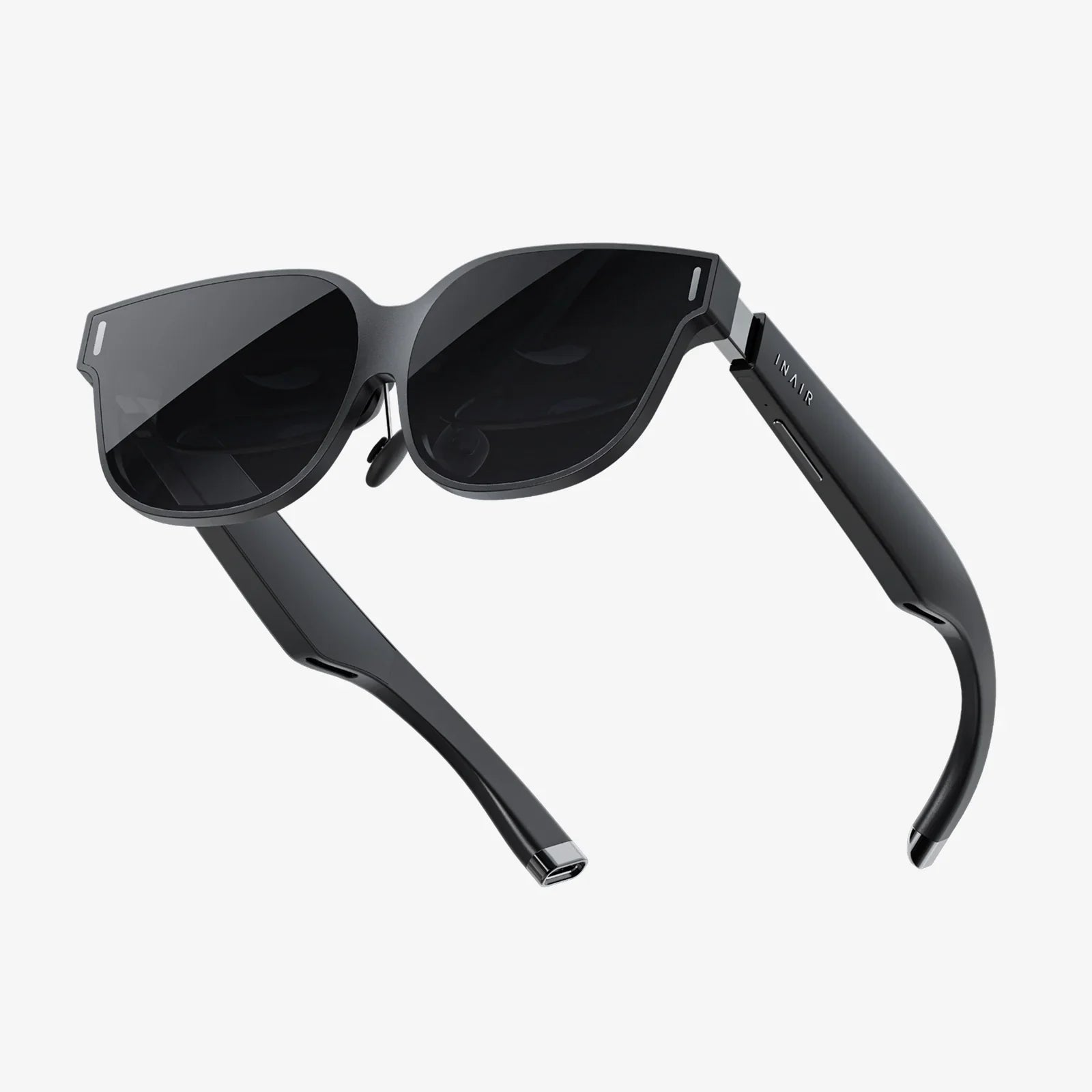
Imagine a workday where information flows seamlessly into your field of vision, where your hands remain free during complex tasks, and where your digital world integrates so subtly with your physical one that you forget where one ends and the other begins. This is no longer the stuff of science fiction; it's the promise held by the best smart glasses for work. This burgeoning category of wearable technology is poised to transform offices, workshops, and home offices, offering a new paradigm for productivity and connectivity that is as discreet as it is powerful. For professionals across industries, from field engineers to corporate strategists, the right pair of smart glasses can be the ultimate tool for a more efficient, focused, and innovative work life.
The Evolution of the Workspace and the Rise of Wearable Tech
The modern professional landscape has undergone a seismic shift. The rigid, desk-bound 9-to-5 has given way to a fluid, hybrid model where work happens everywhere. This evolution demands tools that are equally mobile, intuitive, and context-aware. Laptops and smartphones, while powerful, often create a barrier—a screen we must look down at, disconnecting us from our immediate environment and colleagues.
Smart glasses represent the next logical step in this technological progression. They move computing from our pockets and desks directly into our line of sight, offering a heads-up display (HUD) that provides information without interruption. Early iterations were often clunky and socially awkward, but recent advancements have yielded designs that are sleek, lightweight, and, crucially, resemble conventional eyewear. This maturation in both form and function is what finally makes them a viable and compelling tool for the professional world.
Defining "Smart Glasses for Work": More Than Just a Screen
When we talk about the best smart glasses for work, we're referring to a specialized class of wearable device designed explicitly to enhance professional tasks. Their core utility lies in several key functionalities that set them apart from consumer-oriented models focused on media consumption or gaming.
- Augmented Reality (AR) Overlays: The ability to project digital information—such as diagrams, instructions, or data metrics—onto the real world. A technician can see a wiring schematic overlaid on the actual machinery they are repairing.
- Hands-Free Communication: Integrated microphones and bone-conduction or miniature speakers enable crystal-clear audio calls and video conferencing without the need for a headset or holding a phone. This is invaluable for professionals on the move, from warehouse managers to surgeons.
- First-Person Perspective Recording: The ability to capture photos and video from the user's point of view for documentation, remote expert guidance, or training purposes. An architect can record a walkthrough of a construction site to share with the office.
- Seamless App Integration: Connectivity with essential work software like calendars, project management tools, messaging platforms, and custom enterprise applications, delivering notifications and data directly to the user's eye.
Unlocking Unprecedented Productivity: Key Benefits for Professionals
The integration of these features into a pair of glasses unlocks a multitude of benefits that directly translate to enhanced performance and efficiency.
Radically Improved Multitasking and Context Switching
Traditional multitasking on a computer involves constant alt-tabbing between windows, a process that fractures concentration. Smart glasses eliminate this friction. A developer can keep a reference document pinned in their peripheral vision while coding on their main monitor. A logistics operator can see inventory data while physically moving through a warehouse, without stopping to check a handheld scanner. This seamless flow of information drastically reduces cognitive load and the time lost to context switching.
The Ultimate Tool for Remote Collaboration and Assistance
One of the most powerful use cases is the concept of "see what I see" remote assistance. A field service engineer faced with a complex problem can live-stream their view to an expert colleague thousands of miles away. The remote expert can then annotate the engineer's real-world view with arrows, circles, or notes, guiding them through the repair step-by-step. This slashes downtime, travel costs, and ensures problems are resolved correctly the first time.
Enhanced Focus and Minimized Disruption
Paradoxically, having information always available can actually increase focus. Instead of being pulled away by a phone notification, a quick glance at a calendar reminder or message preview in the corner of the lens allows the user to triage its importance without breaking their workflow on a primary task. It allows for a state of "controlled connectivity," where the technology serves the user's focus rather than disrupting it.
Accurate and Effortless Documentation
For roles that require meticulous documentation, smart glasses are a game-changer. Healthcare professionals can capture patient symptoms hands-free during examinations. Quality assurance inspectors can photograph defects instantly without fumbling for a camera. This leads to more accurate, timely, and comprehensive records, all while keeping the professional engaged with their environment.
Navigating the Considerations: What to Look For
Choosing the right tool requires careful consideration of several factors to ensure it aligns with your specific work needs and environment.
Battery Life: Powering Through the Workday
There is no one-size-fits-all answer for battery life. A device that lasts two hours on a single charge might be perfectly sufficient for a surgeon's specific procedures but useless for a factory worker on a full shift. The best smart glasses for work should offer a battery life that comfortably exceeds your longest continuous need, with options for portable charging or hot-swapping batteries for all-day use cases.
Display Technology: Clarity and Discretion
The quality and type of display are paramount. It must be bright enough to be visible in various lighting conditions but not so bright as to be distracting or obscure your view. The technology should offer sharp text and image resolution to prevent eye strain. Furthermore, consider the social aspect: some displays are only visible to the wearer (private viewing), while others can be seen by people standing close by (public viewing). For most office environments, a private viewing experience is essential.
Comfort and Design: The All-Day Wear Test
If a device is uncomfortable, it will not be used. Weight distribution, nose pad design, and frame flexibility are critical. They should feel as comfortable as a high-quality pair of regular glasses. The aesthetic design is also important; professionals need to feel confident and professional wearing them in meetings and client interactions. Look for styles that are minimalist and align with professional attire.
Software and Ecosystem: The Brain Behind the Lenses
The hardware is only as good as the software it runs. A robust, secure, and intuitive operating system is crucial. Check for compatibility with your existing workflow tools (e.g., Microsoft Teams, Slack, Salesforce). For enterprise use, strong security protocols, device management suites, and the ability to develop or integrate custom applications are non-negotiable features.
Addressing the Elephant in the Room: Privacy and Social Acceptance
The potential for smart glasses to incorporate cameras and microphones naturally raises valid privacy concerns. The onus is on both manufacturers and users to address this responsibly.
Ethical use is key. Many of the best smart glasses for work now feature clear, physical indicators—like an LED light—that show when recording is active. Transparency with colleagues and clients about when and why you are using the recording functions is essential for building trust and establishing norms. Organizations should develop clear usage policies. As this technology becomes more commonplace and its professional benefits become undeniable, social acceptance will follow, much as it did for Bluetooth earpieces and smartphones themselves.
A Glimpse into the Future: Where Work is Headed
The smart glasses we see today are merely the beginning. The trajectory points towards even more immersive and intelligent interfaces. We can anticipate advancements in AI integration, where the glasses act as a real-time personal assistant, analyzing what you see and offering proactive suggestions. Improvements in eye-tracking could allow for control through glances alone. Holographic displays may eventually project full 3D models for designers and engineers to interact with in mid-air.
This technology will fundamentally reshape training, design, maintenance, and communication, creating a more intuitive and symbiotic relationship between humans and the digital information we rely on to perform our jobs.
The future of work isn't about being chained to a desk; it's about being empowered wherever you are. The best smart glasses for work are the key that unlocks this potential, transforming your field of view into a dynamic canvas for productivity, collaboration, and innovation. This is more than an upgrade to your tech stack—it's an upgrade to your capabilities, offering a silent, seamless advantage that lets you work smarter, not just harder. The professional world is on the cusp of a revolution, and it's happening right before your eyes.
Share:
Best Smart Glasses for Everyday Use: The Ultimate Guide to Seamless Wearable Tech
Best Rated Smart Glasses: The Ultimate Guide to the Future on Your Face