


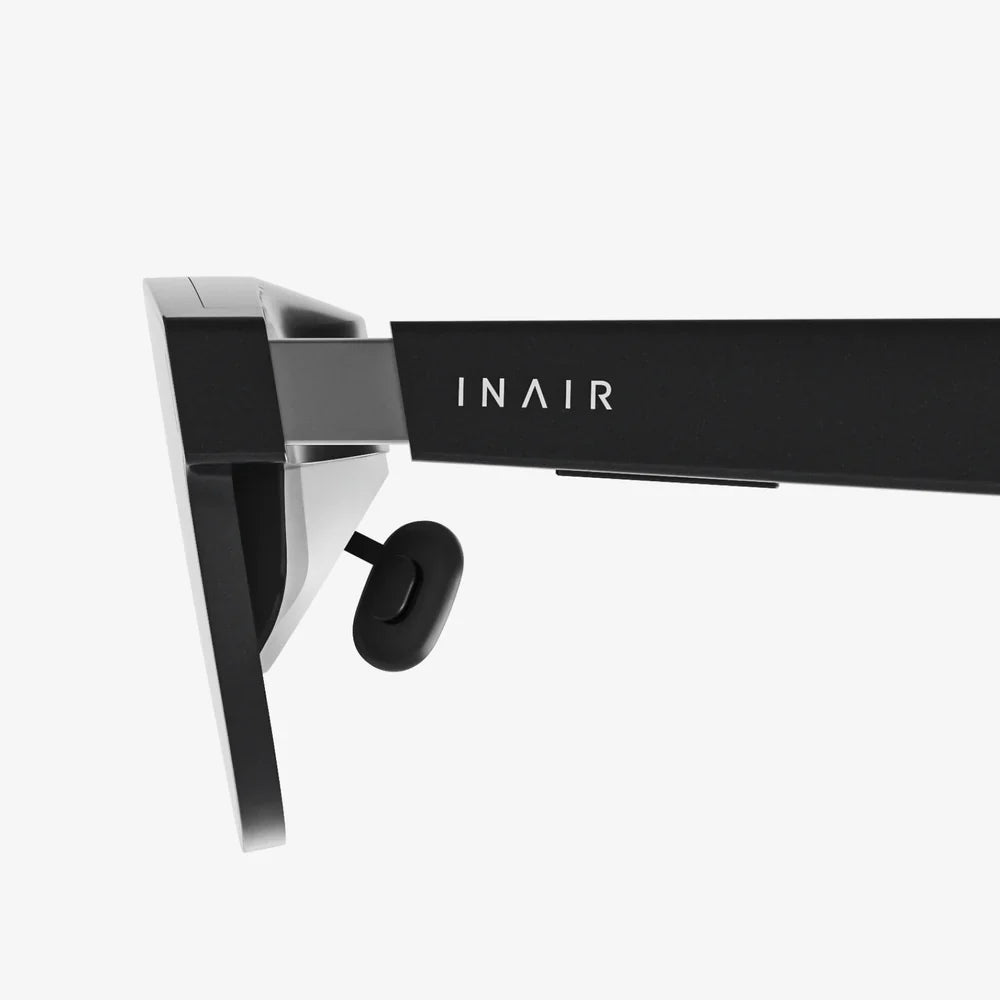
Imagine stepping into your favorite movie, walking around ancient ruins before they crumbled, or designing a new product in mid-air right in your living room. This is no longer the stuff of science fiction. The quest for the most immersive digital experience has driven innovation to new heights, and at the forefront of this revolution are the best virtual 3D glasses, a portal to worlds both imagined and real. This technology promises to redefine not just how we play, but how we work, learn, and connect.
The Core Technology Behind the Digital Lens
At their essence, virtual 3D glasses are sophisticated wearable computers designed to trick the human brain into perceiving depth in a digital image. Unlike the passive, colored-lens glasses used in cinemas decades ago, modern devices are active, immersive systems. They achieve the illusion of three dimensions through a process called stereoscopy, presenting a slightly different image to each eye, mimicking how our binocular vision works in the real world.
The magic is woven from several critical components working in harmony. High-resolution displays are mounted just centimeters from the user's eyes, often using advanced optics like Fresnel lenses to magnify the image and create a wide field of view (FOV). A higher FOV is crucial for immersion, making the digital world feel expansive rather than like looking through a small window. Furthermore, precise head-tracking technology, utilizing a combination of gyroscopes, accelerometers, and external or internal cameras, constantly monitors the position and orientation of the user's head. This allows the virtual environment to respond in real-time, shifting perspective naturally as you look around, lean in, or crouch down.
Key Features That Define the Best Virtual 3D Glasses
Not all devices are created equal. Discerning the best from the rest requires an understanding of the features that directly impact the quality of the experience.
Visual Fidelity: Resolution, Refresh Rate, and Field of View
The clarity of the virtual world is paramount. Display resolution is measured in pixels per inch (PPI) or, more commonly for these devices, by the combined resolution across both eyes (e.g., 1832 x 1920 per eye). A higher resolution drastically reduces the "screen door effect," where users can see the faint lines between pixels, breaking immersion. Equally important is the refresh rate, measured in Hertz (Hz). A higher refresh rate (90Hz and above) ensures smooth motion, reduces latency (lag), and is critical for preventing motion sickness. The field of view, typically between 90 and 120 degrees, determines how much of your vision is occupied by the virtual environment. A wider FOV feels more natural and immersive.
Tracking and Control: Six Degrees of Freedom
The best systems offer what is known as six degrees of freedom (6DoF). This means they track not just rotational movement (pitch, yaw, roll)—which is three degrees of freedom (3DoF)—but also positional movement (moving forward/backward, up/down, left/right). 6DoF is what allows you to physically walk around a virtual object, peer over a virtual ledge, or duck under a virtual obstacle. This tracking can be accomplished through external sensors placed around the room (outside-in tracking) or entirely self-contained using onboard cameras (inside-out tracking), with the latter offering greater ease of setup and portability.
Comfort and Ergonomics: Designed for Long-Term Use
A device can have the most advanced specs on paper, but if it's uncomfortable to wear, it fails. The best virtual 3D glasses are lightweight and feature a balanced weight distribution to avoid straining the neck and face. They offer adjustable head straps, interchangeable facial interfaces for different face shapes, and adequate ventilation to prevent the lenses from fogging up. For those who wear prescription lenses, options for custom inserts or enough space to wear glasses underneath are a significant comfort consideration.
Audio: The Other Half of Immersion
3D spatial audio is often the unsung hero of immersion. High-quality, integrated headphones or audio solutions that provide directional sound are essential. Hearing a sound behind you and turning to see its source completes the illusion of presence, making the experience infinitely more believable and engaging.
A World of Applications: Beyond Gaming
While gaming is the most famous application, the potential of this technology stretches far beyond entertainment.
Revolutionizing Education and Training
Imagine medical students performing virtual dissections or practicing complex surgical procedures without risk. Mechanics can train on virtual engines, and astronauts can simulate spacewalks. History classes can take virtual field trips to ancient Rome or walk on the surface of Mars. This experiential learning leads to dramatically improved knowledge retention and understanding.
Transforming Design and Architecture
Architects, engineers, and product designers are using virtual 3D glasses to step inside their creations before a single physical resource is spent. They can assess scale, identify design flaws, and experience the flow of a space in a way that a 2D screen could never allow. Clients can take a virtual tour of their future home, making changes in real-time, which streamlines the design process and ensures satisfaction.
Redefining Remote Collaboration and Social Connection
The concept of the "metaverse" is built upon the idea of persistent virtual spaces where people can meet, socialize, and work. With virtual 3D glasses, remote teams from across the globe can collaborate around a 3D model as if they were in the same room, using avatars to represent themselves. This adds a layer of human presence and nonverbal communication that video conferencing lacks, fostering a stronger sense of team cohesion and making complex collaborative tasks more intuitive.
Navigating the Considerations and Challenges
Adopting this technology is not without its hurdles. A primary concern for many users is motion sickness, often caused by a disconnect between what the eyes see and what the inner ear feels. While advancements in high refresh rates and low-latency tracking have mitigated this significantly, it remains a barrier for some. The cost of high-end equipment and the powerful computing hardware required to run it can be prohibitive for the average consumer.
Content availability, while growing rapidly, is still a determining factor. The value of the device is directly tied to the software experiences available for it. Furthermore, as with any new technology, there are societal and ethical questions about prolonged use, data privacy, and the psychological effects of increasingly realistic virtual worlds.
The Future is Clear and Three-Dimensional
The trajectory of virtual 3D glasses points toward a future of even greater immersion and ubiquity. We are moving toward devices that are smaller, lighter, and more powerful, eventually evolving into a form factor resembling everyday eyeglasses. The integration of augmented reality (AR) and mixed reality (MR) will become seamless, allowing digital objects to interact convincingly with the physical world. Advancements in eye-tracking and haptic feedback will add new layers of interaction, from navigating menus with a glance to feeling the texture of a virtual object.
The distinction between the digital and the physical will continue to blur. The best virtual 3D glasses are not just a new screen; they are the beginning of a new computing platform, a fundamental shift in our interface with technology. They hold the promise of making the impossible possible, of collapsing distance, and of unlocking new forms of creativity and human connection. The door to these new realities is now open, waiting for you to take a look.
Share:
Digital Twin Augmented Reality: The Ultimate Symbiosis Reshaping Our Physical World
Technology Used in Augmented Reality: The Digital Layer Reshaping Our World