


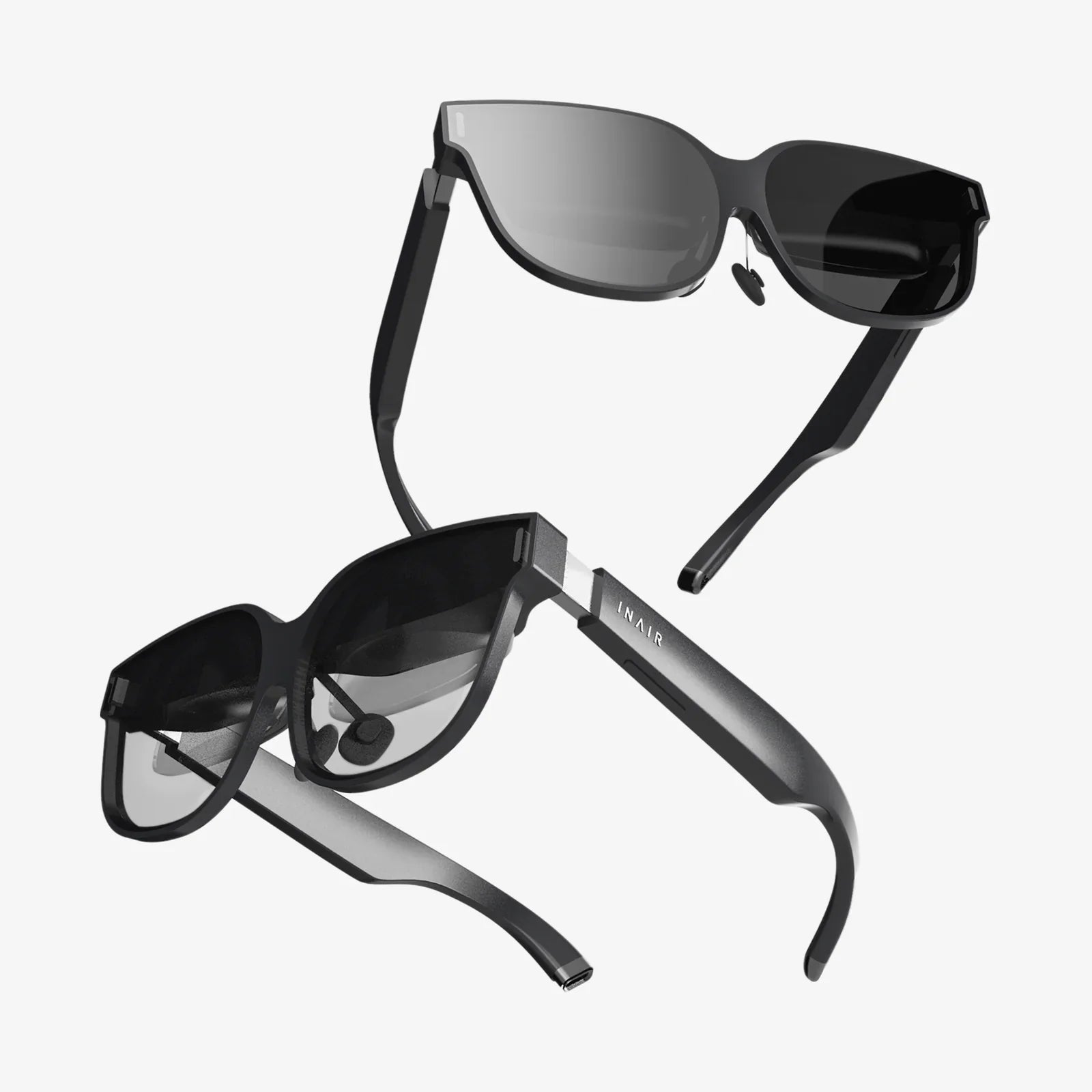
Imagine a world where digital information doesn’t just live on a screen in your hand but is seamlessly woven into the fabric of your reality. Directions float on the pavement in front of you, recipe instructions hover beside your mixing bowl, and a virtual colleague sits across your real kitchen table. This is the promise of augmented reality (AR), a technology once confined to high-end enterprise solutions and science fiction. But a quiet revolution is underway, making this futuristic vision not just possible, but surprisingly affordable. The emergence of budget AR glasses is shattering the perception that advanced AR is a luxury, placing the power to augment our world directly into the hands of the everyday consumer.
Demystifying Augmented Reality: More Than Just Games
Before diving into the budget-friendly landscape, it's crucial to understand what AR glasses actually do. Unlike Virtual Reality (VR), which creates a completely immersive, digital environment that replaces the real world, Augmented Reality (AR) overlays digital information—images, text, animations, and 3D models—onto your view of the physical environment. Think of it as a heads-up display (HUD) for your entire life.
Early AR experiences were largely powered by smartphones, using their cameras to superimpose graphics onto the live feed on your screen. While innovative, this method has significant limitations: it requires holding up your phone, the field of view is constrained, and the immersion is broken. Dedicated AR glasses solve these problems by projecting imagery directly onto specially designed lenses, allowing you to interact with digital content hands-free while remaining fully present in your surroundings.
The Anatomy of Affordable Augmented Reality
So, how do manufacturers create AR glasses at a fraction of the cost of their premium counterparts? The secret lies in strategic compromises and technological innovations that prioritize core functionality over cutting-edge, and often prohibitively expensive, features.
Display Technology: The Window to Your Digital Overlay
High-end AR devices often use complex waveguide or microLED technology to create bright, high-resolution, and seemingly solid images. Budget AR glasses frequently employ more accessible technologies like Birdbath optics. This system uses a combination of mirrors and semi-transparent lenses to reflect a micro-OLED display into the user's eye. While it may not offer the same level of transparency or brightness in direct sunlight as more expensive solutions, it provides a vibrant and compelling AR experience at a dramatically lower production cost.
Processing Power: On-Device vs. Tethered
One of the biggest cost drivers is the internal processor. Premium standalone AR glasses contain powerful, miniaturized computing hardware similar to a high-end smartphone. Budget models often sidestep this cost entirely by functioning as a peripheral display. They connect via a single USB-C cable to a smartphone, computer, or gaming console, which acts as the brain. This "tethered" approach leverages the powerful processor you already own, keeping the glasses themselves lightweight, less complex, and far more affordable.
Design and Materials: Lightweight and Practical
Instead of using exotic, lightweight materials like magnesium alloys, budget-friendly models utilize high-quality polymers. This results in a design that is functional, comfortable for extended wear, and crucially, inexpensive to produce. The focus is on practicality and accessibility rather than a high-fashion statement.
Feature Selection: Focusing on the Essentials
You won’t find advanced eye-tracking, elaborate hand gesture controls, or a vast array of embedded sensors on most budget models. Instead, they focus on delivering a stellar core experience: a clear display, decent speakers or audio passthrough, a reliable connection, and basic touch controls on the frame. This philosophy of "doing a few things very well" is key to their affordability.
The Real-World Applications: What Can You Actually Do?
The value of any technology is measured by its utility. Budget AR glasses are unlocking a wide array of practical applications that were previously inaccessible to the average user.
Productivity Unleashed: The Ultimate Multi-Monitor Setup
For remote workers, students, and digital nomads, this is a killer app. Imagine having multiple virtual monitors floating in your field of vision wherever you go. You can work on a document on a virtual screen while referencing data on another, all while sitting in a coffee shop or at a minimalist home desk. This portable, expansive workspace dramatically enhances productivity without the physical clutter or cost of multiple physical monitors.
Immersive Entertainment: Your Personal Theater
Budget AR glasses excel as a private, giant-screen television. By connecting to a phone, media player, or gaming device, they can project a massive virtual screen that feels dozens of feet wide. You can watch movies, binge-watch shows, or play mobile games on a screen that only you can see, creating an immersive experience without disturbing others—perfect for travel, bedtime viewing, or simply maximizing your leisure time.
Fitness and Navigation: Guidance in Real-Time
Imagine cycling through a new city with turn-by-turn directions visually mapped onto the road ahead, all while keeping your head up and fully aware of traffic. Or following a workout tutorial with a virtual coach demonstrating the next exercise right in your living room. AR glasses provide contextual, hands-free information that is invaluable for on-the-go activities.
Remote Assistance and Connection
Using the built-in camera (on some models), you can share your first-person perspective with a friend, family member, or expert technician. They can see what you see and draw arrows or diagrams into your view to help you assemble furniture, solve a problem, or simply give you a virtual tour of their own space. This "see what I see" capability fosters a deeper level of remote collaboration and connection.
Navigating the Limitations: Setting Realistic Expectations
While budget AR glasses are revolutionary, they are not magic. Entering the market with realistic expectations is key to satisfaction.
- Field of View (FOV): The FOV on affordable models is often narrower than on premium ones. The digital image will appear in a central rectangle of your vision rather than filling your entire periphery. It’s akin to looking at a floating television screen rather than being completely enveloped by the digital world.
- Brightness and Outdoor Use: Many budget displays can be washed out in bright sunlight, making them better suited for indoor use or shaded environments.
- Battery Life: For tethered models, the battery life is typically limited by your connected device. Standalone budget models will have finite battery, often lasting a few hours of continuous use.
- Software Ecosystem: The AR app ecosystem is still maturing. While support for media consumption is robust, the availability of diverse, must-have AR-native applications is still growing.
The Ethical and Social Dimension: A New Digital Etiquette
As this technology becomes more prevalent, new social questions arise. Wearing glasses that can record video or take pictures discreetly necessitates a new level of digital etiquette and respect for privacy. Public spaces may develop new norms, similar to the rules around phone use, governing when and how it is appropriate to use AR glasses. Furthermore, the potential for digital distraction is immense. The ability to constantly overlay information risks pulling us further away from the present moment. The challenge, as with any powerful tool, will be to use it intentionally to enhance our reality, not escape from it.
The Future is Bright, and It's Affordable
The trajectory of budget AR glasses points toward even greater accessibility and capability. We can expect continuous improvements in display clarity, field of view, and battery efficiency. As component costs drop and manufacturing scales, the line between "budget" and "premium" will continue to blur. We are moving toward a future where spatially aware, contextually intelligent computing is a standard part of our daily wear, not a niche luxury.
The door to the augmented world is now open, and the ticket price is no longer a barrier to entry. This isn't just about cheaper hardware; it's about democratizing a new form of computing. It’s about empowering creators, streamlining workflows, and reimagining entertainment for millions. The era of staring down at a small glass rectangle is gradually giving way to looking up and out into a world infinitely enriched by data and imagination. The next great leap in personal technology won’t be held in your hand; it will be worn on your face, and it’s waiting for you to take the first step.
Share:
Why Is My Smart Keyboard Folio Not Working? A Comprehensive Troubleshooting Guide
Upcoming AR Glasses: The Invisible Revolution Set to Redefine Reality