


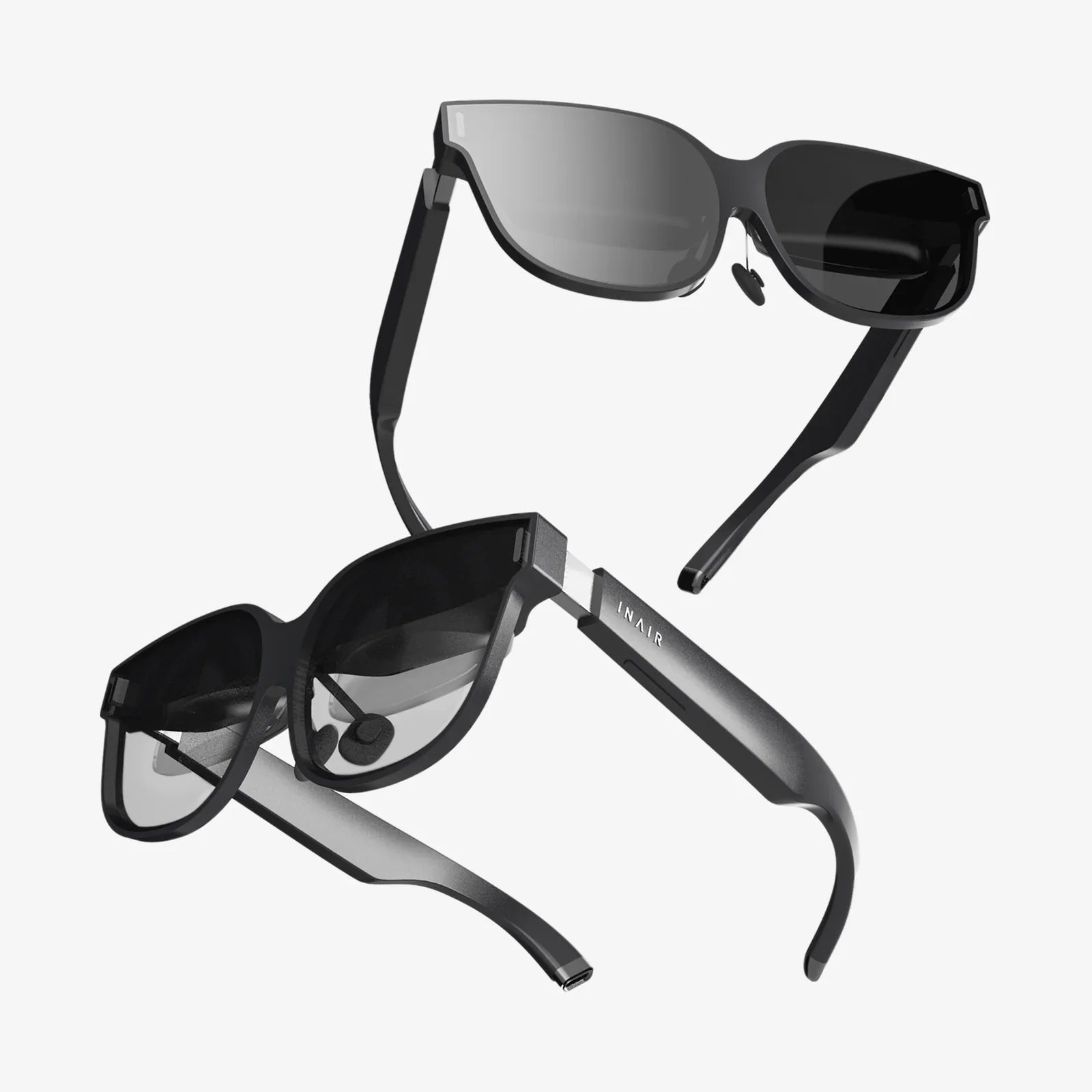
The sleek, futuristic frames you see on the faces of tech enthusiasts and industry professionals are no longer just a concept from science fiction. They are a reality, and a significant portion of this technological vanguard is emerging from a powerhouse of innovation: China. While global tech giants capture headlines, a dynamic and fiercely competitive ecosystem of Chinese smart glasses brands is quietly engineering the future of wearable computing, pushing the boundaries of what's possible and setting the stage for a world where digital and physical realities seamlessly converge.
The Engine of Innovation: A Fertile Ground for Development
China's rapid ascent as a leader in smart glasses technology is not an accident. It is the result of a perfect storm of favorable conditions that have created an ideal environment for research, development, and manufacturing. This ecosystem provides Chinese brands with a distinct competitive advantage on the global stage.
The Manufacturing Juggernaut: At the core of this advantage is China's unparalleled manufacturing infrastructure. The country is home to the world's most sophisticated supply chain for micro-electronics, optics, and precision engineering. For smart glasses brands, this means direct access to the factories and component suppliers that bring their designs to life. This proximity drastically shortens iteration cycles, reduces costs, and allows for rapid prototyping. A design change that might take months to implement elsewhere can be tested and refined in weeks within the Shenzhen tech hub.
Government Backing and Strategic Vision: The development of advanced technologies like augmented reality (AR) and virtual reality (VR) is a key pillar of national strategic plans such as "Made in China 2025." This translates into significant state-supported investment in R&D, favorable policies for tech startups, and the development of specialized industrial parks focused on AI and wearable technology. This top-down support de-risks innovation and allows companies to pursue ambitious, long-term projects.
A Massive Domestic Market: Chinese consumers are notoriously tech-savvy and quick to adopt new technologies. This vast domestic market provides brands with a crucial testing ground. They can launch products, gather immense amounts of user data, and refine their software and user experience based on real-world feedback before attempting to scale globally. This iterative process, fueled by a large and engaged user base, accelerates improvement at a pace difficult to match elsewhere.
Beyond the Hype: Core Technologies Powering the Revolution
The sleek design of smart glasses belies the incredible complexity within. Chinese engineers are making significant strides in overcoming the fundamental technical challenges that have long plagued the industry.
The Battle for the Display: The primary challenge is creating a display that is bright enough to be seen in daylight, high-resolution enough to render sharp text and graphics, and energy-efficient enough to not overheat or drain a small battery. Two main technologies are at the forefront:
- MicroLED Optical Modules: Many leading Chinese brands are investing heavily in MicroLED technology. These self-emissive micro-displays offer exceptional brightness, high contrast ratios, and superior power efficiency compared to older technologies. They are a key enabler for producing glasses that look and feel like regular eyewear.
- Birdbath Optics: This compact optical design uses a combination of a projection module and a series of semi-transparent mirrors to fold the light path and project an image onto the lenses. It's a popular solution for achieving a good field of view (FOV) in a relatively small form factor, a priority for consumer-grade devices.
The AI Brain: Hardware is only half the story. The true magic lies in the artificial intelligence that powers the user experience. Chinese brands are leveraging world-class AI research in areas like:
- Computer Vision: Enabling features like real-time translation where text is recognized by the camera and overlaid with a translation directly in your field of view.
- Natural Language Processing (NLP): Powering voice assistants that can understand and execute complex commands, take notes, or schedule meetings hands-free.
- Scene Understanding: Allowing the glasses to identify objects, people, and locations to provide contextual information and navigation.
Form vs. Function: A critical hurdle has been balancing battery life and performance with a socially acceptable, lightweight design. Chinese brands are pioneering innovative solutions, such as separating the battery and compute unit into a small pod that can be clipped to a pocket, allowing the glasses themselves to remain remarkably slim and lightweight. Advanced materials like titanium alloys and flexible hinges are also being used to enhance comfort and durability.
A Market of Two Halves: Enterprise Leads, Consumer Follows
The adoption of smart glasses is unfolding along two parallel paths, each with distinct drivers and use cases.
The Enterprise and Industrial Arena
This is where smart glasses technology is already delivering undeniable value and seeing widespread adoption. Chinese brands have aggressively targeted this sector with rugged, purpose-built devices.
- Logistics and Warehousing: Workers use smart glasses for hands-free order picking. Navigation arrows guide them to the correct bin, and barcodes are scanned instantly by looking at them, dramatically increasing efficiency and reducing errors.
- Field Service and Maintenance: A technician repairing a complex machine can see schematics, instruction manuals, or even live video from a remote expert overlaid on their real-world view. This enables faster diagnostics, reduces downtime, and empowers less experienced workers.
- Healthcare: Surgeons can access patient vitals or imaging data without looking away from the operating field. Medical students can observe procedures from the surgeon's point of view through immersive training sessions.
In these scenarios, the ROI is clear: increased productivity, reduced costs, and enhanced training. The devices are treated as essential tools, justifying their investment.
The Elusive Consumer Market
Capturing the consumer imagination has proven more challenging. The specter of a previous generation of failed consumer smart glasses looms large, primarily due to clunky designs, limited functionality, and high prices. Chinese brands are now leading the charge to overcome this stigma.
The current strategy is not to create a full-fledged AR universe but to offer compelling, discrete functionality that enhances daily life. The focus is on assistive technology rather than immersive reality:
- Smart Audio and Connectivity: Glasses that look normal but feature open-ear audio speakers for music and calls, effectively functioning as a sleek alternative to headphones.
- Real-time Translation: A killer app for travelers and businesspeople, displaying subtitles for conversations right before the user's eyes.
- Content Consumption and Navigation: Glancing at a recipe while cooking, getting turn-by-turn directions while walking, or watching a video on a virtual large screen while on a plane.
- Photography and Vlogging: A first-person perspective camera for capturing life's moments hands-free.
By focusing on these practical, everyday uses within a form factor that resembles fashionable eyewear, Chinese brands are gradually building consumer acceptance and paving the way for more advanced AR experiences in the future.
Navigating the Global Stage: Challenges and Opportunities
As Chinese smart glasses brands look beyond their domestic market, they face a unique set of challenges and opportunities.
Data Privacy and Security: In an era of heightened awareness around data security, devices with always-on cameras and microphones naturally raise concerns. Gaining the trust of international consumers and enterprises will require transparent data policies, robust on-device processing, and compliance with stringent regulations like GDPR. How these brands address these concerns will be a critical factor in their global success.
Cultural Software and Ecosystem: A device's hardware is only as good as its software and content ecosystem. Chinese brands must adapt their offerings for a global audience. This means building partnerships with Western software developers, integrating with popular international apps and services, and ensuring their AI assistants understand Western cultural nuances and languages flawlessly.
Building Global Brand Identity: While they may dominate in manufacturing and technology, building a globally recognized and trusted brand requires a different skillset. It involves sophisticated marketing, storytelling, and creating an emotional connection with consumers beyond just technical specifications. Establishing a strong brand identity will be essential to competing with entrenched Western tech giants.
The Road Ahead: A Glimpse into the Future
The trajectory of Chinese smart glasses brands points toward an increasingly sophisticated and integrated future. We can expect to see the lines between enterprise and consumer devices blur as technology improves. The ultimate goal remains the same: a pair of glasses that look entirely normal but can project a rich, interactive digital layer onto the world.
Future iterations will likely feature:
- Even more advanced waveguide displays for a wider field of view and better clarity.
- Integration with broader Internet of Things (IoT) ecosystems, allowing the glasses to act as a universal remote control for a user's smart home, car, and other devices.
- More powerful and efficient AI that can act as a true contextual assistant, anticipating needs and providing information before it's even asked for.
- Development of the "metaverse" or spatial computing, where the glasses become the primary portal to a persistent digital world intertwined with our own.
This is no longer a niche interest for tech aficionados; it's a rapidly accelerating field with the potential to redefine how we work, learn, socialize, and interact with information. The relentless pace of innovation, coupled with a formidable manufacturing and development ecosystem, has positioned Chinese smart glasses brands not merely as participants, but as primary architects of this incoming reality. The frames on their drawing boards today are quietly building the lens through which we will all see tomorrow.
Share:
Smart Glasses for Small Faces: The Ultimate Guide to Finding a Perfect Tech Fit
Big Screen VR Price: A Deep Dive into the Cost of Immersive Entertainment