


- by wangfred
Emerging Technology and Future Trends: A Deep Dive into the Next Decade of Innovation
- by wangfred
The pace of technological change is not just accelerating; it is fundamentally reshaping the fabric of reality. We stand on the precipice of a new era, where the boundaries between the digital and physical worlds are dissolving, and the very definition of humanity is being rewritten. To understand the emerging technology and future trends that will define the coming decade is to peer into a future of boundless potential and profound challenges, a world being built today in research labs, corporate strategy sessions, and open-source communities. This is not a distant sci-fi fantasy; it is the imminent next chapter of our collective story.
True technological transformation occurs not with the invention of a single device, but with the convergence of multiple foundational shifts. These are the underlying currents powering the specific trends we see blooming on the surface.
Processing power is ceasing to be a physical constraint. With the proliferation of cloud computing, edge computing, and eventually, ambient computing, intelligence is becoming a ubiquitous utility, flowing like electricity. We are moving from a world where we go to a computer to one where compute exists all around us, embedded in our environments, our clothing, and even our bodies. This invisible fabric of connected intelligence is the essential bedrock for everything from autonomous systems to personalized AI assistants.
Every interaction, both human and machine, is being translated into data. From the macro (global climate patterns, supply chain logistics) to the micro (individual heartbeats, neural signals), the world is becoming quantifiable. This immense data ocean is the fuel for the next generation of artificial intelligence, enabling models to learn with a depth and context previously unimaginable. The trend is no longer just about collecting data, but about building sophisticated digital twins—virtual replicas of physical systems—that allow us to simulate, predict, and optimize reality before making a single physical change.
The line between software and hardware is blurring into what are known as cyber-physical systems. These are integrations of computation, networking, and physical processes. A smart grid, a autonomous vehicle, a robotic surgical arm—these are not just software programs or mechanical devices. They are complex, interdependent systems where software controls physical operations, and physical feedback directly influences software algorithms. This deep integration is making our critical infrastructure smarter and more efficient, but also introducing new layers of vulnerability and complexity.
Building upon these foundational shifts, a suite of specific technologies is moving from the fringe to the forefront, each carrying immense disruptive potential.
If the 20th century was defined by electricity, the 21st will be defined by artificial intelligence. We are rapidly moving beyond narrow AI, which excels at a single task, toward the horizon of Artificial General Intelligence (AGI). The catalyst for this leap is the evolution in large language models (LLMs) and multimodal AI systems that can understand, generate, and translate across different types of information—text, image, audio, and video—with startling proficiency.
The future trend is not just more powerful models, but the democratization and agentification of AI. Democratization means these powerful tools are becoming accessible to millions of developers and businesses through APIs and open-source platforms, unleashing a Cambrian explosion of AI-powered applications. Agentification refers to the shift from AI tools that respond to commands to AI agents that can pursue complex, multi-step goals autonomously. Imagine an AI agent that doesn't just book a flight when asked, but autonomously plans your entire vacation, coordinating budgets, schedules, and preferences across dozens of services without your direct intervention.
While still in its nascent, noisy intermediate-scale quantum (NISQ) era, quantum computing is transitioning from a theoretical field to an engineering discipline. Unlike classical computers that use bits (0s and 1s), quantum computers use qubits, which can exist in multiple states simultaneously (superposition) and be inextricably linked with each other (entanglement). This allows them to solve certain classes of problems exponentially faster.
The immediate future trend lies in quantum supremacy and quantum advantage—demonstrating a quantum computer solving a problem practically impossible for classical machines. The long-term impact will be transformative: designing novel materials and life-saving drugs by simulating molecular interactions at the quantum level; optimizing global logistics and financial modeling; and, contentiously, breaking current cryptographic encryption standards, which is driving the parallel field of quantum-resistant cryptography. The quantum race is not just about building a more powerful computer; it's about building a new lens through which to see and manipulate the universe.
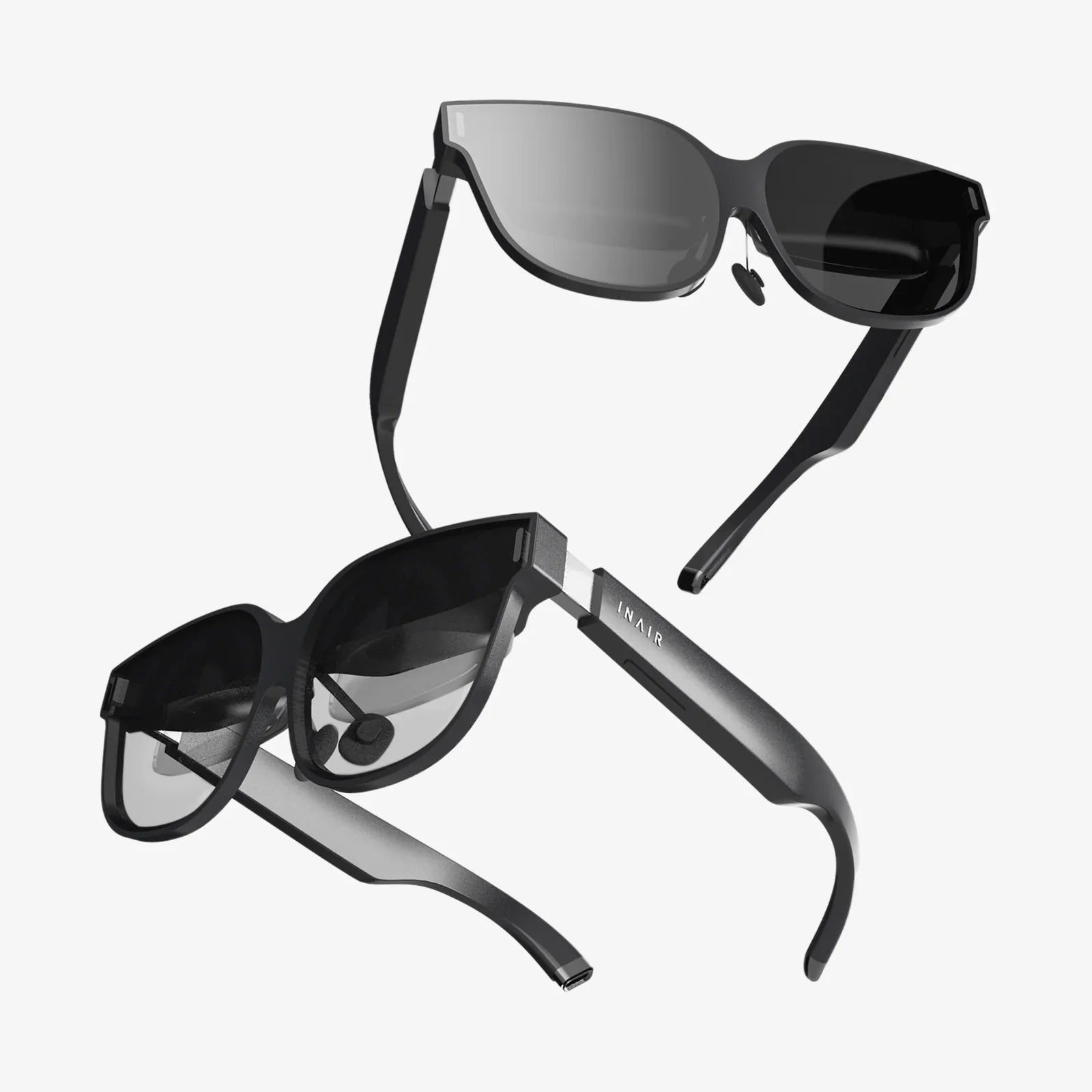
The much-hyped "metaverse" is best understood not as a single virtual world, but as a spectrum of experiences known as the metaverse continuum. This spans from augmented reality (AR), which overlays digital information onto the physical world, to virtual reality (VR), which immerses users in a fully digital environment, and everything in between.
The underlying technology, spatial computing, allows machines to understand and interact with the 3D space around them. The future trend is the fusion of the digital and physical into a persistent, embodied internet. This won't necessarily involve everyone wearing bulky headsets all day. It will be a shift in interface—from 2D screens to 3D spaces—enabling architects to walk clients through unbuilt designs, manufacturers to overlay schematics onto factory floors, and friends to share a virtual concert experience from their own living rooms. The key evolution is context-aware computing, where our devices understand not just who we are, but where we are and what we're trying to do.
We are moving from reading DNA to writing and programming it. CRISPR gene editing was just the beginning. The field of synthetic biology is turning biology into an engineering discipline, using principles of design, standardization, and automation to reprogram living systems.
Future trends point toward personalized medicine tailored to an individual's genetic makeup, lab-grown organs to end transplant waiting lists, and novel biomaterials grown from microbes instead of being extracted from the earth. This extends to the food we eat, with cellular agriculture creating real meat from animal cells without the animal. The convergence of AI with biology is particularly potent, with AI models now capable of predicting protein folding—a problem that has stumped scientists for decades—and designing entirely new proteins for specific therapeutic or industrial purposes. This is not merely a new industry; it is the foundation for a more sustainable and healthier relationship with our own biology and the natural world.
Perhaps the most critical trend is the direct application of innovation toward solving the climate crisis. This is no longer a niche concern but a central driver of technological development. Emerging technologies in this sphere include next-generation nuclear power, such as smaller, safer modular fission reactors and the long-term promise of fusion energy.
Beyond energy, we see advances in carbon capture, utilization, and storage (CCUS) technologies that actively remove CO2 from the atmosphere; the development of a circular economy powered by AI-driven recycling and waste management; and smart agriculture that uses sensors, drones, and data analytics to maximize yield while minimizing water and chemical use. Green tech is evolving from a cost center to an innovation engine, creating new markets and redefining economic success in terms of planetary health.
This breathtaking pace of change does not occur in a vacuum. Each technological leap forward brings a host of ethical, societal, and economic questions that we are only beginning to grapple with.
Automation has always displaced jobs, but AI and robotics are poised to impact a wider range of cognitive and manual tasks than ever before. The critical discussion is shifting from "which jobs will be lost?" to "what does a new social contract look like?" This may involve rethinking education for a lifetime of learning and reskilling, exploring models like universal basic income (UBI) to decouple survival from traditional labor, and valuing uniquely human skills like creativity, empathy, and ethical reasoning.
As data becomes the world's most valuable resource, the potential for surveillance capitalism and algorithmic bias grows exponentially. The future trend must be toward technologies that embed privacy and fairness by design. This includes the development of federated learning (training AI models on decentralized data without it ever leaving your device), differential privacy (adding statistical noise to datasets to protect individuals), and explainable AI (making AI decisions transparent and understandable). The goal is to build systems that are not only powerful but also accountable and aligned with human values.
Technological leadership is now a primary axis of geopolitical competition. The race for supremacy in AI, quantum computing, and semiconductors is reshaping global alliances and creating new tensions. This competition risks fragmenting the global internet into splinternets with different standards, regulations, and ideologies. Navigating this new landscape will require unprecedented international cooperation to establish global norms and prevent conflict, while also fostering innovation and protecting national security interests—a delicate and crucial balancing act.
The future is not a predetermined destination we arrive at passively; it is a landscape we actively build with every policy enacted, every line of code written, and every ethical choice we make today. The emerging technologies at our fingertips hold the dual promise of solving humanity's greatest challenges and presenting us with its most profound dilemmas. The trends point toward a world of breathtaking possibility—a world of longer, healthier lives, a restored planetary balance, and new forms of creativity and connection. Seizing this potential requires not just technical brilliance, but immense wisdom, foresight, and a collective commitment to steering these powerful tools toward a future that is not only smarter and more efficient, but also more equitable, humane, and truly worthy of the human spirit.