


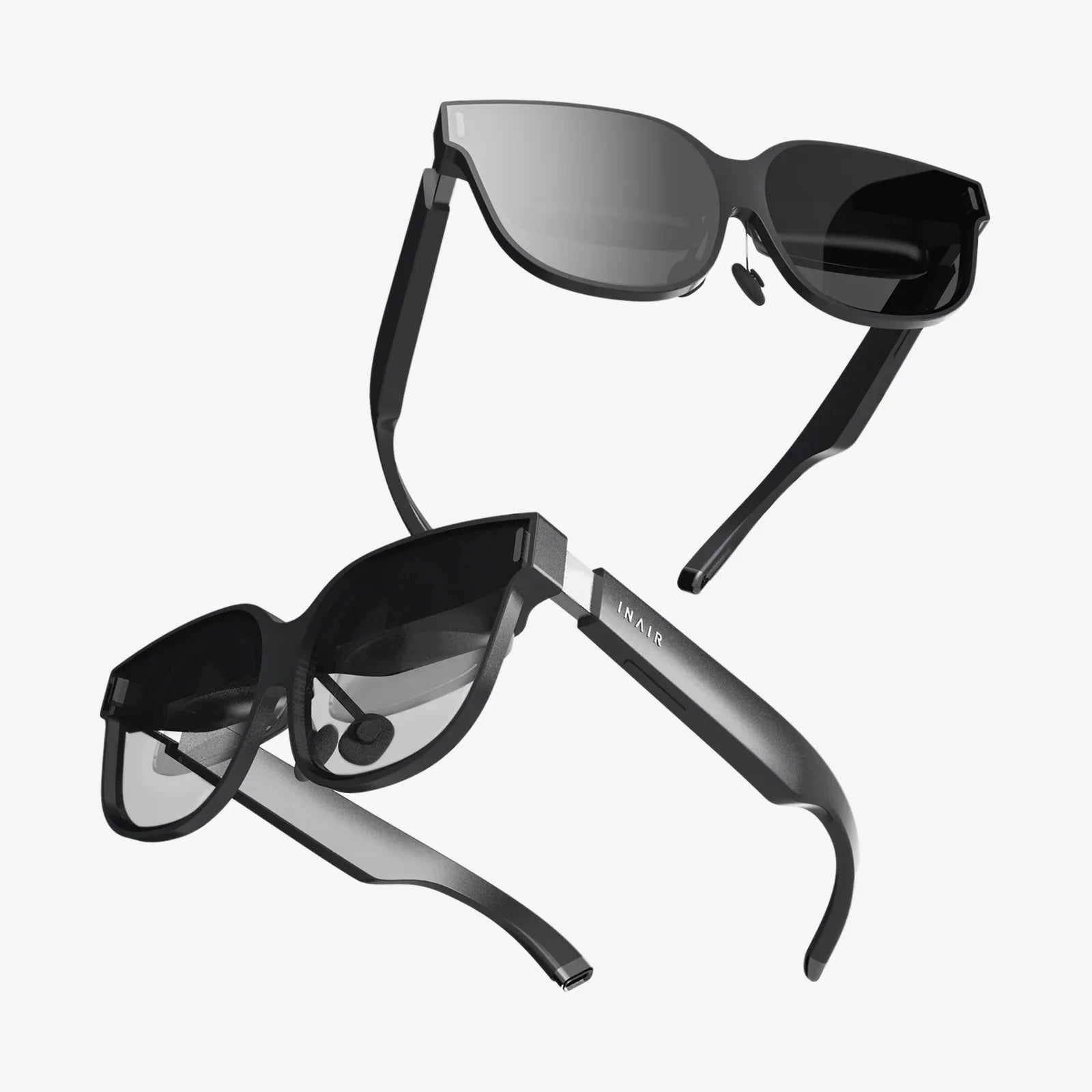
Imagine stepping through a portal into another world, a universe constructed not of atoms but of bits and pixels, yet one that feels tangibly real. Your brain is convinced; your body responds. This is the profound promise of virtual reality, a technology that has evolved from science fiction fantasy into a powerful tool reshaping entertainment, education, and enterprise. But what are the fundamental ingredients that make this digital magic possible? What are the core features of virtual reality technology that trick our senses and transport our consciousness? This deep dive unpacks the very architecture of immersion, exploring the essential components that separate a mere 3D movie from a truly transformative virtual experience.
The Foundational Trinity: Immersion, Interaction, and Imagination
While often discussed in terms of hardware, the true essence of VR is defined by a conceptual framework known as the "3 I's." These are the pillars upon which all virtual experiences are built.
Immersion: The Art of Belief
Immersion is the cornerstone feature, the quality that makes a user feel physically present in a non-physical world. It's the suspension of disbelief achieved through a multi-sensory assault on the brain. Technological immersion is achieved through a combination of factors:
- Visual Fidelity: High-resolution displays, a wide field of view (typically over 100 degrees), and a high refresh rate (90Hz or above) are critical. Low latency is paramount; any lag between the user's head movement and the display updating creates disorientation and breaks the sense of presence.
- Audio Engineering: Spatial 3D audio is a silent hero of immersion. Sounds come from specific points in the 3D space, changing volume and tone as you move your head. A creaking door to your left truly sounds like it's to your left, convincing your brain of the reality of the environment.
- Tracking Precision: Accurate tracking of the user's head and, ideally, their body position is non-negotiable. This is typically done through inside-out or outside-in tracking systems using cameras, lasers, and sensors to map movement onto the digital avatar with pinpoint accuracy.
Interactivity: The Power of Agency
A world you can look at but not touch is a simulation, not a reality. Interactivity is the feature that grants users agency within the virtual environment. It answers the question, "Can I affect this world?" This is enabled by:
- Motion Controllers: These handheld devices are the extension of the user's hands in VR. They are tracked in space, allowing for natural gestures like pointing, grabbing, throwing, and pushing. Haptic feedback in the controllers provides a tactile response to virtual interactions.
- Natural Input Methods: Beyond controllers, advanced systems use hand-tracking technology, allowing users to manipulate objects with their bare hands. Eye-tracking is another layer, enabling foveated rendering (where only the area you're looking at is rendered in high detail) and more intuitive UI interaction.
- Environmental Response: True interactivity means the world reacts. Picking up an object, pressing a button, or even leaving footprints in virtual snow are all examples of the environment responding to the user's actions, creating a dynamic and believable loop.
Imagination: The Blueprint of Worlds
This is the creative and narrative element. The technology provides the canvas and brushes, but imagination provides the art. It encompasses the design of the world, the rules of its physics, the narrative being told, and the overall user experience. A technically perfect VR world with a boring concept will fail, while a creatively brilliant one can overcome some technical limitations.
The Hardware Arsenal: Building the Gateway
The conceptual "3 I's" are brought to life by a suite of sophisticated hardware, each component playing a critical role in constructing the illusion.
Head-Mounted Displays (HMDs): The Window to Another Reality
The HMD, or headset, is the most recognizable piece of VR hardware. It's a wearable device that contains:
- Displays: Two high-resolution screens (one for each eye) create the stereoscopic 3D effect, providing depth perception.
- Lenses: Positioned between the eyes and the displays, these lenses focus and reshape the image, providing a wide field of view and correcting for distortion. Fresnel lenses are common, but newer pancake lenses allow for slimmer headset designs.
- Integrated Sensors: A crucial feature is the array of internal sensors, including gyroscopes, accelerometers, and magnetometers, which work together to precisely track the orientation and rotational movement of the user's head.
- External Sensors (in some systems): Some VR setups use external base stations or cameras placed around the room to provide millimeter-accurate positional tracking of the headset and controllers.
Tracking Systems: Mapping the Real to the Virtual
Tracking is the invisible force that anchors you in the virtual space. There are two primary methodologies:
- Outside-In Tracking: This system uses external sensors placed in the room to observe LEDs or patterns on the headset and controllers. It is renowned for its high accuracy and low latency but requires a fixed play space and setup time.
- Inside-Out Tracking: A more modern approach, this system uses cameras mounted on the headset itself to look outward at the real world. By tracking the movement of environmental features, it can deduce its own position in space. This eliminates the need for external sensors, making the system more portable and easier to set up, though it can sometimes be less accurate for controller tracking behind the user's back.
Haptic Feedback: The Language of Touch
Perhaps one of the most exciting and evolving features is haptic technology. It moves beyond visual and auditory immersion to engage the sense of touch, selling the illusion of physical interaction.
- Controller Rumble: The most basic form, providing simple vibrations for events like collisions or gunfire.
- Advanced Controller Haptics: Newer controllers feature precise linear actuators (LRAs) that can simulate a startling range of textures and sensations, from the feeling of drawing a bowstring to the gentle patter of virtual rain on your hands.
- Full-Body Haptic Suits: These wearable garments contain a grid of actuators that can simulate touch, impact, and even temperature changes across the torso and limbs. Feeling a punch in a combat game or the brush of a virtual creature is a game-changer for deep immersion.
- Force Feedback: This technology provides physical resistance. While still primarily in research and high-end applications, gloves or exoskeletons with force feedback can make a virtual wall feel solid and unyielding to the touch.
Software and Content: Breathing Life into the Machine
Hardware is useless without software designed to exploit its capabilities. The software features of VR are what create compelling experiences.
Engines and Development Platforms
Most VR experiences are built on powerful game engines like Unity and Unreal Engine. These platforms provide the tools necessary to:
- Render complex 3D environments in real-time at high frame rates.
- Implement physics simulations that feel natural.
- Integrate 3D spatial audio.
- Program interactivity and logic for objects and characters.
Social VR and Avatars
A key software feature is the ability to share virtual spaces with others. Social VR platforms allow users to:
- Create digital representations of themselves (avatars) that can range from realistic to fantastical.
- Communicate using spatialized voice chat, where volume and directionality mimic real life.
- Interact with shared objects and environments, enabling collaboration, games, and social gatherings that feel remarkably genuine.
User Interface (UI) and User Experience (UX)
Traditional 2D menus are a immersion-breaking anachronism in VR. Modern VR software features diegetic interfaces—UI elements that exist within the world itself. A virtual watch on your wrist might serve as a menu, or a control panel might appear physically in front of you. The UX is built around intuitive, natural interactions rather than mouse clicks.
Beyond Entertainment: The Expansive Applications
The features of VR technology are being leveraged far beyond games. The same immersion that makes a game thrilling can make a training simulation lifesaving.
- Education: Students can take field trips to ancient Rome, explore the human bloodstream from the inside, or practice complex surgical procedures in a risk-free environment.
- Enterprise: Architects and engineers use VR for virtual prototyping and design reviews, walking through buildings before a single brick is laid. Remote collaboration in a shared virtual space is revolutionizing workplace meetings.
- Therapy and Healthcare: VR exposure therapy is highly effective for treating phobias and PTSD. It is also used for physical rehabilitation, turning painful exercises into engaging games, and for managing pain during medical procedures.
Challenges and The Future Horizon
Despite its advancements, VR technology still faces hurdles related to its core features. Achieving perfect visual fidelity without bulky, expensive hardware is a challenge known as the "visual Turing test." Reducing motion sickness, often caused by a mismatch between visual motion and vestibular sensation, remains a priority. The future, however, is bright. We are moving towards:
- Varifocal Displays: Systems that dynamically adjust focus based on where the user is looking, mimicking the human eye and reducing eye strain.
- Photorealistic Graphics: Driven by evermore powerful rendering techniques and hardware capable of ray tracing within VR.
- Brain-Computer Interfaces (BCIs): The ultimate input device, potentially allowing users to control the virtual world with their thoughts, creating a direct pipeline from imagination to reality.
- The Metaverse: A persistent, interconnected network of shared virtual spaces, powered by these very features, poised to become a new frontier for human interaction.
The magic of virtual reality doesn't lie in any single screen or sensor, but in the seamless, symphonic integration of them all. It's the delicate dance between high-resolution visuals tracked in nanosecond precision, the convincing whisper of spatial audio, and the groundbreaking touch of haptic feedback that collectively conspires to hijack your senses. This is more than just technology; it's a gateway to uncharted experiences, a tool for profound connection, and a canvas for human creativity limited only by the boundaries of our imagination. The journey into the virtual is just beginning, and the next chapter promises worlds we have yet to even dream of.
Share:
Virtual Reality VR Images: The Next Frontier in Visual Storytelling and Immersive Experience
How to Watch Movies on a Virtual Reality Headset: The Ultimate Immersive Cinema Guide