


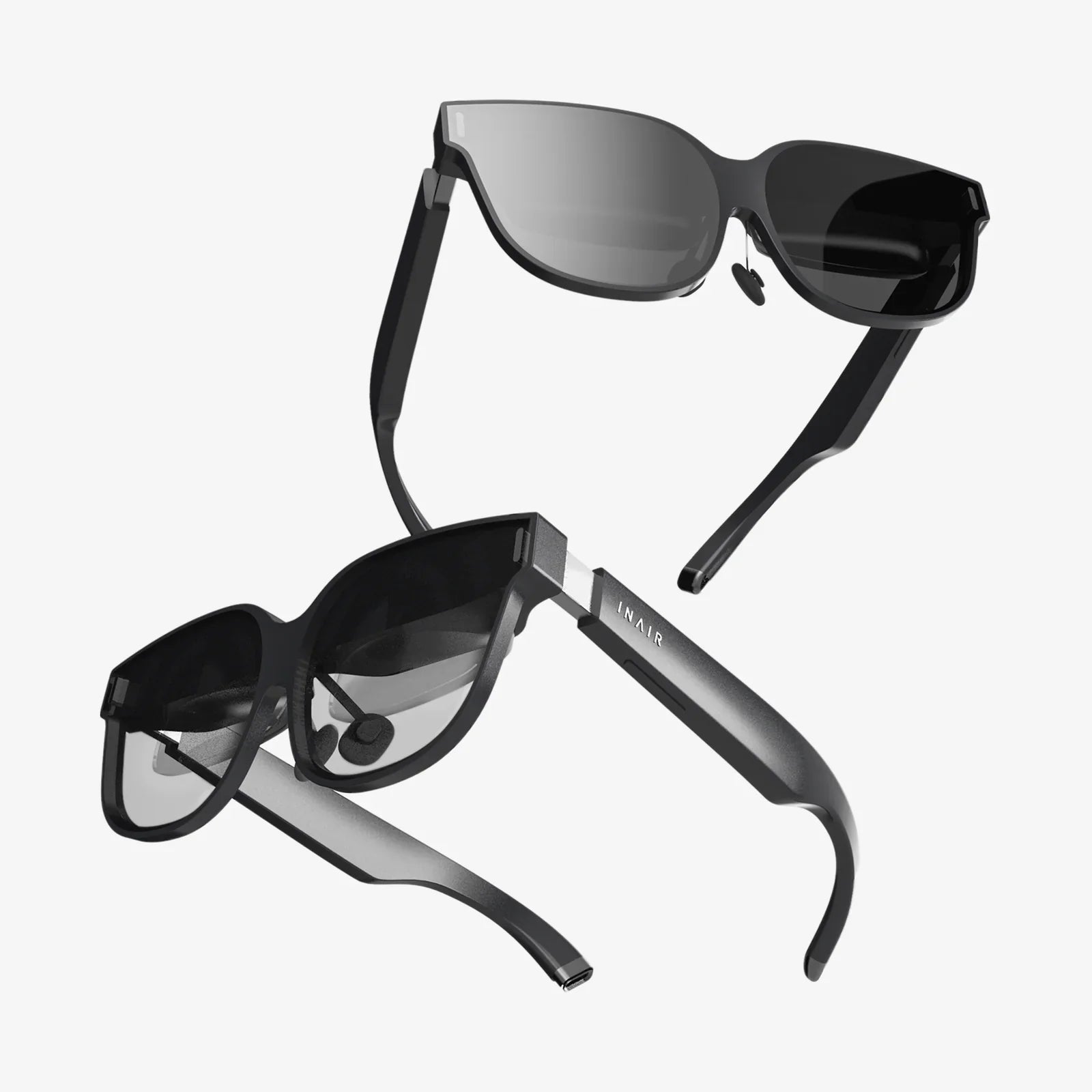
Imagine walking down the street, your favorite soundtrack playing with crystal clarity, yet you can still hear the world around you—the chirping of birds, the distant hum of traffic, a friend greeting you by name. This isn't a scene from a sci-fi movie; it's the reality offered by the latest innovation in wearable tech: glasses with speakers in them. This groundbreaking convergence of audio technology and optical wear is poised to change not just how we listen, but how we interact with our environment. It’s a liberation from the isolating cocoon of headphones, offering a more integrated, aware, and stylish way to experience sound on the go. Step into the future, where your view and your soundtrack are seamlessly combined into a single, elegant frame.
The Genesis of Audio Eyewear: From Concept to Consumer
The journey to creating viable glasses with integrated speakers is a tale of miniaturization and audacious engineering. For decades, the goal of personal audio was fidelity and noise isolation, leading to larger headphones and eventually, the ubiquitous earbud. However, a counter-movement began to emerge, recognizing the social and practical limitations of being sonically disconnected from one's surroundings. The initial concept was less about high-fidelity music and more about hands-free communication, often appearing in niche products or conceptual designs. The real breakthrough came with the advancement of bone conduction technology, which offered an alternative path for sound. While many modern audio glasses do not use bone conduction (opting instead for innovative open-ear speaker design), its development paved the way for rethinking audio delivery. Engineers faced a monumental challenge: fitting powerful micro-speakers and batteries into the slim, lightweight form factor of eyeglass temples without compromising comfort, style, or battery life. The solution involved custom-designed miniature speakers that direct sound down the temple and towards the ear canal, rather than blasting it directly. This method creates a personal audio bubble that is clear to the wearer but minimizes sound leakage to those nearby, a key hurdle in making the technology socially acceptable.
How Do Glasses With Speakers Actually Work?
At first glance, the technology seems like magic, but the principles are elegantly straightforward. Unlike traditional headphones that cover or enter the ear, the speakers in these glasses are typically housed in the part of the frame that rests just above and behind the ear, known as the temple tip.
The Core Technology: Open-Air Audio
The primary technology employed is open-ear audio. Tiny, high-quality speakers are embedded within the temples. When activated, these speakers project sound waves down the side of the head and into the ear canal. Because the speakers are not sealing the ear, ambient noise is not blocked. This allows the user to enjoy their audio content while remaining fully aware of their environment. Advanced models incorporate precise acoustic chambers and waveguides to optimize this sound path, ensuring clarity and richness while reducing audio spillage. Some systems use digital signal processing (DSP) to enhance bass response, which can be a challenge for small drivers operating in an open environment.
The Components Packed Inside
Packing all the necessary tech into a slender frame is a marvel of modern engineering. A typical pair of audio glasses contains:
- Micro-Speakers: The heart of the device, these are custom-designed drivers that prioritize clarity at lower volumes.
- Rechargeable Battery: A lithium-ion battery is discreetly integrated, often into both temples to balance weight. Battery life typically ranges from 6 to 12 hours of playback.
- Bluetooth Chipset: This enables a wireless connection to smartphones, tablets, and laptops, with many supporting the latest Bluetooth standards for stable connectivity and low latency, ideal for watching videos.
- Microphone Array: Multiple microphones are used for voice calls. They employ beamforming and noise-cancellation algorithms to isolate the wearer's voice from wind and background noise, ensuring call clarity.
- Touch Controls: A capacitive touch surface on the temple allows users to play/pause music, skip tracks, adjust volume, answer calls, and even activate voice assistants without reaching for their phone.
- Charging Port: Most models use a magnetic proprietary charging cable for ease of use.
Beyond Music: The Multifaceted Applications of Audio Glasses
While listening to music and podcasts is a primary function, the utility of glasses with speakers extends far into professional and recreational domains, making them a versatile tool for modern life.
Professional and Productivity Powerhouse
For the remote worker or the constantly connected professional, audio glasses are a game-changer. They transform endless video conferencing calls. Instead of dealing with uncomfortable earbuds or a bulky headset, one can wear a pair of stylish frames all day. They allow for seamless switching between taking a call and speaking with a colleague in the same room. Furthermore, they enable multitasking; a professional can listen to guidance or a document being read aloud while keeping their hands free to type or reference other materials. For those who work in warehouses, laboratories, or other environments where situational awareness is critical for safety, the open-ear design provides crucial audio information and instructions without compromising their perception of ambient sounds like machinery or alarms.
The Ultimate Companion for Fitness and Adventure
This is perhaps the category where audio glasses truly shine. For runners and cyclists, traditional headphones can be dangerous, blocking out important auditory cues like approaching cars, shouts, or sirens. Audio glasses eliminate this hazard entirely. They are also far more secure than earbuds during high-movement activities; they don't fall out and aren't affected by sweat in the same way. Swimmers can find models with waterproof ratings, allowing for audio entertainment during laps. Hikers can enjoy nature's soundscape alongside their playlist. The combination of music and environmental awareness creates a uniquely immersive and safe experience for outdoor enthusiasts.
Accessibility and Assistive Technology
The potential for assistive technology is profound. For individuals with certain types of hearing impairment, audio glasses can be paired with hearing aid apps or used to stream audio directly in a more discreet and comfortable package than traditional hearing aids. They can also be used for real-time language translation, where the translated dialogue is spoken directly into the wearer's ear while they observe the speaker's lips and body language, aiding comprehension. This seamless integration of audio information into the wearer's field of vision opens up new avenues for assistive and augmented reality applications.
Addressing the Elephant in the Room: Sound Quality and Privacy
The most common skepticism surrounding audio glasses concerns two aspects: audio fidelity and sound leakage. It's true that the experience is different from a high-end pair of noise-cancelling headphones.
The Realistic Sound Experience
The sound quality of modern audio glasses is surprisingly good and has improved dramatically since the first generation. They excel in delivering clear mids and highs, making them perfect for podcasts, audiobooks, and most popular music genres. The bass response, while never matching a sealed driver, is now often reinforced through acoustic engineering and software, providing a satisfying thump. The overall experience is akin to having a high-quality personal speaker near your ear. It's not about overwhelming, room-shaking sound; it's about personal, situational, and clear audio that complements your day rather than dominating it.
Managing Sound Leakage
What about people around you? Can they hear your podcast? Manufacturers are acutely aware of this concern. Through careful speaker design and directional audio projection, sound leakage is minimized. At reasonable volume levels in moderately noisy environments, those nearby are unlikely to hear anything. In a dead-silent room, like a library, someone sitting extremely close might detect a faint whisper of sound, but it is generally not disruptive. Responsible use involves being mindful of volume, especially in very quiet settings.
Choosing Your Audio Frames: A Buyer's Considerations
If you're considering a pair, look beyond the tech specs and focus on how they will integrate into your life.
Fit, Form, and Prescription Lenses
Comfort is king. Since these are glasses first, they must fit well. Look for adjustable nose pads and temple tips. Many companies offer a variety of frame styles—from classic full-rimmed to modern sport wraparounds. Crucially, most reputable brands partner with optical labs to allow users to fit prescription lenses into the frames, transforming them into a true all-in-one solution for vision and audio. For those without vision needs, non-prescription plano lenses are standard, and often polarized sunglass lenses are available as an option.
Battery Life and Connectivity
Consider your daily usage. A 6-hour battery may suffice for commutes and workouts, but if you wear them all day, a 10+ hour battery is essential. Also, check the charging system; a compact, magnetic cable is far more convenient than a standard port. For connectivity, ensure it has a modern Bluetooth version (5.0 or higher) for a stable connection and the ability to pair with multiple devices simultaneously.
The Ecosystem and Controls
Some models come with a companion app that offers features like equalizer settings, firmware updates, and battery level checks. Test the touch controls—are they intuitive and responsive? Accidental brushes can be frustrating, so good software that distinguishes between intentional and unintentional touches is vital.
The Future of Audio Eyewear: What Lies Ahead?
The current state of the technology is impressive, but it is merely the foundation for a more integrated future. We are moving towards a world of true ambient computing, where technology fades into the background of our lives. Audio glasses are a perfect platform for this evolution. The next steps will likely include:
- Advanced Augmented Reality (AR): Integrating micro-displays to overlay information onto the real world, with audio providing the accompanying narration and cues.
- Enhanced Biometrics: Sensors could monitor health metrics like heart rate, steps, and even sun exposure, all from the frame resting on your head.
- Contextual Awareness: Using AI, the glasses could identify your environment and automatically adjust audio profiles or read out notifications it deems important.
- Improved Audio Fidelity: Ongoing advancements in acoustic materials and speaker design will continue to close the gap with traditional headphones.
The era of stuffing your ears with plastic to hear your world is fading. Glasses with speakers in them represent a more elegant, intelligent, and integrated approach to personal technology. They are not just a gadget; they are a paradigm shift, offering a bridge between our digital lives and the physical world we inhabit. They free us to enjoy our audio content without sacrificing conversation, awareness, or safety. This is more than a new way to listen; it's a new way to live connected, offering a glimpse into a future where our technology doesn't isolate us, but rather enhances our experience of the world in a more natural and harmonious way. The sound of the future isn't in your ears—it's on your face.
Share:
Holographic Touch Screen: The Future of Digital Interaction is Here
Do AR: How Augmented Reality is Reshaping Our Reality and Redefining Human Potential