


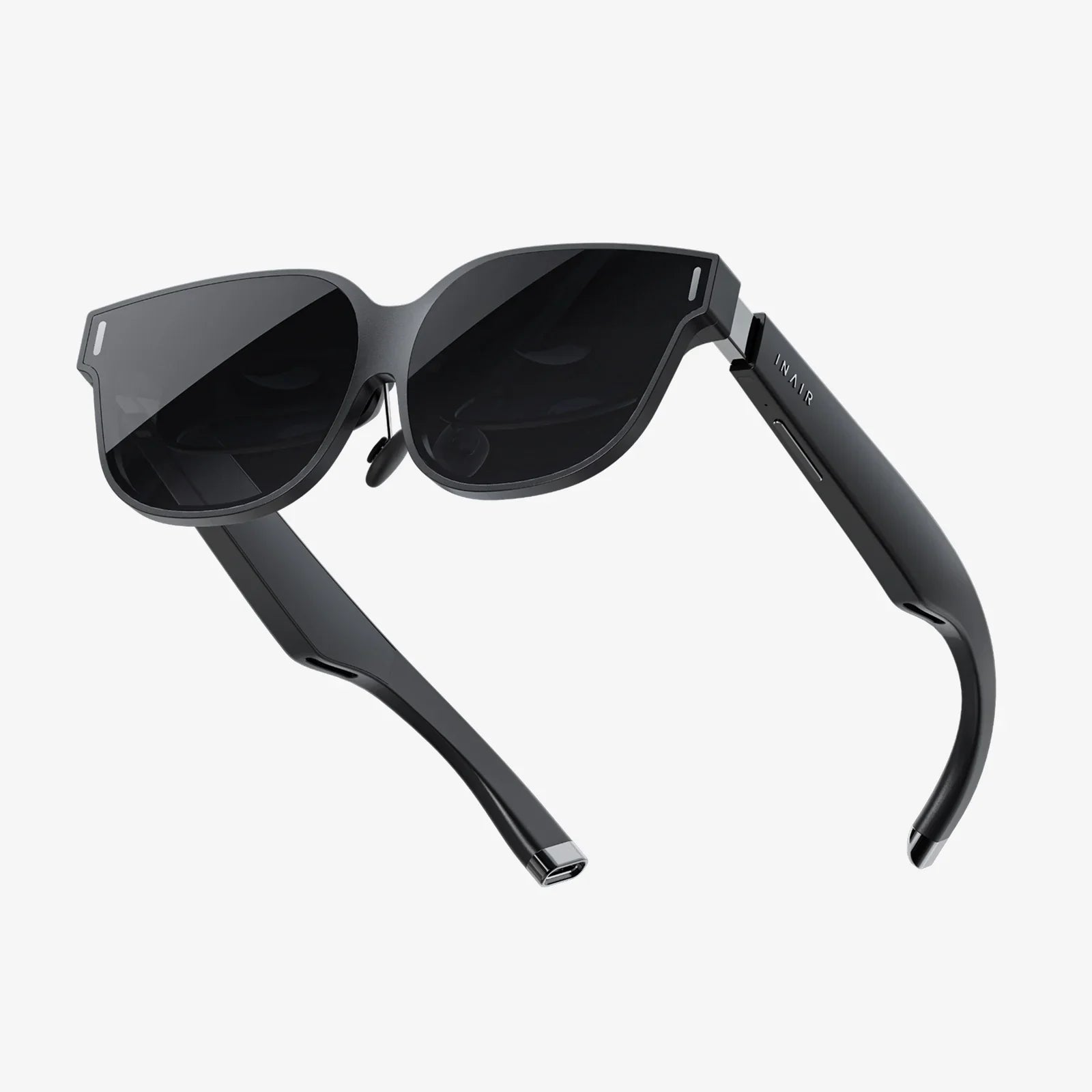
Imagine a world where digital information seamlessly overlays your physical surroundings, where training for complex surgery is as simple as putting on a pair of glasses, and where you can explore the farthest reaches of the universe from your living room. This is not a distant sci-fi fantasy; it is the rapidly evolving reality being built by the humble yet profoundly powerful head mounted device. This wearable technology is poised to be the next great paradigm shift in human-computer interaction, moving us beyond the confines of screens and into an era of immersive, contextual, and intuitive computing. The journey from clunky prototype to sleek, sophisticated system is a story of relentless innovation, and its implications for how we work, learn, play, and connect are nothing short of revolutionary.
The Evolutionary Journey: From Fantasy to Functionality
The concept of a head mounted device is far from new. For decades, it lived primarily in the realms of science fiction and military research. Early iterations were monumental in size, prohibitively expensive, and offered limited functionality. They were the domain of university labs and government agencies. The turning point came with the convergence of several critical technologies. Advances in micro-displays, offering high resolution in tiny form factors, were fundamental. Similarly, the development of precise motion tracking sensors—accelerometers, gyroscopes, and magnetometers—allowed these devices to understand their position and orientation in space. The exponential growth in mobile processing power, driven by the smartphone revolution, provided the necessary computational engine to render complex graphics and run sophisticated software, all within a self-contained unit on your head.
This technological convergence birthed two distinct but increasingly overlapping paths: Virtual Reality (VR) and Augmented Reality (AR). Early VR headsets were fully immersive, blocking out the physical world and transporting users to entirely digital environments. They were initially championed by the gaming industry, offering unprecedented levels of immersion. In parallel, AR devices began to emerge, focusing on overlaying digital information—text, images, 3D models—onto the user's view of the real world. While early AR was often experienced through smartphone cameras, dedicated optical see-through head mounted devices represented the true goal: a seamless blend of the real and the virtual. Today, the line between VR and AR is blurring with the advent of Mixed Reality (MR) devices, which use advanced cameras and sensors to understand the real world and allow digital objects to interact with it in believable ways.
Under the Hood: Deconstructing the Modern Head Mounted Device
A modern head mounted device is a marvel of miniaturization and engineering, packing a suite of sophisticated components into a wearable form factor.
The Display Systems: Windows to New Worlds
At the heart of the experience is the display. VR devices typically use two high-resolution fast-switch LCD or OLED panels, one for each eye, placed very close to the user's face through a system of lenses. These lenses focus the eyes on the screen, which is why the experience feels like looking into a vast world, not at a small screen. For AR and MR, the challenge is different. The goal is to project digital imagery onto the real world. This is achieved through several methods, including waveguide technology, where light is bounced through a transparent glass or plastic lens to the eye, and retinal projection, which beams light directly onto the retina. The choice of technology dictates the device's field of view, brightness, and overall visual fidelity.
Sensors and Tracking: The Nervous System
To create a convincing and comfortable experience, the device must understand everything about its environment and the user. Inside-out tracking uses a array of cameras on the device itself to map the room in real-time, creating a 3D mesh and tracking the device's movement within it without external sensors. This is complemented by infrared cameras for precise hand-tracking, allowing users to interact with digital content using natural gestures without controllers. Eye-tracking sensors monitor where the user is looking, enabling features like foveated rendering (which focuses processing power only where the user is looking, drastically improving efficiency) and more intuitive social interactions in virtual spaces.
Processing and Connectivity: The Brain
The computational load is immense. Some devices are tethered to a powerful external computer, acting primarily as a display and sensor hub. Others are standalone, containing a full mobile system-on-a-chip (SoC), battery, and storage, offering complete freedom of movement. Connectivity options like Wi-Fi and Bluetooth are crucial for accessing cloud-based data, multiplayer experiences, and connecting peripheral devices.
Transforming Industries: Beyond Entertainment
While gaming and entertainment provided the initial commercial impetus, the most profound applications of head mounted devices are emerging across a wide spectrum of professional fields.
Healthcare and Medicine: A New Dimension of Care
In medicine, head mounted devices are saving lives and improving outcomes. Surgeons use AR overlays to visualize patient anatomy—such as CT scans or MRI data—precisely superimposed on the patient during procedures, acting as a GPS for the human body. This enhances precision and reduces operation times. Medical students are using VR to practice complex procedures in a risk-free environment, dissecting virtual cadavers, and exploring detailed 3D models of human anatomy. Furthermore, these devices are powerful tools for therapy, helping patients overcome phobias through controlled exposure in virtual environments and assisting in physical rehabilitation by turning exercises into engaging games.
Manufacturing and Design: Building in the Digital Realm
Engineers and designers are using MR to prototype and interact with 3D models at full scale before a single physical part is manufactured. A car designer can sit inside the hologram of a new vehicle's interior to assess ergonomics and aesthetics. On the factory floor, assembly line workers can receive AR instructions overlaid directly on the machinery they are assembling or repairing, reducing errors and training time. Remote experts can see what a field technician sees and provide visual annotations directly into their field of view, guiding them through a repair thousands of miles away.
Education and Training: The Immersive Classroom
Education is being revolutionized. Instead of reading about ancient Rome, students can take a virtual field trip and walk its streets. Complex scientific concepts, from molecular biology to astrophysics, become tangible and interactive in 3D space. This experiential learning leads to significantly higher retention rates and engagement. Corporate training is also being transformed, allowing employees to practice everything from public speaking to operating heavy machinery in a completely safe simulated environment.
Remote Collaboration: The Ultimate Telepresence
Head mounted devices are redefining the concept of remote work. Instead of a grid of faces on a video call, teams can meet in a persistent virtual office or around a holographic 3D model. Participants, represented by avatars or eventually realistic holograms of themselves, can interact with digital content and each other with a sense of shared presence that flat screens cannot replicate. This has the potential to make remote collaboration more natural, effective, and human.
Navigating the Challenges: The Path to Ubiquity
Despite the immense potential, significant hurdles remain before head mounted devices achieve mass adoption.
The Social and Ethical Frontier
The most pressing questions are social and ethical. As these devices collect vast amounts of biometric and environmental data—recording where we look, how we move, and mapping our homes—data privacy and security become paramount. Who owns this data? How is it used and stored? The concept of attention is also challenged; if digital advertisements can be placed anywhere in our physical world, how do we maintain a sense of personal space and mental quiet? Furthermore, the potential for deep immersion raises concerns about reality blurring, escapism, and social isolation. Establishing clear norms and ethical guidelines is a critical task for developers, policymakers, and society as a whole.
Technical Hurdles: The Quest for the Perfect Device
On the technical side, the ideal device—one that is as small, light, and comfortable as a pair of everyday glasses, with all-day battery life, photorealistic graphics, and a vast field of view—does not yet exist. Challenges in display technology, battery energy density, and heat dissipation are significant engineering problems. Overcoming the vergence-accommodation conflict, a visual discrepancy that can cause eye strain and fatigue in current devices, is a key research area in making long-term use comfortable for everyone.
The Future Unfolds: What Lies Beyond the Horizon
The trajectory is clear: head mounted devices will become smaller, more powerful, more socially acceptable, and ultimately, indistinguishable from ordinary eyewear. They will evolve from being devices we “put on” to becoming always-on, intelligent companions that augment our perception and cognition continuously. We are moving towards the concept of the ‘metaverse’—a persistent network of interconnected virtual and augmented spaces—where these devices will serve as our primary portal. In this future, contextual information will be available instantly, overlaying our reality with a digital layer of knowledge, communication, and entertainment. The distance between a thought and an action, between a question and an answer, will shrink to zero.
The true potential of the head mounted device is not merely to replicate reality or provide an escape from it, but to enhance our human experience in profound and meaningful ways. It promises a future where a mechanic can see the inner workings of an engine, a doctor can see beneath a patient's skin, and a student can walk with dinosaurs. It is a tool for expanding human potential, breaking down barriers of distance and understanding, and unlocking new forms of creativity and connection. The device on your head is more than just technology; it's a lens through which we will reimagine and reshape our entire world.
Share:
Human Computer Interaction Principles: The Blueprint for Intuitive Digital Experiences
Human Computer Interaction Principles: The Blueprint for Intuitive Digital Experiences