


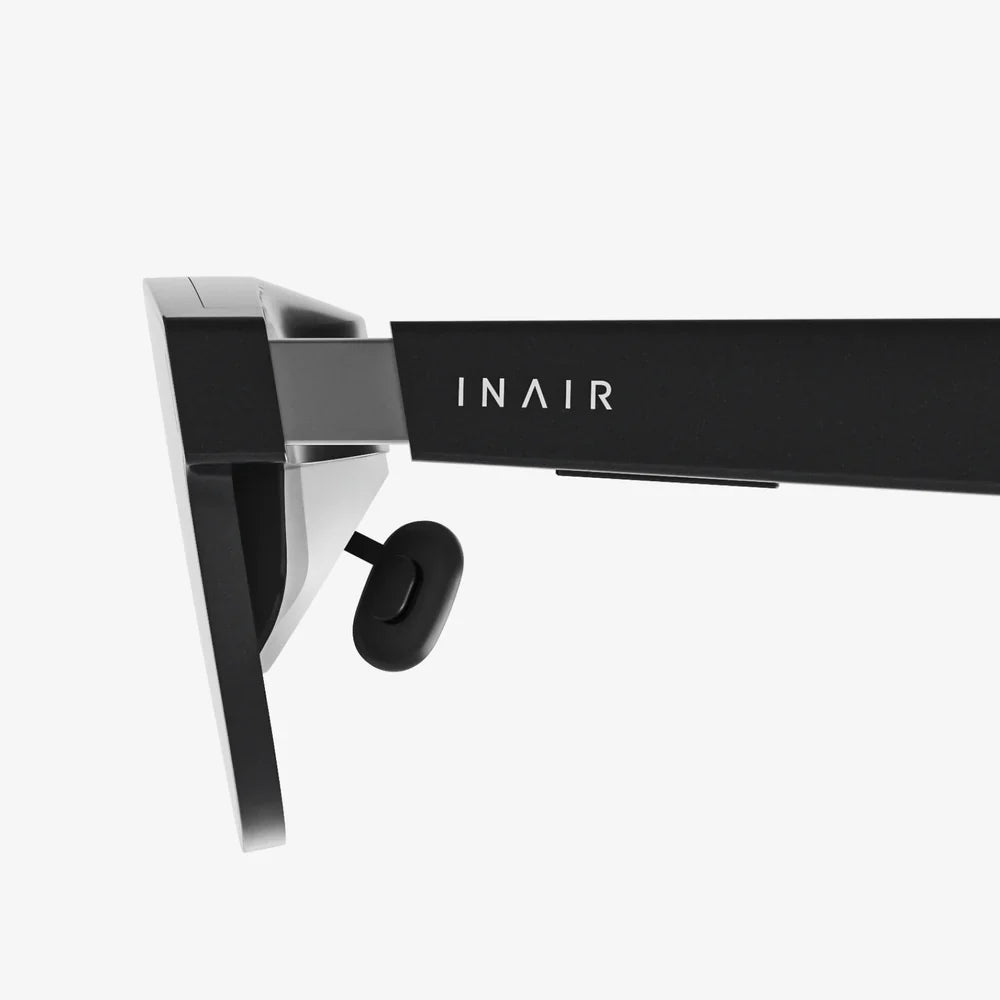
Imagine a world where your ring could calculate complex equations, your glasses could project a private universe of information, and a device on your wrist could monitor the very essence of your being. This isn't a glimpse into a distant cyberpunk future; it is the living, breathing reality shaped by the long and winding history of wearable technology. This story is one of human ingenuity, a relentless pursuit to extend our physical and mental capacities, weaving computation and connection directly into the fabric of our daily lives. It’s a tale that begins not in a Silicon Valley garage, but centuries ago, in the workshops of ingenious inventors and the dreams of visionary storytellers.
The Proto-Wearables: Ancient Foundations and Renaissance Dreams
Long before the term "wearable tech" was coined, the fundamental desire to augment human ability with portable technology was already present. The earliest examples are testaments to practicality and intellectual curiosity. One of the most compelling, albeit debated, artifacts is the abacus ring, a tiny calculating device supposedly worn in ancient times. While physical evidence is scarce, the concept itself is powerful—a personal, always-available tool for computation, the ancestor of every smartwatch calculator app.
The true genesis of wearable technology as a field of invention is often traced to the 16th century. In 1571, the German inventor Peter Henlein created the first portable timepiece, the Nuremberg Egg, a clock small enough to be worn around the neck. This was a monumental leap, miniaturizing a complex machine from a static town clock to a personal accessory. It marked the beginning of a new relationship between humans and machines—one of intimate, personal utility.
The 17th and 18th centuries saw further iterations, with pocket watches becoming status symbols for the wealthy. But the true wearability breakthrough came from necessity. In 1868, the Swiss watchmaker Patek Philippe created the first wristwatch, designed not for a man, but for the Countess Koscowicz of Hungary. It was largely seen as a piece of jewelry for women until the early 20th century, when its practical value became undeniable in the trenches of World War I. Soldiers discovered that strapping a watch to their wrist was far more efficient for synchronizing attacks than fumbling for a pocket watch. This martial adoption cemented the wrist as the prime real estate for wearable technology, a legacy that continues to this day.
The 20th Century: From Fiction to Function
The 1900s served as the incubator for modern wearable technology, a period where science fiction began to inspire science fact. The pages of pulp magazines and comic strips were filled with visions of powered exoskeletons, rocket boots, and communication devices worn on the wrist. These fantastical ideas planted seeds in the minds of engineers and inventors.
The mid-century saw these seeds begin to sprout in earnest. In 1961, mathematicians Edward Thorp and Claude Shannon built the first wearable computer, a shoe-sized device designed to predict roulette wheels. Though clandestine in its purpose, it was a proof-of-concept that computation could be mobile. A more academic and altruistic project followed in 1966 with the invention of the camera-to-tactile vest system for the blind, a pioneering attempt to use wearable sensors to translate visual information into tactile feedback.
Perhaps the most iconic wearable of the 20th century emerged from the calculator boom of the 1970s. In 1975, the Pulsar Calculator Watch was released, fusing a digital timepiece with a miniature calculator. It was a sensation, a piece of true futuristic tech that captured the public's imagination and became a cultural touchstone, famously worn by characters like James Bond. It demonstrated a public appetite for multifunctional wrist-worn devices.
Meanwhile, another form of wearable was developing in the world of healthcare. The first wearable portable ECG monitor was developed in 1977, a clunky backpack-sized unit that was a far cry from today's sleek devices, but it represented a critical step towards continuous, ambulatory health monitoring. The 1980s then introduced the world to the digital hearing aid and the first commercial wireless headsets, further normalizing the act of wearing technology to enhance our senses and communication.
The Dawn of Modern Wearables: The 1990s and 2000s
The final decade of the 20th century was a period of intense experimentation and prototyping, largely within university research labs. The term "wearable computer" gained academic currency. At the Massachusetts Institute of Technology (MIT), researchers like Steve Mann, often called the "father of wearable computing," began living a "cyborg" life, equipped with head-mounted displays and backpack computers that allowed for constant recording and overlaying of digital information onto the real world—a concept known as augmented reality. Mann's work was not about creating a consumer product; it was a philosophical and technical exploration of human-computer integration.
This era also saw the rise of the first true fitness wearables. In the late 1980s, a company released the first wireless heart rate monitor for athletes, and throughout the 1990s, devices became more accurate and accessible. The focus was squarely on the dedicated athlete, providing data that was previously only available in a lab. The early 2000s saw the integration of GPS into sports watches, enabling runners and cyclists to track their distance and pace with unprecedented accuracy. These devices were specialized tools, but they were building a cultural foundation for the quantified self—the idea that collecting data about one's own body and activities could lead to better health and performance.
The Smartphone Catalyst and the Wristwatch Renaissance
The launch of the modern smartphone in the late 2000s was the catalyst that propelled wearable technology from a niche interest to a mainstream phenomenon. Smartphones solved several critical problems: they provided a powerful, miniaturized computer with robust connectivity (Bluetooth and Wi-Fi), a familiar touch interface, and a central hub for data. Wearables no longer needed to be standalone supercomputers; they could be elegant, focused accessories that leveraged the smartphone's brain and connection.
This new paradigm led directly to the explosion of activity trackers around 2010. These clip-on or wrist-worn devices used accelerometers to track steps, sleep, and calories burned. They were simple, affordable, and effective, introducing millions of people to the concept of self-quantification. They democratized health data, making it accessible to everyone, not just elite athletes.
The logical evolution was to combine the functionality of a fitness tracker with the connectivity and app ecosystem of a smartphone. This culminated in the release of the first truly successful modern smartwatch in the mid-2010s. It wasn't the first of its kind, but it was the first to achieve widespread consumer appeal through a blend of elegant design, intuitive interface, and powerful functionality. The smartwatch became the Swiss Army knife of wearables: a phone, a fitness coach, a notification center, and a payment device, all on the wrist. This period also saw the rapid maturation of wireless headphones, transforming from a simple audio tool into an intelligent audio platform with features like active noise cancellation, real-time translation, and voice assistant integration.
The Present and The Horizon: AI, Advanced Sensing, and Bio-Integration
Today, the history of wearable technology is being written in real-time, driven by advancements in artificial intelligence, sensor technology, and material science. Modern devices are moving beyond simple data collection to proactive, contextual insights. AI algorithms analyze heart rate variability to predict stress, track sleep patterns to recommend bedtime, and analyze workout data to suggest recovery times. The wearable is becoming an intelligent health partner.
Sensors are becoming more sophisticated and medical-grade. Electrocardiogram (ECG) apps can detect atrial fibrillation, blood oxygen sensors can warn of potential respiratory issues, and skin temperature sensors can track cyclical patterns and even predict illness. The line between consumer wellness and clinical healthcare is blurring rapidly, a trend accelerated by regulatory approvals for these features.
The next frontier is moving from on the body to in the body. Continuous glucose monitors (CGMs) for diabetics are a leading example of bio-integrated wearables, using a tiny subcutaneous sensor to stream glucose data to a smartphone. Researchers are developing smart contact lenses that could measure glucose from tears or display information directly onto the retina. Electronic tattoos and smart fabrics are creating wearables that are virtually indistinguishable from the skin or clothing itself. Furthermore, brain-computer interfaces (BCIs), once pure science fiction, have advanced to the point where wearable headbands can meditate brain activity to help users focus or sleep, and more invasive implants are being developed to restore function to paralyzed individuals.
Cultural Impact and The Future Human
The history of wearable technology is not merely a technical chronology; it is a story of profound cultural and societal shift. These devices have changed how we communicate, prioritizing glanceable notifications and voice commands. They have revolutionized healthcare, empowering individuals with data and enabling remote patient monitoring. They have created new forms of entertainment and social interaction through augmented reality games and experiences.
However, this evolution is not without its challenges. The history of wearables is also intertwined with growing concerns over data privacy, as these intimate devices collect our most personal biological and behavioral information. The constant connectivity they offer can lead to digital fatigue and an always-on work culture. There are also questions of accessibility, equity, and the potential for a new digital divide based on who can afford these advanced augmentations.
As we look to the future, the trajectory points towards even deeper integration. The ultimate goal is technology that feels less like a device and more like a seamless extension of our own biology—a true symbiosis. The next chapter will likely be written in the language of nanotechnology, advanced biocompatible materials, and powerful, embedded AI. The abacus ring has, in a way, come full circle, but its modern equivalent won't be worn on a finger; it may be woven into our neurons, silently enhancing our reality in ways we are only beginning to imagine.
From calculating time on a Nuremberg neckpiece to monitoring a heartbeat from a wrist, the journey of wearable technology reveals an undeniable truth: our greatest inventions are often those we choose to carry closest to us. This relentless drive to enhance our reality, to quantify the unseeable, and to connect more deeply defines the narrative. The next time your device gently buzzes with a notification or quietly logs another hour of restorative sleep, remember—you are participating in a revolution centuries in the making, one that is quietly stitching the future directly into the fabric of your everyday life.
Share:
Virtual AR The Digital Revolution Reshaping Our Physical World
Virtual Reality AR News: The Convergence Reshaping Media and Human Perception