


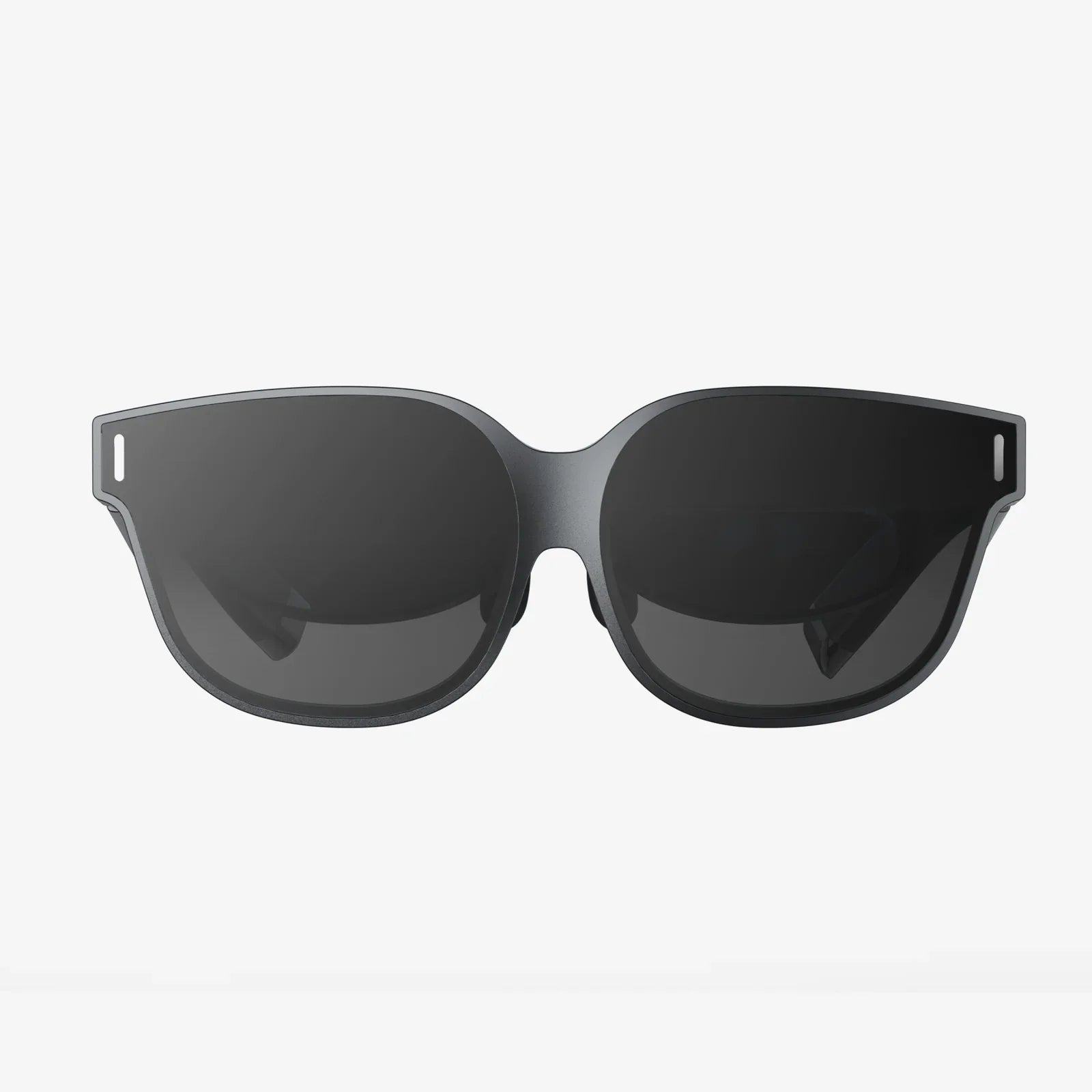
Imagine a world where the information you need materializes before your eyes, where complex data is overlaid onto the physical world, and where your hands remain free to create, fix, and build. This is no longer the realm of science fiction. The emergence of AI-powered glasses is poised to fundamentally reshape how we interact with technology and information, moving beyond the screen to integrate digital intelligence seamlessly into our daily tasks. For professionals across countless fields, this represents a monumental shift in productivity, safety, and efficiency. The question is no longer if this technology will arrive, but how it will revolutionize your work. The journey into this augmented future starts by understanding the powerful synergy between artificial intelligence and wearable visual computing.
The Core Technologies Powering AI Glasses
At their essence, AI glasses are a sophisticated convergence of several advanced technologies. Understanding these components is key to appreciating how they enhance workflows. They are not merely a display worn on the face; they are a comprehensive sensory and computational platform.
Advanced Display Systems
The window to the digital world is provided through micro-display technologies like Waveguide optics, MicroLED, and Liquid Crystal on Silicon (LCoS). These systems project high-resolution images and data directly into the user's field of view, either as a semi-transparent overlay (augmented reality) or as an immersive experience (virtual reality). This allows for critical information—from schematics to patient vitals—to be presented contextually without obstructing the user's vision or requiring them to look away from their task.
Integrated Sensor Suites
These devices are equipped with a powerful array of sensors that act as their eyes and ears. This typically includes high-resolution cameras, depth sensors (LiDAR), inertial measurement units (IMUs) for tracking head movement, microphones for audio input, and often eye-tracking cameras. This sensor suite continuously gathers data about the user's environment, their position within it, and even where they are looking, feeding a constant stream of information to the onboard intelligence.
On-Device and Cloud AI Processing
The true magic lies in the artificial intelligence that processes this sensor data in real-time. While some processing is offloaded to the cloud for complex tasks, a significant amount occurs on the device itself through specialized neural processing units (NPUs). This enables low-latency functionalities like:
- Computer Vision: Recognizing objects, people, text, and gestures.
- Natural Language Processing (NLP): Understanding and responding to voice commands and conversations.
- Contextual Awareness: Analyzing the environment to provide relevant information at the right moment.
- Predictive Analytics: Anticipating user needs based on behavior and current task.
Revolutionizing Hands-Free Information Access and Interaction
The most immediate and profound impact of AI glasses on workflow is the liberation from traditional input devices. The constant cycle of picking up a phone, typing on a keyboard, or clicking a mouse fractures concentration and halts productivity. AI glasses shatter this paradigm.
Information retrieval becomes instantaneous and intuitive. A field service technician can look at a malfunctioning piece of equipment and immediately see its service history, operational manuals, and real-time diagnostics overlaid on their view. A logistics worker in a vast warehouse no longer needs to consult a handheld scanner; the most efficient route to the next item is highlighted on the floor before them, and items can be identified and logged with a glance. This seamless access to knowledge bases, databases, and communication systems turns every user into a hyper-efficient, walking information center.
Interaction is primarily driven by voice commands and subtle gestures, creating a truly hands-free experience. A surgeon can request to see a patient's MRI scan without breaking sterility. An architect on a construction site can measure distances by looking at two points and issuing a voice command. This natural user interface reduces cognitive load, allowing the professional to focus entirely on the physical task at hand while still commanding the full power of digital tools.
Industry-Specific Workflow Transformations
The application of AI glasses is not monolithic; their value is deeply contextual, varying dramatically from one profession to another.
Manufacturing and Field Services
In industrial settings, AI glasses are a game-changer for complex assembly, maintenance, and quality control. A technician performing a repair can see an animated, step-by-step guide overlaid directly onto the machinery they are working on, reducing errors and training time. Remote experts can see exactly what the on-site technician sees and provide visual annotations directly into their field of view, enabling first-time fixes and drastically reducing travel costs and downtime. This "see-what-I-see" remote collaboration is perhaps one of the most powerful workflow enhancements, democratizing expertise across the globe.
Healthcare and Medicine
For medical professionals, AI glasses offer unprecedented tools for patient care and training. During procedures, a surgeon can have vital signs and critical imaging data displayed in their periphery, avoiding the need to turn away from the operating table. Medical students can observe procedures from the surgeon's point of view, with annotations explaining each step. Furthermore, AI-powered image recognition can assist in identifying anatomical landmarks or even potential anomalies, acting as a powerful diagnostic aid.
Design and Engineering
For designers and engineers, the ability to visualize 3D models at full scale in a real-world context is transformative. An interior designer can place virtual furniture in a client's empty room, allowing them to walk through and experience the proposed design. An engineer can project a life-size hologram of a new engine prototype onto a workbench to examine fit and form with colleagues in different locations, all seeing the same model. This bridges the gap between digital design and physical reality, streamlining the iteration and review process.
Overcoming Challenges and The Path to Widespread Adoption
Despite their potential, the path to ubiquitous adoption of AI glasses is not without obstacles. Addressing these challenges is critical for their successful integration into mainstream workflows.
Battery Life and Processing Power: Balancing powerful, real-time AI computation with all-day battery life remains a technical hurdle. Advancements in low-power chipsets and edge computing are steadily improving this equation.
User Experience and Design: Early models often suffered from being bulky, uncomfortable, and socially awkward to wear. The next generation of devices is focusing on sleek, lightweight designs that resemble conventional eyewear, making them more appealing for all-day use.
Privacy and Security: Devices with always-on cameras and microphones understandably raise privacy concerns. Robust data encryption, clear user indicators for recording, and enterprise-grade security protocols are non-negotiable for building trust, especially in corporate and clinical environments.
Software Ecosystem: The hardware is only as good as its software. The development of a rich ecosystem of industry-specific applications is crucial. This requires buy-in from software developers and businesses to create the tools that will deliver tangible ROI.
The Future of Augmented Workflows
The evolution of AI glasses is moving towards more intuitive, powerful, and invisible integration into our lives. We are progressing towards a future where contextually aware AI assistants, viewed through stylish glasses, will proactively manage our digital tasks. They will schedule meetings based on overheard conversations, translate foreign language signs instantly, and highlight the name of a colleague you last met years ago as they approach you at a conference.
This technology will eventually become as commonplace and indispensable as the smartphone, not as a device we look at, but as a intelligent layer we look through. It will augment our memory, our perception, and our ability to execute tasks with superhuman efficiency.
The potential of AI glasses to redefine productivity is staggering, offering a glimpse into a future where the boundary between human intuition and machine intelligence beautifully blurs. This isn't about replacing workers; it's about augmenting their capabilities, making them safer, more informed, and exponentially more effective. The businesses and individuals who begin to explore and adapt to this paradigm shift today will be the ones leading the charge in the augmented workplaces of tomorrow. The next revolution in productivity is not on your desk; it's on your face.
Share:
Augmented Reality Use is Reshaping Our World: From Surgery to the Shopping Mall
AR VR Headset Companies: The Architects of Our Digital Tomorrow