


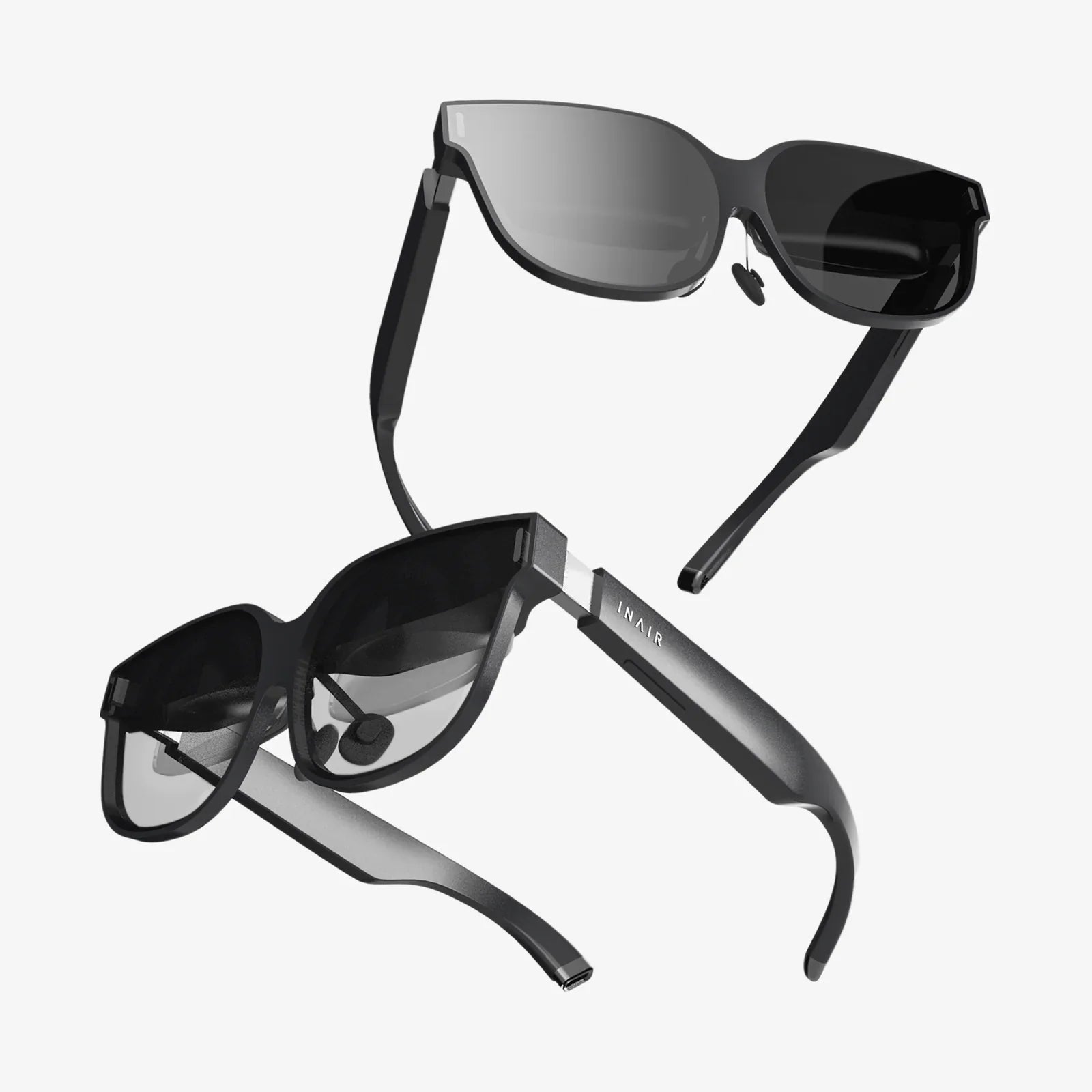
You've seen the concept in sci-fi movies for decades: a pair of sleek glasses that overlay a digital world onto our own, providing real-time information, translating languages on the fly, and identifying objects with a simple glance. That future is no longer confined to the silver screen. AI glasses are here, and they are rapidly evolving from niche prototypes into consumer-ready devices. But as this cutting-edge technology inches toward the mainstream, a single, burning question dominates the conversation for curious early adopters and tech enthusiasts alike: just how much do AI glasses actually cost? The answer is far from simple, revealing a fascinating and complex landscape where price is dictated by a cocktail of advanced technology, intended use case, and pure ambition.
Deconstructing the Price Tag: It's More Than Just Lenses
To understand the cost of AI glasses, you must first look beyond the frame. You are not simply purchasing eyewear; you are investing in a wearable computer. The price is a direct reflection of the sophisticated components packed into a remarkably small form factor. The most significant cost drivers include:
The Display Technology: Your Window to Augmented Reality
This is often the most expensive component. How the digital image is projected onto your field of vision varies significantly between models and directly impacts both the user experience and the cost.
- Optical Waveguides: These are tiny, transparent pieces of glass or plastic etched with microscopic patterns that "bend" light from a projector on the temple into your eye. They allow for sleek designs but are complex and expensive to manufacture.
- Micro-LED Projectors: These incredibly small, bright, and efficient projectors are the light source for many high-end AR glasses. Their miniaturization and power requirements contribute to a higher cost.
- Birdbath Optics: A more common design in consumer-focused models, it uses a semi-transparent mirror to reflect the image from a projector above the lens into your eye. It offers a good balance of cost and field of view.
The choice between these systems creates a vast chasm in price. A simple monochrome LED display for notifications is cheap; a full-color, high-resolution, wide field-of-view waveguide display is a premium feature that commands a premium price.
The Brain: Processing Power and Onboard Intelligence
True AI glasses require substantial processing power. They need to run complex computer vision algorithms, neural networks for object and speech recognition, and sensor fusion software to understand the world around you. This can be handled in two ways:
- On-Device Processing: High-end glasses have a dedicated, miniaturized processor (often a System-on-a-Chip or SoC) within the frame itself. This allows for faster response times and functionality independent of a phone but adds significantly to the component cost, power consumption, and thermal management challenges.
- Companion Device Processing (Tethered): Many glasses offload the heavy computational lifting to a connected smartphone or a separate processing unit that fits in your pocket. This keeps the glasses lighter, cooler, and more affordable, but tethers your experience to another device.
The more powerful the onboard AI, the higher the cost. Glasses that can perform real-time translation or identify complex objects without a data connection are packing serious, expensive silicon.
The Senses: Cameras and Sensors
For AI glasses to understand their environment, they need to perceive it. This requires an array of sensors:
- Cameras: High-resolution cameras for photography and video are common, but specialized RGB cameras for computer vision, depth-sensing cameras (like time-of-flight sensors), and infrared cameras for eye-tracking are also used. More and better cameras mean a higher bill of materials.
- Inertial Measurement Units (IMUs): These gyroscopes and accelerometers track the movement and orientation of the glasses in space, crucial for stabilizing AR content.
- Microphones: An array of microphones is essential for clear voice commands and noise cancellation, especially in noisy environments.
Each sensor adds cost, and the software to seamlessly fuse all this data into a coherent understanding of the world represents years of expensive research and development.
Battery Life: The Power Dilemma
All this technology is power-hungry. Engineering a battery that is small enough to fit comfortably in the frame of glasses yet powerful enough to last for a meaningful amount of time is a monumental challenge. Solutions range from built-in batteries that offer 2-4 hours of use to external battery packs that clip onto clothing or reside in a pocket, offering longer life. Larger capacity and more innovative battery solutions add to the overall cost.
The Market Spectrum: From Basic to Bleeding Edge
The market for AI glasses is not monolithic. It can be broken down into distinct tiers, each with its own price range and target audience.
Entry-Level "Smart Glasses" ($100 - $400)
This category is less about full-blown augmented reality and more about adding convenient functionality to standard eyewear. Think of them as an extension of your smartphone.
- Typical Features: Mono or stereo speakers for audio, a basic microphone for calls, a button for voice assistants, and sometimes a tiny LED for notifications. They lack displays for overlaying information onto the real world.
- AI Functionality: Limited to accessing a phone-based voice assistant (e.g., Siri, Google Assistant).
- Who They're For: Consumers looking for a hands-free way to take calls, listen to music, and get notifications without in-ear headphones.
- Price Justification: You are paying for the miniaturization of basic Bluetooth components into a glasses form factor and stylish design, not for advanced AR tech.
Mid-Range AR & AI Glasses ($400 - $1,500)
This is where true augmented reality begins to appear. These glasses almost always require a tethered connection to a smartphone or computer to handle the processing.
- Typical Features: A monochromatic or basic color display (often using Birdbath optics), one or two cameras for basic photo/video and AR tracking, built-in speakers and microphones.
- AI Functionality: Real-time translation displayed on the lenses, basic object identification, navigation arrows overlayed on the street, and contextual information pulled from the internet via your phone.
- Who They're For: Tech enthusiasts, developers experimenting with AR, and professionals in fields like logistics or remote assistance who can benefit from a heads-up display.
- Price Justification: The cost incorporates more advanced optical engines, better sensors, and specialized software for AR experiences.
High-End & Enterprise-Grade AR Glasses ($1,500 - $2,500+)
This tier represents the current pinnacle of consumer and professional AR technology. Devices here often feature standalone functionality or more advanced tethered setups.
- Typical Features: High-resolution, wide field-of-view waveguide displays, multiple advanced cameras for depth sensing and SLAM (Simultaneous Localization and Mapping), powerful onboard processors, eye-tracking, and sophisticated spatial audio.
- AI Functionality: Advanced computer vision that can understand and label complex environments, robust object persistence (where digital objects stay locked in place in the real world), and sophisticated neural processing for real-time interaction.
- Who They're For: primarily enterprise users: surgeons overlaying medical imagery during procedures, engineers visualizing 3D blueprints on a factory floor, and designers collaborating in shared AR spaces. Also, dedicated AR developers and affluent early adopters.
- Price Justification: You are paying for cutting-edge R&D, low-volume manufacturing of complex components like waveguides, and military-grade durability and performance. The price reflects the value these tools bring to multi-billion dollar industries.
The Hidden Costs: What Isn't on the Sticker Price?
The initial purchase is only part of the financial picture. Several hidden or ongoing costs can influence the total cost of ownership.
- Prescription Lenses: Unless you have perfect vision or wear contacts, you'll likely need to pay an optician to fit prescription lenses into the often-unusual frames of AI glasses. This can easily add $100 - $300+ to your total cost.
- Software Subscriptions: This is an emerging model. Some manufacturers may offer the hardware at a reduced cost but lock advanced AI features—like premium translation packs, professional diagnostic tools, or cloud processing power—behind a monthly or annual subscription fee.
- Companion Devices: Many mid-range glasses require a high-end smartphone with specific capabilities to function properly. If your current phone is outdated, you might need to factor in an upgrade.
- Insurance and Repairs: Repairing a cracked lens on regular glasses is cheap. Repairing a cracked waveguide display or a faulty micro-projector could be prohibitively expensive, making insurance or a protection plan a wise consideration.
The Future of AI Glasses Pricing: A Trajectory Toward Affordability
History has shown us that all transformative technologies start expensive and niche before becoming affordable and mainstream. The same pattern is expected for AI glasses.
- Economies of Scale: As manufacturing volumes increase, the cost of producing complex components like waveguides and micro-projectors will plummet. What costs $500 to make today might cost $50 in five years.
- Component Miniaturization and Integration: Processors will become more powerful and energy-efficient, sensors will become smaller and cheaper, and battery technology will improve. This will allow for more capability at a lower price point.
- Market Competition: Currently, the market is young with only a few key players. As more companies enter the space, competition will drive innovation and force prices down to attract a broader consumer base.
- The "iPhone Moment": Many in the industry are waiting for a device that perfectly balances style, functionality, and price—a product that makes AR glasses a "must-have" rather than a "nice-to-have." When that happens, mass adoption will follow, accelerating the price drop.
We can expect the mid-range tier to see the most dramatic improvements, offering features that are today only available in enterprise devices at a fraction of the cost within the next few years. The entry-level segment will likely fade as basic smart glasses functionality becomes a standard feature in all eyewear.
So, the next time you find yourself asking about the cost of AI glasses, remember that you're not just buying a accessory. You are investing in a portal to a new way of interacting with information and the world around you. The price reflects the immense engineering challenge of condensing the power of a computer into a device light enough to wear on your face. While the entry point for meaningful AR experiences currently sits at several hundred dollars, the relentless march of technology promises a future where the incredible power of AI vision will be accessible to all, transforming these futuristic spectacles from a luxury for the few into an essential tool for the many. The true cost today is that of being first, but the value they offer is a glimpse into the inevitable future of computing.
Share:
AR and VR Solutions Market: A Deep Dive into the Next Digital Frontier
Mobile Augmented Reality Market: Redefining Reality in the Palm of Your Hand