


You've seen the breathtaking trailers, read the rave reviews, and felt that pull—the undeniable urge to step into another world. Virtual reality promises an escape, a new way to play, create, and connect. But before you can slay dragons, paint in 3D, or explore the human bloodstream, one pressing, practical question brings you back to reality: just how much does a VR setup actually cost? The answer is far more nuanced than a single price tag, and the journey from curious beginner to immersed enthusiast is filled with crucial financial decisions. Unpacking the true investment required is the first step toward claiming your ticket to these digital frontiers.
Decoding the VR Market: A Spectrum of Experiences
The first thing to understand is that the VR landscape is not monolithic. It's a diverse ecosystem segmented primarily by the technology powering the experience and the target audience. Broadly, we can categorize headsets into three distinct tiers, each with its own price point and performance profile. Recognizing where you fit on this spectrum is key to making a smart purchase.
1. The Entry-Level Gateway: Standalone VR Headsets
Standalone headsets are the all-in-one wonders of the VR world. They have all the necessary computing hardware, sensors, and batteries built directly into the headset itself. There's no need for a powerful external computer or a game console; you simply charge it, put it on, and you're inside VR. This convenience and accessibility make them the most popular and widespread category, perfect for first-time users, families, and those who prioritize ease of use.
The pricing for these devices typically starts in the $200 to $300 range for older or more basic models, often aimed at younger audiences or specific media consumption tasks. However, the current generation of flagship standalone devices, which offer high-resolution displays, robust tracking, and a vast library of games and apps, generally falls between $400 and $500 for the base model with a limited storage capacity (e.g., 128GB).
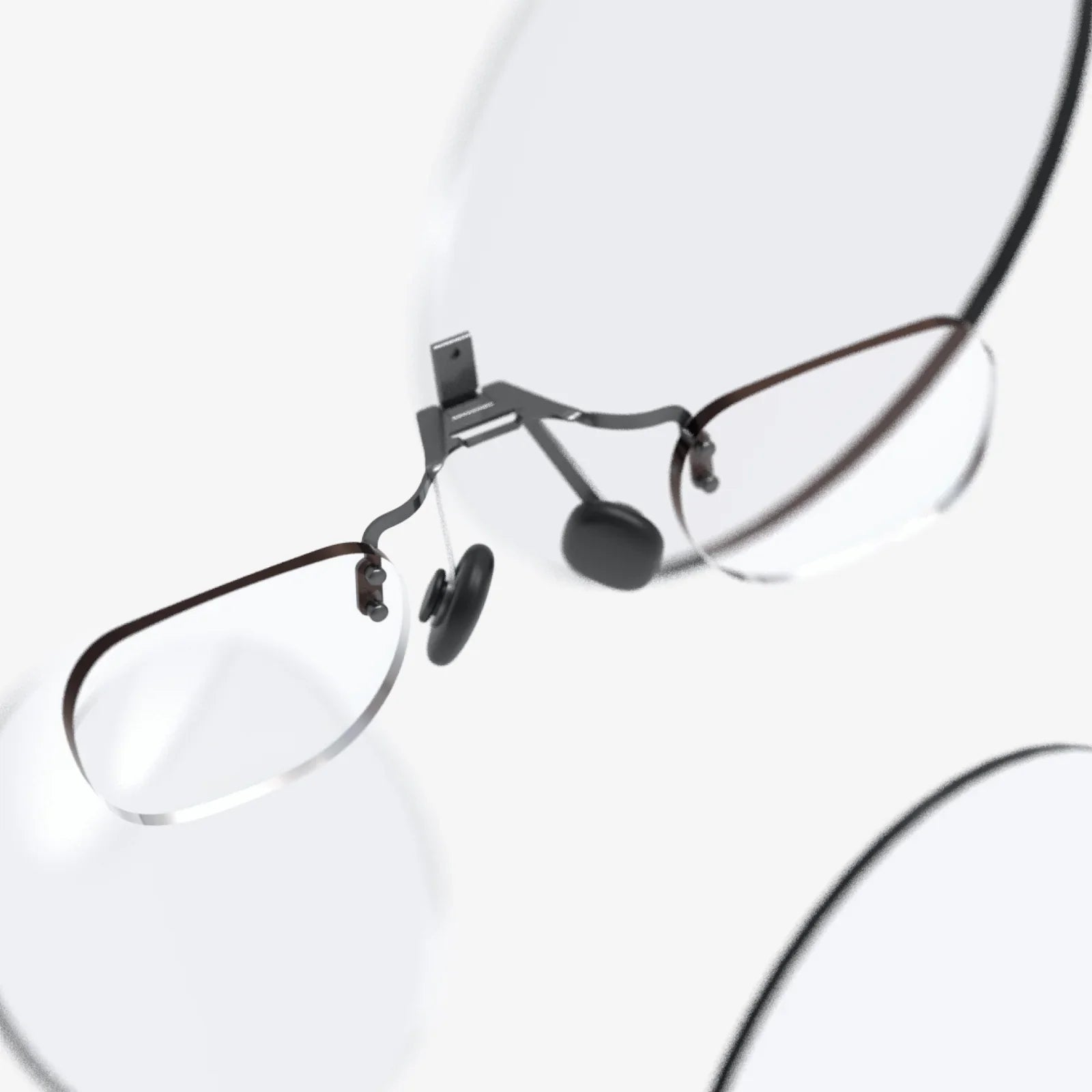
The Hidden Costs: While the headset is a complete package, expenses don't end at the checkout counter. To truly enjoy your device, you will inevitably purchase software. Popular VR games can cost anywhere from $20 to $40. Furthermore, many users opt for premium accessories like a more comfortable elite strap with integrated battery (often an additional $70-$100), a carrying case, and lens inserts for those who wear glasses, which can add another $50-$80 to the total cost.
2. The Console Powerhouse: PlayStation VR2
Occupying a unique and powerful middle ground is the console-based VR system. This approach leverages the existing hardware of a popular game console, in this case, the PlayStation 5, to deliver a high-fidelity VR experience. The headset itself is a sophisticated piece of kit, featuring cutting-edge technology like eye-tracking and haptic feedback, but it relies entirely on the external console for its processing power.
The headset alone has a Manufacturer's Suggested Retail Price (MSRP) of approximately $550. This is a significant investment for the peripheral itself. However, the critical and often prohibitive factor for new entrants is the prerequisite: you must already own, or be willing to purchase, a PlayStation 5 console, which retails for around $500 for the digital edition and $600 for the disc drive model.
Therefore, the total barrier to entry for this ecosystem is a staggering $1,050 to $1,150. This positions it as a premium option exclusively for dedicated PlayStation fans who are already within that walled garden. The silver lining is that once this high initial cost is absorbed, you have access to a growing library of graphically impressive, console-quality VR titles.
3. The Enthusiast's Choice: PC-Powered VR Headsets
At the zenith of performance and price sits the PC VR segment. These headsets are pure displays; they contain no internal computer. Instead, they act as a window into the immense graphical capabilities of a high-end gaming desktop or laptop. This category is home to the most immersive, visually stunning, and technically advanced experiences available in consumer VR, including incredibly detailed flight simulators, vast open-world RPGs, and professional creative applications.
The headsets themselves vary wildly in price. You can find older, discontinued models on the second-hand market for as little as $150. Mainstream consumer PC VR headsets from major manufacturers typically launch in the $600 to $1,000 range. Beyond that lies the professional and enterprise market, with headsets focused on ultra-high resolution and mixed reality capabilities that can cost $1,500 to over $4,000 for the headset alone.
The Real Cost Driver: The Gaming PC This is the most crucial and often overlooked part of the PC VR equation. To run these demanding headsets effectively, you cannot use just any computer. You need a dedicated gaming rig with a powerful graphics processing unit (GPU). A VR-ready gaming PC typically starts at around $1,000 for a minimum-spec build and can easily climb to $2,500 or more for a premium setup that will maximize your headset's potential. For someone starting from scratch, the total investment for a good headset and a capable PC can easily land between $1,600 and $3,500.
Beyond the Headset: The Hidden & Recurring Costs of VR
Thinking the price of the hardware is the entire story is a common mistake. The ecosystem has several layers of ongoing and hidden costs that can subtly inflate your total expenditure over time.
The Software Library: Building Your Virtual World
Your headset is merely a portal; the software is what gives it life. The cost of building a library can add up quickly. While there are free experiences and apps, the major titles—the games you likely bought the headset for—carry premium price tags comparable to flat-screen games. AAA VR titles often launch at $40 - $70. Indie gems and smaller experiences are more commonly in the $15 - $30 range. Subscription services are also becoming more common, offering access to a rotating catalog of games for a monthly fee.
Accessories: The Essential Enhancements
Few users stick with the out-of-the-box experience for long. Accessories dramatically improve comfort, convenience, and immersion.
- Comfort Mods: Standard straps can cause pressure and discomfort during long sessions. Aftermarket straps with better weight distribution and counter-balancing are almost mandatory for some users ($50-$100).
- Additional Controllers: Accidents happen. A single controller can cost $70-$130 to replace.
- Battery Packs: For standalone headsets, external battery packs can double or triple your playtime ($40-$80).
- Lens Inserts: Prescription lens inserts are a must-have for glasses-wearers, improving comfort, clarity, and safety compared to wearing glasses inside the headset ($50-$80).
- VR Covers: Silicone or pleather interface replacements are popular for hygiene and comfort, especially for shared headsets ($20-$40).
PC Upgrades: The Never-Ending Pursuit of Power
For PC VR users, the upgrade cycle is a real recurring cost. As VR games become more complex and headsets become higher resolution, the hardware demands increase. A GPU that was top-of-the-line three years ago may struggle with today's new releases. This creates a pressure to periodically invest in new components to maintain a smooth and high-quality experience, representing a significant potential future expense.
Future-Proofing Your Investment: A Buyer's Guide
With such a wide range of options and prices, how do you ensure you're making a wise investment? The key is to align your purchase with your expectations, existing hardware, and budget.
For the Curious Newcomer:
If you're dipping your toes into virtual reality for the first time, a standalone headset is unequivocally the recommended starting point. The initial investment is manageable, the setup is simple, and the library of content is vast and diverse enough to provide hundreds of hours of entertainment. It allows you to answer the fundamental question—"Do I even enjoy VR?"—without a four-figure financial commitment. Look for a model with a good refresh cycle and strong developer support to ensure it won't be obsolete immediately.
For the Dedicated Gamer (Without a PC):
If you are already a proud owner of a latest-generation game console and crave higher-end experiences than a standalone device can offer, the console-based VR system is your path. It delivers a fantastic, high-performance experience that is plug-and-play (after the initial setup). Just be brutally honest with yourself: are you committed enough to the platform to justify the four-figure total cost?
For the Tech Enthusiast and Power User:
If you already own a robust gaming PC with a recent, powerful GPU, then diving into the PC VR market is a logical next step. You can experience the absolute cutting edge of what consumer virtual reality has to offer. Your choice will be between the more affordable mainstream PC headsets or the ultra-high-end devices aimed at professionals and sim enthusiasts. If you don't own a capable PC, be prepared for the steep but incredibly rewarding total cost of entry.
The Second-Hand Market: A Viable Alternative?
Buying used can be a fantastic way to save money. Older generations of VR headsets, both standalone and PC-powered, are readily available on online marketplaces at a fraction of their original cost. This can be a low-risk way to enter the ecosystem. However, exercise caution: check for lens scratches, controller drift, and overall hygiene. Ensure all necessary cables and components are included. For PC VR, also verify that the headset is still supported by the manufacturer's software.
The Value Proposition: Is VR Worth the Investment?
This is the subjective heart of the matter. Is the experience worth the price of admission? For millions of users, the answer is a resounding yes, but the justification varies.
For some, it's the unparalleled gaming immersion—the feeling of truly being inside the game world in a way a television can never replicate. For others, it's a fitness revolution; VR exercise games have proven to be a incredibly engaging way to burn calories and have fun doing it. Creatives use it as a revolutionary new medium for 3D painting and sculpting. Professionals use it for virtual meetings, architectural visualization, and training simulations. And many others value it as a profound new way to connect socially, attending virtual concerts, watching movies with friends across the globe, or simply hanging out in virtual spaces.
The cost, therefore, isn't just for a piece of hardware; it's an investment in a new form of entertainment, a new tool for creativity, a new gym membership, and a new social platform all fused into one device. The value is what you extract from it.
So, how much does a VR headset cost? It can be a $250 gift for a child, a $500 entertainment system for the family, or a $3,500 professional simulator for an enthusiast. The market has matured to offer a path for nearly every budget and ambition. The true cost is not just the number on the receipt, but the time and money you invest in building your own unique corner of the virtual universe. The door to these other worlds is now open, and the only question that remains is which path you will take to walk through it.
Share:
Assisted Reality Wearables: The Unobtrusive Revolution Transforming Frontline Work
Head Up Display HUD Projector: The Future on Your Windshield is Here