


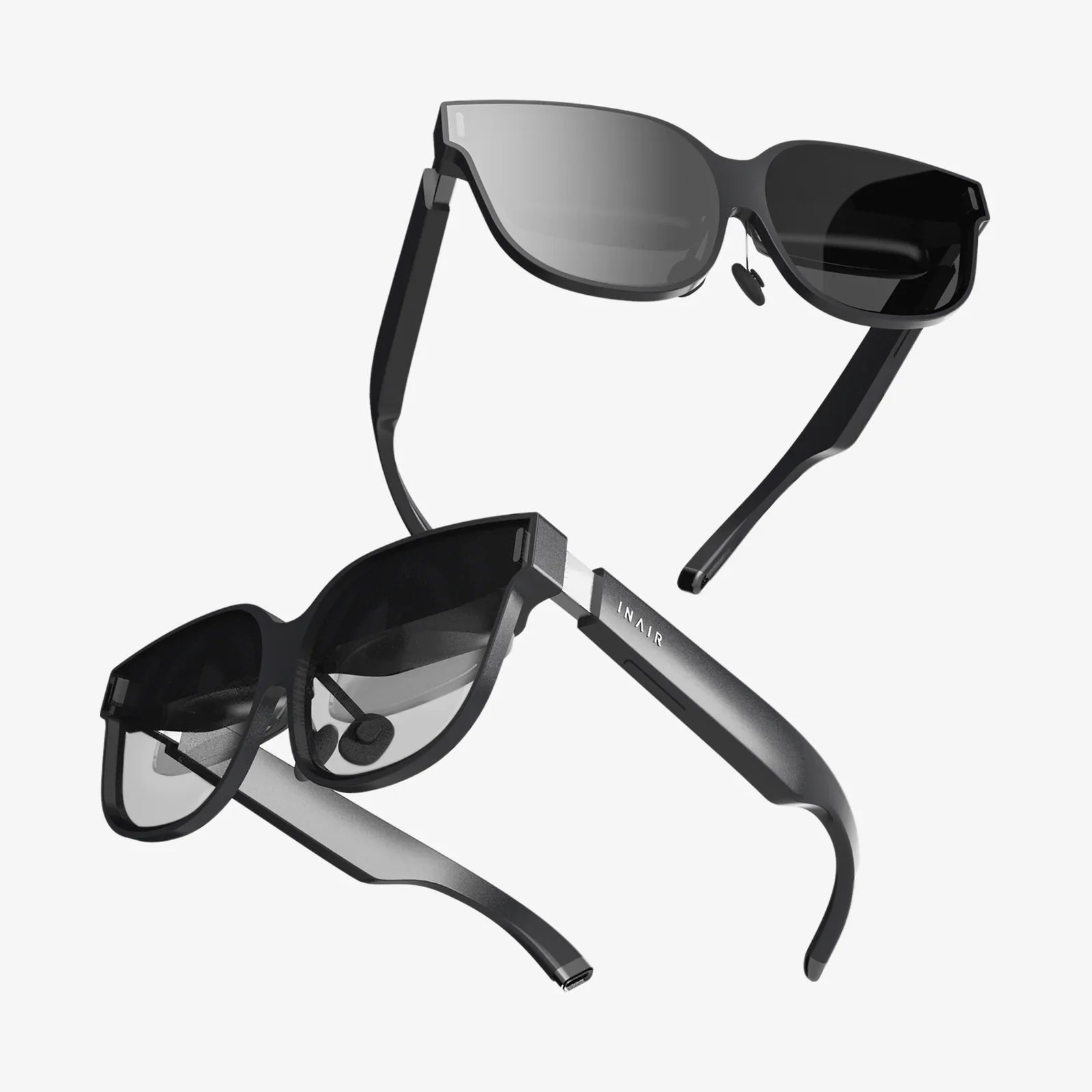
The world as we know it is undergoing a fundamental transformation, a quiet revolution where the very fabric of our reality is being rewoven with digital threads. The boundary between what is physically present and what is digitally rendered is not just blurring; it is dissolving, creating a new hybrid existence. This isn't a distant sci-fi fantasy; it's the palpable present, a seismic shift in how we work, learn, connect, and perceive the world around us. The journey of how reality is going digital is the defining technological narrative of our time, promising to redefine human experience in ways we are only beginning to comprehend.
The Building Blocks: AR, VR, and the Spectrum of Experience
To understand the digitalization of reality, one must first grasp the key technologies enabling it. They exist on a spectrum, often referred to as the reality-virtuality continuum.
On one end lies Augmented Reality (AR), which superimposes digital information—images, text, data—onto our view of the physical world. Through the screen of a smartphone or, more immersively, through specialized glasses, AR adds a layer of digital context to our environment. It’s the navigation arrow hovering on the street ahead, the dinosaur appearing to stomp through your living room, or the detailed specifications of a machine part hovering over it for a technician.
On the opposite end is Virtual Reality (VR), a fully immersive, computer-generated simulation that replaces the user’s environment. By donning a headset, one is transported to a completely digital world, whether a fantastical game landscape, a meticulously recreated historical site, or a virtual meeting room where colleagues from across the globe appear as lifelike avatars. VR operates on a principle of sensory isolation, replacing sight and sound to convince the brain it is elsewhere.
Bridging these two is Mixed Reality (MR), a more advanced form of augmentation where digital objects are not just overlaid but anchored to and interact with the physical world in real-time. An MR headset understands the geometry of a room, allowing a user to place a virtual television on their real wall or have a digital character hide behind their actual sofa. This seamless interplay is a significant step towards a truly blended existence.
The Engine Room: The Technologies Powering the Shift
This digital leap is not powered by a single invention but by the convergence of several accelerating technologies.
Sensory Hardware: The evolution of head-mounted displays (HMDs) is crucial. They are becoming lighter, more powerful, with higher-resolution displays, wider fields of view, and advanced tracking systems involving cameras, gyroscopes, and accelerometers. Haptic feedback devices, from gloves to full-body suits, are adding the crucial sense of touch, allowing users to feel the texture of a digital object or the impact of a virtual force.
Connectivity and Compute Power: Rendering complex, photorealistic digital worlds in real-time requires immense processing power. The rollout of high-speed, low-latency networks is pivotal, enabling a concept known as cloud rendering. Instead of relying solely on the hardware in a headset or computer, the heavy computational lifting is done in powerful remote data centers, and the resulting experience is streamed seamlessly to the user. This democratizes access to high-fidelity digital reality, making it less dependent on expensive local hardware.
Artificial Intelligence and Machine Learning: AI is the silent brain behind the operation. It is used for everything from generating realistic avatars that mimic our facial expressions to understanding and mapping our physical environments through computer vision. AI algorithms can create vast, dynamic virtual worlds, power intelligent digital assistants within them, and optimize the streaming of complex data to ensure a smooth, lag-free experience.
3D Scanning and Photogrammetry: This is the process of capturing the physical world to create accurate digital replicas. Using arrays of cameras or laser scanners, objects, people, and entire environments can be digitized with stunning accuracy. This is the technology that allows historical artifacts to be preserved in perfect digital form or for you to create a 3D model of your own face for use in a virtual world.
The New Frontier: The Metaverse and Digital Twins
These technologies are coalescing into larger, more ambitious constructs.
The concept of the metaverse has become the buzzy encapsulation of this digital future. Envisioned as a persistent, interconnected network of 3D virtual worlds, the metaverse aims to be the next iteration of the internet—a space you don’t just browse but inhabit. It proposes a future where our digital lives—social, professional, economic—are as rich and meaningful as our physical ones, if not more so. It’s a vision of a fully digital reality running in parallel to our own.
Perhaps the most profound industrial application is the Digital Twin. This is a real-time, virtual replica of a physical object, system, or process. Imagine a wind turbine: sensors on the physical turbine send a constant stream of data—vibration, temperature, torque, output—to its digital twin. Engineers can monitor its health, run simulations to predict maintenance needs, and test modifications in the digital space before ever touching the physical asset. This is being applied to everything from jet engines and factory production lines to entire cities, creating “urban twins” that help planners optimize traffic flow, energy usage, and emergency response.
Transforming Industries: The Practical Applications
The move towards digital reality is not abstract; it is already delivering tangible value across sectors.
Manufacturing and Design: Engineers and designers use VR to prototype and interact with 3D models of cars, buildings, and products long before a physical prototype is built. This saves immense time and resources. AR guides assembly line workers through complex tasks, overlaying diagrams and instructions directly onto their workspace, reducing errors and training time.
Healthcare: Medical students practice complex surgeries in risk-free VR simulations. Surgeons use AR to visualize a patient’s anatomy, such as the precise location of a tumor, directly over the surgical site during an operation. VR is also being used for therapeutic purposes, treating phobias, PTSD, and chronic pain through controlled exposure therapy.
Retail and Commerce: Try before you buy is being redefined. AR apps allow you to see how a sofa would look in your living room, how a pair of glasses fits your face, or how a new shade of paint changes your wall. Virtual showrooms enable customers to explore products in immersive 3D from anywhere in the world.
Education and Training: Instead of reading about ancient Rome, students can take a VR field trip to walk its streets. Trainee mechanics can learn to repair a complex engine by following interactive AR cues. This experiential learning boosts engagement and retention dramatically.
Remote Work and Collaboration: Video conferencing is evolving into spatial computing. Colleagues can meet in a virtual boardroom, interacting with 3D data models as if they were physically present. This provides a sense of shared presence and context that a flat screen cannot replicate, making remote collaboration more natural and effective.
The Human and Societal Implications
This technological upheaval brings with it a host of profound questions and challenges that society must confront.
The Identity Paradox: As we spend more time in digital spaces represented by avatars, how does our sense of self evolve? These platforms offer unprecedented freedom to experiment with identity, appearance, and expression. But this fluidity could also lead to a fragmentation of self or a disconnect from our physical bodies and the unmediated world.
The Privacy Conundrum: Immersive technologies are inherently data-hungry. To function, they must continuously scan, map, and understand our physical environments and track our every movement, gaze, and potentially even our biometric responses. This creates a data footprint of unparalleled intimacy. Who owns this data? How is it used, secured, and potentially exploited? The risk of pervasive surveillance is magnified a thousandfold.
The Economic Divide: Access to high-speed internet and advanced hardware is not universal. There is a very real danger that the digitalization of reality could create a new, brutal class divide: those who can afford to augment their world and access new economic opportunities in the metaverse, and those who are locked out of this new dimension of life, further marginalized in an increasingly digital-first society.
Mental and Physical Health: What are the long-term effects of living increasingly hybrid lives? While VR can alleviate loneliness and provide escape, it could also fuel isolation and addiction. The phenomenon of "VR hangover" or cybersickness highlights that our biological senses are not perfectly attuned to these synthetic experiences. The long-term psychological impact remains largely unknown.
Navigating the Uncharted Territory
The path forward requires proactive and thoughtful navigation. We need robust ethical frameworks and agile regulations developed not by technologists alone, but by a multidisciplinary coalition including ethicists, sociologists, policymakers, and the public. Digital literacy must evolve to include "immersive literacy," teaching people to critically evaluate and safely navigate these new environments. Perhaps most importantly, the development of these technologies must be guided by a human-centric design philosophy, ensuring they serve to augment human potential and well-being, not replace or diminish our physical reality.
The digitization of reality is an unstoppable tide, a fundamental rewriting of the human experience. It holds the mirror to our greatest ambitions for progress and our deepest fears of displacement. It promises to unlock new realms of creativity, connection, and efficiency, yet it simultaneously challenges our very notions of truth, presence, and self. The future will not be purely physical nor wholly digital, but a complex and ever-shifting blend of both. The question is no longer if reality will go digital, but how we, as a species, will choose to shape this new merged existence, ensuring it enhances our humanity rather than erodes it. The next chapter of our story is being written not just in atoms, but in bits, and we all hold the pen.
Share:
AR Glasses vs VR: The Ultimate Showdown for the Future of Digital Reality
AR Glasses vs VR: The Ultimate Showdown for the Future of Digital Reality