


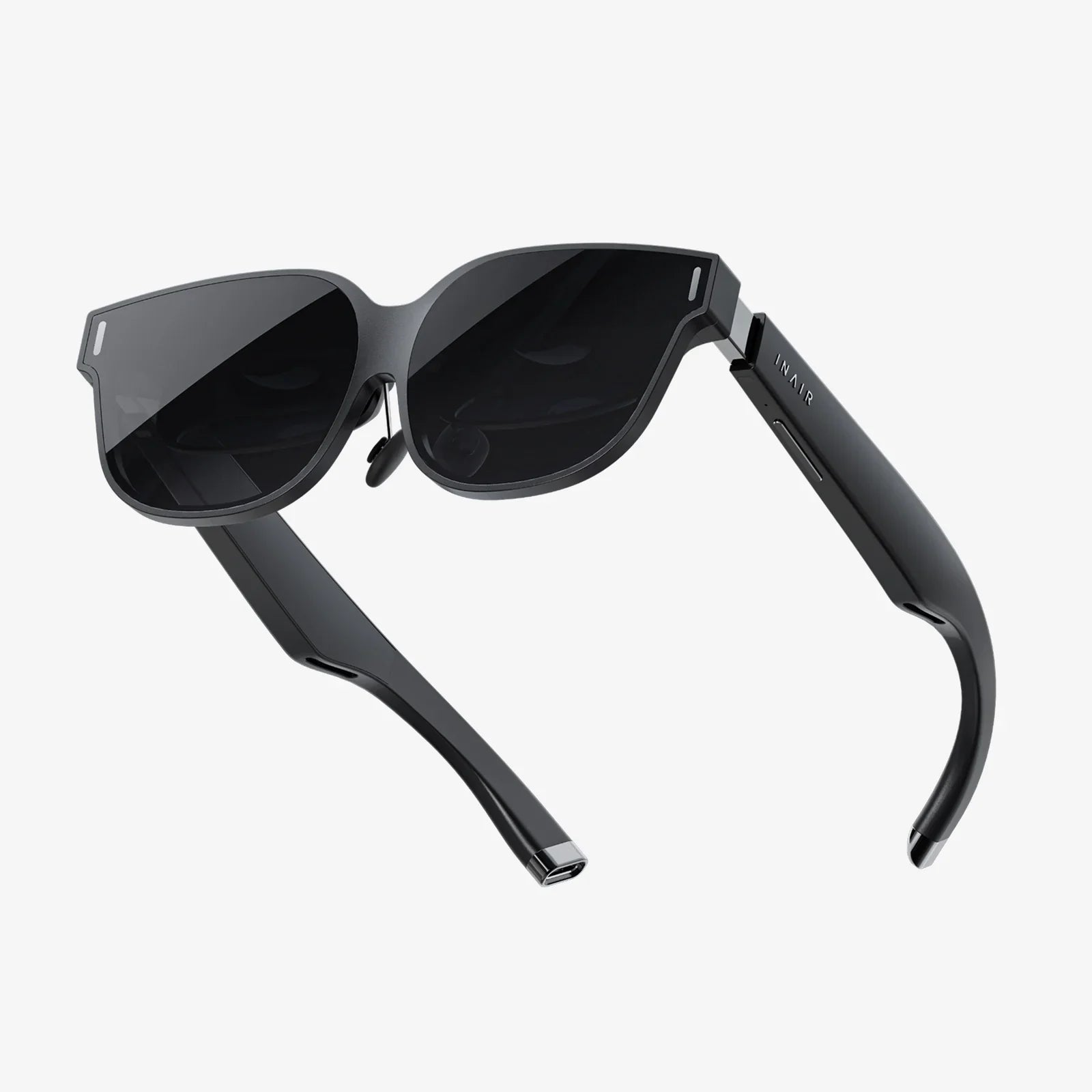
The sleek, futuristic frames of AI glasses promise a world of information at a glance, but in the high-stakes environment of an exam hall, they represent a Pandora's box of ethical dilemmas and potential academic catastrophe. The very notion of using such advanced technology to gain an unfair advantage taps into a deep-seated anxiety within educational institutions worldwide. This isn't science fiction; it's a pressing challenge for educators, students, and technologists alike, forcing a critical re-examination of what it means to learn, to be assessed, and to cheat in the 21st century.
The Technological Capabilities: Beyond Simple Recording
To understand the concern, one must first appreciate what modern AI glasses are capable of. They are far more than just cameras mounted on a face. These devices often integrate a suite of sophisticated technologies:
- High-Resolution Cameras: Capable of capturing clear images and video of test questions, a textbook page on a neighbor's desk, or even notes hidden on a student's person.
- Optical Character Recognition (OCR): This software can instantly convert images of text into machine-encoded text. A quick glance at a question can translate it into a digital format.
- Natural Language Processing (NLP) and Generative AI: This is the core of the danger. The digitized text from the OCR can be fed into a powerful large language model. The AI can then, in mere seconds, analyze the question, retrieve relevant information from its vast training data, and generate a coherent, essay-length answer or solve a complex equation.
- Bone Conduction or Micro-Speakers: The generated answer can be read aloud directly into the user's ear through subtle audio delivery systems, making the communication virtually undetectable to others in the room.
- Connectivity: Many models maintain a constant, discreet connection to the internet via a paired smartphone or built-in cellular modem, allowing them to access cloud-based AI models in real-time.
This pipeline—from capture to analysis to audio delivery—can theoretically be executed with minimal visible movement, making it a formidable tool for academic dishonesty.
The Iron Grip of Academic Integrity Policies
Before any student entertains the idea, it is paramount to understand the universal stance of educational institutions. The use of AI glasses to surreptitiously receive answers during a test is unequivocally considered cheating. It violates every fundamental principle of academic integrity:
- Honesty: It is a deliberate attempt to misrepresent one's own knowledge and abilities.
- Trust: It breaches the trust placed in students by their teachers and institutions.
- Fairness: It creates an grossly uneven playing field, disadvantaging honest students.
- Responsibility: It represents a complete abdication of personal responsibility for one's own learning.
The consequences of being caught are severe and long-lasting. They typically include:
- An automatic failing grade for the test or the entire course.
- Official academic suspension or even expulsion from the institution.
- A permanent note on one's academic transcript, which can severely damage future educational prospects and career opportunities.
- Loss of scholarships, membership in honor societies, and other academic privileges.
Beyond the academic realm, such an act can be a profound personal failure, eroding self-confidence and the genuine satisfaction that comes from earning a grade through hard work.
The Legal and Logistical Minefield
The risks extend beyond the school's disciplinary committee. In many jurisdictions, especially where standardized tests are administered by large, external organizations, using a device like AI glasses to cheat can have legal ramifications. It can be construed as fraud, theft of intellectual property (the test itself), or a violation of test security laws. This could result in hefty fines and, in extreme cases, criminal charges.
Furthermore, test proctors and institutions are rapidly adapting. Countermeasures are becoming standard practice:
- Enhanced Surveillance: Exam rooms are increasingly monitored by multiple cameras capable of detecting subtle movements and suspicious behavior.
- Technology Bans: Clear policies explicitly banning all wearable technology, including all smart glasses, from testing environments. Students are often required to place all personal belongings, including phones and watches, in a designated area.
- Signal Jamming: Some testing centers use equipment to block all cellular, Wi-Fi, and Bluetooth signals within the exam hall, rendering connected devices useless.
- Thorough Checks: Proctors may perform visual inspections of eyeglasses, hats, and wrists to ensure no prohibited technology is present.
The likelihood of successfully deploying this technology without detection is incredibly low, and the cost of failure is catastrophically high.
Reframing the Question: How to Legitimately Use AI Glasses For Test Preparation
The real power of AI glasses lies not in circumventing learning, but in profoundly enhancing it. The question should not be "how to use them on a test," but rather "how to use them to become so prepared that you don't need to cheat." This is where the technology shines as a powerful educational ally.
1. Supercharging Study Sessions
Imagine studying from a textbook. You come across a complex diagram. Simply looking at it through your AI glasses could prompt an instant explanation, a 3D model projection, or a related video tutorial appearing in your augmented reality display. You could highlight a difficult paragraph and have the AI summarize it in simpler terms or generate flashcards for later review. This transforms passive reading into an active, interactive learning experience.
2. Mastering Language and Terminology
For subjects heavy with jargon, like medicine, law, or engineering, AI glasses can be an invaluable tool. By looking at a term, a student can get an instant definition, pronunciation guide, and contextual examples. This allows for efficient and effective vocabulary building, which is crucial for understanding exam questions and formulating precise answers.
3. Practicing with Intelligent Prompts
While practicing past papers or essay questions, a student could use the AI as a sparring partner. After drafting an answer, they could ask the AI to critique its structure, point out logical fallacies, or suggest stronger evidence. The key is that the student is doing the intellectual heavy lifting first; the AI acts as a tutor, providing feedback to refine understanding and technique, not as a ghostwriter.
4. Accessibility and Inclusive Learning
This is perhaps the most noble application. For students with disabilities, AI glasses can be transformative. They can read text aloud for those with visual impairments or dyslexia, translate spoken lectures into text for those who are hard of hearing, or provide real-time language translation for non-native speakers. In these contexts, the technology isn't an advantage; it's a necessary tool for leveling the educational playing field, though its use during formal assessments would still require prior approval from the institution.
The Future of Assessment in an AI World
The existence of such technology forces a necessary and healthy evolution in how we assess learning. Rote memorization and closed-book exams that test for easily Google-able facts are becoming increasingly obsolete. The future of testing lies in formats that AI cannot easily subvert:
- Oral Examinations and Vivas: Defending one's thesis or answers in a live dialogue.
- Project-Based and Portfolio Assessment: Evaluating the process of creating something over time.
- Open-Book, Applied Knowledge Exams: Tests that focus on critical thinking, synthesis, and application of knowledge to novel problems, recognizing that in the real world, professionals have access to information.
- In-Class Essays Written Longhand: A return to a low-tech, but highly effective, method of ensuring original thought.
These methods assess deeper understanding and skills that are truly valuable in the modern workforce, moving beyond what a pair of glasses can replicate.
The sleek allure of AI glasses symbolizes a crossroads for education. They can be a gateway to unprecedented cheating, a shortcut that leads to a dead end of personal and academic failure. Or, they can be embraced as one of the most powerful tutors and learning aids ever invented, a tool to unlock deeper understanding and master complex subjects through engaged, interactive study. The choice isn't about how to use the technology on the test; it's about whether you value the illusion of a grade or the reality of an education. The true test has already begun, and it’s one of character, not knowledge.
Share:
Fun Portable Computer: Your Ultimate Guide to On-the-Go Entertainment and Creativity
Fun Portable Computer: Your Ultimate Guide to On-the-Go Entertainment and Creativity