


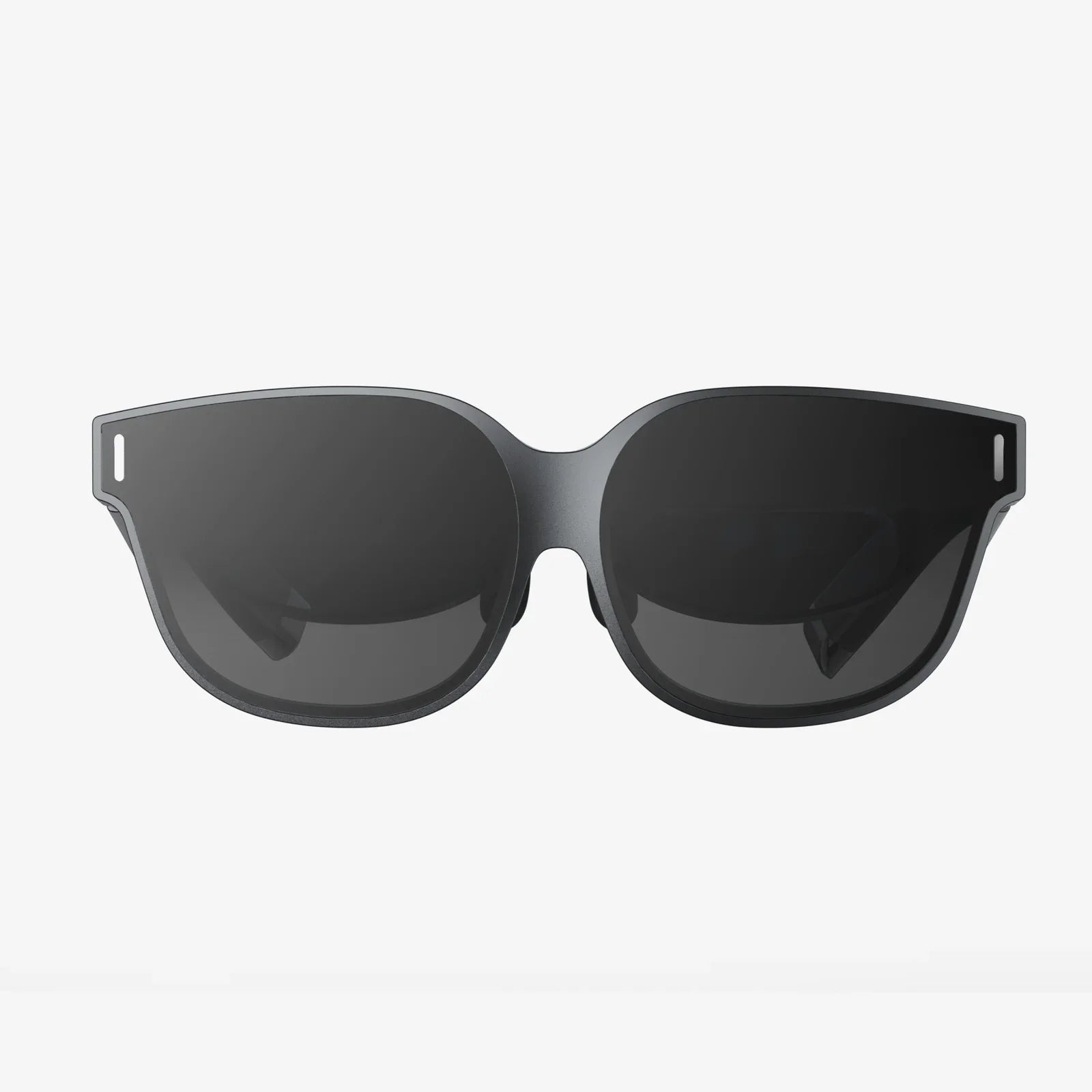
You slip on a sleek, futuristic headset, and in an instant, your living room vanishes. You're now standing on the surface of Mars, watching a dust storm swirl on the horizon, or perhaps you're deep underwater, a giant whale gliding silently past you. This is the magic promised by virtual reality, a technology that has captured the global imagination. But have you ever stopped to wonder, as the red sands of an alien world feel unnervingly real beneath your virtual feet, just how do these incredible devices actually work? The journey from a pair of screens housed in plastic to a believable, immersive universe is a fascinating tale of human physiology, clever software, and precision engineering, all designed to perform one masterful trick: convincingly fooling your brain.
The Foundation: Tricking the Brain with Stereoscopy
At its absolute core, the primary function of virtual reality glasses is to present a believable three-dimensional image. This foundational trick relies on a principle called stereoscopy, which is exactly how human vision itself operates.
Humans have two eyes, positioned approximately two to three inches apart on our faces. This separation means each eye sees the world from a slightly different angle. Your brain is a masterful supercomputer that takes these two distinct two-dimensional images, compares them, and uses the differences between them—a property known as binocular disparity—to calculate depth, constructing a single, rich, three-dimensional picture of your surroundings.
Virtual reality glasses replicate this biological process with stunning accuracy. Inside the headset, there are two small, high-resolution displays (one for each eye) or sometimes one larger display partitioned for each eye. The software running the VR experience renders the virtual world from two slightly different perspectives, corresponding to the position of your left and right eye. When you look through the lenses, each eye sees its own unique image. Your brain then does what it has always done: it fuses these two images together, interpreting the differences as depth and creating a compelling, convincing sense of three-dimensionality. This is the fundamental illusion upon which all of VR is built.
The Critical Role of Lenses: Focusing on the Digital World
Simply placing two screens inches from your eyes would be an uncomfortable and visually incoherent experience. The images would be a blurry, pixelated mess because your eyes cannot focus on something that close. This is where another crucial component comes into play: the specialized lenses.
The lenses in VR glasses are not mere magnifying glasses; they are precision optical elements, often Fresnel lenses, designed with a specific purpose. They sit between the screens and your eyes and perform two vital functions:
- Refocusing the Image: The lenses bend the light from the screens, making your eyes perceive the images as if they are coming from a farther distance, often several feet away. This allows your eye muscles to relax and focus comfortably, preventing immediate strain and making prolonged use possible.
- Warping the Image for a Wide Field of View: The rendered image on the screen is actually pre-distorted by the software—a kind of inverse pincushion effect. The lenses then correct this distortion, stretching the image to fill your peripheral vision. This creates the wide, encompassing field of view (typically between 90 and 110 degrees for consumer headsets) that is essential for immersion. Without these lenses, the virtual world would feel like looking through a narrow tube or a pair of binoculars.
The quality and design of these lenses are paramount to the visual clarity and comfort of the experience, influencing factors like the "sweet spot" (the area of perfect focus), god rays (lens flare effects), and overall sharpness.
Maintaining the Illusion: The Magic of Head Tracking
A static 3D image is impressive, but true immersion shatters the moment you move your head and the virtual world doesn't respond. This is where head tracking technology becomes non-negotiable. It is the system that allows the virtual environment to react to your movements in real-time, making you feel present within the space.
Modern VR glasses employ a sophisticated combination of sensors to achieve this, essentially turning the headset into a high-speed motion tracker. An Inertial Measurement Unit (IMU) is the workhorse of this system. It's a micro-electromechanical system (MEMS) that contains:
- A gyroscope: Measures the rotational velocity and orientation of your head—whether you're nodding yes, shaking no, or tilting it sideways.
- An accelerometer: Measures linear acceleration, detecting when you move your head forward, backward, or side-to-side.
- A magnetometer: Acts as a digital compass, correcting for drift in the gyroscope's orientation data by aligning to Earth's magnetic field.
The IMU provides incredibly fast, high-frequency data on head movements, which is crucial for preventing latency—the delay between your movement and the screen's update. Latency is the enemy of VR; even a delay of 20 milliseconds can cause disorientation and simulator sickness. The IMU's rapid data allows for a technique called asynchronous timewarp, where the software subtly adjusts the rendered image frame just before display to match your latest head position, effectively masking any lag.
For absolute positional tracking—knowing where you are in a physical room—headsets use external sensors or inside-out tracking. External tracking uses laser-emitting base stations placed in the room that sweep across the headset, which has photonic sensors to precisely triangulate its position in space. Inside-out tracking, now the industry standard for consumer devices, builds all the sensors directly into the headset itself. It uses a array of wide-angle cameras to continuously monitor the surrounding environment, tracking the movement of specific features and points in your room to understand its own position relative to the real world. This creates a safe boundary, or "guardian system," and allows for room-scale VR where you can physically walk around within the virtual environment.
Building the World: Rendering and Display Technology
The brains behind the operation often reside not in the headset itself, but in a connected computer or a powerful mobile processor integrated into standalone devices. This computer is responsible for the heavy lifting of rendering two high-resolution, high-frame-rate images simultaneously—one for each eye.
The demand on processing power is immense. To maintain immersion and avoid nausea, VR requires a minimum frame rate of 90 frames per second (FPS), with many modern headsets pushing 120 Hz or even higher. This is more than double the standard 60 FPS of traditional gaming. Each frame must be rendered with incredibly low persistence—meaning the image is displayed for only a fraction of a millisecond before the next one replaces it. This prevents motion blur when you turn your head quickly, which would break the illusion of a solid world.
Display technology is equally critical. Early VR used LCD screens, but modern headsets overwhelmingly use OLED or advanced LCD panels with local dimming. OLED is prized for its perfect blacks and fast pixel response times, which are crucial for high contrast and reducing ghosting. The resolution of these displays is also rapidly increasing, moving from early HD specs to 4K-and-beyond per-eye resolutions to eliminate the "screen door effect," where the visible lines between pixels can make it feel like you're looking through a mesh screen.
Completing the Sensory Experience: Audio and Interaction
Visuals are only one part of the puzzle. Truly convincing virtual reality engages multiple senses. Spatialized 3D audio is a game-changer. Instead of standard stereo sound, this technology uses Head-Related Transfer Functions (HRTF)—complex algorithms that model how sound waves interact with the shape of your head, ears, and torso before reaching your eardrums. By processing sound through an HRTF filter, VR glasses can make a sound seem like it's coming from directly behind you, above you, or ten feet to your left. The creak of a floorboard in a haunted house feels genuinely located in a specific part of the room, dramatically increasing the sense of presence.
Furthermore, interaction is key. You are not a ghost in the machine; you need a virtual body. This is handled by motion-tracked controllers. These devices contain their own IMUs and are tracked by the same external or inside-out camera systems. They translate your real-world hand and arm movements into the virtual space, allowing you to grab, push, throw, and gesture. Haptic feedback, small vibrations and pulses within the controllers, provides a tactile response, simulating the feeling of touching a virtual object. Advanced systems are even exploring finger-tracking technology that can detect individual finger movements without controllers, and haptic gloves that can simulate resistance and texture.
Challenges and The Future of Seeing Differently
Despite the incredible technology, challenges remain on the path to perfect immersion. Simulator sickness, caused by a slight mismatch between visual motion and the inner ear's sense of movement (vestibular sense), still affects some users. The form factor of headsets needs to become smaller, lighter, and less cumbersome for all-day use. There is also active research into solving the vergence-accommodation conflict—a physiological issue where your eyes struggle to focus on virtual objects that appear to be at different distances because the screen is always at a fixed focal plane.
The future points towards even more seamless integration of the digital and physical. Technologies like varifocal and light field displays aim to solve the focus conflict by dynamically adjusting focus based on where you are looking. Eye-tracking technology, already appearing in some headsets, will enable foveated rendering—a technique that focuses the highest rendering detail only on the exact spot where your fovea (the center of your eye) is looking, drastically reducing the computational power required. This could lead to photorealistic graphics in wireless, self-contained headsets. Further out, research into direct neural interfaces promises a future where virtual worlds are not just seen and heard, but felt as reality itself.
The simple act of putting on a headset is a gateway to a meticulously crafted deception, a symphony of optics, sensors, and code playing in perfect harmony. It leverages the very way we perceive our own reality to construct a new one, pixel by pixel, tracking point by tracking point. This complex dance of technology, designed to answer the fundamental question of how we see and interact with a world, is ultimately what makes strapping a pair of screens to your face one of the most transformative and thrilling experiences in modern computing. The next time you stand on that virtual Martian plain, you'll appreciate the monumental engineering achievement that brought you there.
Share:
AR Indoor Navigation Market: Redefining Wayfinding in Complex Environments
Mixed Reality vs AR vs VR: The Ultimate Guide to Immersive Technologies