


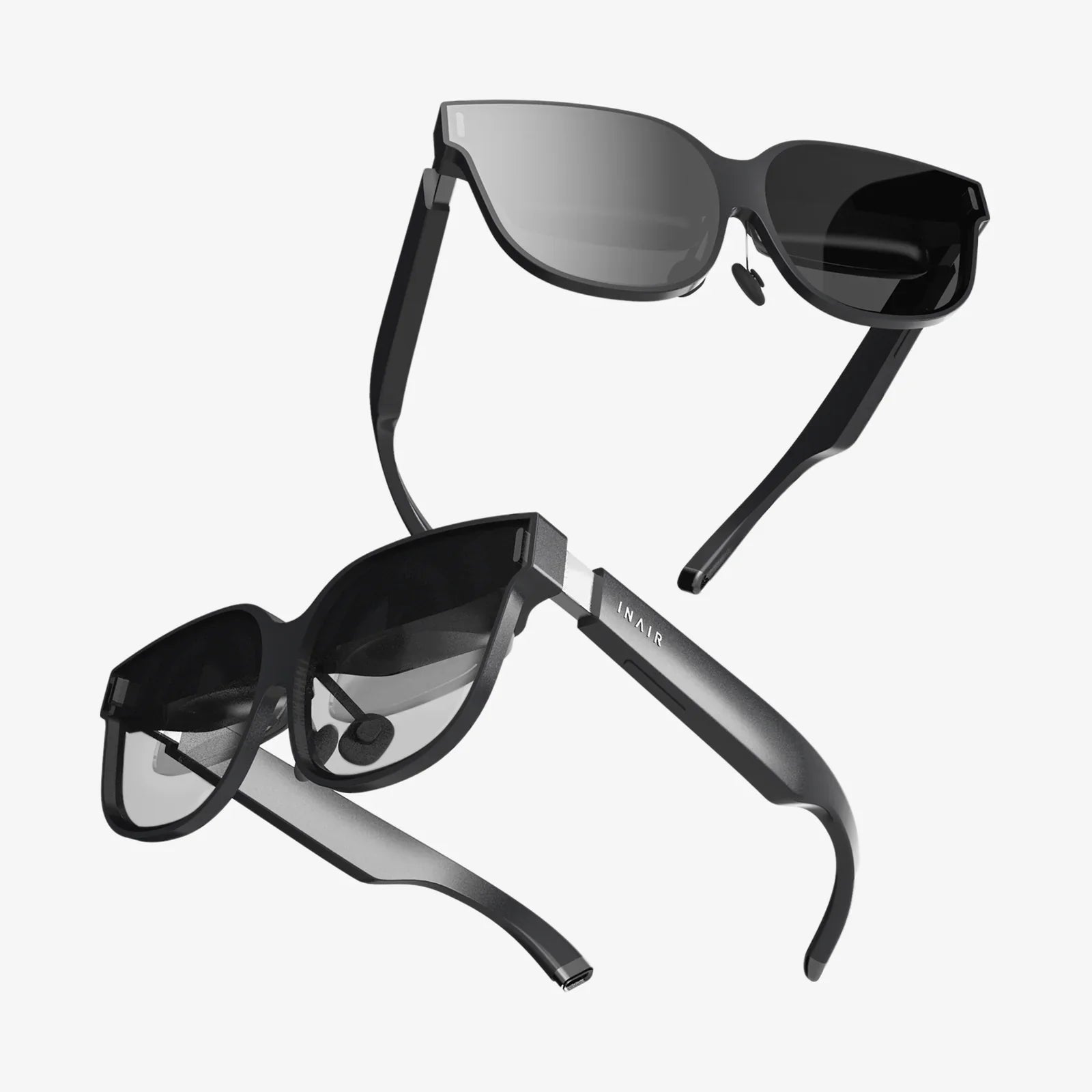
Imagine a world where the digital and the physical are no longer separate realms but a single, unified experience. This is no longer the stuff of science fiction; it is the tangible, accessible reality being built today by those who choose to integrate augmented reality. This powerful technology is rapidly moving from a novel gimmick to a core component of modern business strategy, user experience design, and human-computer interaction. For forward-thinking leaders, developers, and creators, the question is no longer if AR will be relevant to their field, but how and when they will harness its potential to educate, engage, and revolutionize. The journey to seamlessly merge bits and atoms begins here.
Demystifying the Digital Overlay: What Does It Really Mean to Integrate AR?
To integrate augmented reality is to weave a layer of computer-generated information—be it images, text, 3D models, or audio—seamlessly into a user's perception of the real world. Unlike Virtual Reality (VR), which creates a completely immersive digital environment, AR enhances the existing world by superimposing data onto it. This integration is typically experienced through familiar devices: the camera on a smartphone or tablet, specialized smart glasses, or even emerging technologies like AR windshields in vehicles.
The magic of AR lies in its three core technological pillars:
- Tracking and Registration: This is the foundation. Using a combination of GPS, accelerometers, gyroscopes, and sophisticated computer vision algorithms, the AR system must understand its environment and precisely align digital content with physical objects and spaces. This ensures a virtual dinosaur appears to be standing firmly on your living room floor, not floating eerily above it.
- Display Technology: This is the window through which the augmented world is viewed. From the optical see-through displays in high-end headsets that project light directly into the user's eyes to the more common video see-through method used by smartphones (which uses the camera feed as a background), the display is crucial for a believable experience.
- Environmental Understanding: Modern AR systems don't just place objects arbitrarily; they comprehend the geometry of the space. Through techniques like simultaneous localization and mapping (SLAM), the device can detect flat surfaces (planes), estimate lighting conditions, and even recognize specific objects or images, allowing for persistent and interactive digital content.
The Strategic Imperative: Why Businesses Must Integrate Augmented Reality Now
The decision to integrate augmented reality is increasingly becoming a strategic imperative, not a speculative experiment. The value proposition extends far beyond initial novelty, offering tangible returns on investment and significant competitive advantages.
First and foremost, AR delivers an unparalleled level of contextual information. Instead of reading a manual or watching a separate tutorial, a technician can look at a complex piece of machinery and see animated repair instructions overlaid directly onto the components. This reduces error rates, slashes training time, and empowers workers with instant expertise.
Secondly, it supercharges customer engagement and conversion. In retail, the ability to visualize a piece of furniture in your own home at true scale or to "try on" glasses or makeup virtually dramatically reduces purchase hesitation and minimizes returns. It transforms the shopping experience from a transactional click into an interactive, confident, and memorable event.
Furthermore, AR is a powerful tool for remote collaboration and assistance. An expert engineer located thousands of miles away can see what a field technician sees through their smart glasses and annotate the real-world view with arrows, notes, and diagrams to guide them through a complex procedure in real-time. This saves immense costs on travel and downtime while leveraging centralized expertise instantly.
Blueprints for Implementation: A Practical Framework to Integrate AR
The path to successfully integrate augmented reality requires careful planning and a methodical approach. It is a multidisciplinary effort that blends technical expertise with deep user-centric design.
Step 1: Defining the Purpose and Identifying the Use Case
The first and most critical step is to ask: What problem are we solving? AR for the sake of AR is a recipe for failure. The technology should provide a clear, measurable benefit. Successful use cases often fall into a few categories:
- Visualization: See products in your space, preview designs, or view hidden structures (e.g., plumbing in a wall).
- Instruction and Guidance: Assembly instructions, navigation aids, or step-by-step repair procedures.
- Information Overlay: Displaying data about a monument, a product on a shelf, or a person's profile during a conference.
- Marketing and Entertainment: Creating interactive campaigns, games, or immersive storytelling experiences.
Step 2: Choosing the Right Technology Stack
Once the use case is defined, the appropriate technology must be selected. This involves a key decision: marker-based vs. markerless AR.
- Marker-Based (Image Recognition): Relies on a predefined image or object (a "marker") to trigger and anchor the digital content. This is highly reliable and precise but requires the user to have and point their device at the specific marker.
- Markerless (Location-Based or Plane Detection): Uses GPS, compass data, or environmental understanding to place content without a physical marker. This allows for content to be placed on any tabletop or at a specific geographic location, offering greater freedom but sometimes less precision.
Developers then choose between powerful software development kits (SDKs) and game engines that provide the foundational tools for building AR experiences. These platforms handle the complex computer vision heavy lifting, allowing developers to focus on creating the content and user interface.
Step 3: Designing for the User, Not the Screen
Designing for AR is a paradigm shift from traditional 2D screen design. It requires a fundamental rethinking of user interaction (UI) and user experience (UX). Principles include:
- Spatial Design: UI elements must exist comfortably in 3D space, respecting scale, perspective, and occlusion (where real objects can pass in front of digital ones).
- Minimalist Intrusion: The digital content should enhance the real world, not overwhelm it. Information must be presented clearly and concisely to avoid cognitive overload.
- Intuitive Interaction: How does a user select, move, or manipulate a virtual object? Gestures, voice commands, and gaze tracking are becoming standard modes of interaction that feel natural within an AR context.
Step 4: Development, Testing, and Iteration
The development process is iterative. Prototypes should be tested extensively in the actual environment where they will be used. Lighting conditions, surface textures, network connectivity, and device variability can all dramatically impact the experience. Rigorous real-world testing is non-negotiable for achieving a stable and reliable application.
Transforming Industries: Real-World Applications of AR Integration
The theoretical benefits of AR become concrete when examining its impact across diverse sectors. Organizations are already reaping the rewards of their decision to integrate augmented reality.
Revolutionizing Manufacturing and Field Services
On the factory floor and in the field, AR is a game-changer. Technicians wearing smart glasses can access digital work instructions overlaid on equipment, receive remote expert guidance, and automatically document their work with hands-free photos and videos. This leads to a dramatic reduction in errors, faster task completion, and a more skilled and safer workforce. Complex assembly processes are simplified, and training new employees becomes significantly more efficient and effective.
Redefining the Retail and E-Commerce Experience
The "try before you buy" hurdle that has long plagued online shopping is being demolished by AR. Furniture retailers allow customers to place true-to-scale 3D models of sofas and tables in their living rooms. Fashion brands enable virtual try-ons for clothes, watches, and jewelry. Cosmetic companies let users test shades of makeup through their phone's camera. This not only boosts consumer confidence and reduces return rates but also creates a fun, engaging, and highly memorable brand interaction that drives loyalty.
Advancing Healthcare and Medical Training
In healthcare, the implications are profound. Surgeons can use AR to visualize a patient's anatomy, such as CT scans or MRI data, projected directly onto their body during procedures, improving accuracy and outcomes. Medical students can practice complex procedures on detailed, interactive 3D holograms of the human body. AR can also assist in vein visualization for nurses, provide rehabilitation exercises for patients at home, and help explain complex medical conditions to patients in an easily understandable visual format.
Enhancing Education and Training
AR brings learning to life. Instead of reading about ancient Rome, students can walk through a digitally reconstructed Forum on their classroom table. Mechanics in training can see the inner workings of an engine superimposed over a physical block. This interactive, immersive form of learning improves knowledge retention, sparks curiosity, and caters to a variety of learning styles, making education more effective and accessible for everyone.
Navigating the Challenges: Obstacles on the Path to Integration
Despite its immense potential, the journey to integrate augmented reality is not without its hurdles. Acknowledging and planning for these challenges is crucial for success.
Technical Limitations: While improving rapidly, AR still faces issues with accurate tracking in dynamic or low-feature environments, battery life drain on mobile devices, and the limited field of view on many consumer-grade headsets. Creating experiences that are robust across a wide range of real-world conditions remains a significant engineering challenge.
User Experience and Adoption: "AR fatigue" is a real concern. Poorly designed experiences that are difficult to use, overwhelming, or simply not valuable will be abandoned quickly. Overcoming the initial novelty factor and providing sustained utility is key to long-term adoption. Furthermore, convincing users to adopt new behaviors, like using their camera for everyday tasks, requires intuitive and compelling design.
Privacy and Security: AR devices, especially those with always-on cameras and sensors, collect vast amounts of data about the user and their environment. This raises serious questions about data ownership, usage, and security. Establishing clear, transparent, and ethical guidelines for data handling is paramount to building user trust.
The Hardware Conundrum: While smartphone-based AR has massive reach, it is often a compromised experience (holding a phone up is not always convenient). Dedicated AR glasses offer a hands-free, immersive experience but have yet to achieve widespread consumer adoption due to cost, style, and technology constraints. The industry is still waiting for a device that seamlessly blends into everyday life.
The Future is Augmented: What Lies Beyond the Horizon
The current state of AR is merely the foundation for a far more integrated and intelligent future. We are moving towards a world where AR is not an application we open, but a persistent layer of context and information accessible through lightweight, socially acceptable glasses. This "pervasive AR" will be powered by advancements in 5G/6G connectivity for seamless cloud processing, artificial intelligence for smarter object recognition and predictive information display, and the development of a spatial web—an Internet that is mapped onto the real world.
In this future, the line between our digital and physical lives will blur into irrelevance. We will interact with data as naturally as we interact with a doorknob. The decision to integrate augmented reality today is not just about building a cool app; it is about building the foundational literacy and infrastructure for the next major computing platform. It is about positioning yourself, your company, and your ideas at the forefront of a transformation that will redefine how we work, learn, play, and connect with the world around us. The tools are here, the path is clear, and the opportunity to shape this new reality has never been more compelling.
The digital and physical worlds are on a collision course, and the resulting fusion will redefine reality itself. The businesses, creators, and visionaries who learn to integrate augmented reality today are not just adopting a new technology—they are building the lens through which we will all experience the future. The question is no longer about possibility, but about readiness. Are you prepared to see what others can't?
Share:
AI Glasses Market Size: A Deep Dive into the Numbers and Future Projections
Where to Use Augmented Reality: The Ultimate Guide to AR's Transformative Applications