


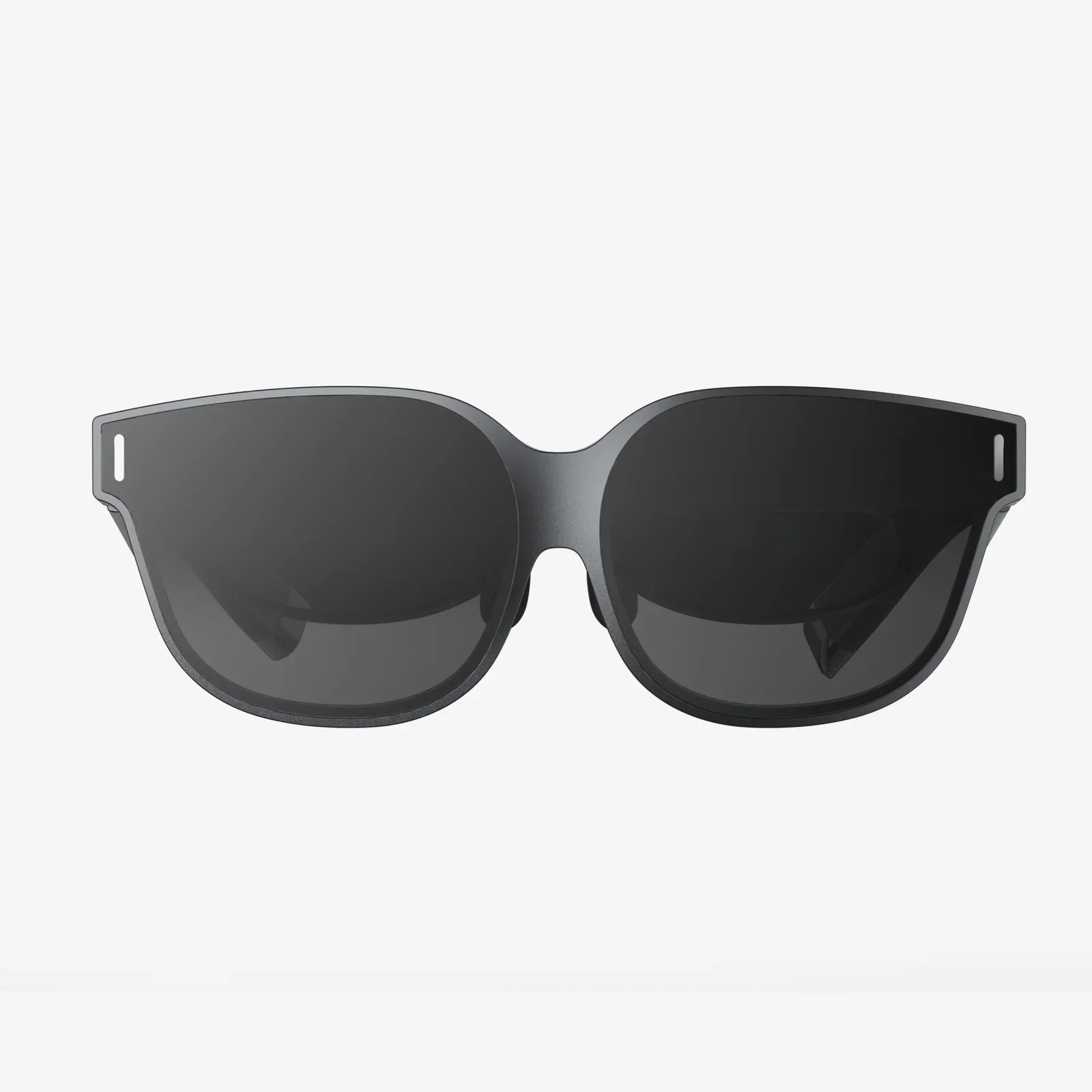
Imagine a world where digital information doesn’t just live on a screen but is woven into the very fabric of your physical environment, where instructional manuals spring to life from static images, historical figures narrate their stories on the very ground they walked, and complex data is visualized as interactive holograms hovering in your living room. This is no longer the realm of science fiction; it is the present and rapidly evolving reality powered by Augmented Reality (AR) technology. But for many, this technological sorcery remains a baffling mystery. How can a device superimpose a perfectly anchored, interactive digital object onto your messy, unpredictable real world? The answer is a sophisticated symphony of hardware and software, a complex dance of data that happens in the blink of an eye. To truly appreciate the revolution at our fingertips, we must pull back the curtain and understand the intricate mechanics that make it all possible.
The Core Principle: Blending Realities Seamlessly
At its heart, Augmented Reality is a technology that overlays computer-generated perceptual information onto the real world. Unlike Virtual Reality (VR), which creates a completely immersive, digital environment that replaces the real one, AR enhances your existing reality by adding digital elements to it. The ultimate goal is to make these digital additions so perfectly aligned and interactive that they are perceived as a natural part of the environment. This process isn't magic; it's a meticulously engineered pipeline involving four fundamental steps: sensing, processing, projecting, and registering.
Step 1: Sensing the World - The AR System's Eyes and Ears
Before an AR system can augment your world, it must first understand it. This is the job of the sensors, which act as the eyes and ears of the device. These components gather raw data about the environment and the user's position within it.
Cameras: The Primary Optical Sensor
The most obvious sensor is the camera. It continuously captures live video of the user's surroundings. This video feed becomes the canvas upon which digital content will be painted. However, the camera does more than just record a pretty picture; it provides the crucial visual data needed for the next step of processing.
Advanced Sensors: Depth, LiDAR, and More
Modern AR systems, especially those on dedicated headsets and newer mobile devices, employ a suite of advanced sensors to understand the world in three dimensions.
- Depth Sensors: These sensors actively measure the distance between the device and physical objects. They project a pattern of invisible dots (usually infrared) into the environment and measure how they deform to create a detailed depth map. This tells the system where walls, tables, and chairs are located in space.
- LiDAR (Light Detection and Ranging): This technology, which has become increasingly common, works similarly to radar but uses laser light. It fires out millions of laser pulses per second and measures how long they take to bounce back. This creates an incredibly precise, real-time 3D map of the environment, allowing for stunningly accurate object placement and occlusion (where digital objects can appear to go behind real-world objects).
- IMUs (Inertial Measurement Units): This is a critical but often overlooked component. An IMU is a micro-electromechanical system that includes accelerometers (measuring linear acceleration), gyroscopes (measuring orientation and rotational velocity), and magnetometers (acting as a compass). They provide high-frequency data about the device's movement and orientation, tracking subtle tilts, pans, and shakes. This is essential for keeping digital content stable and preventing it from jittering or drifting as you move your device.
This combination of optical and motion data gives the AR system a rich, multi-layered understanding of the geometry and properties of the space it is in.
Step 2: Processing and Perception - The Digital Brain
Raw sensor data is useless on its own. The next critical step is for the device's processor to act as a brain, interpreting this data to make sense of the world. This is where complex algorithms and machine learning come into play.
Simultaneous Localization and Mapping (SLAM)
The true genius of modern AR lies in a technology called SLAM. This is the core algorithm that enables a device to simultaneously do two things: map an unknown environment and track its own location within that map in real-time. Imagine walking blindfolded into a room and having to draw a map while also figuring out where you are on that map—SLAM does this digitally and at lightning speed.
As the device moves, SLAM algorithms analyze the video feed and sensor data to identify unique features or points of interest in the environment (like the corner of a picture frame, a power outlet, or a distinctive pattern on a rug). It tracks how these feature points move relative to the device's own movement (from the IMU) to triangulate its precise position and orientation. It continuously builds and refines a 3D point cloud map of the space. This map is what allows digital content to "stick" to a specific location in the real world, regardless of how you move around it.
Object and Plane Recognition
Concurrently, other algorithms are working to identify specific objects and surfaces. Using computer vision and pre-trained machine learning models, the system can recognize that a flat, horizontal surface is likely a "floor" or a "table"—a plane upon which it can place an object. It can also identify specific triggers, like a 2D image (an image target), a QR code, or even a complex 3D object like a piece of machinery. This recognition tells the system not just where to place content, but what content to place and how it should behave.
Step 3: Projection and Display - Painting the Digital Layer
Once the world is understood and the digital content is ready, it must be presented to the user's eyes. This is the role of the display, and there are several methods used today.
Smartphone and Tablet Displays (Video See-Through)
This is the most common and accessible form of AR. The device's camera captures the real world, the processor composites the digital elements into the video feed in the correct position, and the final combined image is displayed on the screen. You are not looking directly at the real world; you are looking at a video of the real world with AR additions. This method is powerful but can sometimes suffer from a slight lag or a less-than-natural feel.
Smart Glasses and Headsets (Optical See-Through)
This is the more advanced and immersive approach. Devices like smart glasses use transparent lenses or waveguides. You see the real world directly through the lenses, but a miniature projector, often coupled with a system of mirrors or holographic optical elements, reflects or bends light from a micro-display to project the digital imagery directly onto your retina. This seamlessly blends the light from the real environment with the light from the digital projector, creating a more natural and integrated experience where digital objects appear to have real depth and presence.
Step 4: Registration and Interaction - Making it Real and Responsive
The final, crucial piece of the puzzle is ensuring the digital overlay is perfectly aligned—or registered—with the physical world and that users can interact with it intuitively.
Precise Alignment and Occlusion
Using the precise positional data from SLAM and the depth map from LiDAR or other sensors, the AR system must render the digital object from the exact correct perspective. As you move, the object's size, angle, and perspective must change in perfect parallax with the real world. Furthermore, advanced systems can handle occlusion. This means that if you move a real-world object in front of a digital dinosaur, the dinosaur will be correctly hidden behind it, a critical effect for selling the illusion of reality.
Modes of Interaction
AR is not meant to be a passive experience. Interaction is key.
- Touchscreen: The most basic method, allowing users to tap, swipe, and pinch digital objects on a mobile device screen.
- Gesture Recognition: Cameras and depth sensors can track hand and finger movements, allowing users to manipulate holograms with gestures, like pinching to select or swiping in the air to cycle through menus.
- Voice Commands: Integrating natural language processing allows users to control the AR experience hands-free.
- Gaze Tracking: Some advanced headsets use internal cameras to track where your eyes are looking, enabling selection and interaction simply by staring at an object.
The Software That Makes It All Talk: AR Platforms and Development
This entire pipeline is made accessible to developers through powerful software development kits (SDKs) and platforms. These toolkits provide the pre-built libraries for SLAM, surface detection, lighting estimation, and occlusion, saving developers from having to build this incredibly complex technology from scratch. They can instead focus on creating compelling content and applications, from games and retail experiences to industrial training and medical visualization tools. These platforms are the unsung heroes that have democratized AR development and accelerated its adoption across industries.
Beyond the Novelty: The Transformative Potential of AR
Understanding how AR works reveals that its value extends far beyond playful filters and mobile games. This technology has profound practical applications.
- Education: Students can dissect a virtual frog, watch historical battles unfold on their desk, or explore the solar system in their classroom.
- Medicine: Surgeons can visualize MRI data overlaid on a patient during an operation, and medical students can practice procedures on detailed anatomical holograms.
- Manufacturing & Repair: Technicians can see step-by-step instructions and diagrams overlaid on the machinery they are fixing, reducing errors and training time.
- Retail: Customers can see how a new sofa would look in their living room or how a pair of glasses would look on their face before making a purchase.
- Navigation: Giant floating arrows can guide you through a complex airport, or street signs can be translated instantly before your eyes.
The journey from capturing light waves to creating a persistent, interactive digital layer on top of our reality is a monumental feat of engineering. It’s a process that demands perfect harmony between high-fidelity sensors, incredibly powerful processors running complex algorithms, and innovative display technology. This intricate ballet, performed millions of times a second, transforms our smartphones and headsets into windows to a blended future. As the underlying technology continues to shrink in size and cost while growing in power and capability, the line between our digital and physical lives will continue to blur, opening up possibilities we are only just beginning to imagine. The next time you use an AR effect, you'll see not just a clever trick, but the incredible culmination of decades of innovation in computer vision, sensor fusion, and graphics rendering—all working in concert to redefine your reality.
Share:
HD Head Mounted Display The Ultimate Guide to Immersive Visual Technology
Digital vs Spatial Interaction Design: Navigating the Blurring Boundaries of User Experience