


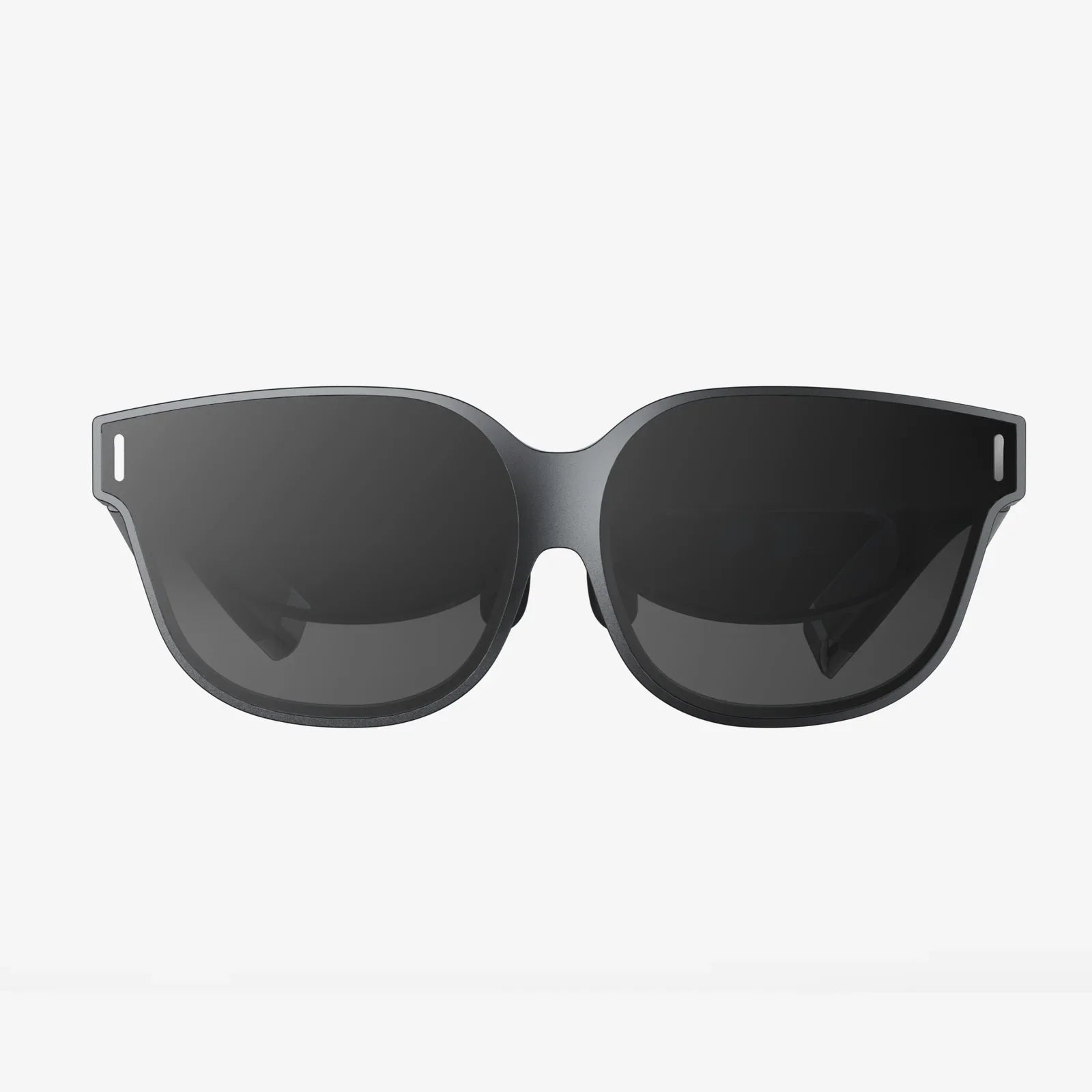
Imagine a device no larger than a hardcover book, sitting discreetly on your desk or tucked away in your entertainment center, yet possessing the raw, unadulterated power to transport you to entirely new worlds. This isn't science fiction; it's the reality offered by the latest generation of computing marvels: the Mini VR PC. These compact powerhouses are redefining the boundaries of immersive technology, challenging the long-held belief that high-fidelity virtual reality requires a hulking, noisy tower. They represent a perfect convergence of engineering ingenuity and user-centric design, promising an uncluttered, elegant, and profoundly powerful portal to virtual realms. For anyone who has ever been intrigued by VR but deterred by the hardware's footprint, the journey begins here.
The Architectural Marvel: Engineering Power into a Tiny Frame
Building a computer capable of handling VR is a significant challenge. Virtual reality is one of the most demanding applications for any system, requiring a consistent, high frame rate (often 90Hz or higher) rendered simultaneously for two eyes at high resolutions. Traditionally, this meant large graphics cards, multi-fan cooling systems, and spacious cases to accommodate it all. The creation of a Mini VR PC is a masterclass in overcoming these constraints through innovation.
The heart of this achievement lies in several key areas. First, the use of high-efficiency, low-power components that don't sacrifice performance. Modern processors and graphics chips are manufactured on advanced nanometer processes, allowing for more transistors and greater computational power within a smaller thermal envelope. This means a chip that fits on a mini-ITX motherboard can deliver performance that rivals its larger predecessors.
Second, advanced thermal solutions are critical. Engineers employ sophisticated heat pipe designs, vapor chambers, and strategically placed blower-style fans that create positive air pressure to efficiently exhaust heat from the tiny chassis. Unlike large towers with ample space for air to circulate, every millimeter in a mini PC case is optimized for airflow, preventing thermal throttling and ensuring stable performance during extended VR sessions.
Finally, the integration is paramount. Every component, from the solid-state drive to the power supply unit (often an external brick or a custom, small-form-factor internal unit), is selected and placed with precision. The result is a dense package of computing potential that belies its modest physical presence.
Why Choose a Compact Powerhouse? The Undeniable Benefits
The advantages of opting for a Mini VR PC extend far beyond simply saving desk space. This form factor offers a compelling value proposition for a wide range of users.
Aesthetics and Space Efficiency
The most obvious benefit is the radical reduction in physical footprint. In an era of minimalist desk setups and clean living spaces, a large gaming tower can be an eyesore. A Mini VR PC can be mounted behind a monitor or television, placed on a bookshelf, or even integrated into a custom sim-racing rig without dominating the environment. It promotes a clutter-free and organized workspace, which is especially valuable in smaller apartments or shared living areas.
Portability and Flexibility
This is a game-changer. A traditional desktop PC is effectively stationary. A Mini VR PC, with its small size and weight, is inherently portable. You can easily transport it in a backpack, making it perfect for:
- VR Demos and Events: Developers, educators, and enthusiasts can bring their high-fidelity VR experiences to clients, classrooms, or meetups with incredible ease.
- Lan Parties and Gatherings: The days of lugging a heavy tower to a friend's house are over.
- Multi-Room Use: Easily move your VR setup from a dedicated office to a larger living room for room-scale experiences when desired.
Performance per Liter
While the absolute top-tier performance crown might still belong to the largest and most power-hungry full-tower systems, the performance gap has narrowed dramatically. Modern Mini VR PCs are not mere compromises; they are capable of driving all major VR headsets at high settings. The metric of "performance per liter" highlights the incredible engineering feat these machines represent, offering a level of power that was unimaginable in such a small form factor just a few years ago.
Power and Noise Efficiency
By utilizing newer generations of CPUs and GPUs built on efficient architectures, these systems often draw less power under load compared to older, larger systems achieving similar performance. Furthermore, while cooling is a challenge, a well-designed Mini VR PC can often be quieter than a large tower. This is because many large towers use multiple fans that can create a cacophony under load, whereas a mini PC might use fewer, higher-quality fans and more passive cooling solutions to manage thermals effectively.
Navigating the Specifications: What to Look For
Choosing a Mini VR PC requires careful attention to specifications. The margin for error is smaller than with a standard PC build. Here are the key components to scrutinize:
Graphics Processing Unit (GPU)
This is the single most important component for VR. It must be powerful enough to render complex scenes at high frame rates. Look for the latest generation of graphics cards designed for efficiency. The GPU must have sufficient video outputs (DisplayPort is typically required for PC VR headsets) and enough VRAM (8GB is a good starting point, with 12GB or more being ideal for future-proofing).
Central Processing Unit (CPU)
A strong CPU is necessary to feed data to the GPU and handle physics calculations, AI, and general system tasks. A modern 6-core or 8-core processor from a recent generation is highly recommended. Avoid older or low-power mobile-derived CPUs that may bottleneck the graphics card.
Memory (RAM)
16GB of fast DDR5 RAM is the current sweet spot for a smooth VR experience. 32GB is excellent for enthusiasts and those who may multitask or use professional applications alongside VR.
Storage
A fast NVMe SSD is non-negotiable. It drastically reduces load times for games and applications, getting you into the virtual world faster. A capacity of 1TB is a good starting point, given the large file sizes of VR titles.
Connectivity and Ports
Check the number and type of ports meticulously. You will need:
- Multiple USB 3.2 Gen 2 (or higher) ports for headset sensors and controllers.
- DisplayPort 1.4 (or the latest standard) for the primary headset connection.
- HDMI 2.1 for a secondary monitor or television.
- Wi-Fi 6E and Bluetooth 5.2+ for wireless peripherals and networking.
The Trade-Offs: Understanding the Limitations
For all their benefits, Mini VR PCs are not without compromises. It's crucial to enter this ecosystem with realistic expectations.
Upgradability
This is the most significant trade-off. The compact nature of these systems severely limits what components can be upgraded later. Typically, only the RAM and storage drives are user-replaceable. The GPU and CPU are often soldered onto the motherboard or use proprietary designs, making future upgrades difficult or impossible. You are largely buying a system for its performance today.
Thermal and Acoustic Limits
Even with advanced cooling, a small chassis has physical limits. Under sustained, heavy load, these systems will run hotter and the fans will spin louder than in a well-ventilated full-sized tower. While not necessarily problematic, it is a characteristic of the form factor.
Premium Price
Engineering on a small scale commands a premium. The research, design, and custom parts required to build a high-performance Mini VR PC often make it more expensive than a comparably performing traditional desktop computer.
The Future is Small and Powerful: Where Mini VR PCs Are Headed
The trajectory for this category is exceptionally bright. As semiconductor technology continues to advance, we can expect even more performance to be packed into ever-smaller packages. Several trends will shape the next generation of these devices.
The adoption of chiplet-based designs, where multiple smaller dies are combined on a single package, allows for more efficient and powerful processors. AI-assisted performance tuning and cooling will become standard, with systems dynamically adjusting clock speeds and fan curves in real-time to maximize efficiency and minimize noise. Furthermore, the rise of wireless VR standards and inside-out tracking reduces the need for a multitude of external sensors and cables, making the compact nature of these PCs even more advantageous. Finally, we are likely to see a greater fusion of hardware and software, with operating systems and VR platforms being optimized specifically for these compact, high-performance systems.
This evolution points towards a future where the power for premium virtual reality is not just accessible, but also invisible and integrated seamlessly into our living spaces. The barrier to entry for high-end VR will lower not just in cost, but in physical imposition.
Gone are the days when unleashing the full potential of virtual reality meant surrendering your desk to a monolithic tower of whirring fans and blinking lights. The Mini VR PC has arrived, shattering the paradigm and proving that immense power can indeed come in small, sophisticated packages. It offers a compelling vision of the future—one where the gateway to other worlds is not a bulky piece of hardware, but an elegant, unobtrusive box that prioritizes your space and lifestyle without demanding a single compromise on the quality of your adventure. The next dimension of computing is here, and it fits perfectly in the palm of your hand.
Share:
Basis of AI: Core Concepts Behind Intelligent Machines
AR Screen Protector: The Ultimate Guide to Clarity, Protection, and the Future of Display Technology