


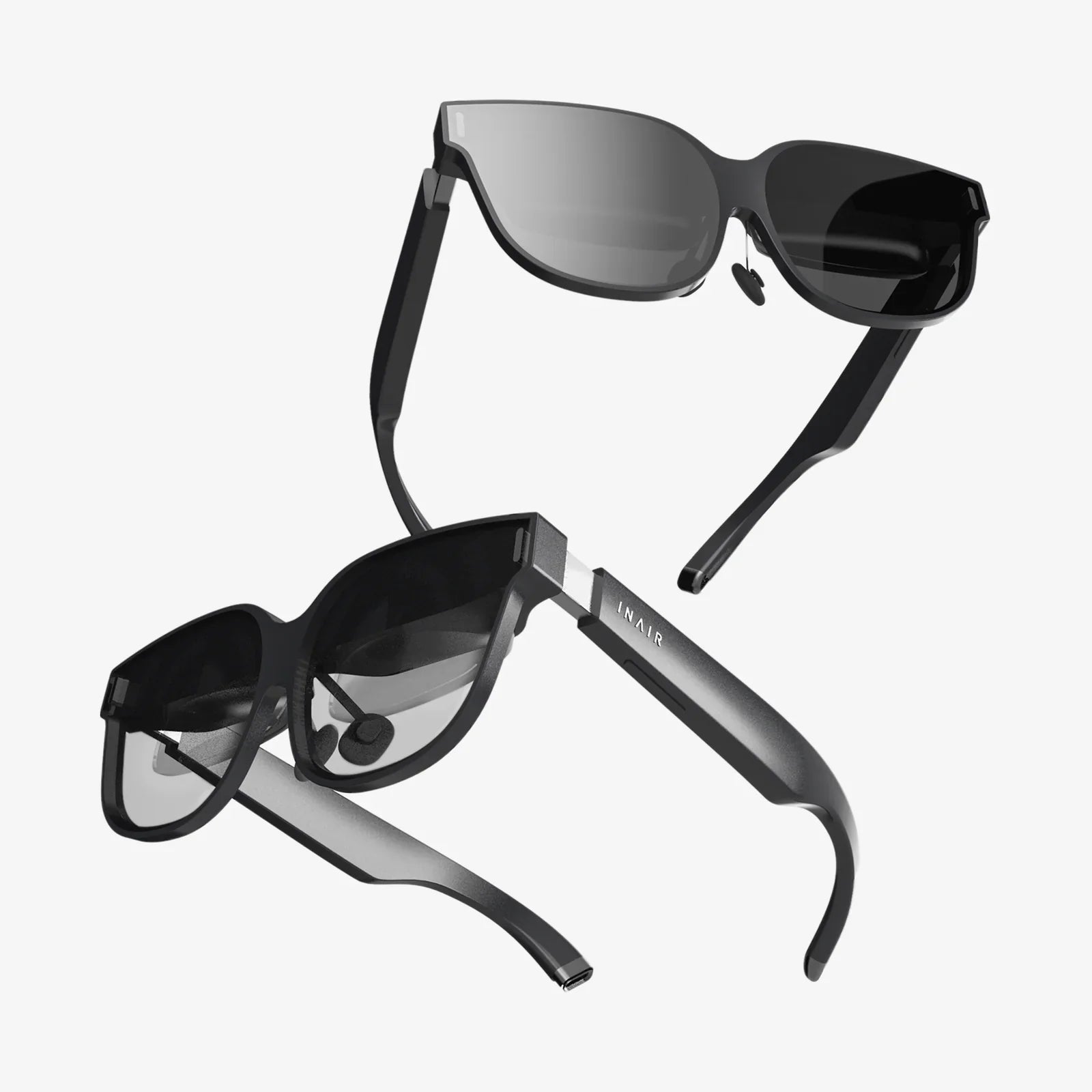
Imagine a world where your most complex designs are no longer confined to a computer screen but can be manipulated in the center of the boardroom table, where a technician thousands of miles away can see what you see and guide your hands with virtual annotations, and where new employees can master dangerous machinery in a consequence-free digital environment. This is not a distant science fiction fantasy; it is the imminent future of business, powered by the rapid and relentless advancement of Mixed Reality. For forward-thinking enterprises, MR is no longer a question of 'if' but 'when,' and the trends shaping its adoption are creating a seismic shift in how we conceptualize work, collaboration, and innovation.
The Convergence of Realities: Defining the Business Landscape
Before diving into the trends, it's crucial to understand the technological context. Mixed Reality exists on a spectrum between the entirely real environment and the completely virtual one. It encompasses both Augmented Reality (AR), which overlays digital information onto the physical world, and Virtual Reality (VR), which immerses the user in a fully digital environment. The power of MR lies in its ability to blend these two, allowing digital and physical objects to coexist and interact in real-time. This creates unparalleled opportunities for businesses to visualize data, simulate processes, and connect people with information in an intuitive, spatial manner.
The Rise of the Immersive Workplace: Remote Collaboration Reimagined
The global shift to remote and hybrid work models exposed the limitations of traditional video conferencing. Flat, 2D screens struggle to convey the nuance, presence, and collaborative energy of a physical meeting. This is where one of the most powerful mixed reality trends for businesses is making its mark: immersive remote collaboration.
Advanced MR platforms are enabling distributed teams to meet in persistent virtual workspaces or share a common view of a physical space. Through avatars or holographic representations, team members can interact with 3D models, annotate the air with virtual notes that remain fixed in space, and manipulate digital prototypes as if they were physically present. An engineer in Munich can examine a faulty engine component with a colleague in Detroit, both seeing the same real-time feed from a MR headset and drawing arrows and circles directly onto the machinery to pinpoint issues. This trend drastically reduces travel costs, accelerates decision-making, and resolves problems with a speed and clarity previously unimaginable.
Digital Twins: Bridging the Physical and Digital Divide
Perhaps the most transformative of all mixed reality trends for businesses is the integration with digital twin technology. A digital twin is a dynamic, virtual replica of a physical asset, process, or system. By feeding real-time data from IoT sensors into this virtual model, businesses can create a living digital counterpart.
When viewed through an MR lens, the digital twin ceases to be an abstract concept on a monitor. Executives can walk through a full-scale, holographic model of a new factory layout before a single brick is laid. Maintenance crews can see the real-time performance data and stress levels of a machine hovering over its physical components, predicting failures before they occur. In logistics, managers can visualize the entire supply chain in 3D, identifying bottlenecks and optimizing flow in real-time. This trend moves business intelligence from descriptive dashboards to prescriptive, spatial experiences, enabling proactive rather than reactive management.
Revolutionizing Training and Skill Development
Enterprise training has long been plagued by high costs, logistical complexity, and inherent risk. Mixed reality is systematically dismantling these barriers. Through immersive simulations, employees can practice complex, dangerous, or expensive tasks in a completely safe environment. A surgeon can practice a new procedure on a holographic patient, a welder can perfect their technique without wasting materials, and a retail employee can navigate a virtual Black Friday rush.
This trend is not just about risk mitigation; it's about efficacy. Studies consistently show that learning in an immersive, hands-on environment leads to significantly higher knowledge retention and skill proficiency compared to traditional methods. Furthermore, MR allows for scalable expertise. A master technician's knowledge can be captured and transformed into an interactive guided tutorial that can be deployed to trainees across the globe, ensuring consistency and preserving institutional knowledge.
Spatial Computing and the AI-powered Workforce
The underlying magic of modern MR is spatial computing—the ability of devices to understand and map the physical environment in three dimensions. This capability is being supercharged by artificial intelligence, creating a powerful trend towards context-aware computing.
Imagine a warehouse worker wearing MR glasses. AI algorithms, combined with spatial mapping, can identify each item on a shelf, instantly cross-reference it with the picking list, and project a glowing path and arrows on the floor to guide the worker on the most efficient route. The glasses can highlight the exact box needed, display its weight and handling instructions, and confirm the pick without the worker ever touching a scanner or screen. This merger of AI, spatial computing, and MR is creating a new class of 'super-workers,' augmented with real-time information that dramatically boosts accuracy, safety, and productivity.
The Showroom of the Future: Transforming Customer Experience
Business-to-consumer applications are a major driver of mixed reality trends. MR is empowering customers to visualize products in their own space and on their own terms before making a purchase. Furniture retailers allow customers to place true-to-scale 3D models of sofas and tables in their living rooms through a smartphone or headset. Automotive companies are enabling buyers to configure a car inside and out, exploring different colors and finishes in photorealistic detail from their home.
This trend moves marketing from persuasion to experience. It reduces purchase hesitation and product returns by setting accurate expectations. For high-value items or complex B2B sales, MR can serve as an immersive showroom, demonstrating the capabilities of industrial equipment or architectural designs in a way that brochures and videos simply cannot match, creating a deep emotional connection and a decisive competitive advantage.
Overcoming Barriers: Considerations for Implementation
Despite the immense potential, businesses must navigate several challenges. The cost of hardware, while decreasing, remains a consideration. Network infrastructure must be robust enough to handle high-bandwidth, low-latency data streams to ensure a seamless experience. Developing or sourcing high-quality, enterprise-grade MR content requires specialized skills. Perhaps the most significant hurdles are cultural: fostering adoption among employees and developing new workflows that leverage MR's unique capabilities rather than forcing old processes onto new technology.
A successful MR strategy starts with identifying a clear use case with a measurable ROI, such as reducing training time, minimizing equipment downtime, or accelerating sales cycles. Piloting programs with specific teams allows for iterative learning and demonstrates tangible value before committing to a large-scale rollout.
The lines between our physical and digital lives are blurring irrevocably, and the businesses that thrive will be those that learn to navigate this new hybrid landscape. Mixed reality is not just another gadget; it is a fundamental shift in the human-computer interface, offering a more intuitive, powerful, and human-centric way to work. The trends are clear: more immersive collaboration, smarter digital assets, safer training, and deeper customer connections. The question for today's leaders is no longer about the validity of the technology, but about the vision to harness it. The enterprises that embrace these trends are building not just for the next quarter, but for the next decade, positioning themselves at the forefront of a more intelligent, efficient, and connected industrial revolution.
Share:
Less Virtual More Reality: Reclaiming Our Physical World in a Digital Age
Virtual Reality Now: Beyond the Hype and Into Our Daily Lives