


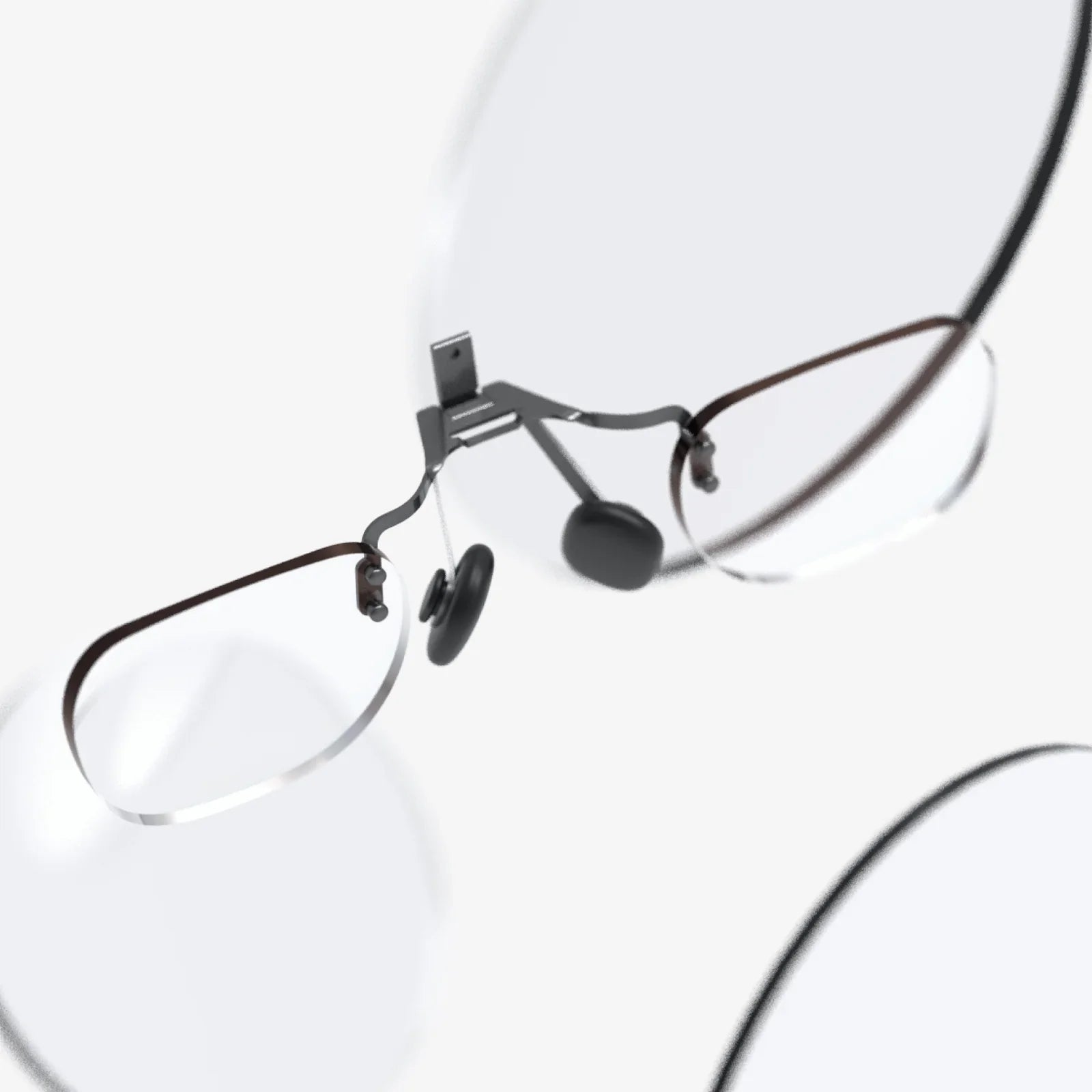
Imagine a world where digital information doesn't live on a screen in your hand, but is seamlessly integrated into your field of vision, enhancing your reality without isolating you from it. This is the tantalizing promise of smart glasses, a wearable technology category that has oscillated between futuristic fantasy and tangible reality for over a decade. The current models available on the market represent a significant leap forward, moving beyond clunky prototypes and niche developer tools into a realm of genuine utility and, increasingly, style. We are standing at the precipice of a new era in personal computing, one worn on the face, and the current generation of smart glasses is our first real glimpse into that future.
The Evolution of Form: From Geek to Chic
The single greatest hurdle smart glasses have faced is aesthetics. Early iterations were often bulky, obtrusive, and screamed "tech gadget" rather than "fashion accessory." The current generation of models has made monumental strides in addressing this critical issue. The overarching design philosophy now is minimalism and discretion.
Manufacturers are acutely aware that for smart glasses to achieve mass adoption, they must first be acceptable to wear in social and professional settings. This has led to a focus on slimmer profiles, lighter materials like titanium and advanced polymers, and designs that closely mimic successful traditional eyewear styles. You can now find current models that resemble classic wayfarers, sophisticated aviators, and modern rectangular frames. The technological components—the batteries, processors, and projection systems—have been miniaturized to the point where they are often entirely hidden within the arms of the glasses, making them virtually indistinguishable from their analog counterparts at a casual glance.
Core Functionalities: What Can They Actually Do?
The capabilities of smart glasses current models can be broadly categorized into several key areas, though not every pair encompasses all of them. The market has begun to segment based on primary function.
Audio-First Glasses
Perhaps the most popular and accessible category today. These models prioritize high-fidelity, open-ear audio delivered through miniature speakers or bone conduction technology nestled in the temples. They allow users to listen to music, take calls, and interact with voice assistants while remaining fully aware of their ambient environment. This is a killer app for productivity, commuting, and sports, offering a situational awareness that headphones simply cannot. The primary advantage is their subtlety; to an observer, you are simply wearing sunglasses or glasses, not a conspicuous audio device.
The Display and Augmented Reality (AR) Models
This is the category that most aligns with the classic sci-fi vision of smart glasses. These devices feature micro-displays that project information directly into the user's line of sight, typically in a small area in the upper corner of the lens or as a translucent overlay. The current implementation of AR is still in its relative infancy. Instead of complex, interactive 3D holograms, most consumer-focused models offer what is known as "monocular AR"—information presented to one eye. This can include:
- Turn-by-turn navigation arrows superimposed onto the street ahead.
- Real-time translation of foreign language text seen through the glasses.
- Contextual information about a landmark, restaurant, or product.
- Notifications from a smartphone for calls, messages, and calendar alerts.
- Basic health and fitness metrics like heart rate or pace during a run.
The technology behind this, often using waveguides or birdbath optics, has improved dramatically, offering brighter and clearer images even in direct sunlight.
Camera-Equipped Glasses
Several current models integrate discreet high-resolution cameras, enabling first-person point-of-view (POV) photography and videography. This is invaluable for content creators, engineers needing hands-free documentation, and everyday users who want to capture life's moments without holding up a phone. Advanced software features often accompany these cameras, such as image stabilization and AI-assisted framing. Privacy remains a paramount concern in this space, leading most manufacturers to implement clear physical indicators—like an LED light—that show when the camera is active.
The Technology Inside: Powering the Experience
The magic of current smart glasses is enabled by a sophisticated suite of technologies packed into a tiny form factor.
Optical Systems: As mentioned, waveguide technology is a frontrunner. It involves etching a pattern onto a tiny, transparent piece of glass or plastic. Light from a micro-LED display is injected into the waveguide, "bounced" through it via internal reflection, and then ejected directly into the user's eye. This creates a bright, sharp image that appears to float in the distance. Other systems use free-form optics or holographic film to achieve a similar result.
Processing Power: Most models are not standalone computers. They act as a sophisticated accessory to a smartphone, leveraging its processing power and connectivity (5G, Wi-Fi) via Bluetooth. This symbiotic relationship keeps the glasses light and power-efficient. However, higher-end AR-focused models are beginning to incorporate custom-designed chipsets to handle the intense computational tasks of spatial tracking and environment mapping on-device, reducing latency and improving the AR experience.
Sensor Fusion: A typical pair of advanced smart glasses is a sensor-packed powerhouse. They may include an accelerometer, gyroscope, magnetometer (compass), ambient light sensor, proximity sensor, and even depth-sensing time-of-flight (ToF) sensors or lidar. This array of data allows the glasses to understand how your head is moving, where you are looking, and the geometry of the space around you, which is fundamental for stable AR placement.
Battery Life and Management: This remains one of the biggest engineering challenges. Batteries are housed in the thicker arms of the glasses, and life varies wildly by function. Audio-focused models can often last a full day, while intensive AR use may drain a battery in under two hours. Innovative solutions include swappable battery arms or sleek magnetic charging cases that provide multiple full charges on the go.
The Style Equation: Fashion Meets Function
The conversation around smart glasses is no longer just about tech specs; it's about personal expression. Recognizing that eyewear is a deeply personal fashion item, leading companies are pursuing partnerships with iconic designers and luxury brands to create collections that cater to diverse tastes. The goal is to offer a range of shapes, colors, and lens options (including prescription and transition lenses) so that the user doesn't have to sacrifice their personal style for functionality. This focus on aesthetics is arguably the most important development in the current market, as it directly tackles the social acceptance barrier.
Challenges and Considerations
Despite the progress, the road ahead is not without its obstacles. Battery life continues to be a limiting factor for power-hungry applications. Social acceptance and privacy concerns are significant, particularly for models with cameras. The public is still wary of being recorded without their knowledge, and etiquette around their use is still being defined.
Furthermore, there is the challenge of the "killer app." While audio and notifications are useful, the true transformative potential of AR glasses lies in applications that we may not have even imagined yet. The software ecosystem is still developing. Finally, cost is a factor. While basic audio glasses have become quite affordable, advanced AR models represent a significant investment, placing them out of reach for many early adopters, let alone the average consumer.
Gazing into the Future
The current models are a fascinating and powerful proving ground. They are testing the waters of consumer desire, technological feasibility, and social norms. The lessons learned from this generation are directly informing the development of the next. We can expect to see even more seamless integration, with improved display technology offering full-color, wide-field-of-view AR. Advances in artificial intelligence will make interactions more intuitive and contextual, with the glasses acting as a true ambient intelligence, anticipating our needs without being asked.
The development of more powerful and efficient dedicated processors will enable richer, more complex experiences without compromising on size or battery life. And as the ecosystem matures, developers will create applications that fundamentally change how we work, learn, shop, and socialize.
The current landscape of smart glasses is no longer about if the technology will work, but how it will fit into our lives. They are transitioning from a novel gadget for tech enthusiasts to a legitimate tool and accessory for a broader audience. The fusion of unparalleled convenience, contextual information, and hands-free operation is an irresistible value proposition. The future they point toward is one of invisible computing, where technology enhances our human experience instead of distracting from it, and that is a future worth watching—quite literally—through a new lens.
Share:
Increase in Wearable Technology Reshaping Lives and the Global Market
Spatial Computing News Last 2 Days: A Paradigm Shift in Digital Interaction