


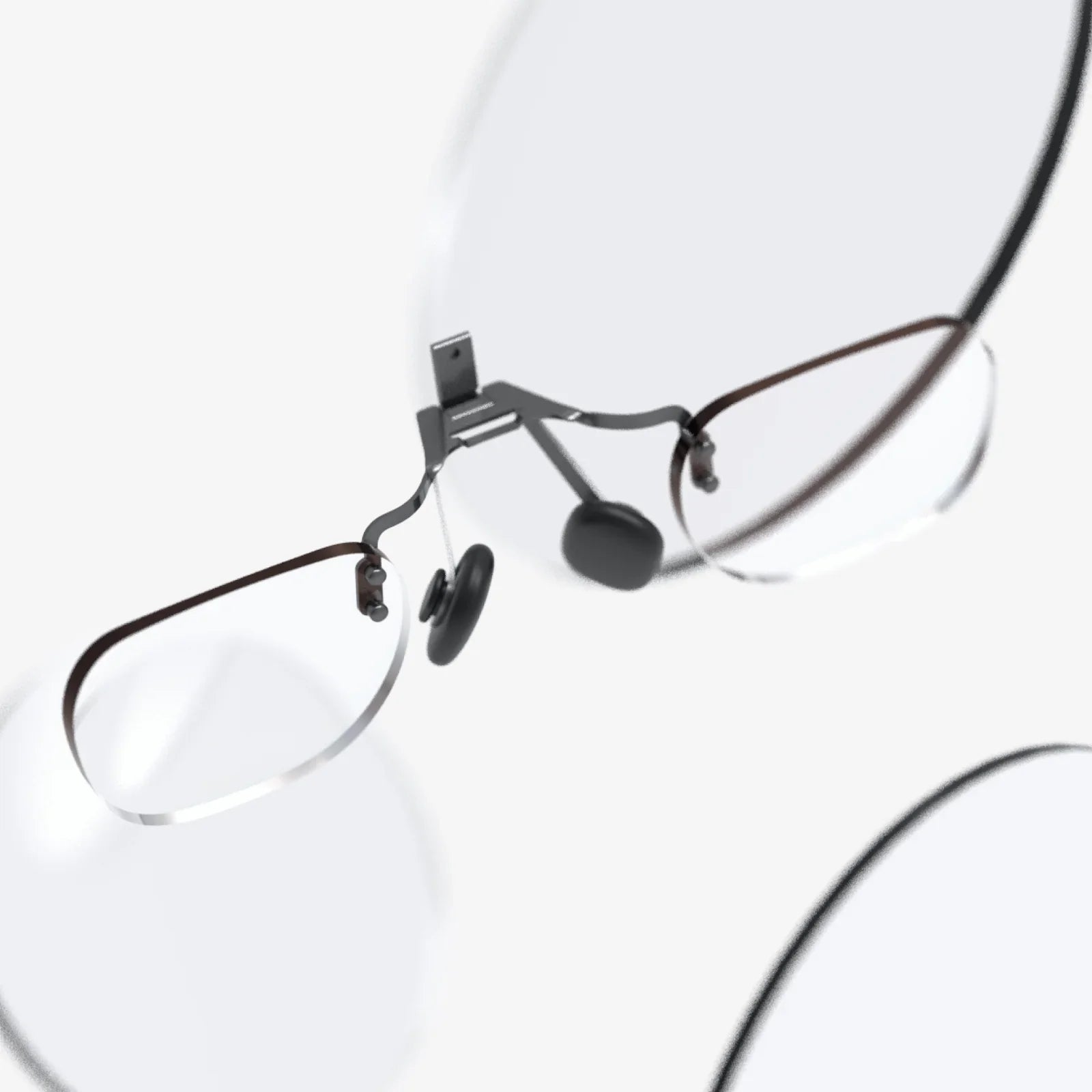
Imagine a world where critical data floats seamlessly in your field of vision, where expert guidance is just a glance away, and your hands remain free to tackle the task at hand. This is no longer the realm of science fiction; it's the rapidly evolving reality of smart glasses for business use. These sophisticated wearable devices are poised to redefine enterprise productivity, offering a transformative bridge between the digital and physical worlds. For forward-thinking companies, the question is no longer if they will adopt this technology, but how quickly they can integrate it to gain a decisive competitive edge.
The Evolution of Wearable Tech: From Consumer Novelty to Enterprise Essential
The journey of smart glasses began with much fanfare in the consumer space, often touted as the next big thing for the average user. Early iterations captured the public's imagination but struggled to find a consistent and valuable role in daily life. However, while consumer adoption waxed and waned, a quiet revolution was brewing in the enterprise sector. Businesses, particularly those with complex logistics, remote field operations, and intricate assembly processes, began to see the immense potential of a hands-free, augmented reality (AR) interface. They identified specific pain points—reducing errors, shortening training times, enabling remote collaboration, and improving workflow efficiency—that this technology could directly address. This shift in focus from a broad consumer play to targeted industrial and commercial applications has been the catalyst for the current wave of innovation and adoption.
Unlocking Core Functionalities: What Business-Centric Smart Glasses Do
Modern smart glasses for enterprise are built around a core set of functionalities designed to solve real-world business problems.
- Heads-Up Display (HUD): The most fundamental feature, a transparent display overlays digital information—such as checklists, diagrams, or metrics—onto the user's real-world view. This allows a technician to see assembly instructions while keeping both hands on the components, or a warehouse worker to see picking instructions without looking down at a handheld scanner.
- First-Person View (FPV) Video Streaming: Integrated cameras enable the wearer to stream their point of view in real-time to a remote expert. This allows a senior engineer located miles away to see exactly what a field technician sees, enabling precise guidance, diagnostics, and approval without the cost and delay of travel.
- Augmented Reality (AR) Overlays: Beyond simple text, advanced AR can project 3D models, animations, and interactive cues into the environment. A mechanic might see an exploded view of an engine part, with arrows indicating the exact sequence for disassembly. An architect could walk through a construction site and see the digital blueprint superimposed onto the physical structure.
- Voice Control and AI Integration: Hands-free operation is paramount. Natural language processing allows users to control the device, retrieve information, and document their work simply by speaking. Integration with artificial intelligence can provide predictive analytics, automatically highlighting potential issues or suggesting the next optimal step in a process.
- Robust Data Capture: These devices can capture photos, video, and data logs automatically, attaching them to work orders or enterprise resource planning (ERP) systems. This creates an immutable digital record of a task, crucial for compliance, quality assurance, and training purposes.
Transforming Industries: Use Cases Across the Sector Spectrum
The application of smart glasses is creating tangible value across a diverse range of industries.
Manufacturing and Assembly
On the factory floor, precision and efficiency are everything. Smart glasses provide assembly line workers with digital work instructions, ensuring every step is followed correctly and reducing errors to virtually zero. They can highlight the exact location for a part to be installed and verify its correctness using AR recognition. This not only improves quality but also significantly reduces the training time required for new hires, as the guidance is built directly into the workflow.
Logistics and Warehousing
In the fast-paced world of logistics, seconds count. Warehouse operatives using smart glasses receive picking and packing instructions directly in their line of sight, navigating vast facilities efficiently through optimized pathfinding displayed on their glasses. Instead of fumbling with a handheld scanner, they can use the glasses' camera to scan barcodes hands-free, accelerating the process and reducing physical strain. Inventory checks become faster and more accurate, with data synced instantly to warehouse management systems.
Field Service and Repair
This is perhaps one of the most powerful use cases. A field service technician dispatched to repair a malfunctioning piece of equipment is no longer alone. Through their smart glasses, they can connect with a central expert who sees what they see, annotate the technician's view with arrows and notes, and pull up relevant schematics and documentation. This "see-what-I-see" collaboration resolves issues faster the first time, slashing costly truck rolls and increasing customer satisfaction.
Healthcare and Telemedicine
Surgeons can receive vital patient data and imaging results without turning away from the operating table. Medical students can observe procedures from the surgeon's point of view, creating powerful training opportunities. Furthermore, paramedics or nurses in remote locations can stream live video to a specialist at a major hospital, facilitating expert diagnosis and guidance during critical moments.
Training and Onboarding
Smart glasses offer an unparalleled platform for immersive, on-the-job training. A new employee can be guided through complex procedures with digital information overlaid on the actual equipment they will use. This experiential learning accelerates competency, improves knowledge retention, and standardizes procedures across the organization, all while being safer than learning solely from a manual.
Navigating the Implementation Hurdles
Despite the clear benefits, adoption is not without its challenges. A successful deployment requires careful planning and addressing several key concerns.
Cost and Return on Investment (ROI): The initial investment in hardware, software development, and system integration can be significant. Businesses must build a strong business case focused on specific metrics like reduced error rates, faster task completion, decreased downtime, and lower training costs to demonstrate a clear ROI.
User Acceptance and Comfort: The technology must be worn for extended periods. Devices need to be lightweight, ergonomic, and comfortable. Furthermore, companies must manage change effectively, addressing potential employee concerns about privacy, surveillance, and the learning curve associated with new technology.
Battery Life and Performance: Processing AR visuals and streaming video is computationally intensive and can drain batteries quickly. Enterprise-grade devices must offer all-day battery life or hot-swappable batteries to support full work shifts without interruption.
Connectivity and Security: Smart glasses rely on robust and secure wireless networks to function. Enterprises must ensure their Wi-Fi or cellular infrastructure can handle the data load, especially in large industrial settings. Furthermore, the transmission and storage of potentially sensitive video and data require enterprise-grade cybersecurity measures to prevent breaches.
Software Ecosystem and Integration: The hardware is only as good as the software it runs. The glasses must integrate seamlessly with existing enterprise software platforms like ERP, CRM, and CMMS systems. A lack of compatible applications or cumbersome integration can derail an otherwise promising pilot project.
The Future is in Sight: What's Next for Enterprise Smart Glasses?
The technology is advancing at a breakneck pace. We are moving toward more socially acceptable designs that resemble standard safety eyewear, a critical factor for wider adoption. Improvements in battery technology and processing efficiency will extend usability. Most importantly, the integration of Artificial Intelligence and Machine Learning will make these devices truly intelligent partners. Imagine glasses that can not only show a manual but can proactively diagnose a machine's issue by analyzing its sound and visual appearance, then guide the user through the repair. The convergence of AR, AI, and the Internet of Things (IoT) will unlock predictive maintenance and autonomous operation scenarios we are only beginning to imagine.
The potential for smart glasses to reshape the business landscape is immense. They represent a fundamental shift in how we interact with information and collaborate within the physical workspace. The businesses that will thrive in the coming decade are those that begin exploring this technology today, identifying pilot programs, and building the internal expertise to harness its power. The future of work is not on a screen in front of you; it's appearing right before your eyes, clear, contextual, and ready to drive unprecedented levels of efficiency and innovation.
Share:
Wearable Safety Device News: The Evolution of Personal Protection Technology
Wearable Safety Device News: The Evolution of Personal Protection Technology