


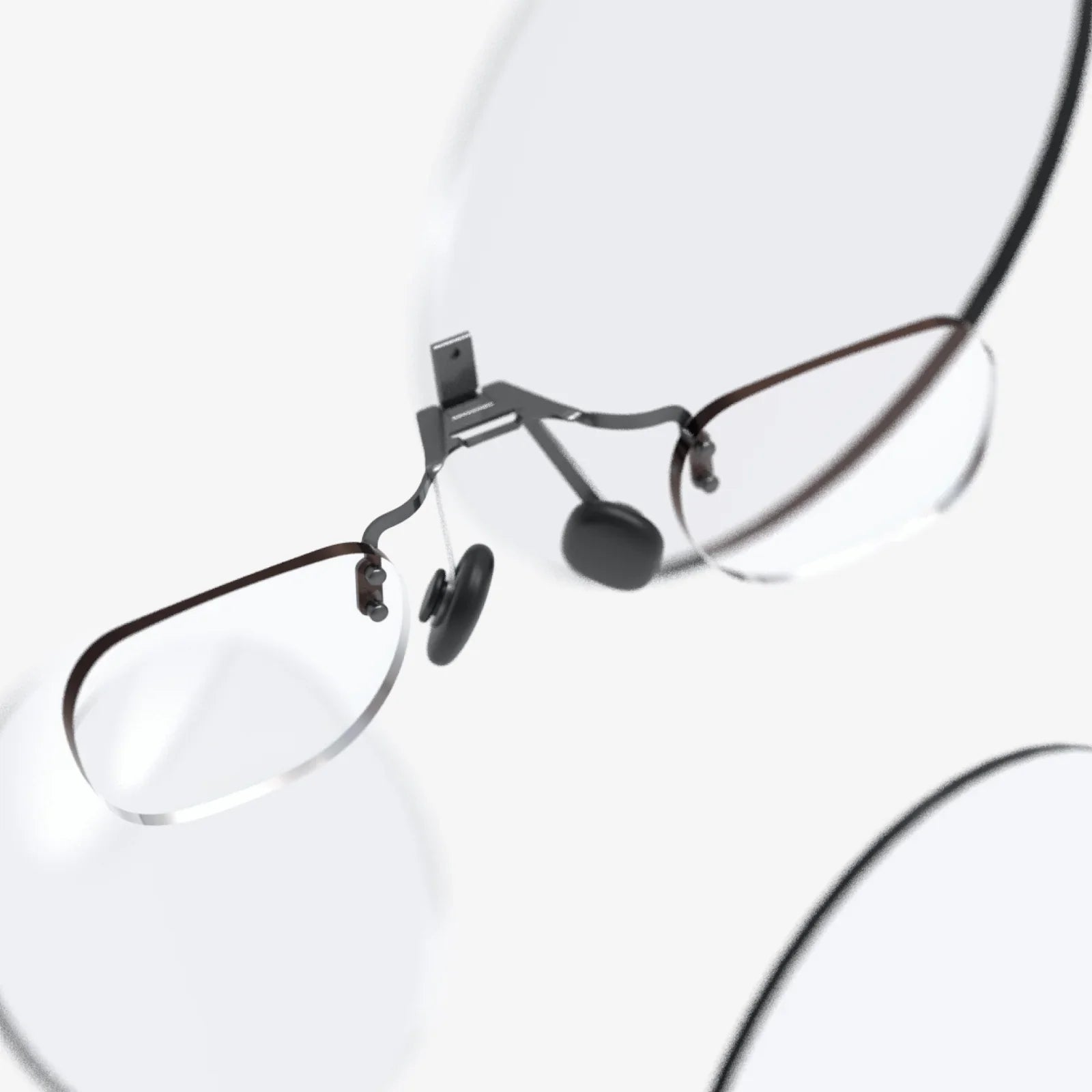
Imagine cresting a mountain ridge, the wind in your hair, and a breathtaking vista unfolding before you. Instead of fumbling in your pocket to check your heart rate, squinting at a tiny phone screen for the next trail marker, or stopping your run to change a podcast, the information you need simply appears, hovering subtly at the edge of your vision. This is the promise of smart glasses for outdoor activities—a seamless fusion of the digital and physical worlds that empowers you to do more, see more, and experience more, all while staying present in the moment. This technology is no longer a sci-fi fantasy; it's a powerful tool redefining the boundaries of adventure.
The Evolution of Wearable Tech in the Great Outdoors
The journey to today's sophisticated eyewear began with clunky head-mounted displays and the first wave of consumer smart glasses, which were often more concept than practical tool. For outdoor enthusiasts, the progression of wearable technology has been a quest for convenience and accessibility. Wrist-mounted devices revolutionized how we track runs and hikes, providing reams of biometric and geographical data. But they still required the user to look away from their surroundings, breaking immersion and, at times, momentum.
The true breakthrough came with the miniaturization of components: micro-projectors, inertial measurement units (IMUs), bone conduction speakers, and high-efficiency batteries. This allowed developers to pack significant computing power into a form factor that closely resembles traditional sports sunglasses. The goal shifted from creating a obvious piece of tech to crafting a discrete companion that enhances the outdoor experience without intruding upon it. This evolution has been driven by a fundamental understanding of the adventurer's needs: hands-free operation, environmental durability, and an interface that prioritizes the real world over the digital one.
Core Features That Elevate Your Adventure
Not all smart glasses are created equal, and models designed specifically for outdoor use boast a suite of features tailored to the demands of the elements and the athlete.
Heads-Up Display (HUD) and Augmented Reality
This is the cornerstone feature. A small, transparent micro-LED or LCD projector overlays critical information onto one or both lenses. The beauty of a well-designed HUD is its subtlety; it sits just below your central line of sight, allowing you to absorb data with a slight downward glance without obstructing your view of the trail, road, or rock face. This augmented reality interface can display:
- Navigation cues: Arrow overlays directly onto the path ahead, distance to the next waypoint, and even elevation profiles.
- Performance metrics: Real-time heart rate, pace, speed, altitude, and duration.
- Environmental data: Temperature, upcoming weather alerts, and sunset time.
Integrated Audio: Hearing the World Around You
Traditional earbuds block ambient noise, a dangerous proposition on busy trails or roads. Smart glasses solve this elegantly with bone conduction audio or tiny, open-ear speakers. These technologies transmit sound through your cheekbones or via speakers that sit just in front of the ear canal, leaving your ears completely open. This allows you to enjoy podcasts, navigation instructions, or motivational playlists while remaining fully aware of surrounding sounds—a cyclist calling out, approaching wildlife, or the warning rumble of an avalanche. Many also feature beamforming microphones for crystal-clear voice commands and calls, even in windy conditions.
Durability and Performance Specifications
These are not delicate gadgets. High-quality outdoor smart glasses are built to military-grade durability standards, often featuring impact-resistant polycarbonate frames and lenses. They are invariably rated for water and dust resistance (IPX4 for sweat and rain, up to IPX7 for full immersion). Polarized, interchangeable lenses are standard, allowing you to switch from low-light to bright-sun conditions. Furthermore, battery life is paramount; expect anywhere from 6 to 12 hours of active use, enough for even the longest endurance events, often supplemented by a compact charging case.
Transforming Specific Outdoor Pursuits
The application of this technology varies dramatically across different activities, each with its own unique demands.
Cycling and Mountain Biking
For cyclists, safety and efficiency are everything. Smart glasses provide a significant safety upgrade by allowing riders to keep their eyes on the road while monitoring speed, power output, cadence, and heart rate. Turn-by-turn navigation is projected directly onto the tarmac, eliminating the need for a handlebar-mounted phone or computer. For mountain bikers, seeing upcoming trail difficulty and elevation changes on the fly can help with pacing and line choice on unfamiliar routes. The open-ear audio ensures they can hear other riders and potential hazards.
Hiking and Trail Running
Navigation is the killer app for hikers. Following a GPX route becomes intuitive with a virtual breadcrumb trail laid over the actual terrain. Runners can maintain their rhythm without breaking stride to check their wrist for pace or distance. The ability to take hands-free photos and videos through an integrated camera captures the majesty of a summit without the hassle, preserving the memory without pulling you out of it. The lightweight, secure fit is also crucial for the dynamic movement of trail running.
Water Sports: Sailing, Kayaking, and Fishing
Even on the water, smart glasses have found a niche. For sailors, they can display wind speed, direction, and boat speed data overlayed on their view of the sails. Anglers can see water depth, temperature, and chartplotter information without turning their back on their fishing line. The high-brightness displays are essential for readability in the glaring reflection off the water, and the waterproof designs ensure they survive a dunking.
Skiing and Snowboarding
On the slopes, these glasses can display speed, vertical descent, and jump analytics. More importantly, they can show a trail map with your location and the location of your friends, making it easy to rendezvous at the lift without pulling out a phone with freezing fingers. The contrast-enhancing lenses improve visibility in flat light, and the robust construction handles the inevitable falls.
Addressing Concerns and Considerations
Despite the clear benefits, potential users have valid concerns. The most common is battery anxiety. The thought of being miles into a wilderness and having your navigation aid die is daunting. This is mitigated by long battery life and the practice of carrying a traditional map and compass as a backup—a rule no tech should ever make you break.
Privacy is another consideration, primarily regarding the built-in cameras. Responsible manufacturers build in clear physical indicators like a recording light and establish strict guidelines for their ethical use in public spaces. The social acceptance of wearing cameras on one's face is still evolving, though the discreet design of modern models helps them blend in.
Finally, there is the philosophical question of technology in nature. Purists argue that the outdoors is a place to disconnect. The counter-argument is that smart glasses, when used intentionally, actually promote connection. By reducing the need to constantly stop and stare at a phone, they keep you immersed in your environment. They handle the digital logistics so your mind can be free to appreciate the view, making them less of a distraction and more of a facilitator for pure, uninterrupted experience.
The Future of Augmented Adventure
The technology is still advancing at a rapid pace. We are moving toward even more immersive augmented reality experiences. Future iterations could identify and label distant peaks and constellations, overlay historical information on a landscape, or provide real-time wildlife identification. Advanced biometrics could offer deeper health insights, warning of potential fatigue or dehydration before they become critical. AI integration could analyze your form in real-time, offering coaching tips as you run or bike. The potential for community features is also vast, with live location sharing for safety and social adventures becoming more seamless.
The great outdoors beckons with a call to challenge ourselves and find solace in nature's grandeur. Smart glasses are answering that call not by building a digital wall between us and that experience, but by acting as a clarifying lens. They are the silent guide that knows the way, the coach that whispers your stats, and the historian that tells the story of the landscape—all while leaving your hands free to grip the rock, your ears open to hear the river, and your eyes wide open to absorb the beauty of the world ahead. The next level of adventure isn't about leaving technology behind; it's about bringing the right technology along.
Share:
What Is Head Mounted Display - A Portal to Digital Realms
What Is Head Mounted Display - A Portal to Digital Realms