


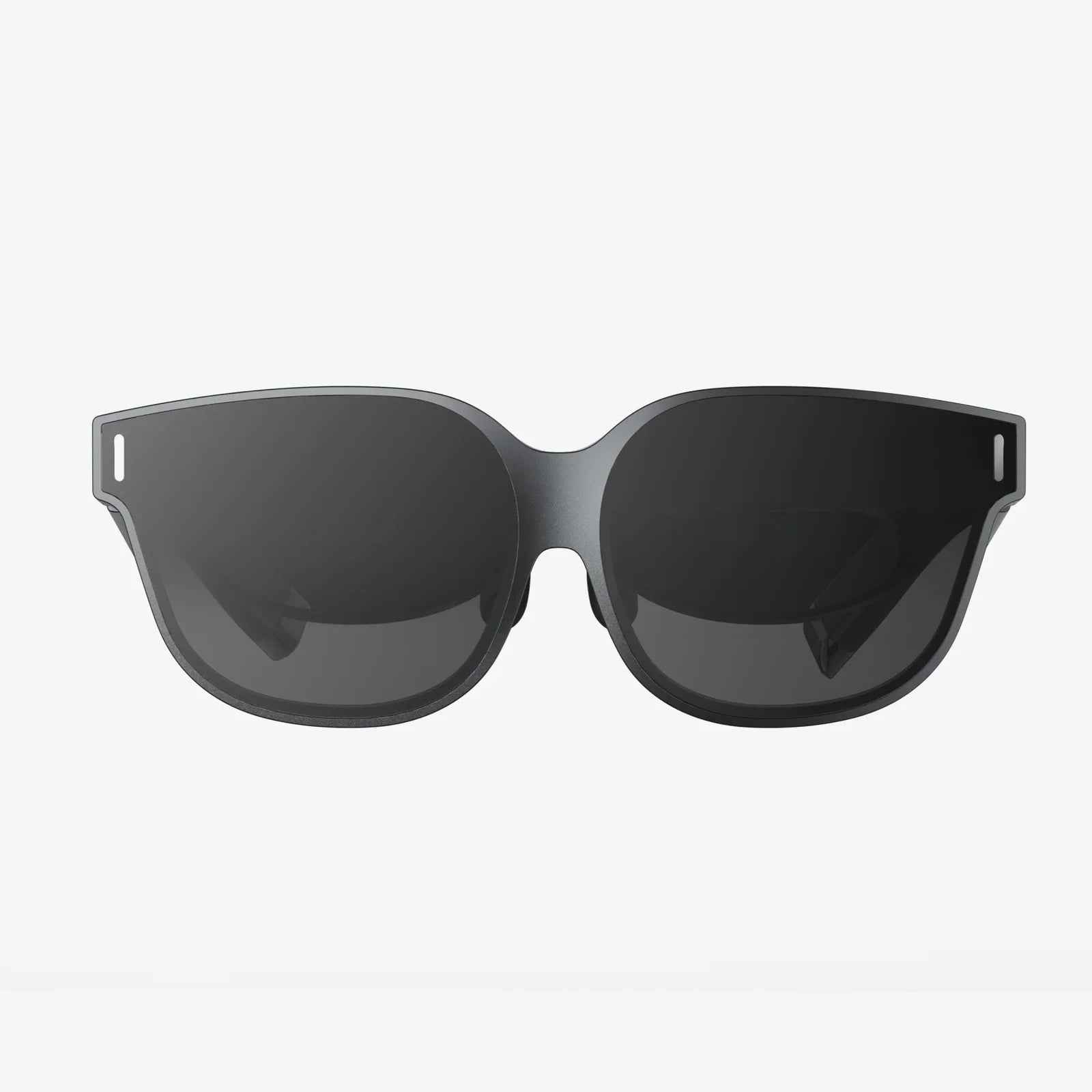
Ever wondered why a pair of high-tech spectacles can command a price tag that rivals a premium laptop? The world of smart glasses is no longer a futuristic fantasy; it's a burgeoning market with options spanning from simple notification displays to powerful augmented reality workstations. But with this innovation comes a critical question for any potential buyer: what exactly am I paying for? The answer is far more complex than a simple bill of materials. Unpacking the smart glasses price details reveals a fascinating interplay of cutting-edge technology, research and development costs, software ecosystems, and strategic market positioning. This comprehensive guide will dissect every layer of cost, empowering you to see beyond the sticker price and understand the true value proposition of your next wearable computer.
The Core Architecture: Where the Foundation Costs Reside
At its heart, a pair of smart glasses is a miniaturized computer worn on your face. This fundamental truth dictates a significant portion of the initial cost. Unlike a smartphone with ample internal space, every component in a frame must be engineered for extreme miniaturization, low power consumption, and minimal heat generation.
The System-on-a-Chip (SoC) is the brain of the operation. This isn't a standard mobile processor; it's often a custom-designed chip that balances processing power for handling complex AR overlays, computer vision algorithms, and sensor data with the absolute necessity of energy efficiency to avoid burning the user's temple. The development and fabrication of these specialized processors represent a massive R&D investment that is factored into the final product's cost.
Then comes the sensor suite. A high-end pair of smart glasses is a veritable orchestra of data-gathering instruments:
- High-resolution cameras for video capture and environmental mapping
- Depth sensors (like time-of-flight sensors) for understanding spatial relationships
- Accelerometers and gyroscopes for precise head tracking
- Microphones for voice commands and audio recording
- Ambient light sensors for display adjustment
- Eye-tracking cameras for intuitive interaction
Each sensor adds not only to the component cost but also to the engineering challenge of integrating them seamlessly into a lightweight form factor. Furthermore, the battery technology is a critical cost driver. It must be small enough to fit into the frame's stems, safe enough to be placed near the user's head, and powerful enough to deliver a usable runtime, often requiring proprietary fast-charging solutions. This intricate dance of performance, size, and safety doesn't come cheap.
The Window to Digital Worlds: The Display Technology Premium
If the SoC is the brain, the display is the soul of the smart glasses experience. This is arguably the single most significant factor differentiating a $200 device from a $2,000 one. The technology used to project digital images onto the real world varies dramatically in cost and capability.
On the lower end of the spectrum, you find simple LED arrays that can display basic notifications, icons, or monochrome text. These are relatively inexpensive to produce and integrate, leading to a more accessible entry price. They serve a specific, limited function.
The mid-range is often dominated by optical waveguide technology. This involves etching microscopic patterns onto a transparent lens that guides light from a micro-projector at the temple into the user's eye. The complexity and precision of manufacturing these waveguides are extreme, requiring cleanroom environments and sophisticated lithography equipment akin to semiconductor manufacturing. The yield rates (number of perfect lenses per batch) directly impact cost—higher failure rates mean each successful lens must bear a greater portion of the production cost.
At the pinnacle of display technology are holographic and laser beam scanning (LBS) solutions. These systems can create vibrant, high-resolution, and wide field-of-view images that appear seamlessly integrated into the real world. The components for these systems, including lasers and microscopic mirrors, are incredibly precise and expensive. The research behind them represents years, sometimes decades, of investment. When you see a premium price tag, you are often paying for the years of scientific advancement required to make that display possible.
Beyond the Hardware: The Invisible Cost of Software and Ecosystems
A common mistake is to view smart glasses solely as a hardware purchase. In reality, you are buying into a platform. The development of the operating system, the developer tools (SDK), and the ongoing maintenance and updates constitute a colossal, ongoing expense for the manufacturer.
Creating a spatially-aware OS that can reliably place digital objects in the real world, understand gestures, and manage multiple concurrent applications is a software engineering challenge of the highest order. This cost is amortized across every unit sold. Furthermore, a robust ecosystem is vital. A pair of glasses with no apps, no services, and no developer support is a useless piece of technology. Companies invest heavily in wooing developers, creating flagship applications, and building cloud services to support their devices. This entire software and ecosystem effort, while invisible, is a fundamental part of the smart glasses price details.
For enterprise-focused devices, this also includes specialized software suites for remote assistance, digital work instructions, and 3D model visualization. The value—and cost—of the device is inextricably linked to this professional software that drives productivity and ROI for businesses.
Market Positioning and Target Audience: Enterprise vs. Consumer
The intended user dramatically influences the pricing strategy. The market today is largely split into two distinct camps, each with its own economic logic.
Enterprise and Professional Smart Glasses: These are built for durability, reliability, and specific work-related tasks. They are sold as B2B (business-to-business) tools, often in bulk to corporations. The pricing reflects this. The cost includes not only the hardware but also enterprise-grade support, lengthy device lifespans, guaranteed security updates, and specialized software licenses. For a company, a price of several thousand dollars per unit is justifiable if it saves dozens of hours in training, reduces errors on an assembly line, or enables an expert to troubleshoot a problem on the other side of the world without traveling. The value proposition is measured in hard ROI, allowing for a higher price point.
Consumer Smart Glasses: This segment aims for mass adoption. Prices are necessarily more aggressive, but this comes with trade-offs. Consumer devices may use less expensive display technology, have a more limited field of view, shorter battery life, and a less robust software ecosystem. Their business model may also rely on accessory sales, app store commissions, or even data services in the future. The goal is to get the technology into as many hands as possible, which means minimizing the barrier to entry, even if it means offering a less powerful experience than its enterprise counterparts.
The Hidden Figures: R&D, Certification, and Distribution
Before a single unit is sold, a company has already spent tens, if not hundreds, of millions of dollars. The research and development phase for advanced smart glasses can take half a decade or more, involving teams of optical engineers, software developers, industrial designers, and material scientists. This immense sunk cost must be recouped over the product's lifecycle.
Additionally, these devices must pass stringent regulatory certifications from bodies like the FCC (for radio frequency emissions) and CE marking for safety in certain regions. This process is time-consuming and expensive. Finally, the distribution model adds its own layer. Selling through retail partners involves margin sharing, while direct sales require building and maintaining a e-commerce and logistics operation. Marketing costs to explain and promote a new category of technology are also substantial and are all baked into the final price the consumer sees.
The Future of Pricing: Trends to Watch
The landscape of smart glasses price details is not static. Several powerful trends are converging that will inevitably reshape cost structures in the coming years.
As the underlying technologies, particularly waveguides and micro-projectors, benefit from economies of scale and improved manufacturing yields, their cost will decrease. What is a cutting-edge, low-yield process today will become a standardized, high-volume one tomorrow. Increased competition is another major driver. As more players enter the market, from established tech giants to agile startups, competition will put downward pressure on prices and force innovation, giving consumers more choice across different price bands.
We may also see the rise of a subscription-based model, where the hardware itself is sold at a significantly reduced cost—or even given away—in exchange for a monthly fee that covers connectivity, cloud services, and access to a premium software suite. This could make advanced technology more accessible upfront. Finally, the concept of a "good enough" market will emerge. Not everyone needs a full-fledged AR workstation. For many, a simpler device that handles notifications, translations, and basic navigation will be sufficient, and these devices will occupy a much lower price point, further diversifying the market.
Navigating the smart glasses market requires a discerning eye. The price is not an arbitrary number but a reflection of a complex equation involving miniature supercomputers, precision optics born from years of research, sophisticated software platforms, and strategic business goals. Whether you're a enterprise buyer calculating return on investment or a consumer tech enthusiast eager for a glimpse of the future, understanding these smart glasses price details is the first step toward making an informed and satisfying investment. The true cost of seeing the world differently is about to become much clearer.
Share:
Augmented Reality: Bridging Our Digital and Physical Worlds
Best Device Intelligence Providers 2025: Shaping the Future of Digital Trust