


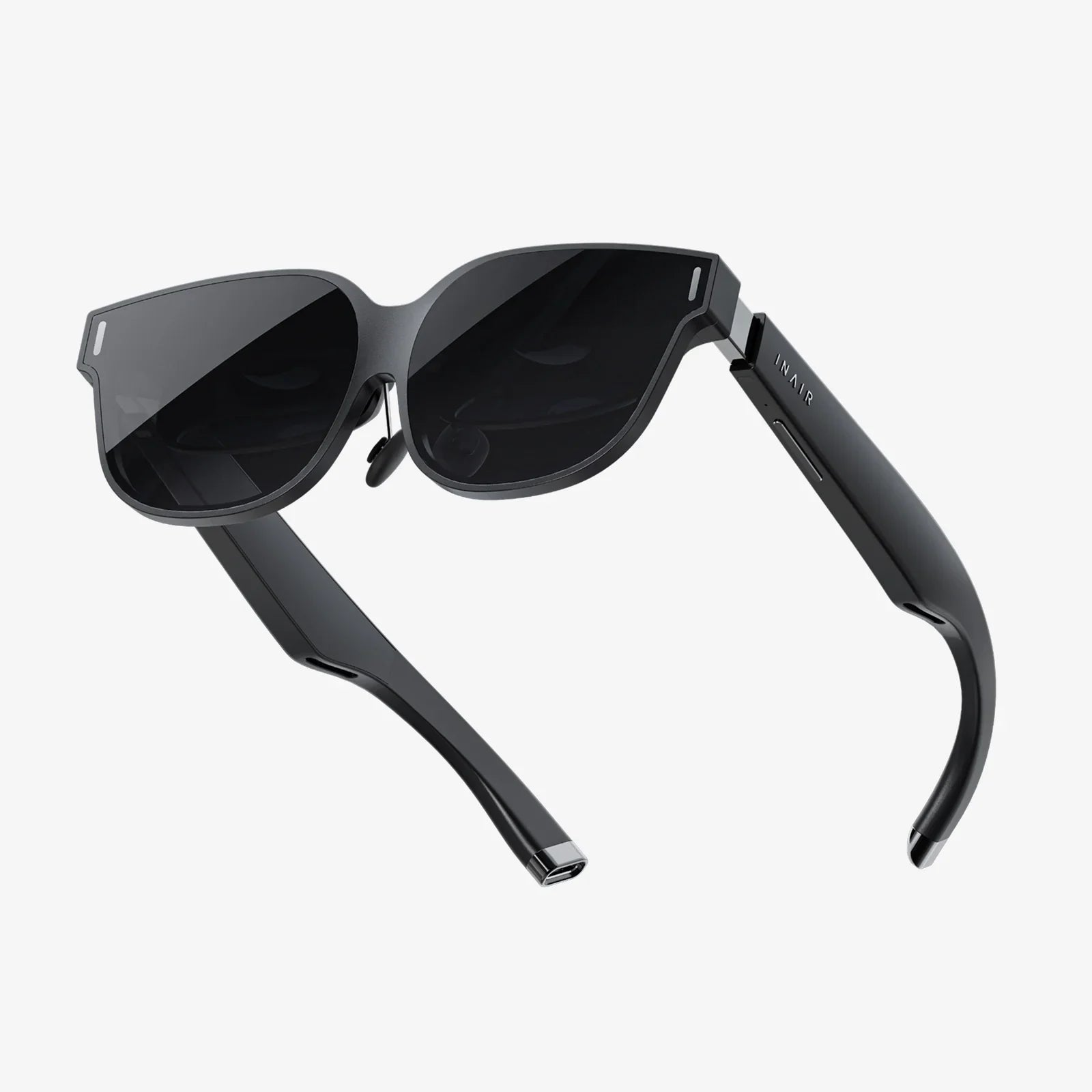
Imagine a world where information doesn't live on a screen in your hand, but floats seamlessly in your field of vision, accessible with a glance and controlled with a whisper. This is not the distant future of science fiction; it is the imminent reality being ushered in by the rapid maturation of smart glasses with integrated displays. This technology, which once seemed a fantastical dream, is now knocking on the door of mainstream adoption, promising to fundamentally alter our relationship with technology, information, and each other. The era of looking down at a device is about to be challenged by a new paradigm: looking forward into an augmented world.
The Architectural Marvel: Deconstructing the Technology
At the heart of this revolution lies a sophisticated fusion of hardware and software, all miniaturized into a form factor that strives to be as unobtrusive as conventional eyewear. The most critical and complex component is the optical system—the mechanism that projects digital imagery onto the user's retina.
The Magic of Waveguides and Micro-LEDs
Unlike the bulky headsets of the past, modern smart glasses employ advanced waveguides. These are essentially transparent glass or plastic substrates etched with microscopic patterns. Light from a tiny micro-LED display module is injected into the edge of the waveguide. This light is then bounced through the substrate via a process of total internal reflection and, finally, directed out towards the user's eye. The result is a bright, sharp image that appears to hover in space several feet away, all while allowing the user to see the real world clearly through the transparent lens.
The Sensory Suite: More Than Meets the Eye
An integrated display is useless without a rich array of sensors to understand the user and their environment. This sensory suite typically includes:
- Inertial Measurement Units (IMUs): Accelerometers and gyroscopes track head movement and orientation with extreme precision, ensuring the digital content remains stable in the user's view.
- Cameras: High-resolution cameras enable computer vision, allowing the device to map the environment, recognize objects, read text, and understand hand gestures for intuitive control.
- Microphones: An array of microphones enables not just voice commands but also advanced audio beamforming, isolating the user's voice from ambient noise for crystal-clear communication.
- Eye-Tracking Cameras: By monitoring the pupil, these sensors determine where the user is looking. This enables gaze-based interaction (e.g., selecting an item by looking at it) and ensures the displayed image is always perfectly focused.
The Brain and Brawn: Processing and Power
All this data requires immense processing power. A miniaturized system-on-a-chip (SoC), similar to those found in high-end smartphones, handles the complex tasks of spatial computing, running algorithms for simultaneous localization and mapping (SLAM), and rendering graphics. Powering this entire system is a significant challenge, often addressed through innovative battery solutions. These can range from compact batteries integrated into the temples of the glasses to external battery packs that connect via a discreet cable and can be stored in a pocket, balancing all-day usability with weight and comfort.
Beyond Novelty: Transformative Applications Across Industries
The true value of smart glasses is revealed not in their technical specifications, but in their practical applications. They are poised to become indispensable tools across a vast spectrum of professional and personal domains.
Revolutionizing the Frontline Workforce
For the industrial and service sectors, smart glasses are a game-changer. Field technicians can receive remote expert guidance with annotations overlaid directly onto the malfunctioning machinery they are repairing, hands-free. Warehouse workers can see picking and packing instructions superimposed on their view, dramatically increasing efficiency and reducing errors. Surgeons can access vital patient statistics and imaging data without ever turning away from the operating table. This "see-what-I-see" capability enhances training, improves safety, and streamlines complex procedures.
Redefining Personal Computing and Connectivity
For the consumer, the implications are profound. Navigation becomes intuitive, with directional arrows and street names painted onto the real world, eliminating the need to constantly consult a phone. Language barriers dissolve with real-time translation subtitles appearing beneath a speaking person. Social interactions are enhanced with contextual information—imagine seeing a colleague's name and recent projects as you walk into a meeting. They offer a liberating form of connectivity, providing notifications, messages, and media without sequestering attention in a handheld device, allowing users to remain present in their physical surroundings.
A New Canvas for Creativity and Entertainment
Artists and designers can use smart glasses as a portable studio, sketching 3D models in mid-air or visualizing architectural plans on an empty plot of land. For entertainment, they promise a paradigm shift. Instead of watching a movie on a rectangle, you could watch it on a virtual cinema screen that feels 100 feet wide, anywhere you go. Gaming will evolve from something you play on a TV to something that happens all around you, with digital characters and objects interacting with your living room furniture.
The Inevitable Challenges: Navigating the Obstacles to Adoption
Despite the exciting potential, the path to ubiquitous adoption is fraught with significant technological, social, and ethical hurdles that must be overcome.
The Form Factor Conundrum
The holy grail is to create a device that is indistinguishable from regular glasses—lightweight, stylish, and with all-day battery life. Current technology forces difficult trade-offs between display brightness, field of view, battery life, and size. Achieving a wide field of view without making the lenses thick and bulky remains a primary engineering challenge. Furthermore, they must cater to a diverse range of facial structures and, ideally, offer prescription lens options to be truly inclusive.
The Privacy Paradox
This is arguably the most significant societal challenge. A device with always-on cameras and microphones worn in public spaces is a privacy advocate's nightmare. The potential for surreptitious recording is immense. Navigating this requires a multi-faceted approach: clear physical indicators (like a recording light) that cannot be disabled, robust privacy controls managed by the user, and perhaps most importantly, the establishment of strong social norms and legal frameworks governing their use in sensitive areas. The industry must prioritize building trust through transparency and ethical design.
The Digital Divide and Social Acceptance
There is a risk that this technology could exacerbate the digital divide, creating a new class of "augmented" individuals with access to superior information and capabilities. Furthermore, social acceptance is not guaranteed. Early adopters may be labeled "glassholes," and the act of conversing with someone whose eyes are partially obscured by a display may be perceived as rude or disconcerting. The technology must be designed to be socially graceful, perhaps by making it explicitly clear when a user is engaged with the device versus the real world.
Gazing into the Crystal Ball: The Future of Augmented Sight
The smart glasses we see today are merely the primitive ancestors of what is to come. The trajectory of innovation points toward several key developments.
The Convergence with Artificial Intelligence
The true power of smart glasses will be unlocked by AI. Instead of just displaying pre-programmed information, future devices will feature an always-on, contextual AI assistant. It will analyze what you see and hear, proactively offering insights and information. It could remind you of a person's name at a party, warn you of a potential allergen in a food ingredient, or suggest the best angle for a photograph based on compositional analysis. The glasses will become an extension of your own cognition.
The Path to True Ubiquity and Neural Interfaces
Eventually, the technology will become so lightweight, efficient, and cheap that it will be integrated into all eyewear, just as Bluetooth is integrated into headphones today. Looking further out, the ultimate goal is to bypass the eyes altogether. Research into direct neural interfaces suggests a future where digital information is directly streamed into the visual cortex, creating perfect, high-resolution overlays without any external hardware. While this remains in the realm of long-term research, it represents the final frontier in merging human and machine intelligence.
The transition from smartphones to smart glasses is not merely an upgrade; it is a fundamental shift in the architecture of computing. It moves us from a world where we go to a device for information to a world where information comes to us, contextually and effortlessly. The challenges of design, privacy, and social integration are daunting, but the potential to enhance human capability, connection, and understanding is too profound to ignore. The age of staring down is ending; the age of looking up and out, augmented and empowered, is just beginning.
Share:
What's a Wearable Device? The Ultimate Guide to the Tech on Your Wrist and Beyond
Augmented Reality Glasses Created: The Invisible Revolution Reshaping Our World