


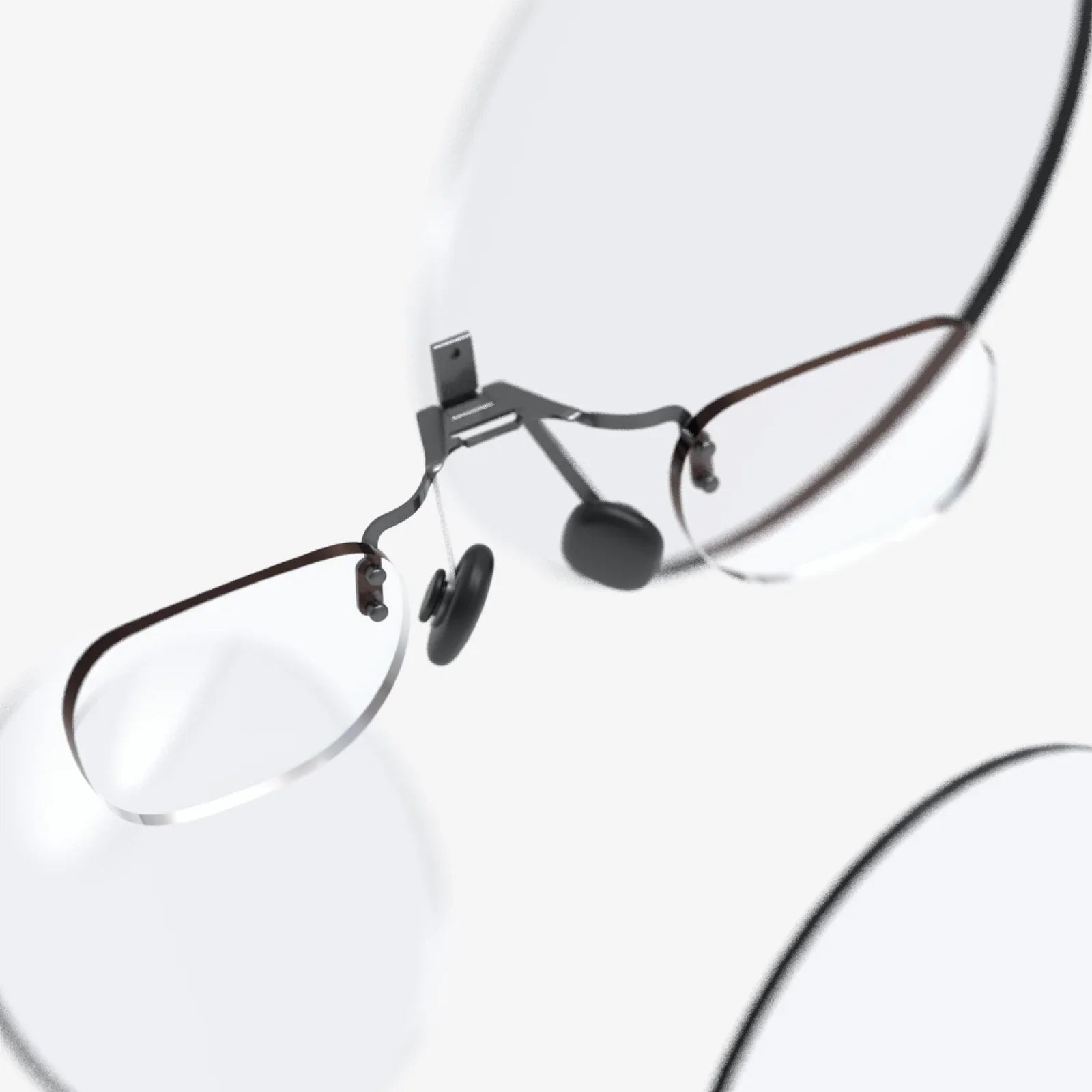
Imagine a world where your vision is not just a biological function but a dynamic, interactive interface with the world around you. A world where visual impairments are not limitations, where language barriers dissolve at a glance, and where information about your environment is seamlessly overlaid onto your reality. This is not a distant science fiction fantasy; it is the imminent future being shaped by the development of smart vision AI adaptive glasses. This groundbreaking technology represents a paradigm shift, moving computing from our pockets and laps directly into our line of sight, offering a more intuitive and powerful way to perceive, understand, and navigate our lives.
The Convergence of Sight and Intelligence
At its core, this technology is a sophisticated fusion of several advanced disciplines. It begins with high-resolution miniature cameras that act as the system's eyes, continuously capturing the user's field of view. This visual data is then processed in real-time by a powerful, on-board artificial intelligence engine. This is where the magic happens. The AI is not merely recognizing objects; it is understanding scenes, context, and relationships between elements in the environment. It can identify faces, read text, interpret gestures, and analyze complex scenarios. Finally, this processed information is projected back to the user's eyes through micro-displays, often using waveguides or other advanced optical systems to overlay digital information onto the real world. This creates a seamless augmented reality (AR) experience that feels like a natural extension of one's own vision.
Beyond Correction: A New Era of Enhanced Vision
The most profound and immediate application of smart vision AI adaptive glasses lies in the realm of visual assistance and accessibility. For the millions of individuals living with visual impairments, this technology is nothing short of revolutionary.
- Dynamic Visual Augmentation: For those with low vision, the glasses can intelligently enhance the world in real-time. They can amplify contrast, highlight edges, zoom in on specific areas of interest, and brighten dimly lit environments, making navigation and object recognition significantly easier and safer.
- Auditory Description of the Visual World: Using bone conduction or discreet earpieces, the AI can provide a constant, descriptive audio stream. It can read out text from signs, documents, or product labels, describe the people in a room and their expressions, identify currency, and provide detailed descriptions of surroundings, effectively acting as a seeing-eye AI guide.
- Obstacle and Hazard Detection: Advanced computer vision algorithms can map the environment in 3D, identifying potential trip hazards, low-hanging branches, or curbs and providing audible or visual warnings to the user, greatly enhancing independent mobility.
This transformative potential extends far beyond medical assistance, offering superhuman visual capabilities to everyone.
The Ultimate Personal Assistant, In Your Field of View
Smart vision AI adaptive glasses promise to become the most personal and contextual personal assistant ever created. By seeing what you see, the AI gains an unparalleled understanding of your context and needs.
- Contextual Information Overlay: Imagine looking at a monument in a foreign city and instantly seeing its history displayed next to it. Or glancing at a restaurant to see its reviews and menu highlights. The glasses can provide real-time, relevant information based solely on your gaze.
- Real-Time Translation: Language barriers could become a thing of the past. Look at a street sign, menu, or document in a foreign language, and the translated text can be overlaid directly onto your view, perfectly aligned with the original text.
- Memory and Recall Enhancement: Struggling to remember a name at a networking event? The glasses, with appropriate privacy permissions, could discreetly display the name and where you met the person. They could also help you find your lost keys by remembering where you last saw them.
- Hands-Free Productivity: From checking your calendar and messages to getting turn-by-turn navigation arrows painted onto the street ahead, all information is accessible without ever needing to look down at a screen.
Navigating the Ethical and Social Landscape
The integration of such a powerful and always-on sensory technology into everyday life inevitably raises significant ethical, privacy, and social questions that must be addressed proactively.
- Privacy and Surveillance: The capability to continuously record and analyze one's environment is a double-edged sword. Robust frameworks must be developed to ensure that recording or identifying individuals without their explicit consent is strictly prohibited. Data security is paramount; the visual data captured is incredibly sensitive and must be encrypted and processed with the highest standards of protection, preferably on the device itself rather than in the cloud.
- The Always-On Society: Will constant access to information and digital stimulation lead to further distraction and a diminished ability to be present in the moment? The technology must be designed to support mindfulness and allow users to easily disconnect and experience the world unfiltered.
- The Digital Divide: There is a risk that such advanced technology could create a new societal schism between those who can afford enhanced vision and cognition and those who cannot, particularly if it becomes essential for certain professions or social interactions.
- Social Acceptance and Etiquette: Wearing glasses that can record and analyze will require new social norms. Clear visual indicators that recording is active will be crucial for maintaining trust in public spaces.
The Road Ahead: From Prototype to Mainstream
The journey to perfecting and widely adopting smart vision AI adaptive glasses is fraught with technical and design challenges. Battery life remains a significant hurdle, as processing high-fidelity visual data and powering displays is incredibly energy-intensive. Advances in low-power chipsets and battery technology are critical. The form factor is another major challenge; for mass adoption, the technology must be indistinguishable from fashionable, lightweight eyewear. No user will want to wear a bulky, obtrusive device on their face all day. Furthermore, the user interface must be intuitive, relying on voice commands, subtle gestures, or even gaze control to avoid the social awkwardness of interacting with a screen on your face.
Despite these challenges, the pace of innovation is rapid. Breakthroughs in materials science, optics, and edge computing are happening constantly. As these pieces fall into place, we will see this technology evolve from a specialized tool for specific needs into a ubiquitous platform that will redefine our relationship with information and with each other.
The true power of smart vision AI adaptive glasses lies not in replacing our reality, but in enriching it. They hold the promise of making the world more accessible, understandable, and navigable for everyone. They represent a bold step towards a future where technology doesn't demand our attention but quietly enhances our human experience, allowing us to see the world not just as it is, but as it can be. The way we see, learn, and connect is on the verge of a change so profound, it will redefine human potential itself.
Share:
Augmented Reality Study: Transforming Education from Classrooms to Operating Theaters
Difference Between AR and VR Glasses: A Comprehensive Guide to Seeing Through the Tech