


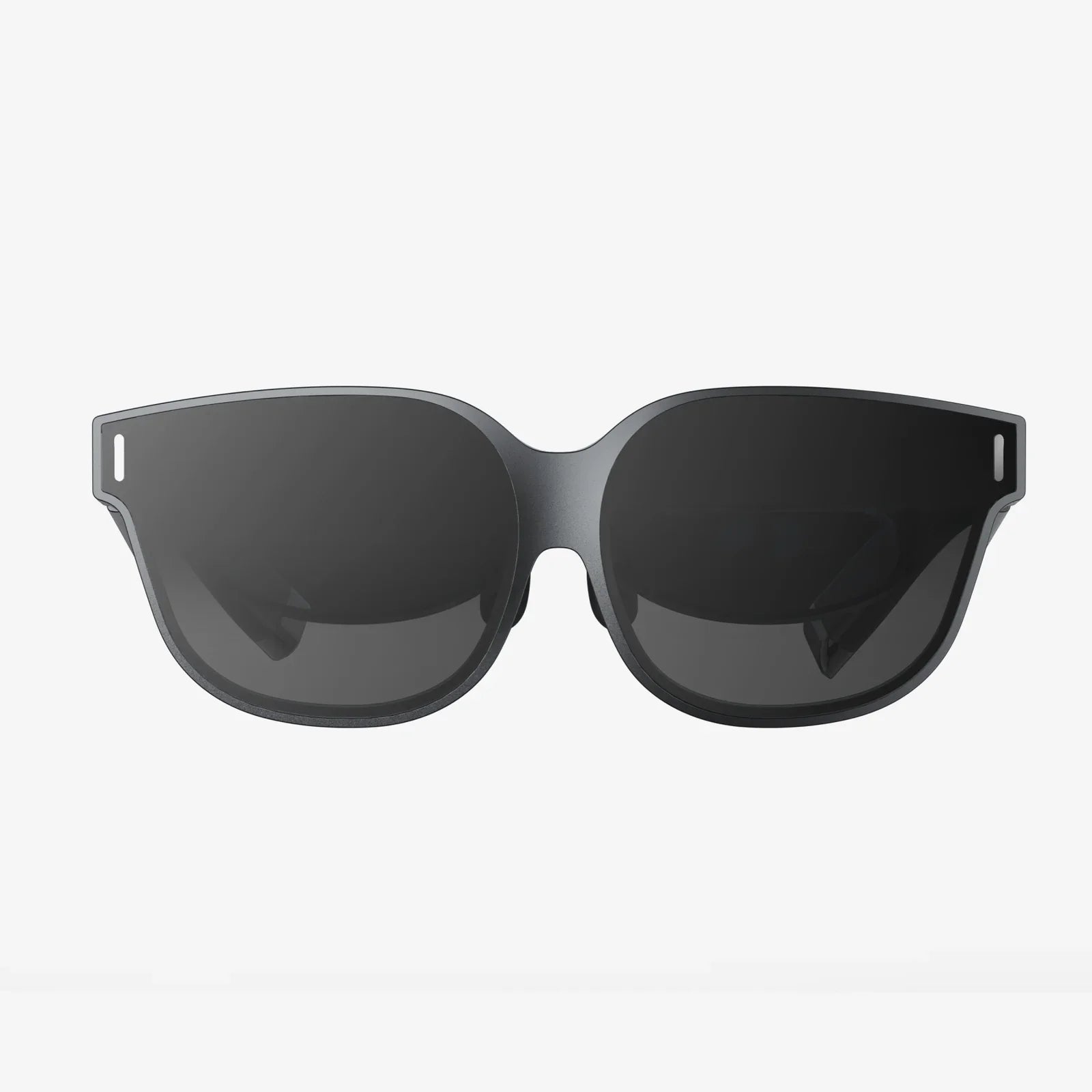
Imagine reaching into a virtual world, your hands gracefully picking up a beautifully rendered game piece, feeling the weight of a dice cup in your palm, and locking eyes with a friend sitting across from you—even though they are miles away. This is no longer the stuff of science fiction; it's the breathtaking reality unfolding at the intersection of tabletop simulator software and virtual reality technology. This powerful fusion is not just changing how we play games; it's redefining social connection, creative expression, and the very essence of a hobby once confined to physical tabletops. The barrier between the digital and the tangible is dissolving, creating a new, limitless dimension for play.
The Evolution of the Digital Tabletop
Long before virtual reality headsets entered the consumer market, tabletop simulators existed as a novel concept. These were primarily 2D applications running on traditional monitors, offering a digital sandbox for classic games. They provided a crucial service: enabling players separated by distance to share in the joy of a shared hobby. They offered tools to mimic the physical actions of a game—flipping cards, moving miniatures, rolling dice. Yet, something was inherently missing. The experience, while functional, often felt detached. Players manipulated a cursor to interact with objects, a layer of abstraction that, while convenient, lacked the visceral, tactile satisfaction of a real game night.
The introduction of virtual reality technology marked a paradigm shift. Instead of looking at a game board through a window (the computer screen), VR allows you to step through that window and inhabit the space. This transition from observation to immersion is the single most significant advancement in digital tabletop gaming. It addresses the core longing that physical game nights fulfill: presence. The sense that you are in a room with others, sharing a common physical space focused on a collective activity.
The Magic of Presence and Embodiment
What separates a VR tabletop simulator from its 2D counterpart is the profound psychological effect known as "presence." This is the convincing feeling of being in another place, a trick played on the brain by immersive audiovisual stimuli. In a VR tabletop environment, presence is achieved through several key elements:
- Scale and Perspective: A monitor flattens a game board into a single image. In VR, you can lean in to examine the intricate artwork on a single card, or stand up and look down at the entire sprawling game map from a god-like perspective. You appreciate the true scale of the game world in a way that is impossible on a screen.
- Natural Interaction: Gone is the abstract language of mouse clicks and keyboard shortcuts. Interaction is replaced by intuitive motion. To move a piece, you simply reach out and grab it. To roll dice, you pick them up and make a throwing motion. To shuffle a deck of cards, you perform the actual动作. This embodied interaction is cognitively satisfying and dramatically reduces the learning curve for new players.
- Social Cues: Modern VR systems track head and hand movements, and often even eye and lip movement. This data is used to animate your avatar. The result is an unprecedented level of social fidelity. A nod, a pointed finger, an exasperated throw of the hands—these non-verbal cues, so vital to communication and camaraderie, are transmitted effortlessly. You can see where another player is looking, gauge their reaction, and feel the shared focus on the game.
This combination creates a powerful illusion. The game is no longer a program you are running; it is a place you are visiting with friends.
A Playground for Creativity and Customization
Beyond replicating existing physical games, VR tabletop simulators have blossomed into incredible platforms for creativity. They are not just simulators; they are creation engines. The virtual space liberates game design from the constraints of physics and budget.
Players and creators can build worlds that would be impossible to produce physically. Imagine a strategy game where the board is a miniature, rotating galaxy. Or a dungeon crawler where the dungeon master can literally reach down and move walls, spawn terrifying monsters that animate in 3D space, and trigger environmental effects like rising lava or collapsing bridges—all with the wave of a hand.
The tools available often mimic real-world creative acts. You can "sculpt" custom miniatures, "paint" them with virtual brushes, and design unique game assets. This empowers communities to build and share content at an astonishing rate, creating a living, breathing ecosystem of games that extends far beyond any single developer's vision. The virtual table becomes a blank canvas, limited only by imagination.
Bridging the Physical Distance
One of the most poignant applications of this technology is its ability to connect people. For enthusiasts of tabletop gaming, finding a local group can be challenging. Schedules conflict, local game stores may be far away, and life's responsibilities often make regular in-person meetings difficult. VR erases geography. A weekly game night becomes possible with friends scattered across the country or even across the globe.
This is more than a video call with a game attached. It is a shared activity in a shared space. The conversation flows naturally, punctuated by the actions of the game. The experience of laughing together after a critical failure, strategizing in hushed tones, or celebrating a hard-fought victory carries the same emotional weight as an in-person event because the feeling of togetherness is so convincingly sold by the technology. It fights the isolation of distance and provides a structured, engaging social outlet.
The Future is on the Table
The journey of VR tabletop simulators is just beginning. Several emerging technologies promise to deepen the immersion even further.
- Haptic Feedback: Current VR controllers provide basic rumble. The next generation of haptic gloves and devices aims to simulate texture, weight, and resistance. Imagine feeling the rough grain of wooden dice, the smooth slide of a poker chip, or the subtle click of moving a piece on a board.
- Enhanced Fidelity: As headset resolution improves and graphics processing power grows, the virtual worlds will become indistinguishable from reality. Ray tracing can simulate light bouncing off glossy cards and painted miniatures, adding a layer of stunning visual depth.
- Augmented Reality Integration: The future may not be entirely virtual. The concept of mixed reality, where digital game elements are overlaid onto your physical table, offers a compelling hybrid model. This could blend the tactile joy of physical components with the dynamic magic of digital effects.
- Artificial Intelligence: AI can serve as a game master, adapting narratives on the fly, controlling non-player characters with believable intelligence, and crafting unique stories tailored to the players' actions.
These advancements will continue to blur the line between the game and the player, creating experiences that are ever more rich, responsive, and emotionally resonant.
Overcoming the Hurdles
Despite its immense potential, the VR tabletop space is not without challenges. The cost of entry for a high-quality VR headset, while decreasing, is still a barrier for some. The technology itself can have a learning curve, and issues like motion sickness, though less prevalent in stationary experiences, can affect users. Furthermore, curating and discovering user-generated content can be daunting in a vast and growing library.
However, the trajectory is clear. As with all technology, costs will fall, hardware will become more comfortable and intuitive, and platforms will become better at surfacing great content. The core experience—the magic of shared presence—is already so compelling that it convinces players that this is not just an alternative way to play, but a new and thrilling dimension of the hobby itself.
The click of plastic on cardboard is a satisfying sound, but it is not the heart of tabletop gaming. The heart is the laughter around the table, the shared strategies, the groans of defeat, and the triumphant cheers. It is human connection. Virtual reality, through the lens of a tabletop simulator, has proven it can not only replicate that connection but can amplify it, transcend physical limits, and open doors to worlds of play we are only beginning to imagine. The next time you consider game night, know that the table is waiting for you, boundless and eternal, in a world just beyond the headset.
Share:
AI Glass and Aluminum: The Invisible Intelligence Reshaping Our Built World
Try On Glasses Digitally: The Ultimate Guide to Virtual Eyewear Fitting