


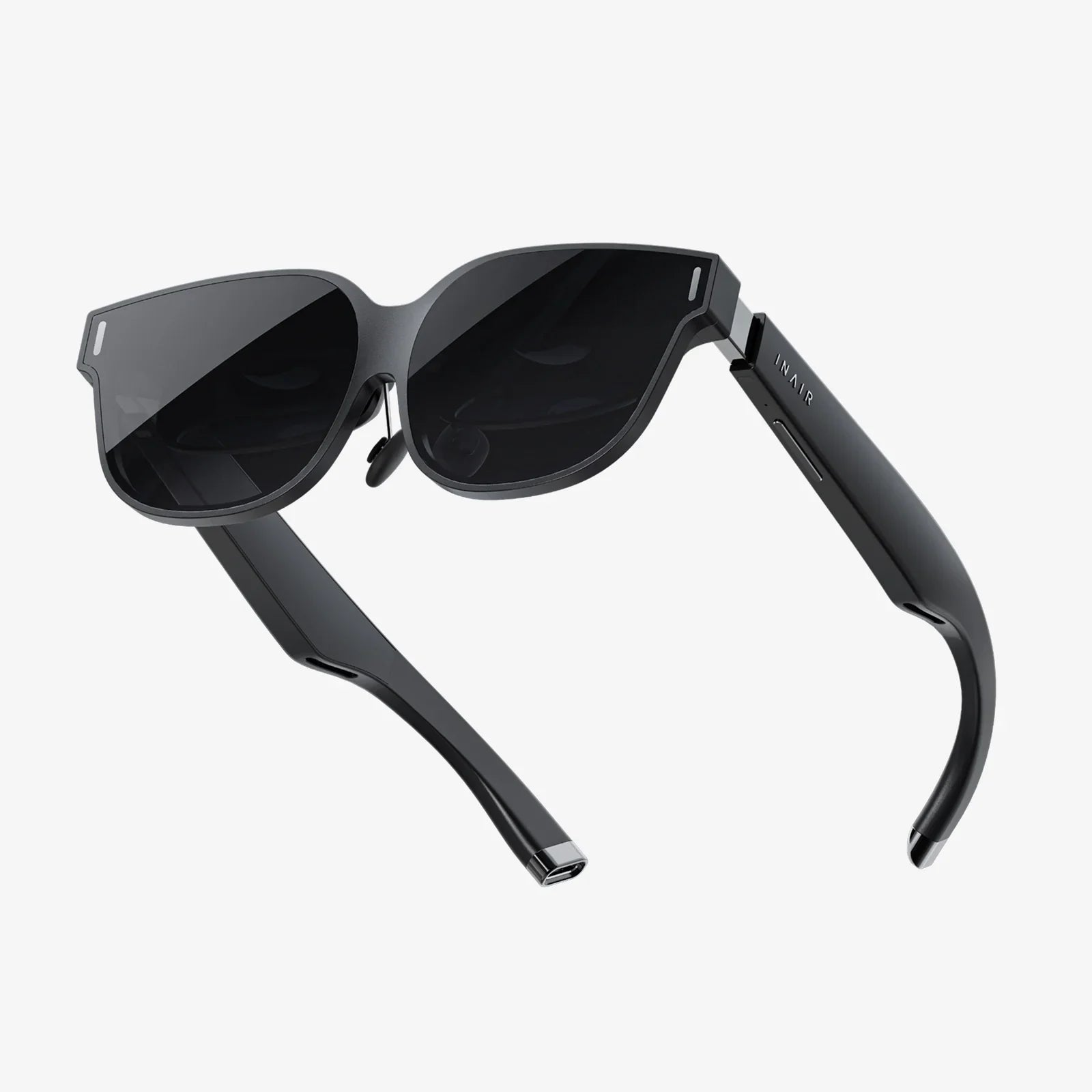
Imagine a world where information doesn't block your view but enhances it, where digital guides float effortlessly over city streets, and complex data is overlaid onto machinery without obscuring a single bolt. This isn't a distant sci-fi fantasy; it's the imminent future being unlocked by a single, transformative technology: the transparent OLED display for AR glasses. This innovation is the key that will finally bridge the gap between our digital and physical realities, creating a seamless, intuitive, and truly immersive experience that promises to redefine how we work, play, and connect.
The Architectural Leap: From Conventional to Transparent
To understand the revolutionary nature of transparent OLEDs, one must first grasp the limitations of the display technologies that preceded them in the AR space. Many early AR systems relied on projection-based methods or waveguides paired with micro-LEDs. While effective, these approaches often struggled with issues of brightness, contrast, field of view, and, most critically, the ability to create a truly transparent lens that doesn't feel like looking through a dim, tinted window.
Transparent OLED technology shatters these constraints. An OLED (Organic Light-Emitting Diode) display is fundamentally different because each pixel is its own microscopic light source. When an electric current is applied to the organic material, it emits light directly. There is no need for a separate backlight, which is a mandatory component in traditional LCDs. This fundamental difference is what enables transparency. By designing the substrate, cathode, and anode to be transparent—often using materials like glass and transparent conductive oxides—manufacturers can create a panel that emits brilliant light while allowing a high percentage of background light to pass through unimpeded. When you look through a transparent OLED lens, you are quite literally looking directly at the real world, with digital content perfectly superimposed upon it.
Deconstructing the Magic: How a Transparent OLED Works
The core magic of a transparent OLED lies in its layered architecture. Imagine a sandwich where every layer is see-through, yet together they create vivid imagery.
- Transparent Substrate: This is the foundation, typically a glass or flexible polymer panel, which provides structural integrity while allowing light to pass through.
- Transparent Anode: Usually made from Indium Tin Oxide (ITO), this layer injects positively charged "holes" into the stack when a voltage is applied.
- Organic Layers: This is the heart of the display. A series of ultra-thin organic films, including an emissive layer and a conductive layer, are deposited onto the anode. When electrons from the cathode and holes from the anode meet in the emissive layer, they form excitons that release energy in the form of photons—light. By using different organic compounds, the display can produce red, green, and blue light to form full-color images.
- Transparent Cathode: Similar to the anode, this layer is also transparent and injects electrons into the organic layers.
The result is a panel with a transparency ratio often exceeding 40%, meaning nearly half of the ambient light passes through, preserving a completely natural view of the surroundings. The remaining portion of the panel is dedicated to emitting intensely bright and high-contrast pixels that can be clearly seen even in bright daylight. This combination of high transparency and high emissivity is the holy grail that makes this technology so perfectly suited for AR glasses.
Why This Changes Everything for Augmented Reality
The integration of transparent OLEDs is not merely an incremental upgrade; it is a paradigm shift for AR glasses. It solves several critical challenges that have hindered mass adoption.
Unprecedented Visual Fidelity: With each pixel self-emitting, these displays offer true blacks and an infinite contrast ratio. A black pixel is simply off, allowing the real world behind it to be seen with perfect clarity. This eliminates the "ghosting" or "washed-out" effect common in other AR displays, creating digital objects that feel solid and real within the user's environment.
A Natural and Comfortable Experience: The high transparency reduces eye strain and cognitive load. Users are not constantly fighting to see the world through a display; the world is the display. This leads to longer usage sessions and a more intuitive interaction model, as the technology fades into the background and the augmented information takes center stage.
Sleeker, Socially Acceptable Form Factors: The thin-film nature of OLEDs allows for incredibly slim and lightweight optical engines. This empowers designers to create AR glasses that look much closer to regular eyewear, moving away from the bulky, goggle-like designs of the past. Social acceptability is a huge barrier for wearable tech, and transparent OLEDs are the key to overcoming it.
Transforming Industries: The Practical Applications
The potential applications for this technology stretch far beyond consumer gadgetry, poised to revolutionize entire professions and sectors.
Enterprise and Industrial Maintenance
A technician repairing a complex aircraft engine or a network server rack can have schematics, torque specifications, and step-by-step instructions overlaid directly onto the components they are working on. Their hands remain free, their focus remains on the task, and error rates plummet while efficiency soars.
Healthcare and Surgery
Surgeons can visualize patient vitals, ultrasound data, or 3D anatomical models from pre-op scans directly in their field of view without turning away from the operating table. Medical students can practice procedures on augmented cadavers, and nurses can have instant access to patient records and medication dosages.
Navigation and Logistics
Warehouse pickers can see optimal routing and item locations flash before their eyes, dramatically speeding up fulfillment. For everyday users, walking through an unfamiliar city becomes intuitive as directional arrows and points of interest are painted onto the streets themselves.
Education and Training
Imagine learning about astronomy by having the constellations traced across the real night sky, or understanding history by seeing historical figures and events reenacted on the very ground where they occurred. Transparent OLED AR glasses can make learning a truly immersive and interactive experience.
The Road Ahead: Challenges and The Future Vision
Despite its immense promise, the path forward for transparent OLEDs in AR glasses is not without obstacles. Manufacturing yields for large, perfectly transparent panels need to improve to drive down costs. Power consumption remains a critical concern for all-day wearable devices, necessitating advances in battery technology and display efficiency. Furthermore, developing the software and context-aware AI that can seamlessly blend relevant digital information with the unpredictable real world is a monumental task.
However, the trajectory is clear. Research is ongoing into more efficient organic materials, flexible transparent substrates for curved lenses, and even higher transparency rates. We are moving toward a future where AR glasses powered by this technology become as ubiquitous as smartphones are today—an indispensable tool and a fundamental lens through which we perceive and interact with our world.
The true power of transparent OLED displays lies not in their ability to command our attention, but in their capacity to enhance our reality on our own terms. They offer a glimpse into a future where technology is not a barrier between us and the world, but a gentle, intelligent guide that makes our reality richer, safer, and infinitely more interesting. The clear window is here, and it's waiting for us to look through.
Share:
Virtual Reality Glasses for Android: Your Ultimate Portal to Immersive Worlds
Smart Digital Workplace: The Future of Productivity and Employee Experience