


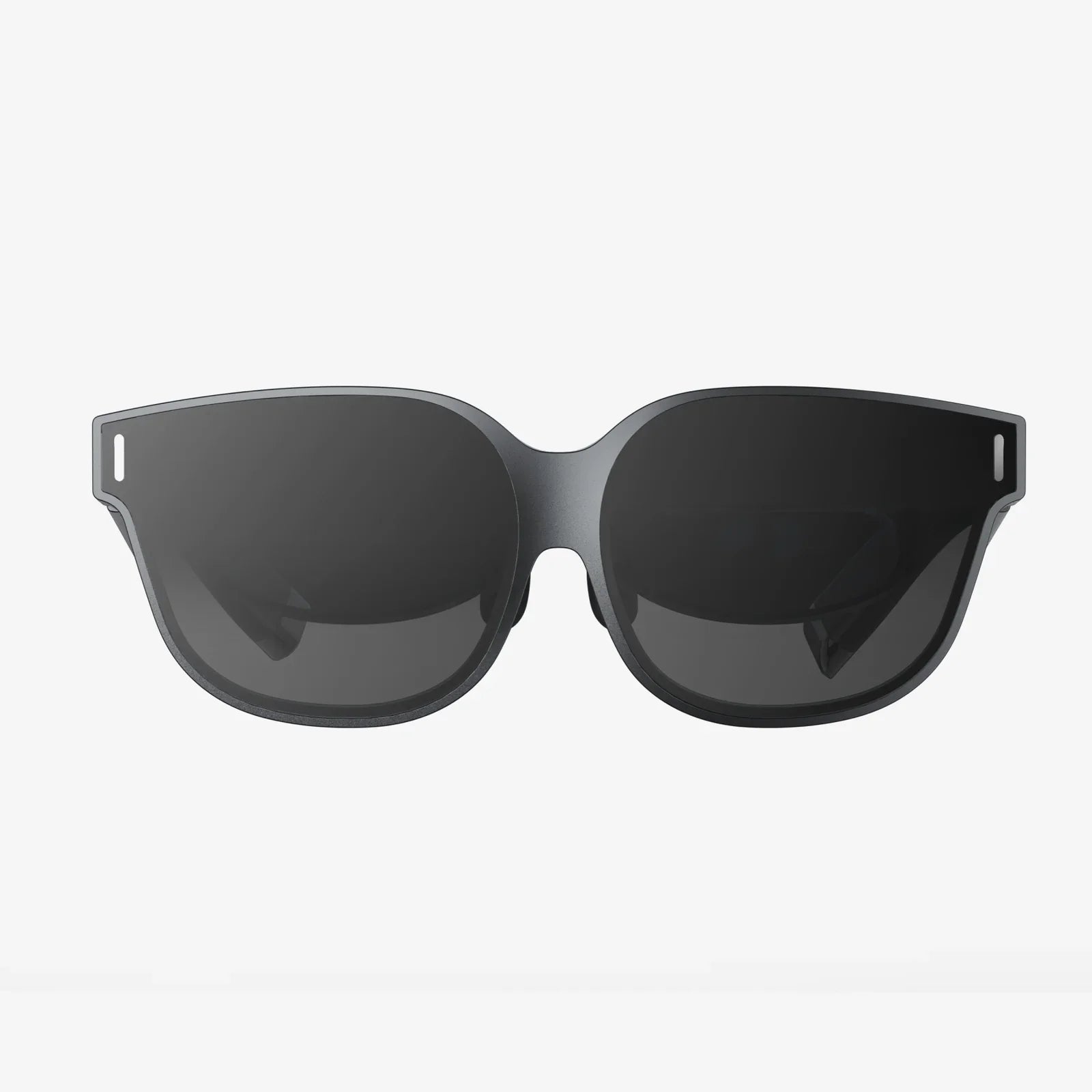
Imagine a virtual reality experience so seamless, so intuitive, that the headset itself vanishes from your perception, leaving you utterly transported to another world. This is the promise, the holy grail, that the next generation of unusual virtual reality headsets is chasing. We are moving far beyond the now-familiar black box strapped to the face. The future of VR isn't just about higher resolution or wider fields of view; it's about a fundamental reimagining of the interface between human and machine. This new wave of technology is exploring uncharted territories, from reading brainwaves to projecting light directly onto our retinas, promising to shatter the final barriers to true digital immersion. The journey beyond the conventional is already underway, and it is more fascinating than science fiction.
The Limits of Convention: Why the Standard Form Factor is Failing Us
For years, the standard VR headset design has followed a predictable formula: a rigid plastic shell housing two displays, a series of lenses, and an array of external or internal sensors for tracking. While this design has brought immersive experiences to millions, it is fraught with compromises that prevent true, long-term adoption.
The first and most obvious issue is physical bulk and discomfort. The weight distribution, the pressure on the face, and the sheer isolation from the real world can be taxing. This leads to the phenomenon of "VR fatigue," limiting sessions to often less than an hour for many users.
Secondly, there's the vergence-accommodation conflict, a fundamental flaw in current optical design. In the real world, our eyes converge (cross or uncross) and accommodate (change focus) in tandem when looking at objects at different distances. In most VR headsets, the displays are at a fixed focal distance, typically 1.5 to 2 meters away. Your eyes must converge to perceive depth on a virtual object held close to your face, but they must still focus on the fixed screen, creating a sensory mismatch that causes eye strain and, for some, nausea.
Finally, the input paradigm remains clumsy. Hand-held controllers are an improvement over gamepads, but they are still an intermediary tool. They are not our hands. The disconnect between our natural dexterity and the abstract buttons and joysticks of a controller is a constant reminder that we are in a simulated space. These limitations have acted as a catalyst, pushing engineers and designers to explore radically unusual solutions.
A Spectrum of the Unusual: From Evolutionary to Revolutionary Designs
The term "unusual" encompasses a broad spectrum of innovation. Some headsets take an evolutionary approach, refining the existing form factor with bizarre but functional new features. Others are outright revolutionary, proposing a completely new way to interface with digital content.
1. The Varifocal and Light Field Revolution
Addressing the vergence-accommodation conflict is a primary goal for many unusual designs. One approach is varifocal displays. These are headsets that physically move the displays or lenses to change the focal distance in real-time, matching the virtual distance of the object you are looking at. It's a complex mechanical solution involving tiny, ultra-fast motors and eye-tracking so precise it knows exactly where you are focusing.
An even more advanced concept is the light field headset. Instead of presenting a flat image, these devices project a field of light rays that mimic how light behaves in the real world. This allows your eyes to naturally focus and accommodate at different depths within the virtual scene, just as they would on a real object. The result is a profound reduction in eye strain and a dramatic increase in the realism of virtual objects, making them feel truly solid and present in space.
2. Neural Interfaces: The Ultimate Bypass
If the goal is to remove the hardware barrier entirely, what could be more unusual than a headset that reads your brain? Non-invasive neural interface headbands are being developed that use electroencephalography (EEG) or other technologies to detect electrical activity from the scalp.
Their current applications are focused on measuring engagement, focus, or relaxation to adapt experiences in real-time. However, the long-term vision is far more ambitious: controlling the virtual environment with thought alone. Imagine simply thinking about grabbing a virtual object and having it happen, or navigating a menu with a mental command. This technology is in its infancy for consumer VR, but it represents the most radical departure from the button-and-joystick paradigm imaginable.
3. Projection-Based and Retinal Displays
Some of the most unusual concepts abandon the traditional display-lens system altogether. One idea involves projecting images directly onto the user's retina. This technology uses low-power lasers or LEDs to scan images directly onto the eye, creating a high-resolution, bright display that appears to float in space in front of the user. The potential advantages are immense: a huge field of view, incredible resolution density, and a form factor that could be as small and light as a pair of sunglasses, as it eliminates the need for large, heavy lenses and displays.
Another fringe concept involves projecting the virtual world onto the physical surfaces of your room. A headset would map your environment and then use built-in projectors to cast textures, objects, and characters onto your walls, floor, and furniture. This creates a mixed reality experience where the virtual and physical are literally fused together, blurring the line between them in a uniquely tangible way.
4. Haptic Feedback and Sensory Expansion
Unusual headsets aren't just about sight and sound; they're about touch and feel. Advanced haptic feedback systems are being integrated directly into head straps and facial interfaces. These can use arrays of tiny ultrasonic transducers or actuators to simulate the feeling of wind, rain, or even a spider crawling across your cheek. This type of targeted, localized haptics adds a powerful new layer of sensory immersion that is currently missing.
Furthermore, unusual designs are experimenting with olfactory output (smell) and thermoceptive feedback (changes in temperature). Imagine feeling the sun's warmth on your face in a virtual desert or catching the scent of rain on pine trees in a forest simulation. These multi-sensory approaches aim to create a holistic immersion that engages the user on every level, making the virtual experience more memorable and emotionally resonant.
The Challenges on the Path to the Unusual
Pioneering these unusual designs is not without immense challenges. Each revolutionary approach brings its own set of formidable obstacles.
- Technical Complexity and Cost: Light field displays, varifocal mechanics, and neural interfaces are astronomically expensive to develop and produce. Translating a lab prototype into a consumer-product that is reliable, durable, and affordable is a monumental task.
- Power Consumption and Heat: Processing complex light field data or running multiple high-resolution projectors requires immense computational power, which in turn generates heat. Managing this thermal load in a device worn on the face is a critical engineering hurdle.
- Biometric and Ethical Concerns: Headsets that track eye movement, facial expressions, and especially brainwave data raise serious privacy questions. This is deeply personal biometric information. Who owns this data? How is it stored and used? Establishing trust and robust ethical frameworks is paramount for the adoption of these advanced devices.
- Content Creation: A new medium requires new content. Developing experiences that truly leverage varifocal focus, neural input, or complex haptics requires entirely new tools and design languages. The software must evolve in lockstep with the hardware.
The Future is a Feeling, Not a Form Factor
The true impact of these unusual virtual reality headsets extends far beyond gaming or entertainment. They have the potential to redefine human connection and perception.
In the realm of remote work and collaboration, a headset that perfectly conveys eye contact, nuanced facial expressions, and a shared sense of physical presence could make video calls feel obsolete. Architects and engineers could walk clients through full-scale, photorealistic holograms of unbuilt designs. In medicine, a surgeon could practice a complex procedure on a patient-specific, light-field-rendered organ that responds with realistic haptic feedback. Therapists could use controlled, multi-sensory environments to treat phobias or PTSD with unprecedented efficacy.
The ultimate goal is presence—the unshakable feeling of being in another place. The unusual headsets of the future are not about seeing a digital world; they are about feeling that you are there. They aim to trick not just your eyes, but your entire vestibular system, your proprioception, and your subconscious. They seek to make the digital tangible.
We stand at the precipice of a new era in spatial computing. The unusual virtual reality headsets emerging from labs and startups around the world are not mere iterations; they are the first drafts of a new reality. They promise a future where the boundary between our physical and digital lives dissolves not into a flat screen, but into a rich, sensory, and deeply human experience. The headset, in all its unusual forms, is the key to unlocking this door. It is the looking-glass through which we will not just see, but step into the worlds of our own creation.
The next time you hear about a virtual reality headset that reads your mind, projects images onto your retina, or lets you feel digital rain on your skin, don't dismiss it as a gimmick. See it for what it is: a bold, unconventional, and necessary step on the path to a future where our reality is limited only by our imagination. The journey into the virtual is just beginning, and the most unusual part is yet to come.
Share:
New AI Glasses 2026: The Dawn of the Invisible Computer
AR Glasses Components: The Intricate Anatomy of Augmented Reality