


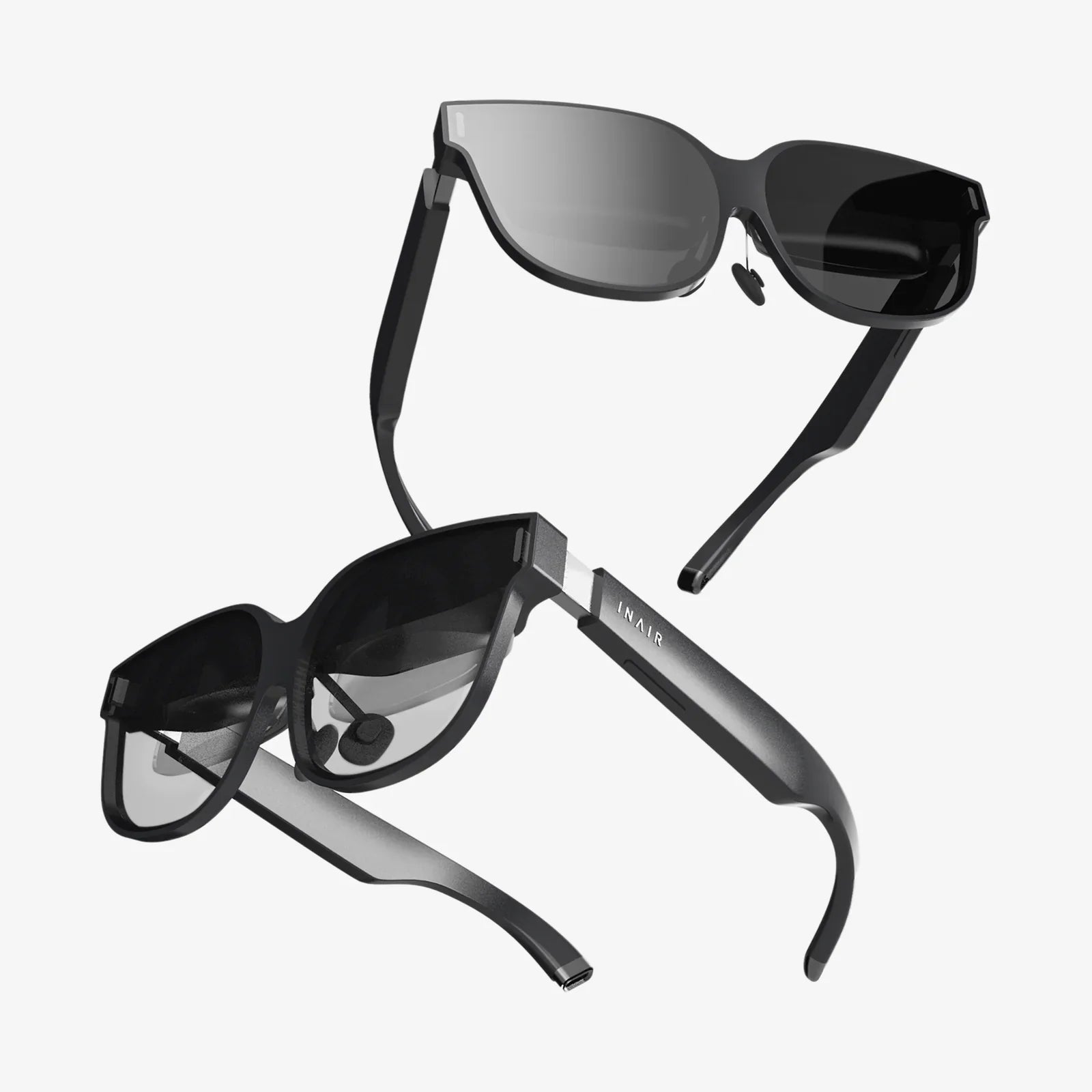
Imagine a world where information doesn't live on a screen in your hand, but flows seamlessly into your field of vision, enhancing reality without obscuring it. A world where digital assistants don't just respond to voice commands but understand context through your eyes, and where the boundary between the physical and digital worlds becomes almost imperceptibly thin. This is not a distant science fiction fantasy; it is the imminent future being forged in labs and design studios today, all pointing towards a watershed moment: the mainstream arrival of sophisticated smart glasses in 2026.
The Architectural Leap: Beyond Bulky Prototypes
The fundamental barrier to widespread smart glasses adoption has always been a triumvirate of challenges: form factor, battery life, and computational power. The devices of 2026 are poised to shatter these limitations through a series of convergent technological evolutions.
First, the physical design. The goal for 2026 is not just miniaturization, but near-invisibility. We are moving away from the concept of a "computer on your face" and towards "intelligence embedded within eyewear." This is being achieved through advanced micro-optics. Waveguide technology, which pipes light to the eye from the edge of the lens, will become dramatically more efficient, allowing for brighter, fuller-color displays without the need for bulky projection units. These optical engines will be so small they can be discreetly embedded within the frame's temples, making them indistinguishable from high-end traditional eyewear.
Second, the power dilemma is being solved on two fronts. Battery technology itself is advancing, with solid-state batteries offering higher energy density in smaller, safer packages. More importantly, a new paradigm of heterogeneous computing is emerging. Instead of one power-hungry central processor, 2026's smart glasses will feature a distributed network of ultra-low-power specialized chips. A tiny, always-on contextual awareness chip will handle basic functions like sensor monitoring, while more powerful processors for complex AI tasks and graphics will activate only when needed. This, combined with solar-charging coatings on the lenses and innovative kinetic energy harvesting from movement, will push battery life from hours into multiple days of moderate use.
The AI Copilot: Contextual Intelligence Through Your Eyes
Hardware is only the vessel; the true soul of the 2026 smart glasses will be the artificial intelligence that powers them. This will evolve from a reactive voice assistant to a proactive, contextual, and visual AI copilot.
Leveraging a suite of miniaturized sensors—including high-resolution cameras, LiDAR, depth sensors, and advanced microphones—the glasses will build a real-time, multimodal understanding of your environment. This is where the magic happens:
- Visual Search & Translation: Look at a menu in a foreign country, and subtitles for each dish will appear over them in your native language. See a landmark, and a brief history will materialize beside it. This won't require a voice command; the AI will infer your intent from your gaze and context.
- Proactive Assistance: The glasses will notice you've entered a grocery store and subtly highlight the items on your list on the shelves. They will see your hands are full and offer to read and summarize an incoming message without a prompt. They will recognize a friend approaching in a crowd and discreetly display their name and last interaction point.
- Personalized Memory Augmentation: For professionals, this is a game-changer. An engineer could look at a complex machine, and the AI could overlay maintenance history or technical schematics. A doctor could review a patient's chart while making rounds, with vital signs and key notes remaining in their periphery. The glasses become an extension of your own memory and expertise.
This AI will primarily be powered by hybrid computing. Highly personal and latency-sensitive tasks will be processed on-device for privacy and speed, while more complex queries will be seamlessly offloaded to powerful cloud AI models, with the user never perceiving the shift.
The Display: The Final Frontier of Seamless AR
The quality of the augmented overlay is paramount. The dream is a display that can project vivid, high-resolution graphics that appear solid in the real world, visible in all lighting conditions from bright sunlight to a dark room. 2026 will bring us closer than ever to this ideal.
Advances in Laser Beam Scanning (LBS) and MicroLED technology will be key. These technologies allow for incredibly small light sources that can project directly onto the retina or through advanced waveguides, creating bright, high-contrast images. The field of view (FOV)—the window through which you see the digital world—will expand significantly, moving from a small, postage-stamp display to something that encompasses a much larger portion of your natural vision, making digital objects feel truly anchored in reality.
Furthermore, these displays will become dynamic and interactive. Imagine not just seeing a virtual screen, but being able to reach out and "touch" it with your finger, with the glasses tracking your gestures with pinpoint accuracy. The interface will move beyond voice and simple taps on the temple to encompass intuitive hand gestures and eventually, even neural input via non-invasive sensors that detect subtle electrical signals from the brain, allowing for silent, thought-based control of simple commands.
A New Social Contract: Privacy, Etiquette, and the Always-On Camera
The path to adoption is not purely technological; it is profoundly social. The most significant hurdle for smart glasses may be the societal permission for them to exist. A device with an always-on camera and microphone strapped to someone's face inherently raises concerns about privacy and surveillance.
The manufacturers of 2026 are acutely aware of this. We will see a new standard for privacy-by-design hardware. This will likely include:
- Physical Privacy Shutters: Prominent, hardware-based switches that physically disconnect the cameras and microphones, accompanied by an external LED that glows when sensors are active, providing a clear, unambiguous signal to others.
- On-Device Processing: A strong emphasis on processing sensitive data (like video feeds) directly on the device itself, never sending raw video to the cloud, to alleviate fears of constant surveillance.
- New Social Norms: A public conversation and the establishment of new etiquettes—similar to the now-common practice of asking permission before taking someone's photo—will be essential. We may see the development of "AR-free zones" in certain private establishments.
Overcoming the "glasshole" stigma associated with earlier attempts will require not just discreet design, but a demonstrable commitment to ethical design and user control. The success of these devices hinges on them being perceived as a tool for personal enhancement, not a threat to public privacy.
The Ecosystem: Beyond a Single Device
The 2026 smart glasses will not exist in a vacuum. They will be the central node in a personal area network, seamlessly integrating with your other devices. They will act as the primary display and input mechanism for your smartphone, which will likely remain a powerful compute puck in your pocket. They will interface with your smartwatch for health data, your wireless earbuds for immersive audio, and your smart home, allowing you to control your environment with a glance.
This interoperability will be crucial. Developers will be able to create experiences that span devices. A navigation app might show turn-by-turn directions on your glasses, while your watch taps your wrist for alerts and your earbuds provide audio cues. This creates a cohesive, ambient computing environment that feels less like using a gadget and more like harnessing a digital sixth sense.
Industries Transformed: The Enterprise Leads the Way
While consumer applications are flashy, the initial and most profound impact of the 2026 smart glasses will be felt in enterprise and industrial settings. Here, the value proposition is undeniable and the environment is more controlled.
- Manufacturing & Logistics: Warehouse workers will have picking lists and inventory data overlaid directly on shelves, guiding them with optimal routes and verifying items, drastically reducing errors and training time. technicians on assembly lines will have schematics and instruction manuals superimposed on the machinery they are repairing.
- Healthcare: Surgeons could access vital patient statistics and imaging data without looking away from the operating field. Nurses could instantly see patient vitals and medication schedules upon entering a room. Medical training will be revolutionized through detailed anatomical overlays.
- Field Service & Maintenance: Engineers repairing complex infrastructure, from wind turbines to telecom equipment, will have remote experts able to see their view and annotate the real world with arrows, diagrams, and notes, enabling expert guidance from anywhere on the globe.
This enterprise adoption will serve as the testing ground, refining the technology, proving its ROI, and funding the innovation that will eventually drive down costs for the consumer market.
The stage is not just set for an upgrade to our eyewear; it is set for a fundamental recalibration of our relationship with technology itself. The upcoming smart glasses of 2026 represent the culmination of a decade of incremental progress in AI, materials science, and optics, converging into a product that finally feels inevitable, necessary, and, most importantly, normal. They promise to unlock a new layer of human potential, making us more knowledgeable, more connected, and more efficient, all while leaving our hands free to engage with the very world they are helping to enhance. The future is not in your pocket; it’s right before your eyes.
Share:
Digital Production Examples: The Invisible Engine Reshaping Our World
New Digital Products Are Redefining Our Reality: A Deep Dive into the Next Technological Wave